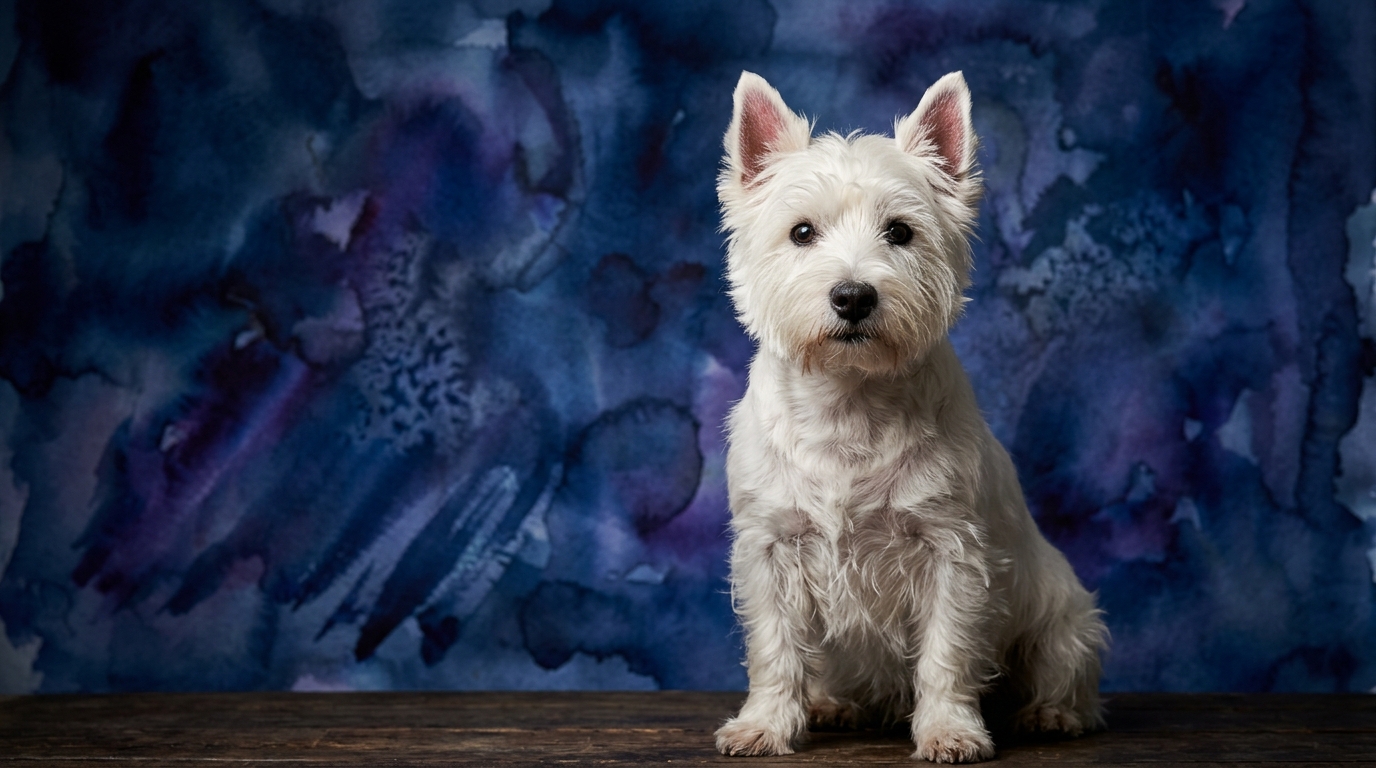

Side-by-Side Cognitive Profiles
At The Cosmic Pet Pet IQ Lab, we evaluate canine cognition across five key dimensions, providing a comprehensive view beyond simple obedience. For the West Highland White Terrier, a breed with a Coren ranking of #47, their profile shows a balanced aptitude: Problem Solving at 3/5, Training Speed at 3/5, Social Intelligence at 3/5, and Instinctive Drive at 3/5. Where the Westie truly shines is in Memory, earning a robust 4/5, suggesting a strong capacity for retaining learned information and experiences over time.
The Norfolk Terrier, while not appearing on Coren's broader ranking, presents a remarkably similar cognitive blueprint to its Westie cousin across most metrics. This lively terrier also scores 3/5 in Problem Solving, 3/5 in Training Speed, 3/5 in Social Intelligence, and 3/5 in Instinctive Drive. The primary distinction lies in their Memory score, which stands at 3/5, indicating a solid, but perhaps not as exceptional, recall capability compared to the Westie. These identical scores across four dimensions highlight a shared terrier ingenuity and social awareness, while the memory difference points to a key area for functional differentiation.
Where the West Highland White Terrier Excels Cognitively
The West Highland White Terrier's standout cognitive strength is undeniably its superior memory, rated at 4/5. This enhanced recall means Westies are likely to retain complex sequences of commands, remember specific routes during walks, or recall the precise location of a hidden toy with greater accuracy and consistency over time. For an owner, this translates into a dog that can master and reliably execute a wider repertoire of tricks and obedience commands, even after periods of inactivity. Their capacity for remembering past interactions and learned boundaries can also contribute to more predictable behavior within established household routines.
Furthermore, this memory advantage can make Westies adept at activities requiring sequential learning, such as advanced agility courses with intricate patterns or scent work that demands remembering specific target odors. While their problem-solving and training speed are on par with the Norfolk at 3/5, their ability to *store* and *retrieve* solutions and learned behaviors is a distinct advantage. This cognitive trait positions the Westie as a strong candidate for owners who enjoy progressing through advanced training challenges or engaging in competitive canine sports where consistent recall and pattern recognition are paramount.
Where the Norfolk Terrier's Cognitive Profile Shines
While the Norfolk Terrier's memory score of 3/5 is a point lower than the Westie's, its consistent 3/5 across Problem Solving, Training Speed, Social Intelligence, and Instinctive Drive paints a picture of a remarkably well-rounded and adaptable cognitive profile. This balance suggests a dog that is consistently capable across various mental tasks without over-specializing in one area. Their problem-solving at 3/5 means they possess a practical ingenuity, capable of figuring out moderate challenges, perhaps without the Westie's tendency to meticulously remember every past solution, leading to a fresh approach when faced with similar situations.
The Norfolk's robust instinctive drive at 3/5, combined with their balanced cognitive scores, allows them to excel in situations that demand immediate, practical responses rather than reliance on complex memorized routines. This can make them incredibly effective in their traditional roles, such as vermin control, where quick assessment and decisive action are more valuable than perfect recall of a long sequence. Their slightly less dominant memory might also contribute to a certain resilience, allowing them to adapt more readily to changes in routine or environment without being overly fixated on past patterns, making them excellent companions for owners with dynamic lifestyles who appreciate a dog that lives very much in the present moment.
Trainability: Westie vs. Norfolk
When considering trainability, both the West Highland White Terrier and the Norfolk Terrier share a Training Speed score of 3/5, indicating they are generally capable of grasping new commands at a moderate pace. However, the Westie's superior Memory (4/5) compared to the Norfolk's (3/5) introduces a crucial distinction in the *retention* and *reliability* of learned behaviors. A Westie is more likely to remember commands, routines, and boundaries consistently over longer periods, even with less frequent reinforcement. This means once a Westie learns something, it tends to stick.
For the Norfolk Terrier, while they learn at a similar initial pace, their slightly lower memory score suggests that consistent practice and regular reinforcement might be more critical to maintain the sharpness of their learned skills. They might require more frequent refreshers to ensure commands remain reliable, especially if a behavior isn't practiced for some time. This doesn't mean the Norfolk is harder to train; rather, it implies that owners might need to adopt a slightly more diligent and consistent approach to training upkeep, focusing on short, engaging sessions to keep their minds stimulated and their learned behaviors fresh. Both breeds benefit from positive reinforcement and engaging training methods that tap into their terrier curiosity and drive.
Matching Canine Intellect to Owner Lifestyles
Considering both breeds' shared 3/5 scores in Problem Solving, Social Intelligence, and Instinctive Drive, both the West Highland White Terrier and the Norfolk Terrier are generally well-suited for owners who can provide consistent engagement and mental stimulation. Their moderate instinctive drive means they appreciate activities that allow them to use their senses and problem-solving skills, such as scent games, puzzle toys, or structured walks with opportunities for exploration. They are not typically content to be purely sedentary companions, requiring regular physical activity and mental challenges to prevent boredom.
For active owners, either breed could be a good fit, especially those who enjoy consistent training or canine sports. However, the Westie's stronger memory might make it a better companion for owners who aspire to more complex competitive activities or desire a dog that can reliably perform a wide array of advanced commands. For relaxed owners, or those seeking a more adaptable companion for varied routines, the Norfolk Terrier's balanced cognitive profile and potential for less fixation on rigid patterns might be marginally more forgiving. Both breeds thrive on social interaction (3/5 Social Intelligence), meaning neither is a solitary garden ornament; they need to be integrated into family life and receive ample attention and companionship.
The Verdict
Choose the West Highland White Terrier if you prioritize a dog with exceptional memory for advanced training, consistent recall, and mastering complex routines, and are prepared to engage their sharp intellect.
Opt for the Norfolk Terrier if you appreciate a well-rounded terrier intellect that is adaptable and present-focused, and are committed to consistent, engaging training to keep their skills sharp.
🧠 Find Your Pet's IQ Score
Our Pet IQ Lab assessment covers 25+ tests across 5 cognitive dimensions — personalized to your breed.
Take the Full IQ Test →Frequently Asked Questions
Are West Highland White Terriers good at learning tricks?
Yes, West Highland White Terriers are quite proficient at learning tricks. With a Training Speed of 3/5 and a strong Memory of 4/5, they pick up new behaviors at a moderate pace and tend to retain them very well, making them excellent candidates for mastering a wide array of commands and tricks over time.
Do Norfolk Terriers require a lot of mental stimulation?
Norfolk Terriers do benefit significantly from mental stimulation. With scores of 3/5 in Problem Solving and Instinctive Drive, they possess a curious and resourceful mind that needs outlets. Engaging them with puzzle toys, scent games, and consistent, varied training sessions will help keep them content and prevent boredom-related behaviors.
Which breed is better for first-time dog owners?
Both breeds, as terriers, possess a spirited independence that requires consistent guidance. However, the Westie's stronger memory might make it slightly more predictable once trained, while the Norfolk's balanced profile makes it adaptable. A first-time owner comfortable with consistent positive reinforcement and providing ample mental and physical engagement could succeed with either, but should be prepared for the typical terrier tenacity.