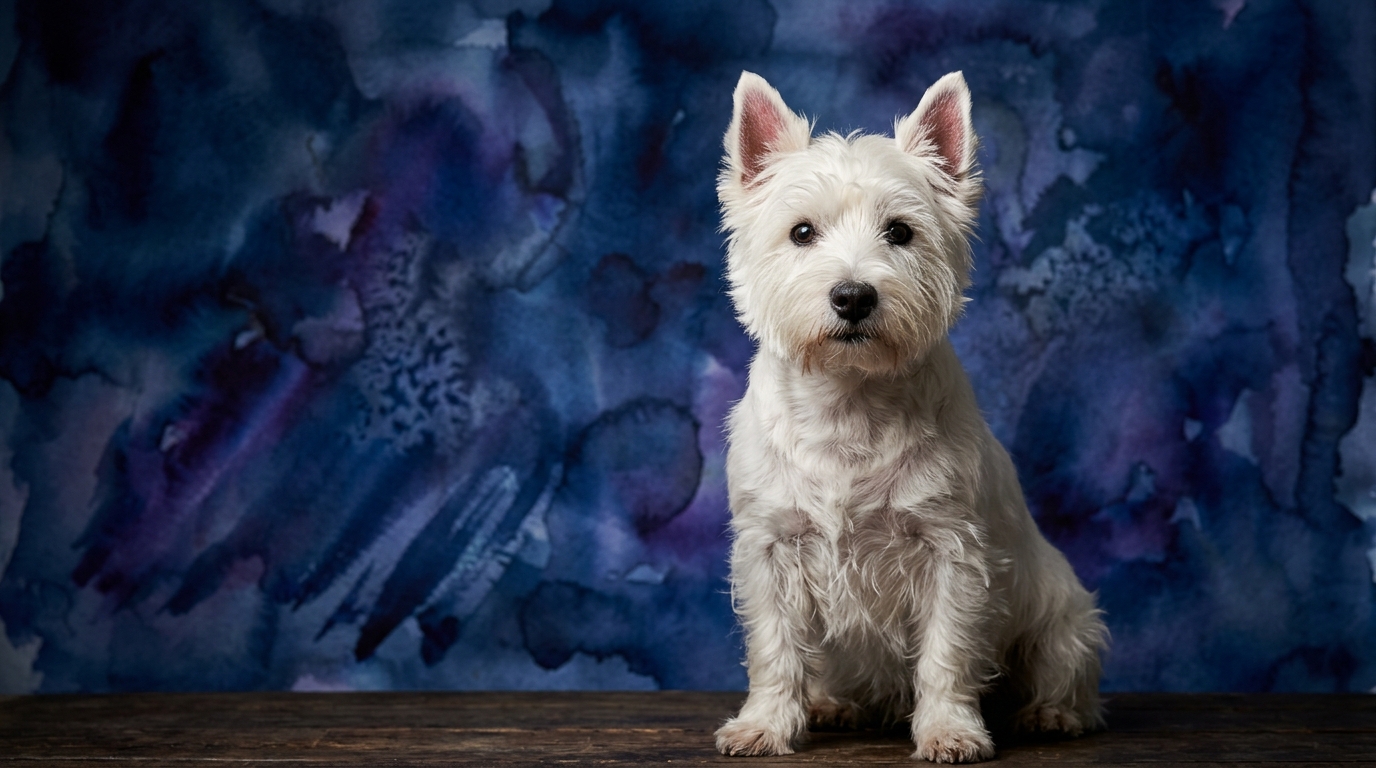
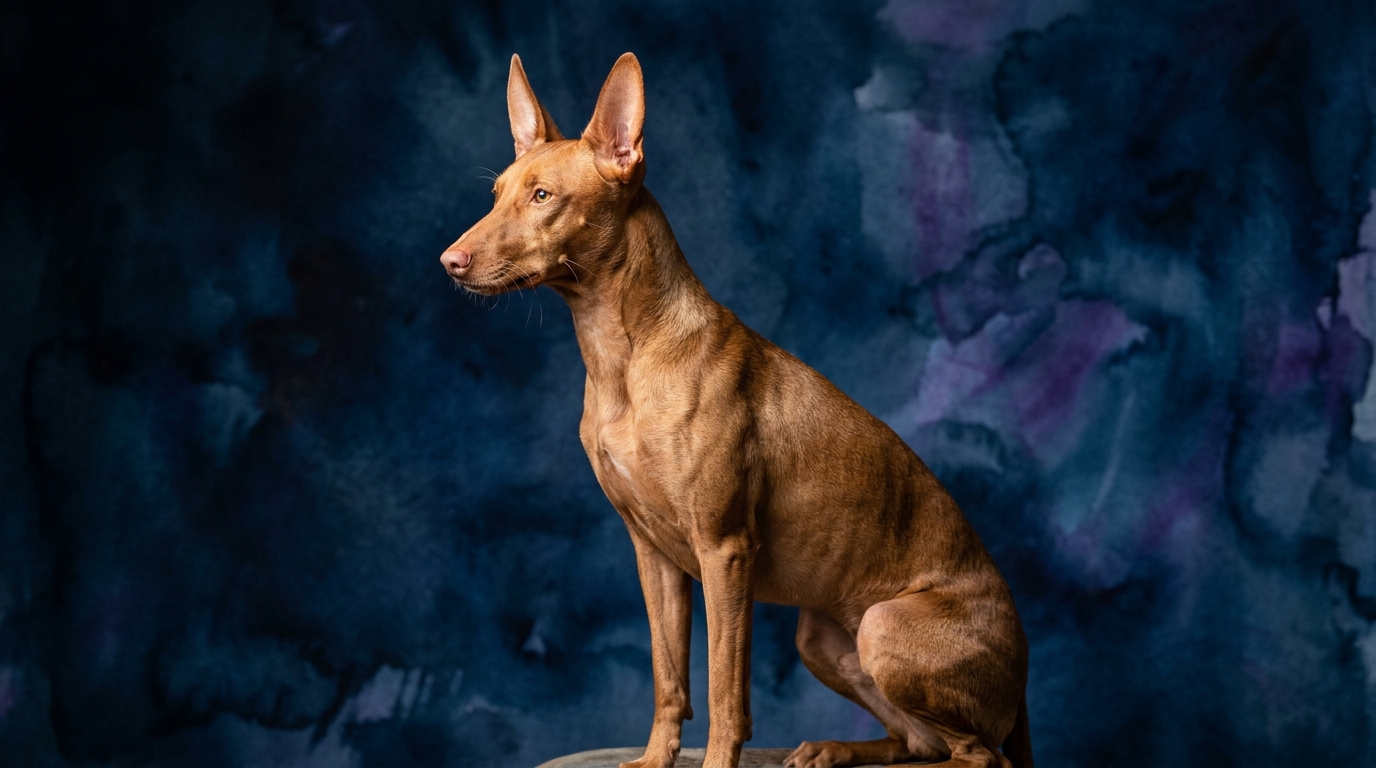
Side-by-Side IQ Profile: Westie vs. Pharaoh Hound
At The Cosmic Pet Pet IQ Lab, we evaluate canine cognition across five key dimensions to provide a nuanced understanding of each breed's mental landscape. While raw numerical scores can seem similar, the application and manifestation of these cognitive traits vary significantly between breeds.
For the **West Highland White Terrier**, Problem Solving (3/5) reflects a resourceful nature; these small terriers are adept at figuring out how to achieve their goals, often employing persistence and a bit of ingenuity, especially when it involves accessing something desirable or outsmarting a perceived obstacle. Their Training Speed, also 3/5, indicates a moderate learning pace, yet this is often counterbalanced by a strong independent streak; they grasp concepts but may require consistent motivation to perform reliably. Social Intelligence at 3/5 means they are observant of their human companions, forming strong bonds, though they can be selective or reserved with strangers and other dogs, a typical terrier assertiveness. The Instinctive Drive of 3/5 is distinctly terrier, manifesting as a keen desire to dig, chase small prey, and explore, driven by generations of working heritage. Crucially, their Memory shines at 4/5, allowing them to retain a vast array of commands, routines, and experiences over long periods, making them excellent at recalling complex sequences.
For the **Pharaoh Hound**, a Problem Solving score of 3/5 often manifests as independent thought within their environment, particularly when engaged in pursuit; they are quick to assess situations and adapt tactics during a chase, rather than focusing on human-centric puzzles. Their Training Speed, also 3/5, suggests they learn at a moderate rate, but this process is heavily influenced by their sighthound independence and a propensity for visual distractions, meaning consistent, engaging methods are essential. Social Intelligence at 3/5 indicates a sensitive and perceptive nature; they form deep, quiet bonds with their families and are generally good at reading human emotions, though they can be quite reserved and watchful around new people. The Instinctive Drive of 3/5 is powerfully linked to their sighthound heritage, primarily manifesting as an intense visual hunting drive for chasing fast-moving objects, rather than digging or close-quarters work. Their Memory, rated at 3/5, is solid for recalling commands and routines, but perhaps less focused on intricate detail or long sequences compared to the Westie, prioritizing immediate environmental cues.
Where the West Highland White Terrier Wins Cognitively
The West Highland White Terrier's clear cognitive advantage lies in its superior Memory, rated at 4/5 compared to the Pharaoh Hound's 3/5. This enhanced recall means Westies are exceptionally adept at retaining learned commands, routines, and complex sequences of actions over extended periods. For owners, this translates into a companion that can build a truly extensive repertoire of tricks, maintain proficiency in advanced obedience skills, and confidently navigate intricate agility courses where precise sequencing is paramount. Their robust memory also underpins their problem-solving (3/5), as they can effectively recall past successful strategies or attempts, allowing them to apply learned solutions to new challenges with greater efficiency and tenacity. This capacity for remembering detailed information makes them highly responsive to consistent training efforts, even if their independent streak requires a firm, positive approach. Furthermore, their Coren ranking of #47, while not directly tied to the specific IQ dimensions provided, broadly positions them as having a greater capacity for working obedience and adaptive intelligence within a human-centric framework than an unranked breed might exhibit. This reflects a breed that, when motivated, can apply its memory and problem-solving to tasks set by humans with considerable effectiveness.
Where the Pharaoh Hound Wins Cognitively
While the Pharaoh Hound shares similar numerical scores in many cognitive dimensions, its unique strengths are profoundly shaped by its sighthound heritage, leading to distinct cognitive advantages. Its Problem Solving score of 3/5, for example, is not about solving puzzles in a living room but rather about unparalleled, rapid, and independent decision-making in dynamic, open environments. This breed excels at instantly assessing moving targets, calculating trajectories, and adapting pursuit strategies on the fly, demonstrating a sophisticated form of spatial reasoning and predictive analysis crucial for a hunter. Their Instinctive Drive (3/5) is not merely about chasing; it’s about a finely tuned visual acuity and an innate understanding of movement dynamics, allowing them to process visual information with exceptional speed and accuracy. Furthermore, their Social Intelligence (3/5), while sometimes appearing reserved, is characterized by a deep sensitivity and an acute ability to pick up on subtle human emotional cues and body language. This often results in a profound, almost empathic bond with their chosen family, making them highly attuned companions who respond to nuance rather than overt commands, flourishing in an environment of quiet understanding and mutual respect. This combination of independent, environmentally-focused problem-solving and sensitive social attunement defines the Pharaoh Hound's cognitive triumphs.
Training Dynamics: Which is Easier to Train?
Both the West Highland White Terrier and the Pharaoh Hound share a Training Speed score of 3/5, indicating that neither is inherently 'easy' nor exceptionally challenging to train, but rather requires a specific approach. For the Westie, their superior Memory (4/5) is a significant asset; once they grasp a command or routine, they tend to retain it well. However, their terrier nature imbues them with a strong sense of independence and self-will. This means while they understand what is asked, they may choose whether or not to comply based on their own assessment of the situation or their current level of motivation. Successful Westie training hinges on consistency, making lessons feel like engaging games, and employing positive reinforcement to channel their tenacity.
For the Pharaoh Hound, their training speed is similarly moderate, but challenges arise from their sighthound instincts. They possess an independent spirit, and their acute visual focus means they can be easily distracted by anything that moves, often prioritizing a perceived 'chase' over human directives. Training a Pharaoh Hound demands immense patience, a highly engaging and varied approach to compete with environmental stimuli, and a deep understanding of their sensitive nature, as harsh methods can be counterproductive. While both require dedication, the Westie's better memory might make the *long-term retention* of general obedience slightly more straightforward, provided their inherent stubbornness is positively managed. The Pharaoh Hound's training requires a greater commitment to managing environmental distractions and understanding their deep-seated prey drive.
Activity Levels: Active vs. Relaxed Owners
When considering activity levels, both the West Highland White Terrier and the Pharaoh Hound lean towards owners who embrace an active lifestyle, though their specific needs differ. The Westie, despite its smaller size, is a robust terrier requiring consistent physical and mental engagement. They thrive on daily walks, playtime that incorporates chasing and retrieving, and structured activities that tap into their problem-solving abilities and instinctive drives, such as puzzle toys or supervised digging. An owner who can provide regular, varied outlets for their energy and curiosity will find a well-adjusted Westie. A relaxed, sedentary owner might find a Westie prone to boredom, which can manifest as destructive behaviors or excessive barking.
The Pharaoh Hound, however, demands a significantly more active owner. Bred for speed and stamina to hunt over vast distances, these elegant sighthounds require substantial daily exercise that includes opportunities for full-speed running in a securely fenced area. Their powerful instinctive drive for chasing means they are not suited to brief strolls; they need to truly stretch their legs and satisfy their athletic prowess. For a relaxed owner, a Pharaoh Hound would quickly become frustrated and potentially destructive, as their need for intense physical exertion is non-negotiable for their well-being. Therefore, while both need active owners, the Pharaoh Hound necessitates an owner dedicated to high-intensity, specific forms of exercise, making the Westie a better fit for those seeking consistent activity without the extreme athletic demands.
The Verdict
Choose the West Highland White Terrier for owners who appreciate a spirited, tenacious companion with a good memory for learning tricks and routines, and who can provide consistent, engaging training to manage their independent streak. They are ideal for those who enjoy structured activities and a dog with a robust personality.
Choose the Pharaoh Hound for owners who can offer extensive opportunities for running and free exercise in secure areas, understand a sensitive and independent sighthound nature, and value a graceful, affectionate companion that thrives on a deep, quiet bond.
🧠 Find Your Pet's IQ Score
Our Pet IQ Lab assessment covers 25+ tests across 5 cognitive dimensions — personalized to your breed.
Take the Full IQ Test →Frequently Asked Questions
Do Westies or Pharaoh Hounds bark more?
Westies tend to be more vocal, often barking at perceived intruders or during play, reflecting their alert terrier nature. Pharaoh Hounds are generally quieter, though they will 'sing' or 'yodel' when excited or bored, a distinctive sighthound trait.
Are these breeds good with children?
Both breeds can be good with respectful, older children, but require proper socialization and supervision. Westies are sturdy but might nip if provoked, while Pharaoh Hounds are sensitive and may prefer a quieter environment, potentially being overwhelmed by boisterous toddlers.
What are the key differences in their exercise needs?
Westies require regular walks, playtime, and mental challenges like puzzle toys or digging opportunities to satisfy their terrier instincts. Pharaoh Hounds need significant daily exercise, ideally including opportunities to run at full speed in a safely enclosed area, due to their sighthound heritage.