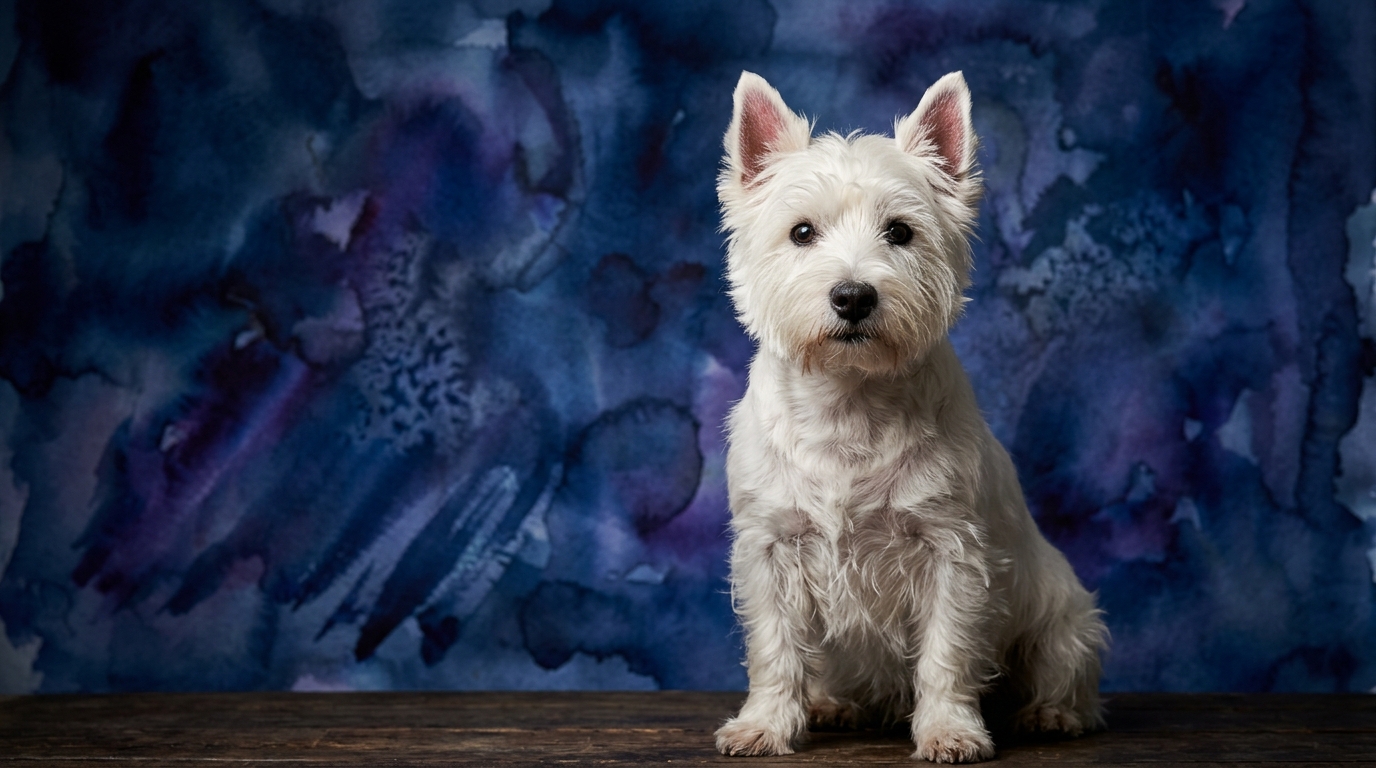

Side-by-Side Cognitive Profiles: Westie vs. Russian Toy
At The Cosmic Pet Pet IQ Lab, we analyze canine intelligence across five key dimensions. The West Highland White Terrier, a tenacious terrier, registers at Coren rank #47, indicating a respectable capacity for obedience and working intelligence. Their cognitive scores include Problem Solving 3/5, Training Speed 3/5, Social Intelligence 3/5, Instinctive Drive 3/5, and a notable Memory at 4/5. This profile suggests a dog with independent thought, a good capacity for learning, and a strong recall for experiences.
The Russian Toy, a delicate companion breed, does not have a Coren ranking, but our IQ Lab provides insight into their intellectual makeup. They score Problem Solving 3/5, Training Speed 3/5, Social Intelligence 3/5, Instinctive Drive 3/5, and Memory 3/5. These scores position the Russian Toy as a capable learner and social creature, demonstrating moderate aptitude across all measured cognitive areas, particularly in their interaction with humans.
Where the West Highland White Terrier Excels Cognitively
The West Highland White Terrier's standout cognitive strength lies in their Memory, scoring 4/5 compared to the Russian Toy's 3/5. This superior recall means a Westie can retain complex sequences of commands or remember past spatial arrangements with greater accuracy over time. For an owner, this translates into a dog that, once a lesson is truly learned, is less likely to 'forget' it, making long-term retention of good habits and tricks a rewarding experience. This robust memory also contributes to their ability to navigate familiar environments and routines with precision, often anticipating the next step in a well-established schedule.
Furthermore, the Westie's Problem Solving score of 3/5, combined with their inherent terrier tenacity, allows them to approach challenges with a persistent, if sometimes stubborn, drive. While their Training Speed is similar to the Russian Toy, the Westie's distinct drive means they are adept at figuring out ways to achieve their goals, whether that's retrieving a hidden toy or, indeed, finding a loophole in a household rule. This independent problem-solving capacity, rooted in their working heritage, means they are not simply waiting for instructions but actively engaging with their environment to understand and manipulate it, often displaying cleverness in unexpected situations. Their instinctive drive, also at 3/5, fuels this exploratory and problem-solving spirit, pushing them to investigate and engage with the world around them more robustly than many smaller companion breeds.
Where the Russian Toy Shines Cognitively
The Russian Toy, while showing slightly lower Memory scores, brings a unique blend of cognitive strengths to the table, particularly in how they apply their intelligence within a companion context. Their Social Intelligence, at 3/5, is particularly noteworthy for its sensitivity and adaptability. This means Russian Toys are often exceptionally attuned to their owner's emotional states and subtle cues, making them highly responsive companions. This cognitive empathy can translate into a dog that anticipates needs, offers comfort, and forms deep, reciprocal bonds, which is a specific form of intelligence invaluable in a family setting.
Despite matching the Westie's Problem Solving at 3/5, the Russian Toy's approach to challenges can be characterized by their agility and quick adaptation within a human-centric world. They may not possess the Westie's digging prowess or independent hunting drive, but they excel at navigating the complexities of human households, often learning routines and preferred behaviors through observation and social feedback. Their Training Speed, also 3/5, benefits greatly from their eager-to-please nature and desire for close interaction, making them receptive to gentle, positive reinforcement methods. This combination of social attunement and moderate training speed means they are often quick to understand what is expected of them, especially when the reward is praise and affection from their beloved human. Their less intense instinctive drive, while still present, often means fewer distractions from independent urges, allowing them to focus more intently on owner-directed tasks.
Training Aptitude: Westie's Recall vs. Russian Toy's Responsiveness
When considering ease of training, the nuances of each breed's cognitive profile become apparent. The West Highland White Terrier, with its Coren rank of #47, is certainly trainable, and their excellent Memory (4/5) ensures that once a command is mastered, it’s likely to stick. However, their Problem Solving (3/5) often manifests as a clever independence, leading them to decide if and when to comply, especially if there's a more interesting scent or activity beckoning. This terrier characteristic means training requires consistent, patient, and often creative methods to keep them engaged, as they are not inherently driven by a desire to simply please. Their instinctive drive (3/5) for digging and chasing also means owners must work to redirect these natural behaviors, rather than suppressing them, which can add a layer of complexity to their training journey. They learn *what* to do, but often need strong motivation to *consistently* do it.
The Russian Toy, while not Coren-ranked, often feels easier to train in daily interactions due to their Social Intelligence (3/5) and a generally more eager-to-please disposition. They are highly motivated by positive reinforcement, praise, and the desire to maintain a harmonious bond with their owners. Their Training Speed (3/5) is well-supported by their responsiveness to human cues and a less intense instinctive drive compared to a Westie, meaning fewer self-directed distractions. However, their delicate nature means they can be sensitive to harsh corrections, necessitating gentle, reward-based methods to build confidence and reinforce learning. While their memory (3/5) might not be as robust as a Westie’s, their consistent desire for connection often means they are more consistently compliant, making the training process feel smoother and more rewarding for many owners, especially those new to dog ownership.
Lifestyle Match: Active Explorers vs. Devoted Companions
Choosing between a Westie and a Russian Toy also depends heavily on an owner's lifestyle. The West Highland White Terrier, with its robust build and inherent terrier instincts (Instinctive Drive 3/5), thrives with active owners who enjoy outdoor exploration and consistent engagement. These dogs love walks, games, and even digging in a designated area. Their problem-solving minds (3/5) require mental stimulation through training, puzzle toys, and varied experiences to prevent boredom, which can lead to destructive behaviors. They are well-suited for individuals or families who are prepared for a lively, inquisitive companion that enjoys being part of outdoor adventures and requires regular, structured activity to channel their energy and intelligence. A Westie is a dog that will enthusiastically join you on a hike or a rigorous play session in the yard, demanding interaction and offering robust companionship.
In contrast, the Russian Toy, while certainly enjoying walks and playtime, is generally better suited for more relaxed owners or those with a predominantly indoor lifestyle. Their smaller size and delicate frame make them less inclined for strenuous outdoor activities, though they do appreciate regular, gentle exercise. They excel as devoted companion dogs, thriving on close human interaction and finding immense satisfaction in lap time, cuddles, and indoor games. Their social intelligence (3/5) ensures they are deeply connected to their family, making them excellent choices for individuals seeking a loyal, affectionate presence that doesn't demand hours of vigorous outdoor activity. They are content with being close to their people, observing, and participating in the quieter rhythms of home life, making them ideal for apartment living or owners who prefer a more tranquil pace.
The Verdict
Choose the West Highland White Terrier if you appreciate a dog with strong recall for learned behaviors and a tenacious spirit, ready for engaging outdoor adventures and consistent, firm guidance.
Opt for the Russian Toy if you seek a responsive companion dog who learns well through gentle methods and thrives on close human connection, perfect for a more relaxed, indoor-centric lifestyle.
🧠 Find Your Pet's IQ Score
Our Pet IQ Lab assessment covers 25+ tests across 5 cognitive dimensions — personalized to your breed.
Take the Full IQ Test →Frequently Asked Questions
Does the Westie's higher memory score make it easier to train overall?
While the Westie's superior memory ensures that learned commands are retained well, their independent terrier spirit can make initial training more challenging. Owners need to be consistent and patient, understanding that memory helps with retention, not necessarily with immediate compliance.
How does the Russian Toy's 'not Coren-ranked' status impact its perceived intelligence?
The lack of a Coren ranking for the Russian Toy doesn't imply lower intelligence, but rather that it wasn't included in that specific obedience and working intelligence study. Our IQ Lab scores indicate moderate cognitive abilities, suggesting they are capable learners and problem-solvers.
Are there specific training methods that work best for each breed given their IQ profiles?
For Westies, positive reinforcement combined with firm, consistent boundaries is crucial to manage their instinctive drives and leverage their strong memory. Russian Toys benefit greatly from gentle, reward-based training that builds confidence, as their social intelligence makes them responsive to positive human interaction.