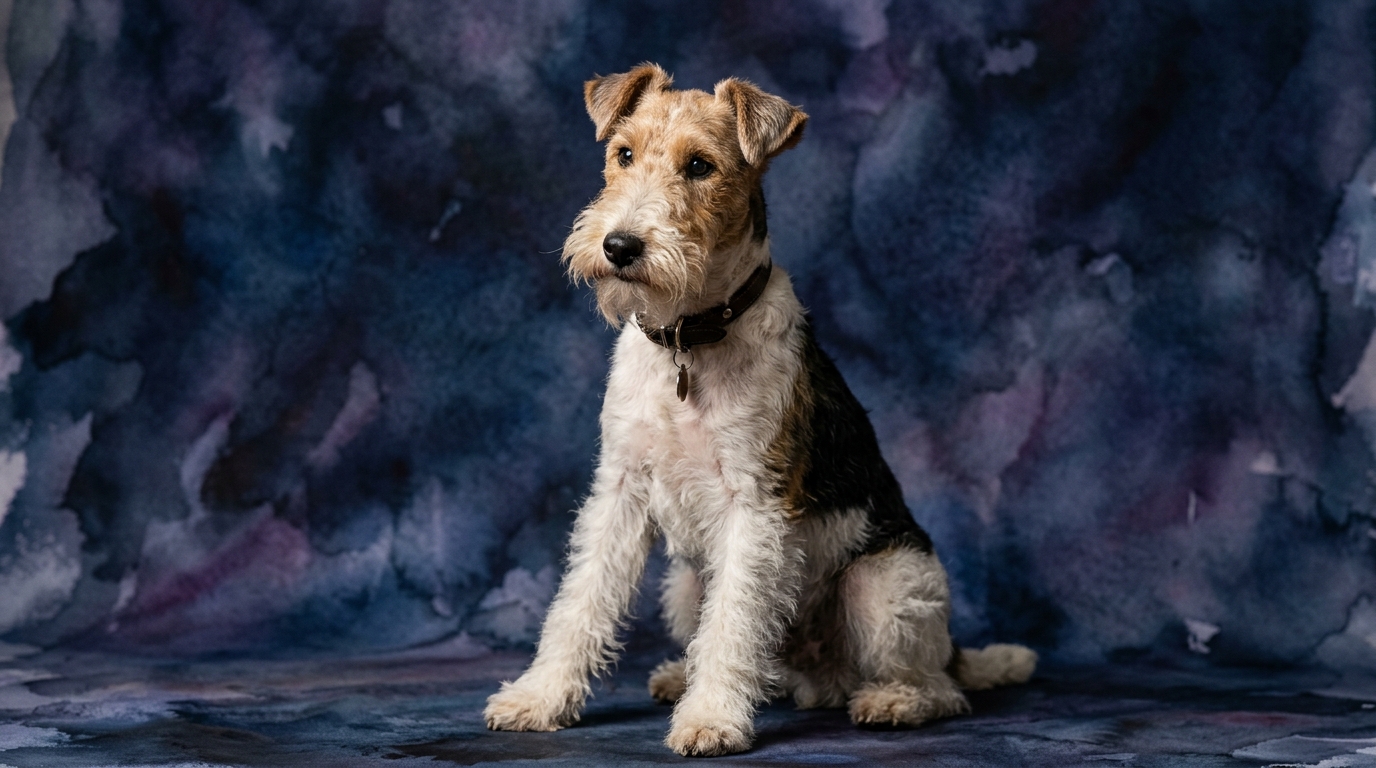

Side-by-Side IQ Profile: Unpacking the Terrier Mind
At The Cosmic Pet Pet IQ Lab, we assess canine intelligence across five key dimensions. Both the Wire Fox Terrier and the Parson Russell Terrier register a consistent 3/5 across all categories, indicating a solid, capable intellect. However, these identical scores belie subtle yet significant differences in how their cognitive abilities manifest in daily life. Understanding these distinctions is crucial for prospective owners.
**Problem Solving (3/5):** For the Wire Fox Terrier, a 3/5 in problem-solving often translates to cleverness in navigating complex environments or figuring out how to access forbidden treats. They exhibit an engaging resourcefulness, sometimes using their paws or nose with surprising dexterity to manipulate objects or open gates. This manifests as a thoughtful approach to obstacles, rather than brute force, often involving a sequence of actions.
The Parson Russell Terrier’s 3/5 in problem-solving, conversely, leans more into strategic thinking related to their historical hunting purpose. They are adept at finding solutions to challenges that involve pursuit or retrieval, such as locating a hidden toy by scent and sound, or figuring out how to outmaneuver a squirrel in the yard. Their problem-solving is often driven by a strong, focused intent to achieve a specific, often prey-related, goal.
**Training Speed (3/5):** A 3/5 training speed for the Wire Fox Terrier suggests they absorb new commands at a moderate pace, but their independent terrier spirit means they require consistent, engaging methods. They can learn quickly when motivated, but their attention might waver if training becomes repetitive or lacks novelty. They respond well to positive reinforcement and mental challenges that make learning feel like a game.
Similarly, the Parson Russell Terrier's 3/5 training speed means they are capable learners, but their intense focus and independent nature can sometimes make them seem less compliant. They grasp concepts readily, particularly if linked to their innate drives, but their willingness to perform might depend on their current interest level. Patience and understanding of their tenacious personality are key to successful training, as they are not inherently eager to please in a conventional sense.
**Social Intelligence (3/5):** The Wire Fox Terrier’s 3/5 in social intelligence indicates a good capacity to understand human cues and integrate into a family structure. They are generally responsive to their owners' moods and intentions, often seeking interaction and participation in household activities. While capable of forming deep bonds, their social interactions can sometimes be assertive, reflecting their confident demeanor.
For the Parson Russell Terrier, a 3/5 in social intelligence means they are perceptive of their human companions, understanding routines and emotional states. They form strong, loyal attachments, often displaying a keen awareness of their handler’s presence and commands, especially during activities. However, their social intelligence is often paired with a high energy level and a strong desire to be involved, which can sometimes be misinterpreted as demanding rather than socially aware.
**Instinctive Drive (3/5):** Both breeds, being terriers, naturally score a 3/5 in instinctive drive, a testament to their deep-seated predispositions. For the Wire Fox Terrier, this drive often manifests as a strong urge to chase, dig, and explore. They possess a keen interest in small animals and novel scents, making secure fencing and leash training essential. Their drive fuels their energetic play and inquisitive nature, pushing them to investigate every interesting stimulus.
The Parson Russell Terrier’s 3/5 instinctive drive is particularly pronounced in their unwavering focus on vermin. This manifests as an intense prey drive, a strong desire to dig, and a persistent vocalization when they detect something of interest. Their drive is less about general exploration and more about a dedicated, relentless pursuit of a perceived target, often with remarkable tenacity and endurance.
**Memory (3/5):** A 3/5 in memory for the Wire Fox Terrier means they have a solid ability to recall commands, routines, and past experiences. They can remember complex sequences of actions and retain learned behaviors over time, particularly if those behaviors were associated with positive reinforcement. This contributes to their adaptability and ability to learn new tricks or sports routines.
The Parson Russell Terrier also scores 3/5 in memory, demonstrating a reliable recall of training and established patterns. They remember locations of hidden objects, past successful hunting strategies, and the routines of their household with precision. Their memory is particularly strong for tasks related to their instinctive drives, allowing them to quickly retrieve learned skills when presented with a familiar challenge or environment.
Where the Wire Fox Terrier Wins Cognitively
Despite identical scores, the Wire Fox Terrier often demonstrates a slightly more adaptable and generalist problem-solving approach. Their cognitive strengths shine in varied scenarios, from navigating new urban environments to figuring out puzzle toys. They tend to apply their intelligence broadly, showing a knack for deciphering novel situations that don't directly involve hunting or field work. This makes them particularly adept at learning complex tricks or participating in agility courses where diverse challenges are presented, requiring quick, flexible thinking beyond pure instinct.
Where the Parson Russell Terrier Wins Cognitively
The Parson Russell Terrier’s cognitive edge often lies in their unwavering focus and tenacious application of intelligence towards a specific goal, particularly those related to their prey drive. Their problem-solving and memory are finely tuned for tasks requiring persistence and single-minded dedication, such as tracking a scent or extracting a target from a confined space. This specialized intelligence makes them exceptionally effective in earthdog trials or similar activities where their instinctive drives are channeled, showcasing a profound strategic depth within their chosen 'mission.'
Which is Easier to Train and Why
While both breeds share a 3/5 training speed, the Wire Fox Terrier might be perceived as marginally 'easier' to train for a broader range of domestic behaviors, largely due to their slightly more generalized curiosity and willingness to engage in diverse activities. Their cognitive flexibility allows them to find enjoyment in varied training exercises, provided they are kept stimulating and positive. They are still terriers, meaning consistency is paramount to overcome their independent streak, but they often respond well to a playful, reward-based approach that taps into their adaptable nature.
The Parson Russell Terrier, with its intense, focused instinctive drive, can present a different training challenge. Their strong prey drive means that while they learn commands quickly, their attention can be significantly diverted by environmental stimuli, particularly small animals. Training requires a handler who can consistently capture and maintain their focus, channeling their tenacity towards desired behaviors rather than allowing it to be consumed by their natural instincts. Their learning speed is good, but their independent thought and strong-willed nature mean they require a firm, consistent, and highly engaging training regimen that respects their innate purpose, often excelling when tasks align with their natural drives.
Which Suits Active Owners vs. Relaxed Owners
Neither of these breeds is suited for truly 'relaxed' owners in the sense of minimal engagement. Both are high-energy terriers requiring substantial mental and physical stimulation. However, for active owners, the distinctions lie in the *type* of activity. The Wire Fox Terrier thrives with owners who enjoy varied adventures: long hikes, urban exploration, agility, or engaging in trick training. Their adaptable nature means they can enjoy a diverse schedule of activities that challenge both their bodies and their flexible minds, making them suitable for active families who appreciate a versatile companion.
The Parson Russell Terrier is best suited for owners who are not only active but also possess a deep understanding of, and willingness to engage with, a working terrier's specific drives. They excel with owners who can provide outlets for their intense prey drive and boundless energy, such as earthdog trials, extensive off-leash running in secure areas, or rigorous dog sports like flyball. These dogs require consistent, high-intensity exercise and mental tasks that satisfy their innate desire to 'work,' making them ideal for dedicated, experienced owners who embrace their tenacious spirit and provide structured activities to prevent boredom.
The Verdict: When to Choose Each Spirited Terrier
The Verdict
Choose the Wire Fox Terrier if you seek a spirited, adaptable companion capable of excelling in a variety of activities and social settings, appreciating a clever mind that enjoys diverse challenges and a touch of urban flair.
Opt for the Parson Russell Terrier if you are an experienced, active owner dedicated to channeling intense terrier drives, valuing a dog with unwavering focus and tenacity for tasks related to scent work, digging, and high-energy pursuits.
🧠 Find Your Pet's IQ Score
Our Pet IQ Lab assessment covers 25+ tests across 5 cognitive dimensions — personalized to your breed.
Take the Full IQ Test →Frequently Asked Questions
Do Wire Fox Terriers and Parson Russell Terriers get along with other pets?
Both breeds possess a strong prey drive, which means careful introductions and supervision are crucial with smaller pets like cats or rodents. They can coexist peacefully with other dogs, especially when socialized from a young age, but their assertive terrier personalities may lead to squabbles if not managed.
Are these breeds suitable for apartment living?
While both breeds are relatively small, their high energy levels and strong drives mean apartment living is only feasible with an owner committed to providing extensive daily exercise and mental stimulation outside the home. Without adequate outlets, they can become destructive or excessively vocal in smaller spaces.
What are the key differences in their coat care?
The Wire Fox Terrier has a dense, wiry coat that requires regular hand-stripping or professional grooming to maintain its texture and prevent matting, typically every 8-12 weeks. The Parson Russell Terrier can have either a smooth or broken coat; smooth coats are easier to maintain with weekly brushing, while broken coats might need occasional stripping to remove dead hair, though less intensely than a Wire Fox.