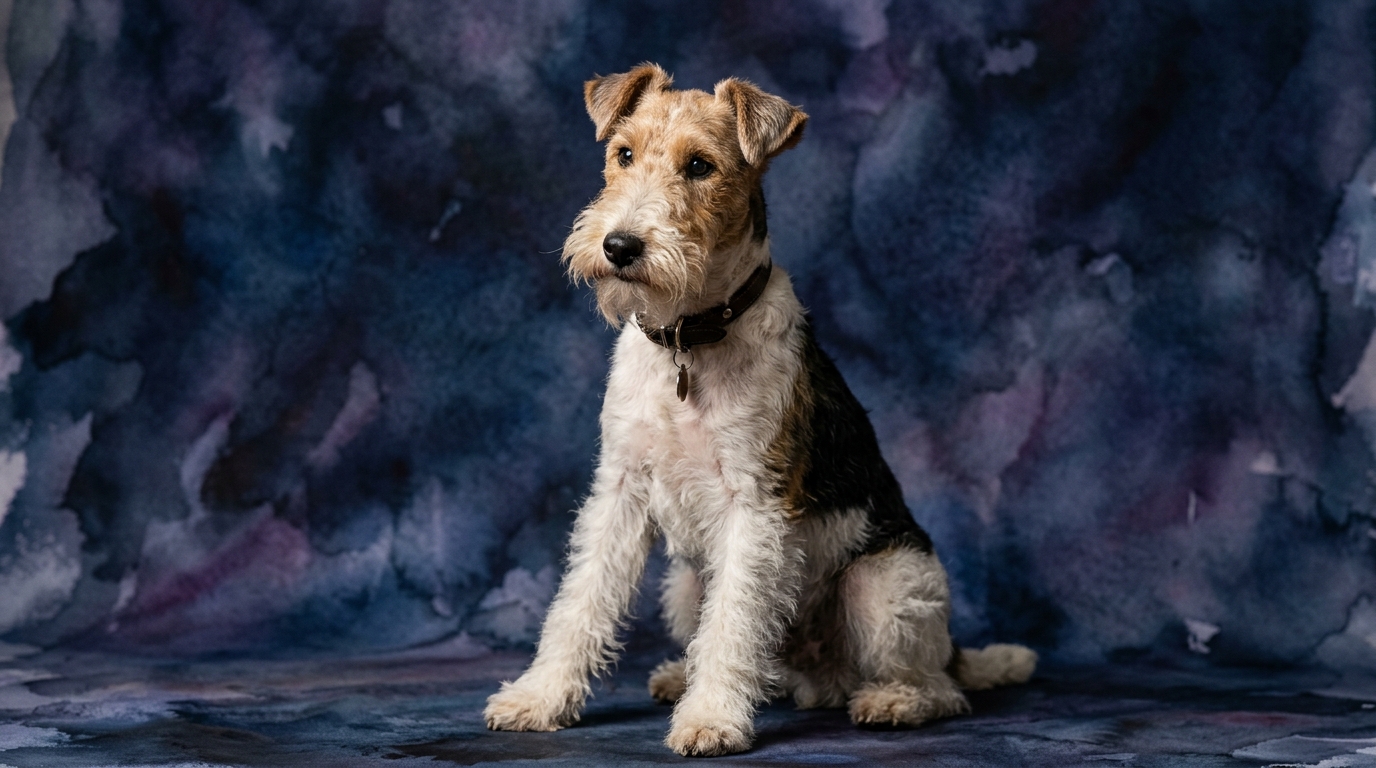

Side-by-Side IQ Profile: Deconstructing Identical Scores
At first glance, the Wire Fox Terrier and Rat Terrier appear to share the same cognitive blueprint, each scoring 3/5 across all five dimensions measured by The Cosmic Pet Pet IQ Lab. However, these identical numerical ratings mask intriguing differences in how their intelligence manifests behaviorally. Understanding these nuances requires examining their historical roles and inherent temperaments.
The **Wire Fox Terrier**, originally bred for robust fox hunting, approaches problem-solving (3/5) with tenacious ingenuity, often persisting through trial-and-error to overcome physical barriers or outmaneuver a target. Their training speed (3/5) reflects their capacity to learn, but also their independent spirit, requiring engaging methods to maintain focus. Social intelligence (3/5) allows for strong bonds, though their terrier tenacity can sometimes override sensitivity in novel social situations. Their instinctive drive (3/5) is potent, expressed through digging, tracking, and a determined pursuit of small prey. Memory (3/5) is robust for learned routines and spatial awareness, particularly when tied to their independent explorations.
The **Rat Terrier**, developed as versatile farm dogs for vermin control, exhibits problem-solving (3/5) through practical resourcefulness and quick assessment, adapting tactics efficiently in fast-paced scenarios. Their training speed (3/5) is often marked by eagerness to please and rapid comprehension, though they can become easily bored by repetition. Social intelligence (3/5) typically presents as a more adaptable and responsive nature, forming close family bonds and often being more amenable to new people and situations. Their instinctive drive (3/5) is characterized by lightning-fast reflexes and sustained focus on small, moving targets. Memory (3/5) is excellent for commands and routines, especially when reinforced positively, and for remembering specific hunting grounds or pathways.
Where the Wire Fox Terrier Wins Cognitively
Despite identical scores, the Wire Fox Terrier's cognitive strengths often shine brightest in scenarios demanding sustained, independent problem-solving and a certain audacious ingenuity. Their historical role in bolting foxes from dens cultivated a distinct brand of determined intellect. They exhibit remarkable persistence when faced with an obstacle, often trying various approaches until a solution is found, driven by an internal motivation to conquer the challenge itself rather than immediately seeking human intervention. This tenacity, fueled by their instinctive drive, means they might spend more time dissecting a complex puzzle toy or figuring out a gate latch, showcasing a self-assured, exploratory cognitive style.
Their memory, also rated 3/5, seems particularly robust for spatial awareness and recalling sequences of actions related to their independent pursuits. A Wire Fox Terrier might better remember the exact location of a hidden treat from days ago or the precise path taken during an off-leash adventure, leveraging this recall for future explorations. This manifests as a self-assured cognitive style, where their memory supports their adventurous spirit and independent decision-making in navigating their environment, making them adept at remembering successful strategies for individual endeavors.
Where the Rat Terrier Wins Cognitively
Conversely, the Rat Terrier often demonstrates a cognitive edge in situations requiring rapid assessment, adaptability, and a highly responsive social awareness. Though sharing a 3/5 in problem-solving, their farming background fostered an intellect geared towards immediate, practical solutions for vermin control, often involving quick decisions and agile execution. They might excel at swiftly identifying the quickest route to a target or adjusting their hunting strategy on the fly, showcasing a flexible cognitive approach that prioritizes efficiency and speed in real-time challenges. This rapid processing makes them exceptionally quick to react to environmental changes.
Their social intelligence, also 3/5, frequently presents as a more nuanced ability to read and react to human emotional states and intentions. While Wire Fox Terriers form deep bonds, Rat Terriers often show a slightly higher propensity for collaborative engagement, making them highly attuned to their family's moods and routines. This adaptability extends to their training speed; while both are 3/5, Rat Terriers can often appear to pick up new commands with slightly less resistance, thriving on positive interaction and praise. This can make them feel more 'biddable' in certain contexts, as their cognitive processing is geared towards responsive interaction.
Which is Easier to Train and Why
Given their identical 3/5 training speed scores, discerning which breed is 'easier' to train requires understanding their distinct motivations and temperaments. The Wire Fox Terrier, with its ingrained independence and strong will, often approaches training as a negotiation rather than a simple instruction. They absorb commands adequately, but their application is heavily influenced by whether they perceive the task as worthwhile or engaging. Training a Wire Fox requires creativity, patience, and a firm but fair hand to channel their natural tenacity. They respond best to varied, stimulating sessions that leverage their problem-solving skills, as repetitive drills can quickly lead to disinterest or subtle acts of defiance.
The Rat Terrier, while equally capable of learning, often exhibits a more cooperative spirit, making them generally appear more eager to please their human companions. Their 3/5 training speed is often expressed through quick comprehension and a desire for positive feedback. However, their intelligence also means they can become bored if training isn't kept fresh and exciting. They thrive on variety, short sessions, and reward-based methods, but their instinctive drive for chasing can be a significant distraction if not managed. Therefore, while both require commitment, the Rat Terrier's inherent willingness to engage can make the initial stages of obedience feel less challenging for some owners, provided boredom is avoided and training remains dynamic.
Which Suits Active Owners vs Relaxed Owners
Both the Wire Fox Terrier and the Rat Terrier are breeds brimming with energy and a keen intellect, making them generally unsuitable for truly relaxed, sedentary owners. Their 3/5 instinctive drive means they require consistent outlets for their natural behaviors like digging, chasing, and exploring. However, there are subtle differences in how these drives manifest and what type of active engagement best suits their cognitive styles.
The Wire Fox Terrier, with its bold and sometimes boisterous personality, thrives with owners who embrace adventure and robust outdoor activities. Their independent problem-solving and sustained focus make them excellent companions for long hikes, agility courses, or earthdog trials where they can channel their terrier instincts. An active owner for a Wire Fox is one who enjoys consistent engagement in mentally stimulating games and physical challenges, understanding that their cognitive satisfaction comes from conquering tasks with a degree of autonomy. They are not content to simply observe; they want to participate vigorously and independently.
The Rat Terrier, while equally energetic and driven, often possesses a more versatile athleticism and a slightly higher propensity for collaborative activities. They excel in dog sports like agility, flyball, or obedience, where their quick reflexes and eagerness to work with their handler are assets. They suit active owners who enjoy structured training and interactive play, and who can provide a varied routine to keep their sharp minds engaged. While they can enjoy a quieter evening, their daily requirement for vigorous mental and physical exercise is non-negotiable, making them an excellent fit for owners who enjoy a dynamic, engaged lifestyle that includes their canine companion in many aspects, valuing their responsiveness and collaborative spirit.
The Verdict
Choose the Wire Fox Terrier if you appreciate a tenacious, independent thinker who thrives on challenging puzzles and spirited, self-directed adventures, and you're prepared for a strong-willed companion.
Opt for the Rat Terrier if you seek a highly adaptable, quick-witted partner eager for collaborative activities and structured engagement, who excels with varied routines and responsive training.
🧠 Find Your Pet's IQ Score
Our Pet IQ Lab assessment covers 25+ tests across 5 cognitive dimensions — personalized to your breed.
Take the Full IQ Test →Frequently Asked Questions
Do Wire Fox Terriers and Rat Terriers get along with other pets?
Wire Fox Terriers can be assertive with other animals due to their prey drive and independent nature, requiring careful, early socialization. Rat Terriers are often more adaptable, especially if raised with other pets, but their strong prey drive still necessitates supervision around small, non-canine companions.
Are these breeds good for first-time dog owners?
Both breeds are energetic and require consistent training and mental stimulation, which can be challenging for inexperienced owners. While the Rat Terrier might be slightly more forgiving due to its cooperative nature, neither is typically recommended for someone entirely new to dog ownership without significant commitment to learning and training.
What kind of mental stimulation do these terriers need?
Both benefit greatly from puzzle toys, scent work, and training sessions that incorporate new tricks. Wire Fox Terriers enjoy tasks that allow independent problem-solving, while Rat Terriers thrive on interactive games and agility exercises that engage their quick reflexes and desire for collaboration.