Side-by-Side Cognitive Profile: Understanding the '3/5' Score
The Cosmic Pet Pet IQ Lab assesses canine intelligence across five critical dimensions: problem solving, training speed, social intelligence, instinctive drive, and memory. Intriguingly, both the Wirehaired Pointing Griffon and the Lhasa Apso achieve a consistent '3/5' score in every single category. This parity doesn't suggest identical minds, but rather highlights how the same cognitive capacity can manifest in vastly different ways depending on a breed's historical role and inherent nature. Let's explore how these '3/5' scores unfold for each breed.
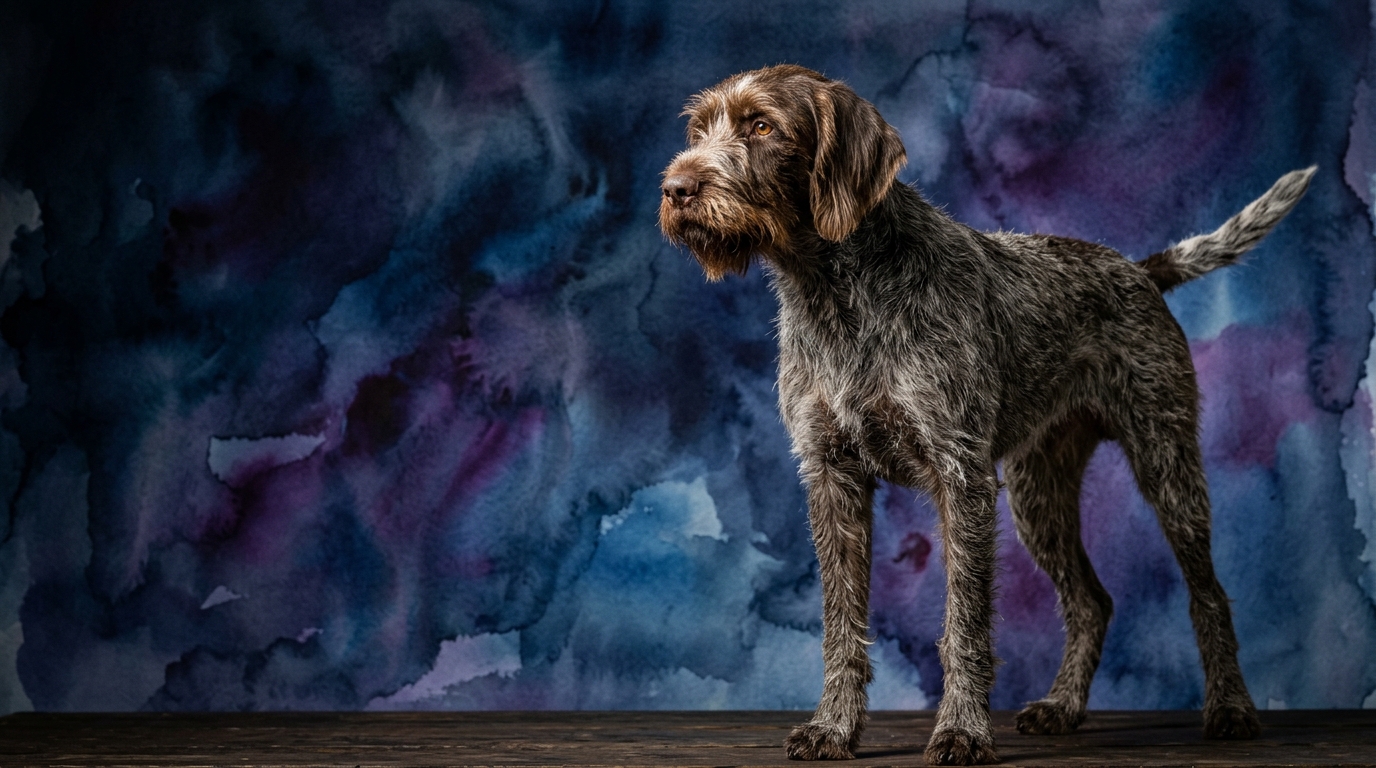
For the **Wirehaired Pointing Griffon**, a breed developed for hunting, a '3/5' in **problem solving** translates to resourcefulness in dynamic, unpredictable outdoor environments. They excel at navigating complex terrains, strategizing to locate game, and adapting to changing conditions in the field. Their '3/5' **training speed** reflects an eagerness to learn tasks related to their working heritage, responding well to consistent, engaging methods that tap into their desire to collaborate with a handler. Their '3/5' **social intelligence** is geared towards a strong working partnership, understanding subtle cues from their human companion in a cooperative setting. A '3/5' **instinctive drive** in a Griffon is a potent, specific set of behaviors – pointing, flushing, and retrieving – crucial for their role, rather than just general energy. Finally, their '3/5' **memory** is applied to retaining complex scent patterns, remembering commands over long periods, and recalling specific hunting locations or strategies.
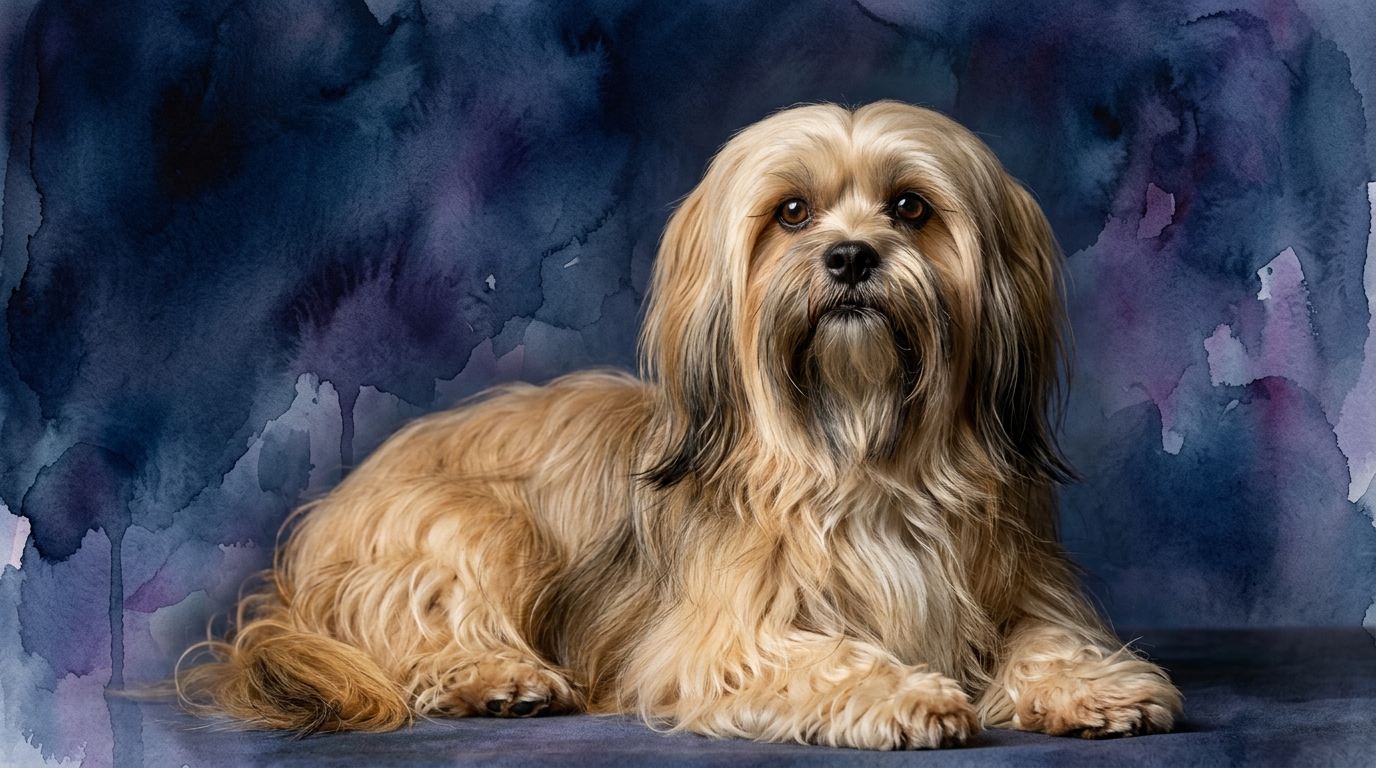
The **Lhasa Apso**, a breed historically serving as a sentinel in Tibetan monasteries, interprets these '3/5' scores through a different lens. Their '3/5' in **problem solving** often manifests in clever ways to achieve comfort, secure prime napping spots, or subtly manipulate situations to their advantage within a domestic setting. A '3/5' **training speed** means they are capable learners, but their independent streak requires patient, positive reinforcement and a clear understanding of 'what's in it for them.' Their '3/5' **social intelligence** is expressed through astute observation of human behavior, discerning friends from strangers, and forming deep, loyal, yet often discerning, bonds with their primary family members. The '3/5' **instinctive drive** of a Lhasa Apso is primarily centered on guarding and companionship, manifesting as alert barking, territoriality, and a strong desire to be near their chosen people. Their '3/5' **memory** is excellent for recalling routines, household rules, and specific social interactions, both positive and negative, within their home environment.
Where the Wirehaired Pointing Griffon Excels Cognitively
Despite identical numerical scores, the Wirehaired Pointing Griffon demonstrates distinct cognitive strengths rooted in its sporting heritage. Their problem-solving at a '3/5' level is particularly impressive in dynamic, unpredictable outdoor environments. A Griffon's ability to methodically track a complex scent trail over varied terrain, ignoring distractions, and then execute a precise point, showcases a sophisticated interplay of instinctive drive, environmental problem-solving, and memory. This isn't just following an instinct; it's an intelligent application of their senses and learned behaviors to achieve a specific goal.
Furthermore, their social intelligence, also rated '3/5', shines in the context of a collaborative working partnership. A Griffon is bred to work *with* a human, forming a tight communication loop in the field. They are adept at reading subtle body language and vocal cues from their handler, adapting their actions in real-time during a hunt or training exercise. This cooperative intelligence, focused on achieving a shared objective, is a hallmark of their cognitive profile and a key area where their mental aptitudes are specifically optimized.
Where the Lhasa Apso Shines Cognitively
The Lhasa Apso, with its '3/5' scores, reveals cognitive advantages tailored to its role as a sentinel and companion. Their social intelligence is particularly acute in discerning the nuances of household dynamics and human intentions. A Lhasa Apso often possesses an uncanny ability to differentiate between a family friend and an unfamiliar visitor, reacting with a keen, territorial alert bark that belies their size. This discerning social acumen, coupled with their '3/5' instinctive drive for guardianship, makes them exceptional at identifying and reacting to perceived threats within their domain.
Moreover, their '3/5' problem-solving skills are often expressed in clever, sometimes manipulative, ways to optimize their comfort and secure attention. A Lhasa Apso might ingeniously figure out how to open a cupboard door to access a favorite treat, or employ a specific vocalization to solicit a belly rub at precisely the right moment. This domestic ingenuity, focused on personal comfort and influencing their human companions, highlights a unique application of their problem-solving abilities within a home environment, a domain where they are truly masters.
Training Dynamics: Which is Easier and Why?
While both breeds share a '3/5' rating for training speed, the *ease* of training can differ significantly due to their underlying motivations and temperaments. The Wirehaired Pointing Griffon generally presents as 'easier' to train for obedience and complex tasks because of their inherent drive to work alongside a handler. They thrive on structured tasks and find genuine satisfaction in a job well done, especially when it involves engaging their natural retrieving and pointing instincts. Their cooperative spirit means they are often eager to please and respond well to clear, consistent positive reinforcement, making them highly responsive pupils for those who understand their working dog mentality.
The Lhasa Apso, on the other hand, while equally capable of learning with its '3/5' training speed, requires a more nuanced and patient approach. Their independence and discerning nature mean they need to understand 'what's in it for them' and may not be inherently driven by a desire to 'please' in the same way a working breed is. Training a Lhasa Apso demands consistency, positive reinforcement, and making the process genuinely rewarding on *their* terms. They can be stubborn if they don't see the value in a command or if they perceive it as arbitrary. Their guarding instincts can also make them less inclined to obey commands from strangers, emphasizing the importance of a strong, trusting bond with their primary trainer.
Lifestyle Match: Active Owners vs. Relaxed Owners
The divergence in their cognitive application and inherent drives makes these breeds suitable for very different owner lifestyles. The **Wirehaired Pointing Griffon** is unequivocally suited for active owners. Their '3/5' instinctive drive demands regular, engaging physical and mental activity. They are not content with short strolls around the block; they need opportunities to 'work' – be it through long hikes, scent work, agility, or actual field sports. A relaxed owner who cannot provide sufficient outlets for their energy and mental stimulation would likely find a Griffon becoming bored, potentially leading to unwanted behaviors and frustration. They thrive when they have a purpose and can expend their considerable energy.
The **Lhasa Apso** can adapt to various lifestyles but generally leans towards more relaxed owners who appreciate their independent yet loyal companionship. While they enjoy regular walks and playtime, their primary 'work' revolves around home guardianship and being a steadfast companion. They are often content with moderate exercise and thrive on indoor companionship, observing their domain and being close to their family. An overly active owner might find their desire for independent comfort and sometimes aloof nature less compatible with a constantly on-the-go lifestyle, though Lhasas can certainly enjoy adventures that are integrated into family life on their own terms.
The Verdict
Choose the Wirehaired Pointing Griffon if you are an active individual or family seeking a devoted canine partner for outdoor adventures, field sports, or engaging training, appreciating a dog driven by a cooperative working spirit.
Choose the Lhasa Apso if you desire a discerning, loyal, and independent companion who excels at home guardianship and offers quiet, steadfast affection, and you appreciate a dog with a strong sense of self.
🧠 Find Your Pet's IQ Score
Our Pet IQ Lab assessment covers 25+ tests across 5 cognitive dimensions — personalized to your breed.
Take the Full IQ Test →Frequently Asked Questions
Do Wirehaired Pointing Griffons need to hunt to be happy?
While hunting is their heritage, Griffons don't strictly *need* to hunt. They do, however, require consistent outlets for their strong instinctive drives, such as scent work, retrieving games, long hikes, or other demanding physical and mental activities. Providing engaging alternatives is key to their overall well-being and contentment.
Are Lhasa Apsos good with children?
Lhasa Apsos can be good with respectful, older children who understand how to interact with a dog that values its personal space and independence. They are less tolerant of rough play or being treated like a toy, and their guarding instincts mean they may not appreciate unfamiliar children in their territory.
How do their grooming needs compare?
The Wirehaired Pointing Griffon requires regular brushing and occasional hand-stripping to maintain its unique coat texture and prevent matting. The Lhasa Apso, with its long, flowing double coat, needs daily brushing to prevent tangles and matting, often requiring professional grooming or regular trimming to keep it manageable and healthy.