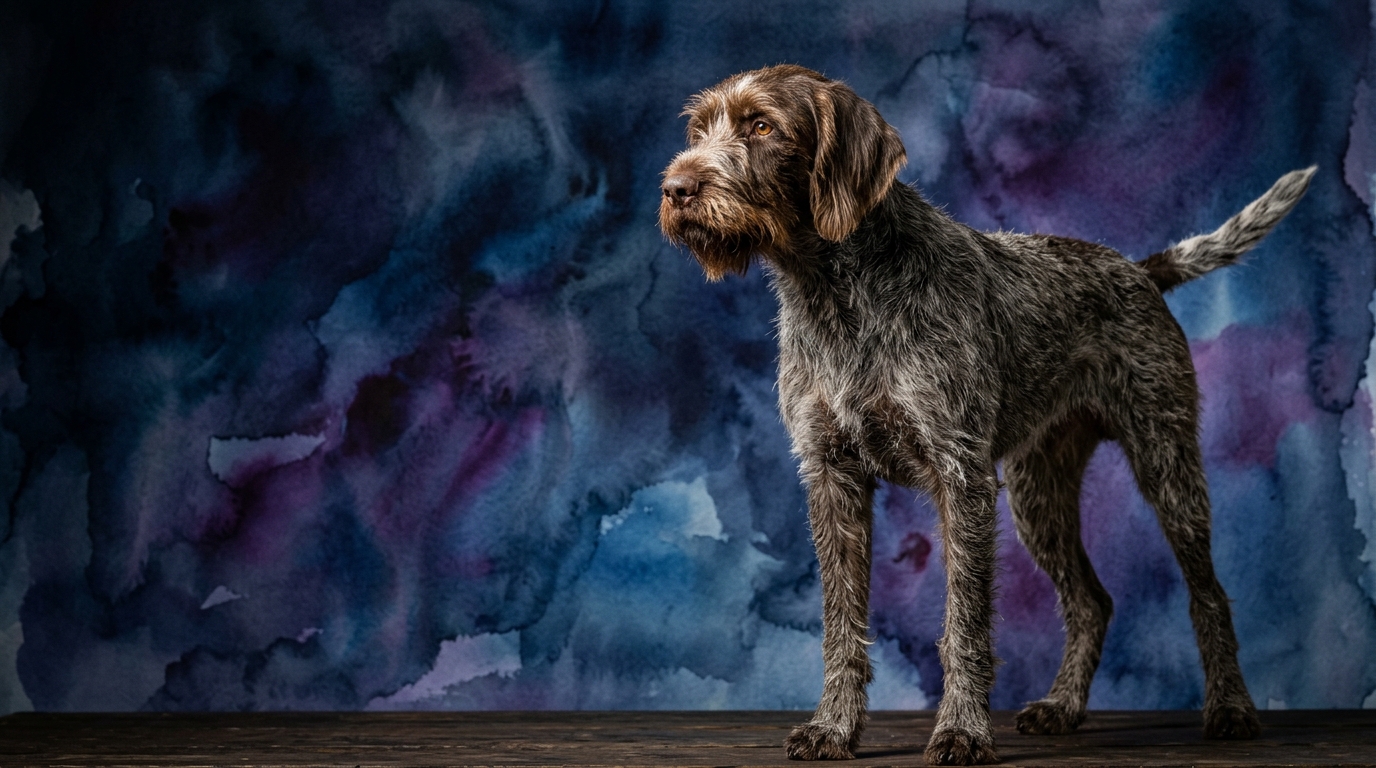
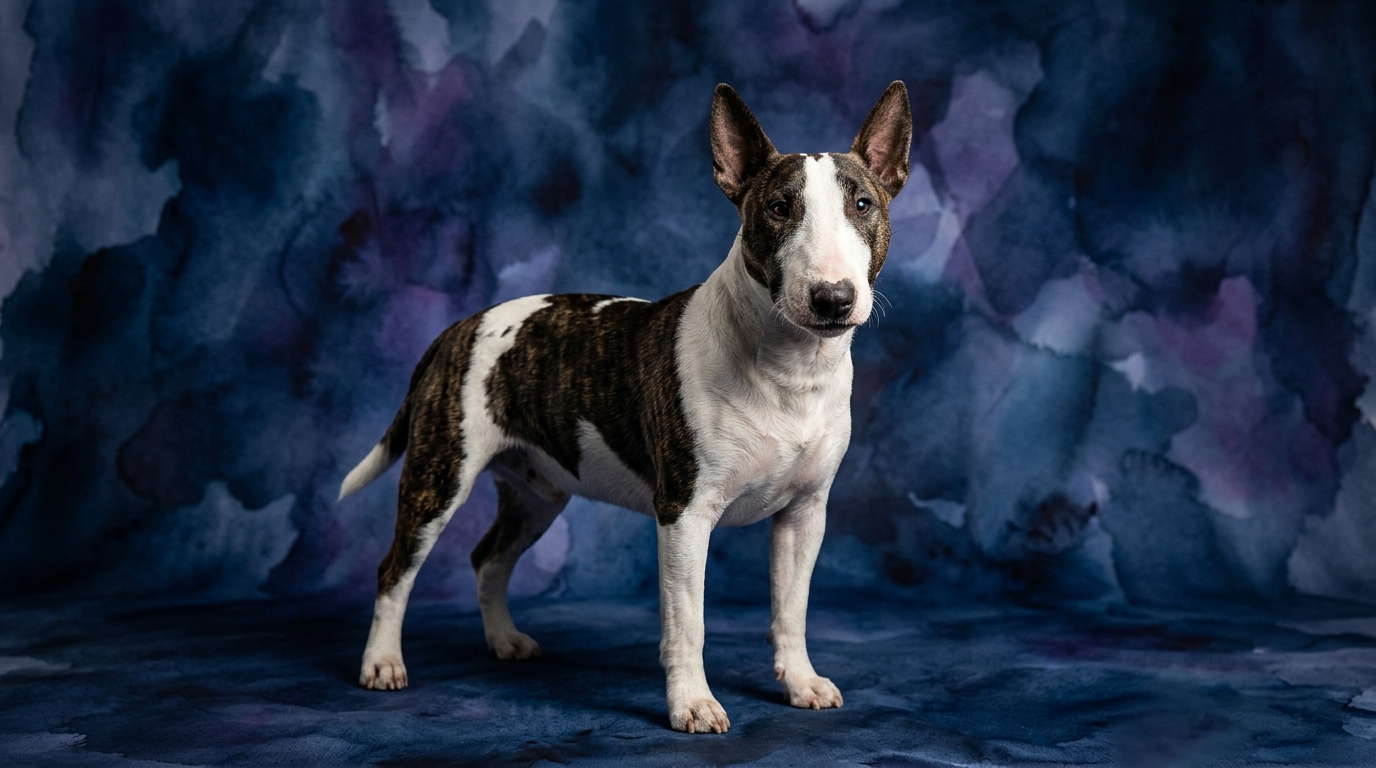
Side-by-Side IQ Profile: Understanding the Nuances of 3/5
At first glance, the Wirehaired Pointing Griffon (WPG) and the Miniature Bull Terrier (MBT) appear to possess similar cognitive capabilities, each scoring a consistent 3 out of 5 across all evaluated intelligence dimensions. However, these identical scores belie distinct expressions shaped by their breed histories and purposes. A 3/5 rating signifies a solid, functional level of intelligence, capable of learning and adapting, but not typically exhibiting the extreme cognitive flexibility or rapid learning often seen in breeds scoring higher.
For the Wirehaired Pointing Griffon, a Sporting dog, their **Problem Solving (3/5)** manifests as a practical acumen for navigating outdoor environments, efficiently locating game, and understanding the mechanics of a hunt. They can figure out how to work through brush or find a scent trail, demonstrating a focused, task-oriented intelligence rather than abstract reasoning. Their **Training Speed (3/5)** means they absorb commands related to their field work, like 'point' or 'retrieve,' with reasonable repetition, but might require more patience for generalized obedience due to their independent nature as a hunting companion. **Social Intelligence (3/5)** in a Griffon often involves reading their handler's subtle cues in the field, understanding pack dynamics within a family, and discerning friend from stranger with a balanced temperament. Their **Instinctive Drive (3/5)** is strongly geared towards pointing, flushing, and retrieving game, displaying a persistent and focused pursuit. Finally, their **Memory (3/5)** is reliable for recalling hunting locations, learned commands, and familiar routines, crucial for consistent performance.
The Miniature Bull Terrier, a Terrier breed, interprets its identical 3/5 scores through a different lens. Their **Problem Solving (3/5)** often involves creative, sometimes mischievous, approaches to achieving their desires, whether it's figuring out how to open a cabinet or outsmarting a puzzle toy. This is an intelligence applied to their immediate environment and personal goals. Their **Training Speed (3/5)** suggests they can learn commands effectively, but their characteristic stubbornness and independent streak mean that consistency and motivation, often through play or food, are paramount to ensure lessons stick. **Social Intelligence (3/5)** for an MBT means they are often adept at charming people, understanding social hierarchies within their family, and can be quite sensitive to their owner's moods, though they might express this with a characteristic 'clownish' exuberance. Their **Instinctive Drive (3/5)** is rooted in their terrier heritage: digging, chasing small prey, and a determined, tenacious spirit that can sometimes be directed towards playful 'roughhousing' or guarding. Their **Memory (3/5)** is solid for remembering routines, where their favorite toys are, and past interactions, contributing to their sometimes selective recall.
Where the Wirehaired Pointing Griffon Wins Cognitively
The Wirehaired Pointing Griffon's cognitive strengths shine in environments that reward sustained focus, precise task execution, and a cooperative yet independent working style. Their 3/5 problem-solving ability, coupled with their instinctive drive, makes them exceptional at tasks requiring methodical investigation and perseverance, such as tracking a scent or navigating varied terrain for an extended period. This is not about abstract thought, but about applying learned strategies and innate abilities to achieve a tangible, practical outcome. For instance, a Griffon is more likely to methodically work a field pattern to locate hidden game, remembering where they've already searched, a direct application of their memory and problem-solving in concert with their strong drive.
Furthermore, their social intelligence, while rated 3/5, is particularly tuned to forming a strong, responsive partnership with a single handler in a working context. They excel at reading subtle body language and vocal commands during a hunt, demonstrating a cognitive alignment with human intent for a shared objective. This makes them highly effective in roles where precise, cooperative action is required, such as in dog sports like hunt tests or agility, where they need to execute a sequence of commands with accuracy and enthusiasm.
Where the Miniature Bull Terrier Wins Cognitively
The Miniature Bull Terrier's cognitive advantages lie in their adaptability, tenacity, and often, their creative approach to problem-solving within a domestic setting. Their 3/5 problem-solving score, while numerically identical to the Griffon's, often translates into a more inventive, sometimes unconventional, method of achieving their goals. They might figure out how to manipulate a situation or a person to get what they want, displaying a unique brand of 'street smarts' rather than field smarts. For example, an MBT might quickly learn which family member is most likely to give in to their charming antics, leveraging their social intelligence and memory to exploit patterns in human behavior.
Their instinctive drive, a 3/5, combined with their terrier tenacity, gives them a remarkable persistence in pursuing something they desire, be it a toy, a treat, or a comfortable spot on the sofa. This translates into a resilience in learning, where despite initial stubbornness, they will continue to try if sufficiently motivated. Their social intelligence also allows them to be highly engaging and responsive to human emotion, often acting as a playful, empathetic companion who understands and adapts to the family's dynamic, even if their methods are sometimes boisterous.
Which is Easier to Train and Why
When considering ease of training, the Wirehaired Pointing Griffon generally presents a more straightforward experience for owners focused on specific tasks, while the Miniature Bull Terrier requires a more nuanced, often highly engaging approach. The Griffon's 3/5 training speed is coupled with a strong desire to please its handler and a clear working purpose. They respond well to consistent, positive reinforcement methods, especially when training aligns with their natural hunting instincts. For example, teaching a Griffon to 'stay' or 'come' can be reinforced with opportunities for retrieving or scent work, leveraging their instinctive drive. Their independence means repetition is key, but their focus on cooperation with their human partner makes them generally willing students for foundational obedience.
The Miniature Bull Terrier, also at 3/5 for training speed, is a different story due to their independent and often stubborn nature. While capable of learning, their attention span can be shorter for repetitive tasks they deem uninteresting, and they may test boundaries frequently. Training an MBT demands creativity, variety, and a very firm but fair hand. Owners need to make training feel like a game, incorporating play and high-value rewards to maintain their interest. For instance, an MBT might learn 'sit' quickly if a squeaky toy or a favorite treat is involved, but mastering 'recall' in a distracting environment will require far more dedication and proofing against their strong terrier drives. Their independent streak means they are less inclined to blindly follow commands and more likely to evaluate if a command benefits them, requiring an owner who can consistently outwit and motivate them.
Which Suits Active Owners vs. Relaxed Owners
For active owners seeking a canine partner for outdoor adventures and structured activities, the Wirehaired Pointing Griffon is often the more suitable choice. Their 3/5 instinctive drive is channelled into a need for purposeful activity – long hikes, trail running, swimming, and especially any form of scent work or retrieving. These dogs thrive when they have a 'job' to do, even if it's just a vigorous daily walk that allows them to explore and use their nose. A relaxed owner who cannot provide consistent mental and physical stimulation will likely find a Griffon becoming restless, potentially leading to undesirable behaviors as they seek outlets for their considerable energy and intelligence.
The Miniature Bull Terrier, while possessing a 3/5 instinctive drive and certainly energetic, can be a surprising fit for both active and moderately relaxed owners, provided their unique needs are met. Their energy is often expressed in bursts of intense play followed by periods of lounging, making them adaptable to varying daily rhythms. They do require consistent exercise, including vigorous play sessions and walks, but their cognitive engagement often comes more from interactive games, puzzle toys, and social interaction rather than sustained outdoor work. A relaxed owner who is willing to engage in daily interactive play, consistent training, and provide plenty of attention can find a Mini Bull Terrier to be a delightful companion, as long as they understand and manage the breed's tenacious and sometimes boisterous nature. They are not dogs that can be ignored or left to their own devices for long periods without consequence, regardless of the owner's activity level.
The Verdict
Choose the Wirehaired Pointing Griffon if you're an active individual or family seeking a cooperative, biddable partner for outdoor activities, hunting, or dog sports, valuing a dog that thrives on purposeful work and a strong handler bond. They excel when their natural drives are channeled into consistent, engaging tasks.
Opt for the Miniature Bull Terrier if you appreciate a spirited, tenacious, and often comical companion who thrives on close family interaction, interactive play, and firm but fun training. They are best for owners who can provide consistent structure, creative engagement, and manage a strong-willed personality with humor and patience.
🧠 Find Your Pet's IQ Score
Our Pet IQ Lab assessment covers 25+ tests across 5 cognitive dimensions — personalized to your breed.
Take the Full IQ Test →Frequently Asked Questions
Do Wirehaired Pointing Griffons like to cuddle?
Yes, Wirehaired Pointing Griffons are generally affectionate dogs that enjoy being close to their family members. While they are capable working dogs, they also have a gentle and loving nature, often seeking out physical contact and enjoying quiet time cuddling on the couch after a day of activity.
Are Miniature Bull Terriers good with children?
Miniature Bull Terriers can be good with children, especially if raised with them from a young age and properly socialized. However, their boisterous play style and strong personality mean that interactions should always be supervised, and children taught how to interact respectfully with the dog.
Which breed is better for first-time dog owners?
For first-time dog owners, the Wirehaired Pointing Griffon might be a more manageable choice due to their generally more biddable nature and eagerness to please. The Miniature Bull Terrier's strong will and unique terrier traits can be challenging for inexperienced owners who may struggle with consistent training and boundary setting.