
The Cosmic Pet Pet IQ Lab: Side-by-Side Cognitive Profiles
The Cosmic Pet Pet IQ Lab assesses five crucial dimensions of canine intelligence, offering a granular view beyond general classifications. For the Wirehaired Pointing Griffon, a sporting dog originally bred for hunting, its profile reveals a consistent '3/5' across Problem Solving, Training Speed, Social Intelligence, Instinctive Drive, and Memory. This balanced score suggests a canine that is competent and adaptable, designed for cooperative work in varied environments.
A '3/5' in Problem Solving for the Griffon indicates an ability to navigate complex hunting scenarios, such as tracking game through dense cover or locating downed birds, relying on a combination of learned skills and sensory input rather than abstract reasoning. Its '3/5' Training Speed reflects a capable learner, generally responsive to cues and eager to please within a structured training framework. Social Intelligence at '3/5' points to a dog that understands human communication and pack dynamics, making it a cooperative partner in the field and at home. An Instinctive Drive of '3/5' highlights its inherent drive for pointing and retrieving, channeling natural behaviors into productive work. Finally, its '3/5' Memory score suggests a solid capacity to retain learned commands and experiences, ensuring consistency in its performance.
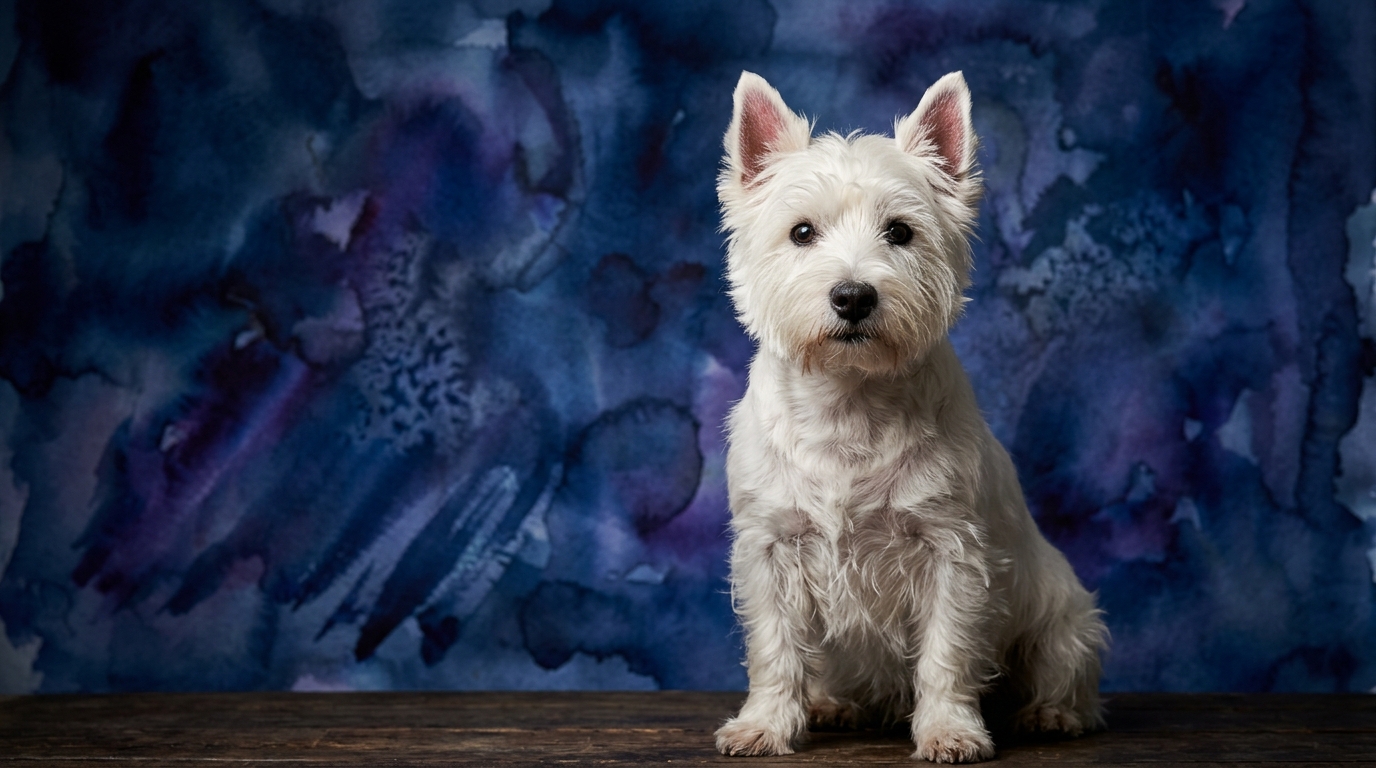
The West Highland White Terrier, a spirited member of the Terrier group, presents a largely similar profile with one notable distinction. It also scores '3/5' in Problem Solving, Training Speed, Social Intelligence, and Instinctive Drive. However, the Westie distinguishes itself with a '4/5' in Memory. This higher score hints at a remarkable capacity for retention that shapes its overall cognitive approach.
For the Westie, a '3/5' in Problem Solving often manifests as cleverness in outmaneuvering small prey or navigating tight spaces, demonstrating resourceful thinking in immediate situations. Its '3/5' Training Speed means it can learn commands effectively, though perhaps with a characteristic terrier independence that might require more engaging motivation. Social Intelligence at '3/5' indicates an awareness of its human companions' moods and intentions, often leveraged to its own advantage. The '3/5' in Instinctive Drive for the Westie speaks to its deep-seated urge to hunt, dig, and pursue, a tenacious focus on its core terrier purpose. The standout '4/5' in Memory suggests a dog that not only learns quickly but remembers specific strategies, routines, and past interactions with exceptional clarity, potentially influencing its persistent nature and ability to adapt learned behaviors over time.
Where the Wirehaired Pointing Griffon Excels Cognitively
The Wirehaired Pointing Griffon's cognitive strength lies in its harmonious blend of abilities, particularly how its scores synergize to create an effective working companion. Its balanced '3/5' in Problem Solving, Training Speed, and Social Intelligence, combined with its '3/5' Instinctive Drive, positions it as a highly adaptable and cooperative partner in dynamic environments. This breed excels in tasks requiring consistent application of learned behaviors within a team context, such as intricate scent tracking, marking fallen game, and retrieving on command.
The Griffon's cognitive profile suggests a dog that is not easily flustered by novel situations in the field. Its '3/5' in Problem Solving, while not indicating abstract thought, implies a practical intelligence for navigating physical obstacles and making quick, effective decisions relevant to its task. This is supported by its '3/5' Social Intelligence, enabling it to read a handler's subtle cues and adjust its actions accordingly, making it particularly responsive during complex hunting sequences where communication is paramount. Its steady '3/5' Memory ensures that once a skill is learned, it is retained reliably, allowing for consistent performance without frequent retraining, crucial for a dog expected to perform under varying conditions and pressures.
Where the West Highland White Terrier Excels Cognitively
The West Highland White Terrier's primary cognitive advantage is its superior '4/5' Memory score, which serves as a foundation for its resourceful and often persistent nature. This enhanced memory means a Westie is likely to retain past experiences, successful strategies for achieving goals, and specific training cues over longer periods and with greater fidelity than a breed with a lower score. This can manifest in remembering the precise location of a hidden treat, recalling a particular route taken on a walk, or consistently applying a learned trick even after a long hiatus.
While its Problem Solving is rated '3/5', its strong memory likely amplifies its effectiveness in this area. A Westie might remember which tactics worked previously to access a forbidden area or which vocalizations elicited a desired human response, allowing it to apply these learned solutions repeatedly. This breed's tenacity, rooted in its '3/5' Instinctive Drive for pursuit and digging, is further empowered by its strong memory, enabling it to persistently pursue a goal, recalling past efforts and adjusting its approach based on remembered outcomes. This cognitive trait contributes significantly to the Westie's reputation for being a determined and clever companion, capable of outsmarting situations and sometimes even its owners, through the application of remembered knowledge.
Training Dynamics: Wirehaired Pointing Griffon vs. West Highland White Terrier
When considering ease of training, the Wirehaired Pointing Griffon generally presents as a more straightforward student. Its '3/5' in Training Speed combined with a '3/5' in Social Intelligence and a '3/5' Instinctive Drive for cooperative work suggests a dog that is inherently inclined to work alongside its human. Griffons are typically eager to please and respond well to positive reinforcement, thriving on the partnership aspect of training. Their balanced memory ensures that once a command is learned, it is remembered consistently, making the training process feel progressive and rewarding for both dog and owner. They are less likely to challenge authority or become easily distracted by independent pursuits during training sessions, preferring to engage with their handler.
The West Highland White Terrier, despite its impressive '4/5' Memory, can present a more nuanced training experience. While it retains information exceptionally well, its '3/5' Training Speed, combined with its strong, independent terrier spirit and '3/5' Instinctive Drive for self-directed activities like hunting and digging, means it often requires more patience and creative engagement from its trainer. A Westie remembers what you want, but might not always be immediately inclined to offer it if it perceives a more interesting alternative. Training a Westie often involves convincing them that your agenda is more rewarding than their own, necessitating highly motivating rewards and consistent, firm yet positive leadership. Their social intelligence allows them to understand human cues, but their inherent determination means they might choose to 'negotiate' rather than simply comply, making training a stimulating challenge rather than a simple instruction-following exercise.
Matching Breeds to Lifestyles: Active vs. Relaxed Owners
For active owners seeking a true partner in outdoor adventures and structured activities, the Wirehaired Pointing Griffon is an excellent match. Its '3/5' Instinctive Drive for hunting, coupled with its cooperative social intelligence and problem-solving skills, means it thrives on regular, engaging physical and mental stimulation. Owners who enjoy hiking, field sports, dog sports like agility or obedience, or simply long walks in varied terrain will find a Griffon's needs align perfectly. This breed requires consistent exercise to prevent boredom and channel its natural working instincts productively, making it unsuitable for a truly sedentary lifestyle. Its balanced cognitive profile ensures it can handle the mental demands of advanced training and complex tasks, making it a fulfilling companion for those who appreciate an active, engaged canine.
The West Highland White Terrier, while small, possesses a robust '3/5' Instinctive Drive and a lively spirit that also benefits from regular activity. They are suitable for active owners who enjoy daily walks, playful games, and perhaps earthdog trials or other terrier-specific activities. However, their physical activity needs can often be met within a smaller footprint compared to a large sporting dog. For owners who are 'relaxed' in the sense of not requiring a rigorous, several-hours-long daily exercise regimen, but are still committed to daily mental enrichment, play, and shorter, brisk walks, the Westie can be a good fit. Their independent streak and strong memory mean they need mental challenges and consistent engagement to prevent boredom, which can manifest as inventive mischief. A 'relaxed' owner for a Westie is one who appreciates a dog with a distinct personality and is willing to provide consistent mental stimulation through training games, puzzle toys, and varied interactions, even if the physical demands are less intense than a Griffon's.
The Verdict
Choose the Wirehaired Pointing Griffon if you seek a cooperative, versatile partner for outdoor adventures and structured training, valuing its balanced cognitive profile for consistent performance.
Opt for the West Highland White Terrier if you appreciate a clever, tenacious companion with exceptional memory, willing to engage in playful mental challenges and consistent, patient training.
🧠 Find Your Pet's IQ Score
Our Pet IQ Lab assessment covers 25+ tests across 5 cognitive dimensions — personalized to your breed.
Take the Full IQ Test →Frequently Asked Questions
Is the Wirehaired Pointing Griffon a good family dog?
Yes, Wirehaired Pointing Griffons are generally known for their affectionate and gentle nature with families, including children. Their social intelligence (3/5) allows them to integrate well into family dynamics, provided their exercise and mental stimulation needs are met to prevent boredom and promote calm behavior indoors.
Do West Highland White Terriers bark a lot?
West Highland White Terriers can be prone to barking, a trait often linked to their terrier instincts and alert nature. Their strong instinctive drive (3/5) to guard their territory or alert to perceived threats means consistent training and management are important to moderate excessive vocalization, especially if not adequately stimulated.
Which breed is better for first-time dog owners?
The Wirehaired Pointing Griffon, with its more biddable nature and cooperative training speed (3/5), might be slightly more forgiving for a first-time owner committed to providing sufficient activity. The West Highland White Terrier's independent streak and strong will, despite its good memory (4/5), can be more challenging for an inexperienced owner, requiring more consistent and creative training approaches.