
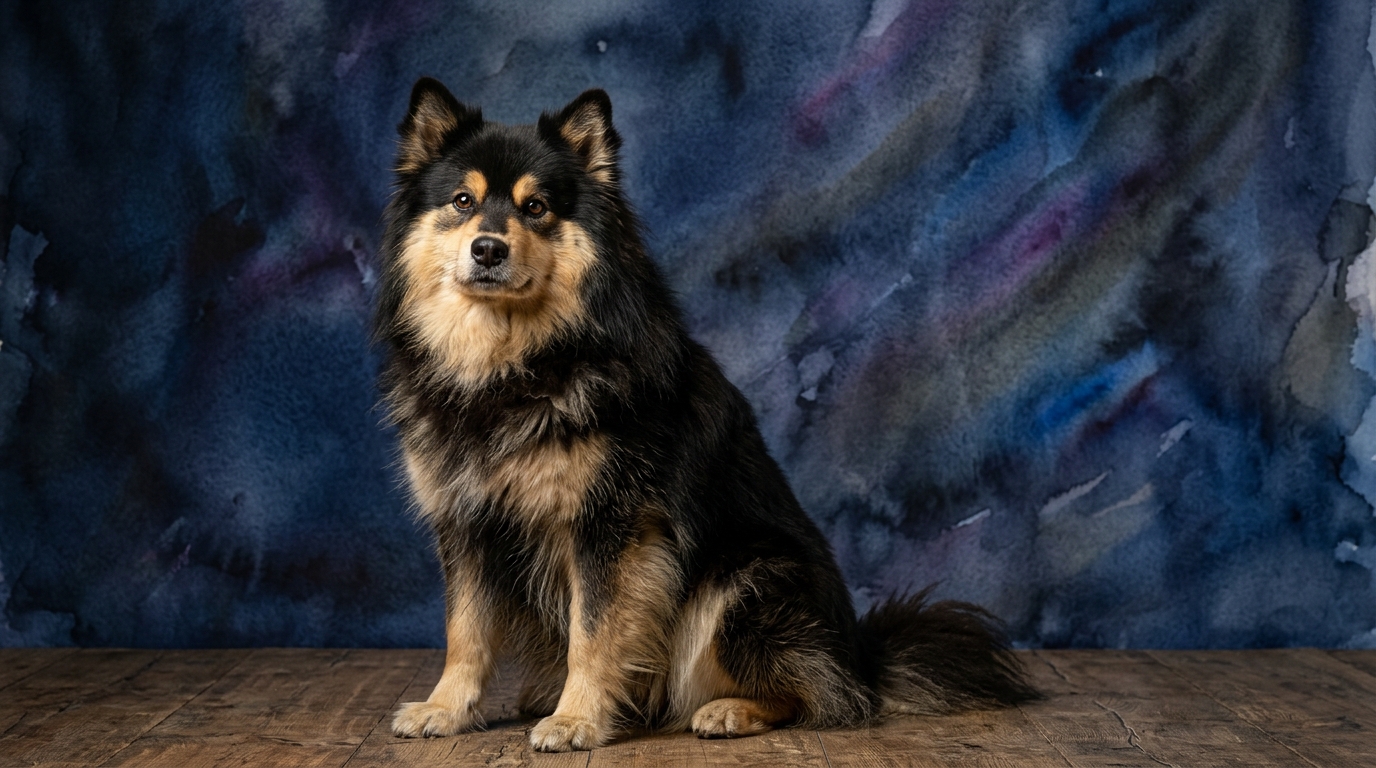
Side-by-Side IQ Profile: Yorkshire Terrier vs. Finnish Lapphund
The Cosmic Pet Pet IQ Lab employs a five-dimensional framework to assess canine intelligence, offering a nuanced view beyond mere obedience. For the Yorkshire Terrier, a breed deeply embedded in human domesticity, their profile reflects their companion role. Their Problem Solving ranks at 3/5, demonstrating resourcefulness in navigating complex household environments and manipulating situations to their advantage. Training Speed is a commendable 4/5, indicating a quick grasp of commands and routines, often eager to please for a reward. Social Intelligence scores 4/5, highlighting their sharp ability to read human cues and form deep, often intense, bonds. Instinctive Drive, at 4/5, speaks to their terrier heritage of alertness, vigilance, and a persistent prey drive. Memory, also 4/5, shows strong retention of routines, learned behaviors, and social interactions, making them reliable in established patterns.
In contrast, the Finnish Lapphund, a breed whose origins lie in herding reindeer in the Arctic, presents a different cognitive signature. Their Problem Solving registers 3/5, focusing on independent judgment in dynamic, outdoor environments rather than human-centric puzzles, such as finding the best route or managing a flock. Training Speed is 3/5; while capable, their independent nature means they may require more repetition and motivation than some breeds, not always acting solely to please. Social Intelligence is 3/5, indicating good family bonds but often a more reserved demeanor with strangers and a focus on dog-dog communication within a pack dynamic. Instinctive Drive is 3/5, characterized by a strong herding instinct involving gathering and barking, coupled with a moderate prey drive and an innate desire to patrol their territory. Memory, at 3/5, is solid for recalling routes, flock members, and fundamental commands, but perhaps less focused on the intricate details of a human household than a Yorkie.
Where the Yorkshire Terrier Wins Cognitively
The Yorkshire Terrier demonstrates distinct cognitive advantages in areas emphasizing close human interaction and adaptability to domestic life. Their superior Training Speed (4/5 versus Lapphund's 3/5) means they typically acquire new commands and tricks with remarkable swiftness. This isn't merely about rote learning; it's a testament to their keen observational skills and eagerness to understand human expectations. They excel in environments where precise, consistent cues lead to desired outcomes, making them responsive partners in obedience or trick training.
Furthermore, the Yorkie's higher Social Intelligence (4/5 versus Lapphund's 3/5) allows them to interpret subtle human emotional states and intentions with greater precision. They often seem to anticipate their owner's moods or desires, making them extraordinarily attuned companions. This cognitive strength enables them to navigate complex social dynamics within a household, often learning to 'work' their owners for attention or treats. Their Memory (4/5 versus Lapphund's 3/5) complements this, allowing them to retain intricate social lessons, remember past interactions, and recall routines that contribute to their seamless integration into family life. This combination makes them particularly adept at forming deep, reciprocal bonds within a human-centric world, where understanding unspoken cues is paramount.
Where the Finnish Lapphund Wins Cognitively
While the Finnish Lapphund may not outrank the Yorkie in every cognitive dimension, their unique strengths lie in their capacity for independent judgment and environmental awareness, honed by centuries of working in vast, challenging landscapes. Their Problem Solving (3/5, similar to the Yorkie but different in application) shines brightest in less structured, outdoor settings. This isn't about solving human-devised puzzles but about making autonomous decisions in dynamic situations, such as navigating varied terrain, assessing the movement of animals, or determining the best course of action without constant human directives. Their cognitive processes are geared towards practical, real-world solutions in a natural environment.
The Lapphund's Instinctive Drive (3/5) also represents a distinct cognitive advantage in its application. Their herding instinct requires a sophisticated understanding of spatial relationships, group dynamics, and subtle cues from livestock, demanding a different kind of cognitive processing than a terrier's prey drive. This involves an inherent ability to gather, guide, and protect, utilizing a blend of vigilance, patience, and strategic movement. Their cognitive makeup allows for a profound connection to their surroundings, processing environmental stimuli like distant sounds or changes in weather with a focus on their function as a working animal, demonstrating a robust sensory-cognitive system adapted for outdoor vigilance and resilience.
Training Ease: Understanding Behavioral Differences
When it comes to training, the Yorkshire Terrier generally presents as the easier student due to their higher Training Speed (4/5) and Social Intelligence (4/5). Yorkies are often quick to form associations between commands and actions, especially when positive reinforcement is employed. Their strong desire for human attention and approval means they are highly motivated by praise, treats, and interactive play. This makes them responsive to cues and eager to learn new behaviors, from basic obedience to complex tricks. Their attentiveness to human body language and vocal tone allows for more nuanced communication during training sessions, often making the process feel fluid and rewarding for both dog and owner. However, their strong instinctive drive can manifest as stubbornness or selective hearing when a more compelling stimulus (like a perceived 'prey' object) captures their attention, requiring consistent, firm, but positive handling.
The Finnish Lapphund, with a Training Speed of 3/5 and Social Intelligence of 3/5, requires a different approach. They are capable learners but possess a more independent and thoughtful nature stemming from their herding heritage. Lapphunds often need to understand the 'why' behind a command or may take longer to decide if a request is worth their effort. This isn't a lack of ability but rather a deliberate processing style. They respond best to patient, consistent training methods that are engaging and respect their intelligence, rather than demanding unquestioning obedience. Their herding drive, while manageable, means they might be prone to 'herding' family members or other pets, and their vocal nature as a warning system needs to be addressed early in training. While they may not pick up new commands as rapidly as a Yorkie, once a behavior is learned and understood, it tends to be deeply ingrained and reliable, reflecting their independent problem-solving and memory for established routines.
Suitability for Active vs. Relaxed Owners
The choice between a Yorkshire Terrier and a Finnish Lapphund also hinges significantly on an owner's lifestyle and activity level. For genuinely active owners, both breeds can find fulfillment, though in different ways. The Finnish Lapphund, with its herding background, thrives on consistent physical and mental engagement. They require substantial daily exercise, including long walks, hiking, or dog sports like agility, obedience, or herding trials. Their cognitive makeup demands activities that stimulate their problem-solving and instinctive drives, making them ideal companions for owners who enjoy outdoor adventures and structured training sessions. A Lapphund who isn't adequately stimulated will likely become bored, potentially leading to undesirable behaviors like excessive barking or destructive chewing.
The Yorkshire Terrier, while small, is also a robust and energetic dog that benefits from regular activity. They enjoy brisk walks, interactive play sessions, and mental challenges like puzzle toys. Their energy can be satisfied with shorter bursts of activity and ample indoor engagement, making them adaptable to urban living or smaller spaces. For owners with a more relaxed lifestyle, the Yorkie can be a suitable choice, provided their cognitive and social needs are met through consistent interaction, training, and engaging indoor activities. While they don't demand the same extensive outdoor exercise as a Lapphund, neglecting their mental stimulation can lead to boredom and attention-seeking behaviors. A truly relaxed owner, however, might struggle with the Finnish Lapphund's inherent need for purposeful activity and engagement, as their cognitive framework is built for work and exploration, not sedentary living.
The Verdict
Choose the Yorkshire Terrier if you seek a highly responsive, socially astute companion that thrives on intimate human interaction and quickly integrates into a structured home life.
Opt for the Finnish Lapphund if you appreciate an independent, thoughtful companion with a strong connection to natural environments, suitable for an owner committed to providing consistent, engaging activities and respecting their working heritage.
🧠 Find Your Pet's IQ Score
Our Pet IQ Lab assessment covers 25+ tests across 5 cognitive dimensions — personalized to your breed.
Take the Full IQ Test →Frequently Asked Questions
Are Yorkshire Terriers good for first-time dog owners?
Yes, Yorkshire Terriers can be suitable for first-time owners due to their high social intelligence and training speed, making them responsive to guidance. However, their strong-willed terrier nature requires consistent positive reinforcement and early socialization to manage potential barking or territorial tendencies.
How much exercise does a Finnish Lapphund need daily?
Finnish Lapphunds require a moderate to high amount of daily exercise, typically an hour or more of vigorous activity. This can include long walks, running, hiking, or engaging in dog sports, as their herding background necessitates both physical exertion and mental stimulation.
Do Finnish Lapphunds bark a lot?
Finnish Lapphunds are known to be vocal, using barking as a communication tool, particularly in their traditional role as herding and alarm dogs. While they can be trained to moderate their barking, owners should be prepared for a dog that naturally expresses itself vocally, especially when excited or alerting to perceived threats.