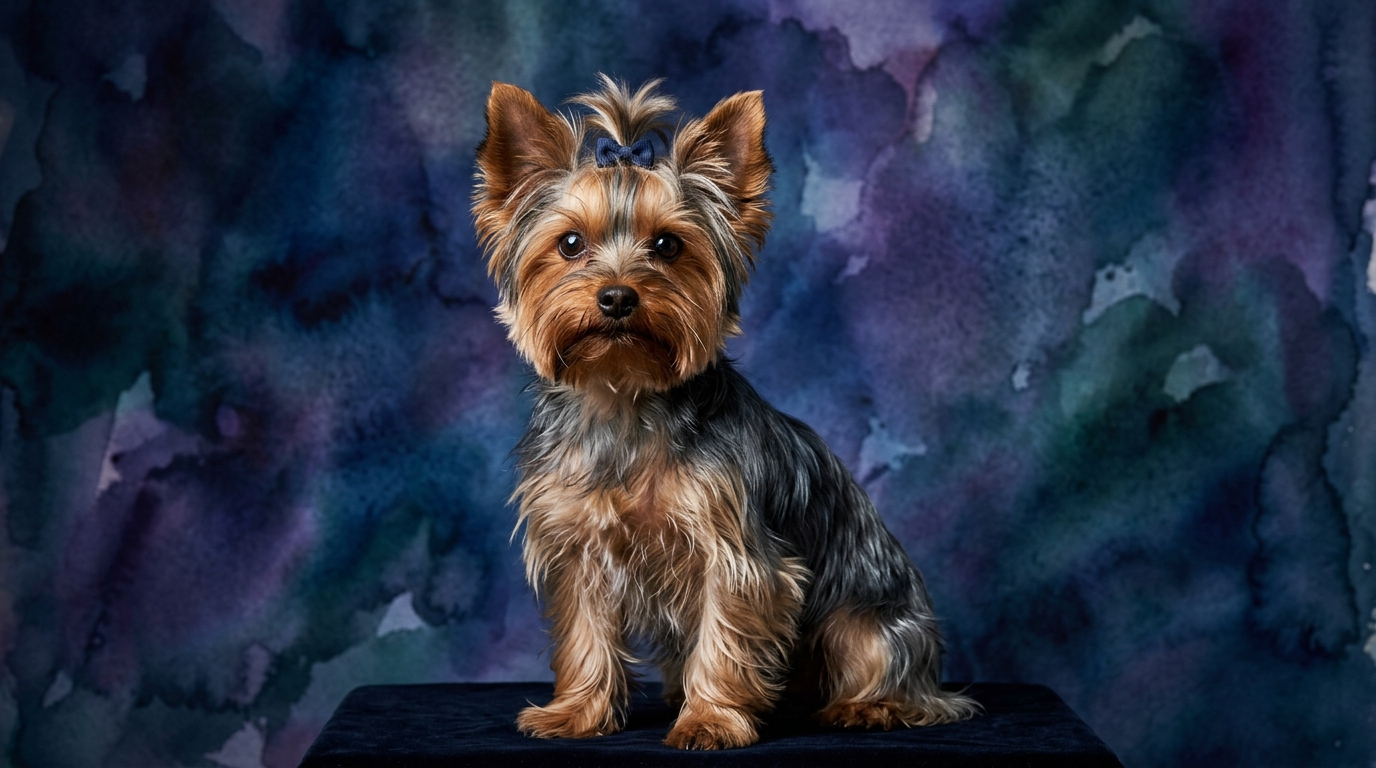
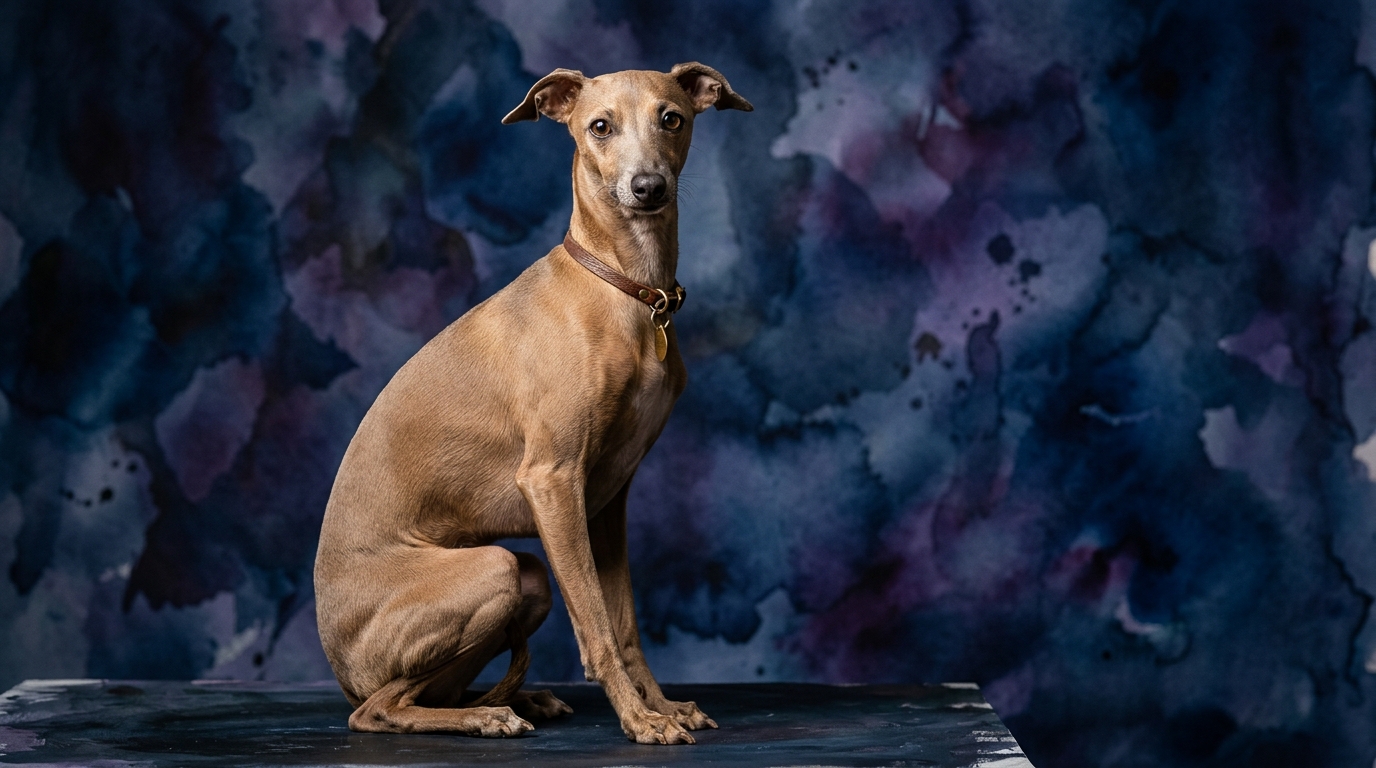
Side-by-Side Cognitive Profiles: Yorkshire Terrier vs. Italian Greyhound
At The Cosmic Pet Pet IQ Lab, we delve into five key dimensions of canine intelligence to provide a granular understanding of each breed's cognitive strengths. For the Yorkshire Terrier, these metrics paint a picture of a responsive and socially attuned companion, while the Italian Greyhound presents a distinct profile rooted in its sighthound heritage.
The **Yorkshire Terrier**, with a Coren ranking of #27, positions itself firmly among breeds with considerable working and obedience intelligence, signaling a capacity for efficient learning and command execution.
**Problem Solving (Yorkie: 3/5):** Yorkies exhibit a practical approach to challenges. They are adept at navigating household puzzles, figuring out how to access desired toys, or manipulating situations to their advantage, often demonstrating a keen observational intelligence rather than complex abstract reasoning.
**Training Speed (Yorkie: 4/5):** Their quick grasp of new commands and routines is a hallmark of the breed. Yorkies respond well to consistent, positive reinforcement, absorbing lessons efficiently and retaining them effectively, making them responsive pupils in various training contexts.
**Social Intelligence (Yorkie: 4/5):** These small terriers possess a pronounced awareness of their human companions' moods and intentions. They often form strong emotional bonds, demonstrating an ability to read social cues, seek attention, and even offer comfort, indicating a sophisticated understanding of their social environment.
**Instinctive Drive (Yorkie: 4/5):** True to their terrier heritage, Yorkies possess a strong drive rooted in their original purpose of ratting. This manifests as a determined persistence, a keen prey drive, and a fearless approach to exploring their surroundings, often showing remarkable tenacity for their size.
**Memory (Yorkie: 4/5):** Yorkies demonstrate robust long-term and short-term recall. They remember learned commands, routines, and even specific people or places over extended periods, which significantly aids in their trainability and ability to adapt to consistent environments.
The **Italian Greyhound**, while not evaluated within Coren's traditional working and obedience framework, possesses its own set of cognitive characteristics, emphasizing grace and sensitivity.
**Problem Solving (Italian Greyhound: 3/5):** Italian Greyhounds approach problem-solving with a practical aptitude similar to Yorkies, though perhaps with a different motivation. They can navigate their environment effectively and learn to overcome simple obstacles to reach desired outcomes, often employing their agility and speed.
**Training Speed (Italian Greyhound: 3/5):** While capable of learning, Italian Greyhounds may require more repetition and patience in training compared to some breeds. They can be sensitive and respond best to gentle, consistent methods, and their learning might be influenced by their independent sighthound nature.
**Social Intelligence (Italian Greyhound: 3/5):** Italian Greyhounds are deeply affectionate and bond closely with their families. They are sensitive to human emotions and thrive on companionship, though their social awareness might be more focused on close family members rather than a broad range of social interactions.
**Instinctive Drive (Italian Greyhound: 3/5):** As sighthounds, their instinctive drive is primarily focused on chasing moving objects. This manifests as a strong prey drive for small, fast-moving targets, coupled with a desire for bursts of speed and open spaces. This drive is distinct from the terrier's 'hunt and dispatch' instinct.
**Memory (Italian Greyhound: 3/5):** Italian Greyhounds possess a functional memory for routines, commands, and familiar faces. They remember their training and daily schedules, but perhaps not with the same depth or consistency across a wide range of tasks as breeds with higher memory scores.
Where the Yorkshire Terrier Cognitively Excels
The Yorkshire Terrier notably outperforms the Italian Greyhound in several cognitive domains, particularly those related to structured learning and social engagement. Their Coren ranking of #27 immediately signals a superior capacity for understanding and executing human commands efficiently, placing them in a category of breeds that grasp instructions with fewer repetitions.
This inherent aptitude is clearly reflected in their training speed score of 4/5, indicating they absorb new concepts and routines with remarkable efficiency compared to the Italian Greyhound's 3/5. This rapid acquisition of knowledge makes them exceptionally responsive to obedience training, agility exercises, or learning various tricks, often showing a keen enjoyment in the process.
Furthermore, the Yorkie's social intelligence, also rated at 4/5, suggests a more nuanced understanding of human social cues and intentions. They often demonstrate a more proactive engagement with their human companions, seeming to anticipate needs or respond with greater emotional reciprocity. This heightened social awareness, combined with their 4/5 memory score, allows them to build complex associations between commands, situations, and desired behaviors, solidifying their status as quick and adaptable learners within a family unit. Their instinctive drive, also 4/5, though rooted in their terrier heritage, translates into a determined focus that can be channeled effectively in training scenarios, providing a persistent drive to achieve goals.
Where the Italian Greyhound Cognitively Shines
While the Italian Greyhound might not outscore the Yorkshire Terrier in traditional obedience metrics, their cognitive strengths lie in different, yet equally valuable, areas, particularly those tied to their sighthound heritage. Their 3/5 problem-solving ability, while numerically equal to the Yorkie's, often manifests through a distinct approach. Italian Greyhounds excel in navigating complex physical environments with grace and speed, demonstrating a spatial intelligence that allows them to efficiently traverse obstacles or locate specific items, often using their agility to bypass rather than directly solve a problem.
Their instinctive drive, rated 3/5, is a specialized form of cognition focused on visual tracking and pursuit. This acute visual processing and rapid reaction time, honed over centuries for spotting and chasing small game, represent a unique cognitive strength. While not always directly applicable to human-centric 'problems,' this specialized predatory sequence is a sophisticated cognitive loop that demonstrates a distinct form of environmental awareness and rapid decision-making.
Furthermore, their social intelligence, also 3/5, is characterized by a deep, almost singular devotion to their primary caregivers. This intense bond, though potentially less outwardly expressive than a Yorkie's, signifies a profound emotional intelligence focused on specific human connections, creating a powerful, intuitive understanding within their immediate family circle. Their sensitivity, while sometimes making training slower, also fosters a strong emotional resonance with their owners, leading to a profound, quiet companionship.
Trainability: Which Breed Learns Faster and Why
Based on their cognitive profiles, the Yorkshire Terrier is generally more straightforward to train than the Italian Greyhound. The Yorkie's higher training speed (4/5 versus 3/5) directly translates to a quicker grasp of new commands and routines. This is further supported by their superior memory (4/5) and Coren ranking, indicating a greater inherent capacity for working intelligence and a desire to engage in structured learning.
Yorkies often exhibit a keen desire to please and a persistent terrier drive that, when channeled appropriately, makes them highly responsive. For instance, a Yorkie is more likely to master foundational commands like 'sit,' 'stay,' and 'come' with fewer repetitions and maintain consistency over time, making them excellent candidates for advanced obedience or trick training.
In contrast, Italian Greyhounds, while certainly trainable, often require more patience and a gentler, more nuanced approach. Their 3/5 training speed suggests they absorb information at a more moderate pace. Their sighthound nature can also mean they are easily distracted by visual stimuli in the environment, making sustained focus during training sessions more challenging. Furthermore, their sensitive disposition means harsh corrections can be counterproductive, leading to shut-down or avoidance rather than compliance.
While Italian Greyhounds learn, their independent streak and focus on visual cues mean they might prioritize chasing a leaf or a distant movement over executing a 'stay' command, especially in an open environment. Their training success often hinges on highly motivating rewards, short engaging sessions, and a consistent, positive reinforcement strategy that respects their sensitive and sometimes independent character, making the learning process a collaborative, trust-building experience.
Matching Canine Cognition with Owner Lifestyles
The choice between a Yorkshire Terrier and an Italian Greyhound for active versus relaxed owners hinges significantly on the *type* of activity and the desired level of energetic engagement, as informed by their cognitive profiles.
For **active owners** who enjoy structured activities, engaging in dog sports, or frequent, purposeful walks, the **Yorkshire Terrier** often proves a more suitable match. Their instinctive drive (4/5) and robust energy levels, combined with their superior training speed (4/5) and memory (4/5), make them excellent candidates for agility, urban exploration, or even learning complex sequences of tricks. They thrive on mental stimulation and physical challenges that allow them to utilize their problem-solving skills and tenacious spirit. A Yorkie will happily accompany an owner on brisk walks, engage in extended play sessions, and quickly learn new routes or commands, making them a dynamic and interactive partner for an owner who enjoys consistent interaction and structured engagement.
For **relaxed owners** who prefer bursts of activity followed by significant periods of calm companionship, the **Italian Greyhound** can be an ideal choice. While they possess an innate need for short, intense sprints due to their sighthound heritage, their overall energy expenditure is often less sustained than a terrier's. They are content with a few exhilarating dashes in a secure yard or a short, brisk walk, after which they are typically eager to curl up on a lap or beside their owner for extended periods of rest. Their social intelligence (3/5), though not as broadly expressive as the Yorkie's, is deeply rooted in close companionship, making them exceptional 'velcro dogs' for owners who value quiet presence and physical closeness over constant interactive play. Their sensitivity means they thrive in calm, predictable environments, aligning well with a more relaxed household rhythm and a preference for intimate, shared tranquility.
The Verdict
Select a Yorkshire Terrier if you seek a highly trainable, socially perceptive companion eager for structured learning, consistent engagement, and a tenacious spirit that thrives on interaction and purpose-driven activities.
Opt for an Italian Greyhound if you desire a deeply affectionate, sensitive companion who enjoys intense bursts of play followed by long periods of quiet companionship, thriving in a calm household with an owner who appreciates their graceful elegance and devoted nature.
🧠 Find Your Pet's IQ Score
Our Pet IQ Lab assessment covers 25+ tests across 5 cognitive dimensions — personalized to your breed.
Take the Full IQ Test →Frequently Asked Questions
Are Yorkshire Terriers prone to being yappy due to their intelligence?
Yorkshire Terriers' vocal tendencies are more linked to their strong instinctive drive (4/5) and social intelligence (4/5) than overall intelligence. They often use barking to alert, express excitement, or communicate needs, a behavior that can be managed with consistent training and redirection.
Does the Italian Greyhound's lower training speed mean they cannot learn complex commands?
No, a 3/5 training speed doesn't mean they can't learn complex commands, but rather that it may take more time and consistent positive reinforcement. Their sensitivity means training must be gentle and rewarding, focusing on building trust and making learning a positive experience.
How does the 'instinctive drive' score impact daily life with these breeds?
The Yorkie's 4/5 instinctive drive means a strong prey drive and determination, requiring consistent leash training and mental enrichment to prevent unwanted behaviors. The Italian Greyhound's 3/5 drive is primarily visual chase, meaning they need secure, fenced areas for off-leash play to prevent them from pursuing perceived prey, which can be a safety concern.