Side-by-Side IQ Profile: Afghan Hound vs. Australian Terrier
**Afghan Hound**
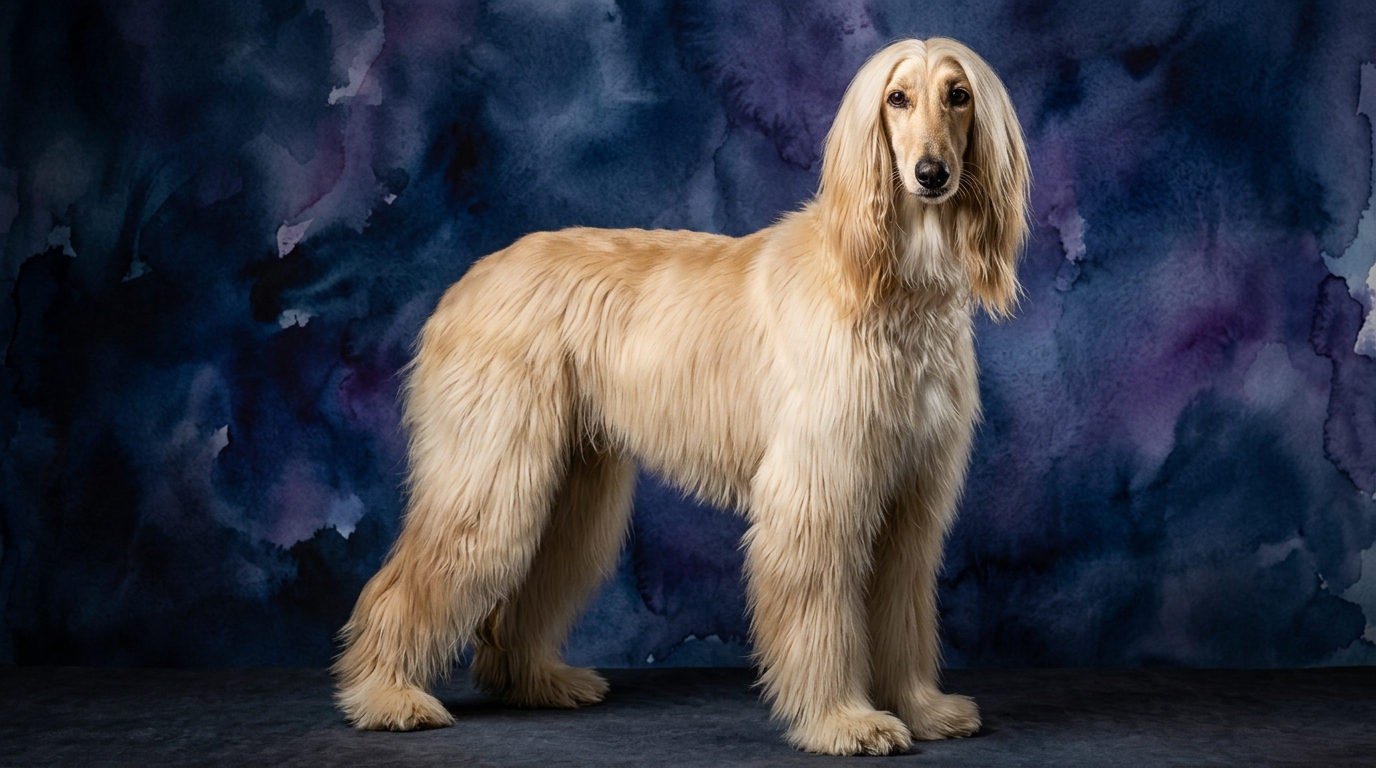
The Afghan Hound, ranked #79 by Coren, presents a cognitive profile shaped by centuries of independent hunting. Their **Problem Solving (4/5)** is strong, manifesting as an ability to autonomously navigate complex environments and devise solutions to reach objectives, particularly when motivated by their keen senses and prey drive. However, their **Training Speed (1/5)** is notably low; they are not inherently driven to please and often evaluate commands based on self-interest, leading to slow acquisition and inconsistent compliance. Their **Social Intelligence (2/5)** tends towards reservedness; while deeply bonded with primary caregivers, they are often aloof with strangers and interact on their own terms, lacking the eager-to-please engagement seen in many breeds. An exceptionally powerful **Instinctive Drive (5/5)** for chasing and hunting dictates much of their behavior, often overriding other considerations. They possess **Memory (3/5)** adequate for routines and learned behaviors, though their selective obedience can sometimes make it appear as if commands are forgotten.
**Australian Terrier**
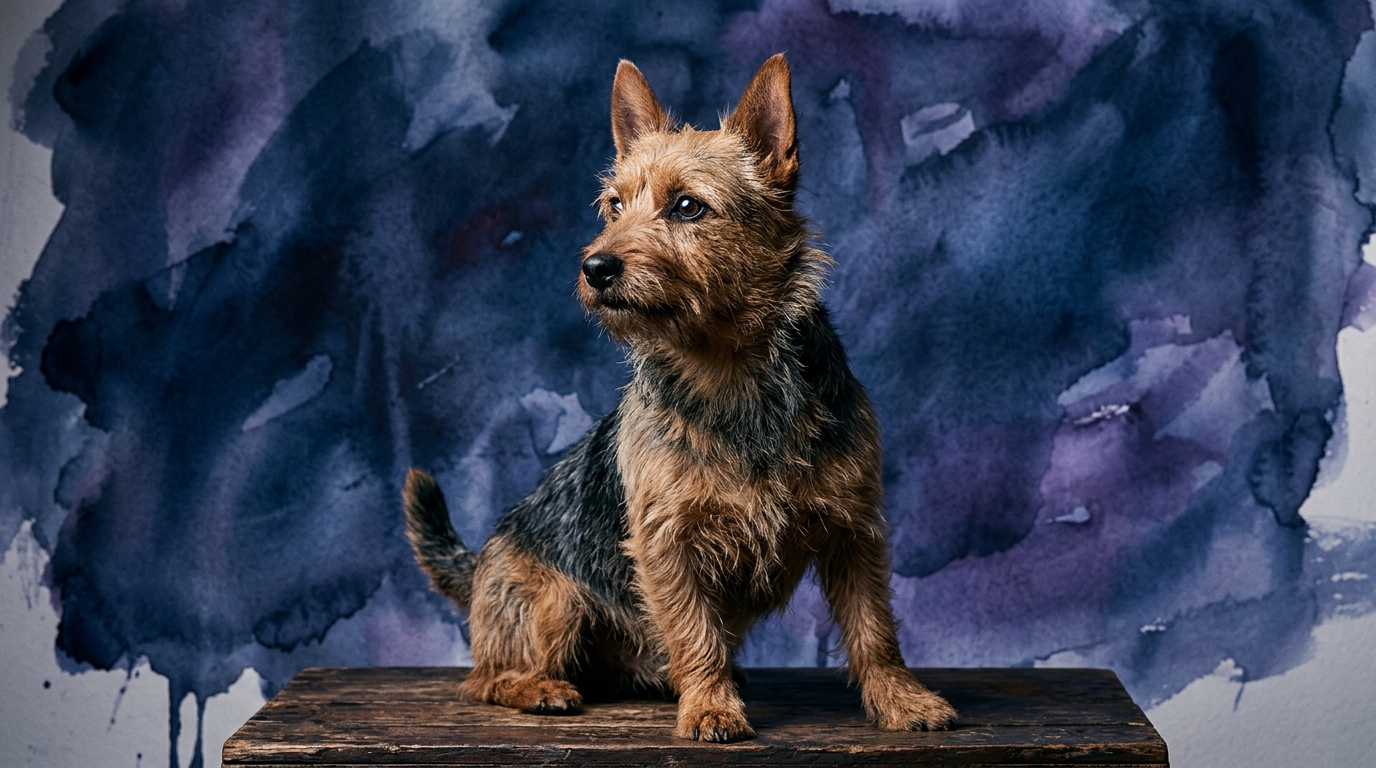
The Australian Terrier, not Coren-ranked, possesses a different, yet equally compelling, set of cognitive traits. Their **Problem Solving (3/5)** is moderate, displaying tenacity and wit to overcome obstacles, often driven by curiosity or a desire to investigate rather than strategic hunting. They exhibit a moderate **Training Speed (3/5)**, generally willing to engage and capable of learning new commands with consistent, positive reinforcement, though their terrier determination might test boundaries. With a **Social Intelligence (3/5)** rating, they are typically more outwardly social than Afghan Hounds, enjoying interactions with their family and cautiously friendly with polite strangers, showing a reasonable capacity for understanding social cues. Their **Instinctive Drive (3/5)** for digging, chasing small prey, and guarding is present but generally more manageable than the Afghan Hound's intense drive, manifesting as a persistent curiosity. Australian Terriers have a solid **Memory (3/5)** for learned commands, routines, and experiences, retaining behaviors well with consistent reinforcement, which contributes to their loyalty and adaptability.
Where the Afghan Hound Wins Cognitively
The Afghan Hound's cognitive strengths lie in its exceptional **instinctive drive (5/5)** and practical **problem-solving (4/5)** when these align with its sighthound heritage. Their unparalleled ability to visually track and pursue fast-moving objects across varied terrains demonstrates a sophisticated environmental awareness and rapid, autonomous decision-making. This isn't about human-directed tasks, but about independently navigating complex situations to achieve a self-motivated goal, like discerning the most efficient path through brush or the weakest point in an enclosure during a chase. This deep-seated drive allows them to operate with an internal motivation largely independent of human direction, making them extraordinary in activities requiring self-reliance and acute sensory perception, such as lure coursing. They possess a unique, self-directed brilliance.
Where the Australian Terrier Wins Cognitively
The Australian Terrier excels in areas that foster closer partnership with humans, particularly its **training speed (3/5)** and **social intelligence (3/5)**, coupled with a more adaptable **instinctive drive (3/5)**. Unlike the Afghan Hound, this breed is generally more receptive to learning human-initiated commands and routines with consistent positive reinforcement. Their moderate training speed, combined with a willingness to engage, makes them adaptable to various activities like obedience or agility. This receptiveness stems from their higher social intelligence, enabling them to better interpret and respond to human cues and desires. Their instinctive drive, while present for typical terrier activities like digging, is less overwhelming and more amenable to redirection or integration into structured play. An Australian Terrier's cognitive profile facilitates smoother integration into a human household, offering a more reciprocal learning experience and greater capacity for nuanced social interaction within a family unit.
Which Is Easier to Train and Why
The Australian Terrier is considerably easier to train than the Afghan Hound, a distinction rooted in their differing **training speed** and **social intelligence**. The Australian Terrier's 3/5 training speed signifies a reasonable capacity for acquiring and retaining commands, responding well to positive reinforcement and consistency. This is significantly bolstered by their 3/5 social intelligence, which means they are more attuned to their human's intentions and generally more inclined to cooperate. They often approach training with enthusiasm, eager to engage and receive positive feedback, fostering a collaborative and rewarding training dynamic. Teaching an Australian Terrier a new command typically involves fewer repetitions and less frustration, as they are motivated by interaction and understanding.
Conversely, the Afghan Hound's training speed of 1/5 and social intelligence of 2/5 present substantial training challenges. Their profound independence and minimal inherent drive to please humans mean commands are often viewed as optional suggestions rather than directives. An Afghan Hound might fully comprehend a command but choose not to comply if it conflicts with a more compelling personal interest, such as pursuing a distant visual stimulus. Their adequate memory (3/5) is frequently overshadowed by their selective obedience; they don't forget, they simply prioritize. For instance, a recall command might be disregarded if their powerful instinctive drive (5/5) for a chase takes precedence. Training an Afghan Hound demands immense patience, creative, instinct-driven reinforcement, and an acceptance that their compliance will often be conditional. The Australian Terrier typically looks to its owner for guidance, whereas the Afghan Hound is inclined to make its own decisions, a fundamental behavioral difference impacting trainability.
Which Suits Active Owners vs. Relaxed Owners
While both breeds require activity, the *nature* of that activity and the *owner's role* diverge, suiting distinct lifestyles. The **Afghan Hound** is ideal for experienced, active owners who fully comprehend their breed's need for expansive, free-running exercise in highly secure environments. Their intense instinctive drive (5/5) means they thrive on opportunities to gallop at full speed, ideally in lure coursing or vast, fenced spaces where they can truly stretch out. This is beyond typical leash walks; it's about fulfilling their deep-seated need to run and chase. Owners who appreciate a dog that is independent indoors but requires significant, dedicated outlets for their athletic prowess will find the Afghan Hound rewarding. A relaxed owner unable to provide these specific, high-intensity outlets will likely contend with a frustrated, potentially destructive, or aloof companion. Their independence means they don't constantly demand interactive play but absolutely require their core sighthound needs to be met.
The **Australian Terrier**, conversely, suits active owners who prefer more interactive and structured engagement. Their moderate instinctive drive (3/5) for digging and chasing is manageable and can be channeled into games, agility, or consistent walks and hikes. They flourish with owner involvement and enjoy being part of family activities. Owners who enjoy regular walks, interactive play sessions, or dog sports like Earthdog trials will find an Australian Terrier a delightful match. Their higher social intelligence (3/5) makes them more eager to participate in owner-directed play and training, creating a more collaborative dynamic. While energetic, their needs are generally easier to integrate into a standard family schedule compared to the Afghan Hound's specialized exercise requirements. They are less prone to creating their own “entertainment” through destructive behaviors if given sufficient mental and physical engagement from their human companions.
The Verdict
Choose the Afghan Hound if you are an experienced, active owner who appreciates a magnificent, independent companion, capable of incredible athletic feats, and are prepared to dedicate significant effort to understanding and managing their powerful sighthound instincts and independent problem-solving abilities.
Choose the Australian Terrier if you are an active owner seeking a spirited, engaging, and more biddable companion who thrives on interaction and consistent, positive training, and who desires a dog that integrates readily into family life and enjoys participating in structured activities.
🧠 Find Your Pet's IQ Score
Our Pet IQ Lab assessment covers 25+ tests across 5 cognitive dimensions — personalized to your breed.
Take the Full IQ Test →Frequently Asked Questions
Is the Afghan Hound truly "unintelligent" due to its low Coren rank?
Not at all. The Coren ranking primarily measures obedience-based intelligence. The Afghan Hound's low rank (#79) reflects its profound independence and selective compliance, not a lack of problem-solving ability or sensory processing. They possess a highly specialized, self-directed intelligence tailored to their sighthound purpose.
Can an Australian Terrier live in an apartment?
Yes, an Australian Terrier can adapt to apartment living if their moderate exercise and mental stimulation needs are consistently met. Daily walks, interactive play, and training sessions are crucial to prevent boredom and destructive behaviors, ensuring they remain a well-adjusted companion.
What is the biggest challenge when owning an Afghan Hound?
The biggest challenge is consistently managing their extremely powerful instinctive drive for chasing and their profound independence. This requires unwavering commitment to secure containment, extensive off-leash exercise in safe areas, and a patient, creative approach to training that respects their self-willed nature.