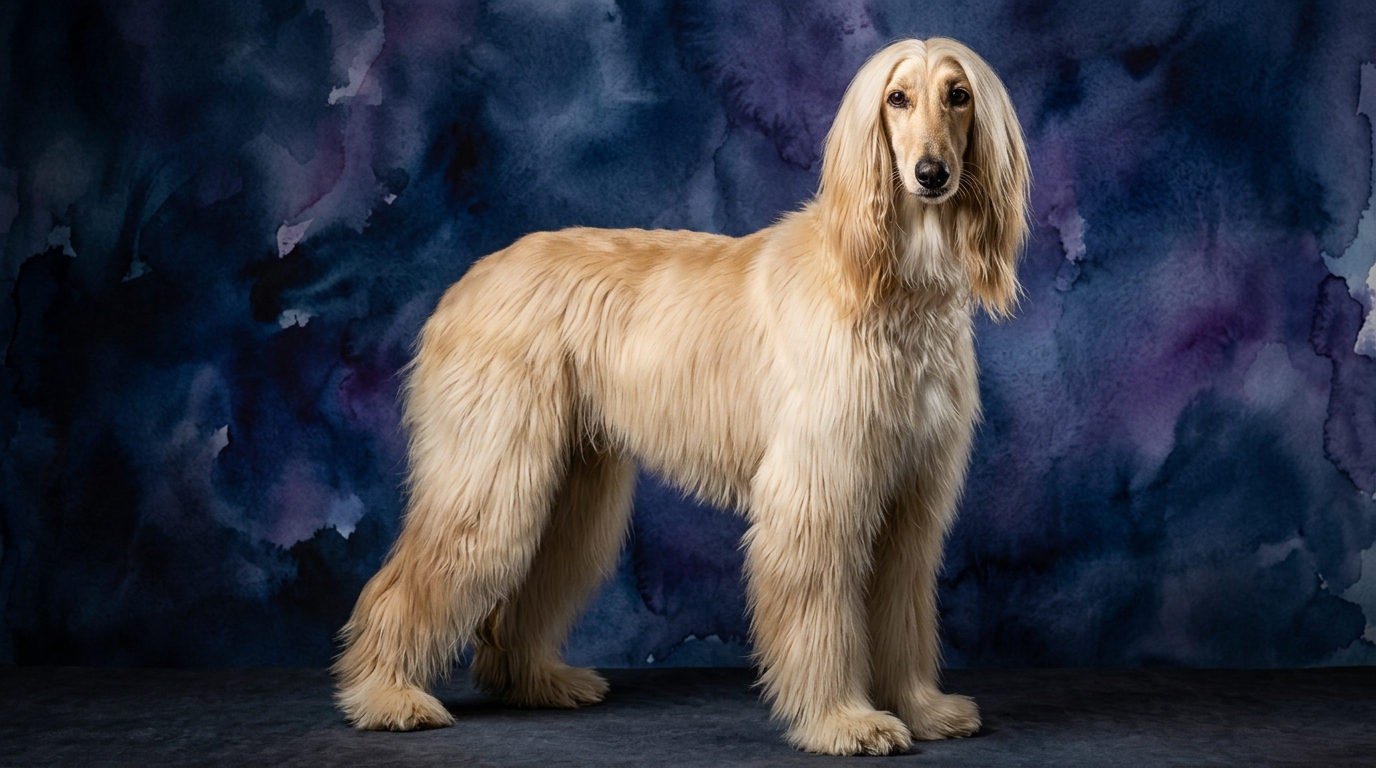
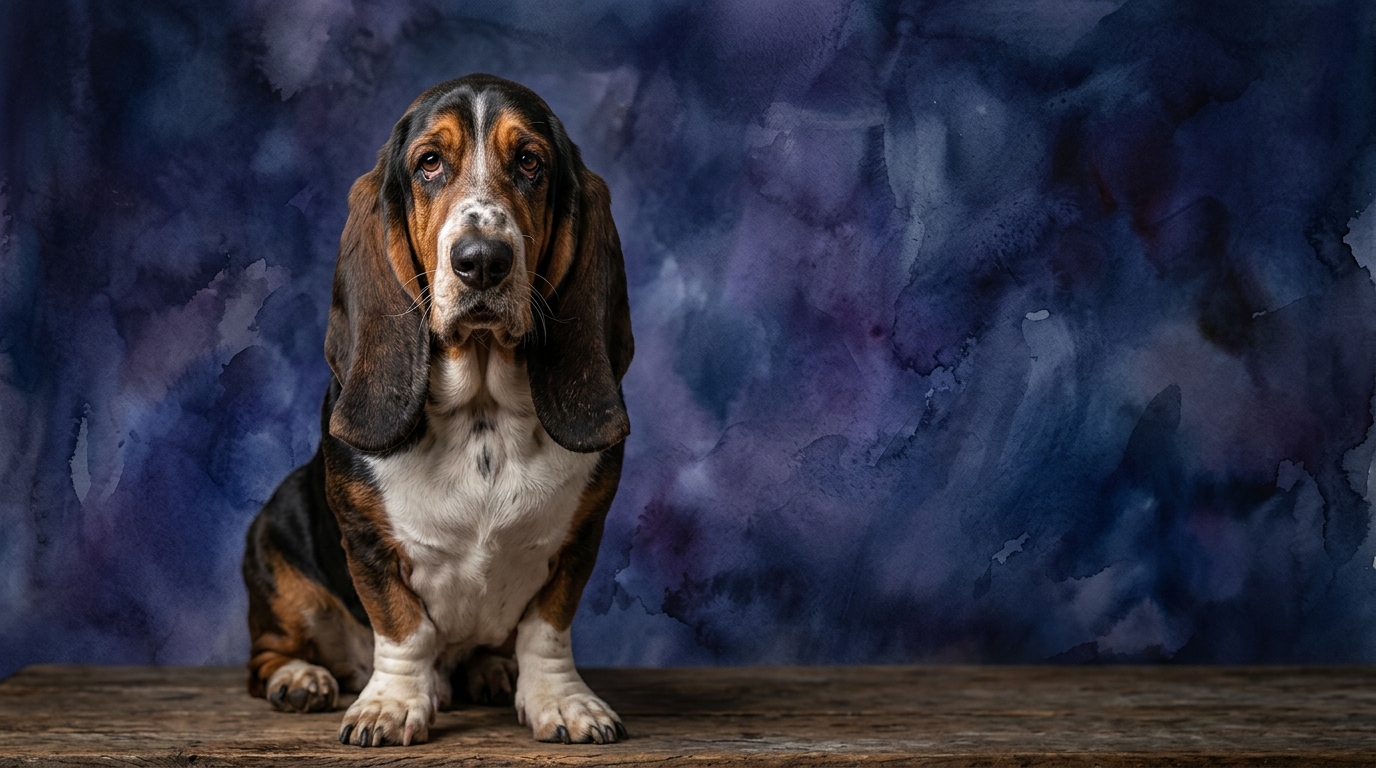
Side-by-Side IQ Profile
Understanding a dog's intelligence requires looking beyond simple obedience, exploring various cognitive dimensions. The Afghan Hound, with a Coren rank of #79, presents a unique cognitive blueprint. Its Problem Solving at 4/5 indicates a significant capacity for independent thought and navigating complex situations, often without human direction. However, its Training Speed of 1/5 highlights a profound independence, making rote obedience a considerable challenge. Social Intelligence, rated at 2/5, suggests a reserved nature, less inclined towards overt human-pleasing behaviors, while an Instinctive Drive of 5/5 underscores an incredibly strong, self-directed hunting impulse. Memory at 3/5 suggests average retention, neither exceptional nor poor.
In contrast, the Basset Hound, holding a Coren rank of #71, offers a different intellectual profile. Its Problem Solving at 3/5 shows a capable mind, proficient at figuring things out but perhaps less inclined towards inventive, independent solutions than the Afghan. A Training Speed of 3/5 denotes moderate trainability, meaning they can learn commands and routines with consistent effort. Their Social Intelligence at 3/5 suggests a generally amiable disposition and a better attunement to human social cues. The Basset's Instinctive Drive, at 3/5, is primarily focused on their legendary scenting abilities rather than generalized prey pursuit, and their Memory also stands at a balanced 3/5.
Where Afghan Hound Wins Cognitively
The Afghan Hound truly shines in areas demanding raw, independent mental prowess. Its superior Problem Solving score of 4/5, compared to the Basset's 3/5, speaks to an innate ability to assess and overcome obstacles on its own terms. This isn't about solving puzzles for treats; it’s about navigating complex terrain, outmaneuvering quarry, and making split-second decisions in a dynamic environment, a direct legacy of its sighthound heritage.
Furthermore, the Afghan’s unparalleled Instinctive Drive, rated at a perfect 5/5 against the Basset’s 3/5, signifies a relentless, self-motivated pursuit of its goals. This intense drive fuels their determination, enabling them to sustain focus over long distances or through challenging situations. It’s a profound internal compass that guides their actions, often overriding external commands when their instincts are engaged.
Where Basset Hound Wins Cognitively
Conversely, the Basset Hound demonstrates a distinct advantage in aspects of intelligence that foster harmonious coexistence with humans. Its Training Speed, rated at 3/5 compared to the Afghan’s challenging 1/5, means the Basset is significantly more amenable to learning and retaining human-directed tasks. While they possess a charming stubborn streak, they are generally more receptive to training methods and positive reinforcement, making them a more straightforward pupil for most owners.
The Basset’s higher Social Intelligence of 3/5, versus the Afghan’s 2/5, positions it as generally more attuned to human emotions and social structures. This translates to a dog that is often more responsive to subtle cues, more eager to engage in companionship, and generally more adaptable to family life. Their affable nature means they are more likely to seek interaction and respond positively to social engagement from their human companions.
Which is Easier to Train and Why
Without a doubt, the Basset Hound generally proves to be the easier of the two breeds to train. Their moderate Training Speed (3/5) combined with their reasonable Social Intelligence (3/5) means they are more inclined to form cooperative relationships with their human handlers. Bassets often respond well to food motivation and praise, and while their scent drive can be distracting, they are ultimately more willing to perform learned behaviors and accept guidance. They possess a charming persistence but are not typically defiant.
The Afghan Hound, with its exceptionally low Training Speed (1/5) and lower Social Intelligence (2/5), presents a far greater training challenge. Their profound independence and strong instinctive drive (5/5) mean they often prioritize their own agenda or the pursuit of a perceived 'lure' over human commands. They are not unintelligent; rather, their intelligence is geared towards self-sufficiency and independent action, making them less inclined to perform repetitive tasks or follow commands that don't align with their intrinsic motivations. Training an Afghan requires immense patience, creativity, and a deep understanding of their sighthound nature.
Which Suits Active Owners vs Relaxed Owners
For active owners seeking a stimulating canine partner, the Afghan Hound is undeniably the more suitable choice. Their exceptional instinctive drive (5/5) and strong problem-solving skills (4/5) demand significant physical and mental exercise. These dogs thrive on activities like lure coursing, long runs in secure areas, or competitive dog sports that engage both their speed and their independent thinking. An Afghan needs an owner who understands their need for expansive movement and can channel their intense drive into appropriate outlets, otherwise, their pent-up energy can lead to frustration.
In contrast, the Basset Hound is a better match for relaxed owners who appreciate a more leisurely pace of life. While they absolutely require regular walks to satisfy their powerful scent drive and maintain a healthy weight, their overall energy levels and instinctive drive (3/5) are more moderate than the Afghan’s. They are generally content with a comfortable home life, enjoying ample naptime interspersed with their 'sniffaris.' Their amiable social intelligence makes them excellent companions for those seeking a laid-back yet affectionate presence.
The Verdict
Choose an Afghan Hound if you are an experienced owner who values a fiercely independent, elegant companion with a profound drive for action and a unique, self-reliant intellect, and are prepared for a significant commitment to exercise and creative training.
Choose a Basset Hound if you desire an affable, moderately trainable companion who enjoys a relaxed lifestyle interspersed with engaging scent work, and integrates seamlessly into a family setting with fewer demands on intense physical activity.
🧠 Find Your Pet's IQ Score
Our Pet IQ Lab assessment covers 25+ tests across 5 cognitive dimensions — personalized to your breed.
Take the Full IQ Test →Frequently Asked Questions
Are Afghan Hounds truly stubborn during training?
Afghan Hounds aren't necessarily stubborn, but their intelligence is geared towards independent action and decision-making, rather than human-directed obedience. Their strong instinctive drive means they prioritize their own impulses, making traditional training methods less effective without significant adaptation and motivation.
Do Basset Hounds need a lot of exercise despite their laid-back image?
While Basset Hounds are known for their calm demeanor indoors, they do require regular, moderate exercise, primarily for their powerful scent drive and to prevent obesity. Daily walks or 'sniffaris' are essential to keep them mentally stimulated and physically healthy.
How do the Coren ranks (71 vs 79) relate to their IQ scores?
The Coren rank primarily assesses 'working and obedience intelligence,' which reflects a dog's ability to learn and follow commands. The Basset's higher rank (71) aligns with its better training speed, while the Afghan's lower rank (79) reflects its strong independence, which can be perceived as less 'obedient' despite its high problem-solving capacity.