Side-by-Side IQ Profile
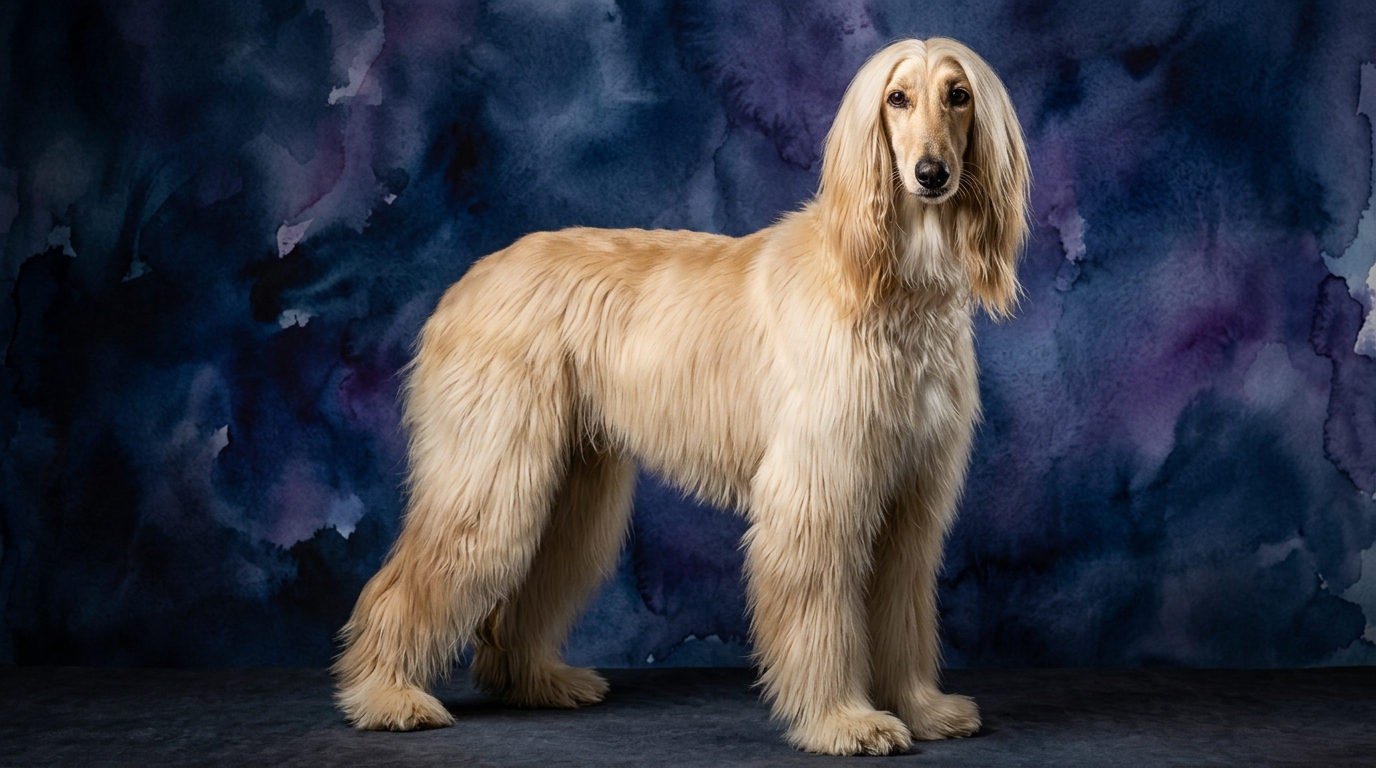
The Cosmic Pet Pet IQ Lab assesses canine intelligence across five key dimensions, providing a granular view of each breed's cognitive strengths. For the Afghan Hound, a Hound breed ranked #79 by Coren, its profile is distinct: Problem Solving 4/5, Training Speed 1/5, Social Intelligence 2/5, Instinctive Drive 5/5, and Memory 3/5. This profile paints a picture of a self-reliant thinker with powerful innate drives.
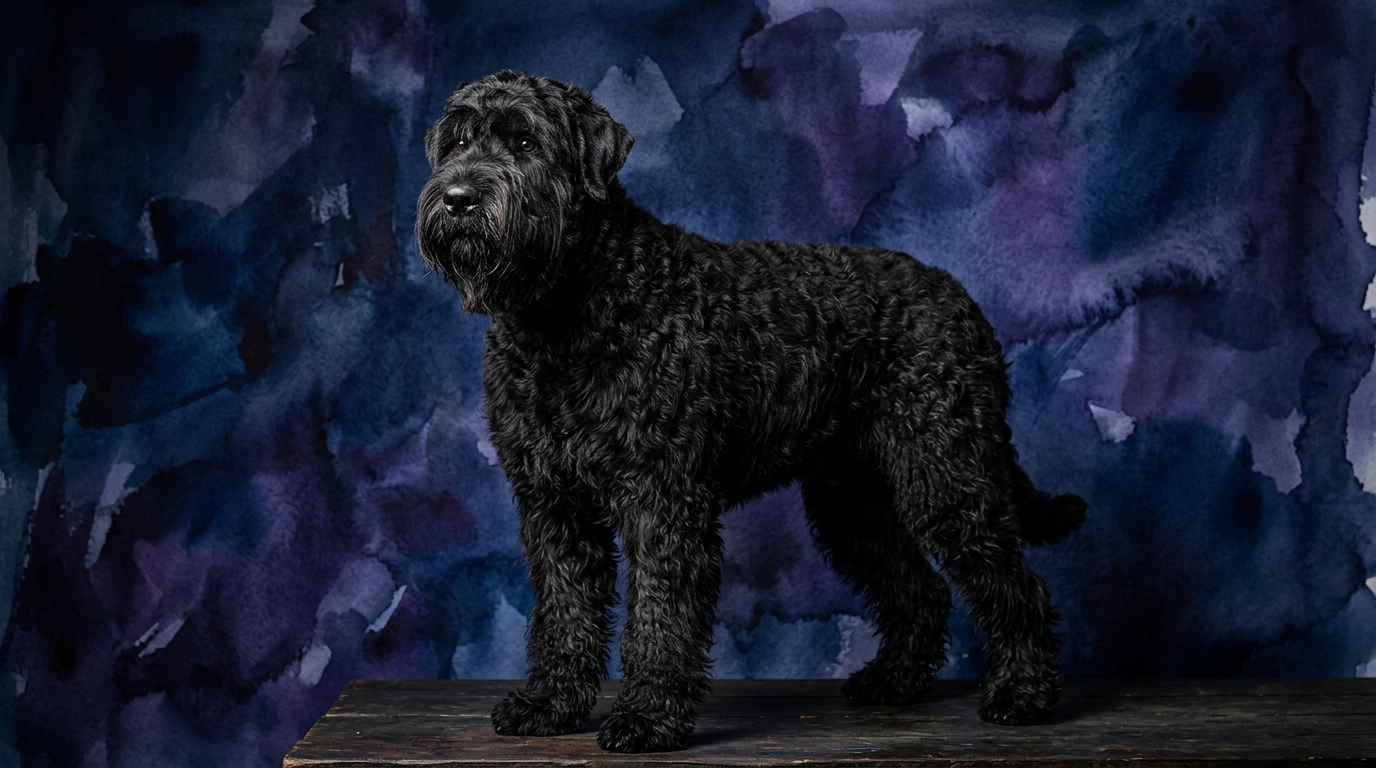
The Black Russian Terrier, a Working breed not yet Coren-ranked, presents a different cognitive blueprint: Problem Solving 3/5, Training Speed 3/5, Social Intelligence 3/5, Instinctive Drive 3/5, and Memory 3/5. This profile suggests a more balanced and cooperative intelligence, tailored for purposeful engagement and partnership.
Where Afghan Hound Wins Cognitively
The Afghan Hound's cognitive strengths shine particularly in two areas: Problem Solving and Instinctive Drive. Their 4/5 score in Problem Solving reflects an impressive capacity for independent thought, a critical trait for a sighthound developed to hunt without direct human command. This means they are adept at evaluating situations and formulating their own strategies, whether it's finding the most efficient path around an obstacle or deciding the best way to pursue a moving object. This is on-the-fly decision-making, a deep-seated cognitive independence allowing them to thrive in environments requiring self-reliance.
Furthermore, their 5/5 Instinctive Drive is a profound cognitive asset. This is a deeply ingrained cognitive program prioritizing detection, pursuit, and capture. This immense drive shapes their perception of the world, making them exceptionally attuned to movement and speed. While challenging for training, this high drive means an Afghan Hound is incredibly focused and determined in activities tapping into natural inclinations like lure coursing or open-field runs. Their memory, while rated 3/5, often works in tandem with this drive, allowing them to recall the best hunting routes or strategies they've employed previously.
Where Black Russian Terrier Wins Cognitively
The Black Russian Terrier demonstrates clear cognitive advantages in areas crucial for a cooperative working companion. Their 3/5 score in Training Speed, while not exceptional, is notably higher than the Afghan Hound's 1/5, indicating a greater willingness and capacity to absorb and execute commands. This reflects a cognitive makeup more aligned with human direction and structured learning, allowing them to form associations between cues and actions more readily. This breed was developed for specific roles requiring biddability and reliability, and their cognitive architecture supports this.
Their Social Intelligence, also rated 3/5, surpasses the Afghan Hound's 2/5. This suggests a more nuanced understanding of family social dynamics and a greater capacity for forming strong, integrated bonds. A Black Russian Terrier is generally more attuned to human emotional states and social cues, enabling them to fit seamlessly into a household and act as a vigilant, yet responsive, family member. This social awareness contributes to their effectiveness as guardians and companions, equipping them to interpret and respond appropriately to their environment and people. While their Problem Solving is rated 3/5, it's a practical problem-solving that often involves working with their handler rather than entirely independently.
Which Is Easier to Train and Why
When it comes to ease of training, the Black Russian Terrier holds a distinct advantage over the Afghan Hound, largely due to fundamental differences in their cognitive profiles, particularly their Training Speed and Instinctive Drive. The Black Russian Terrier’s Training Speed of 3/5 indicates a dog generally receptive to learning, grasping new commands and concepts with consistent instruction. Their working dog heritage instilled a cognitive inclination towards cooperation and a desire to fulfill a role, making them more amenable to structured obedience. Their moderate Instinctive Drive (3/5) means their focus is less likely to be overwhelmingly diverted by environmental stimuli compared to the Afghan.
In stark contrast, the Afghan Hound’s Training Speed of 1/5, coupled with its Coren rank of #79 (among the lowest for obedience and working intelligence), signals a profound challenge for traditional obedience training. Their extremely high Instinctive Drive (5/5) means cognitive resources are primarily directed towards scanning, detecting, and pursuing. An Afghan Hound's independent problem-solving (4/5) means they are wired to make their own decisions, rather than waiting for human instruction. Their intelligence lies in self-sufficiency and quick, independent action, making compliance with repetitive commands a secondary concern. Training an Afghan Hound requires immense patience, creativity, and an understanding of their deep-seated sighthound instincts, often focusing on motivation through play and chase rather than strict obedience.
Which Suits Independent Companionship vs Collaborative Partnership
Understanding the cognitive drives of these breeds is key to matching them with the right owner lifestyle. The Afghan Hound, with its 5/5 Instinctive Drive and 4/5 Problem Solving, thrives with active owners who appreciate and accommodate their unique cognitive needs. These are dogs that require extensive outlets for their innate drive to run and chase. An owner who enjoys long, secure off-leash runs in expansive, safe areas, or participates in activities like lure coursing, will find the Afghan Hound a fulfilling companion. Their independent nature (low Social Intelligence 2/5) means they might prefer engaging in physical activity alongside their owner rather than constant, direct collaboration. They are not necessarily looking for constant interaction during their exercise but rather the freedom to express their powerful physical and cognitive drives. A 'relaxed' owner expecting a couch potato or minimal exercise will find themselves with a bored and potentially destructive Afghan Hound.
The Black Russian Terrier, while also requiring an active lifestyle, suits owners who seek a more collaborative and purposeful engagement. Their 3/5 Instinctive Drive is substantial but channeled more towards protection and work; their 3/5 Social Intelligence means they desire to be an integrated part of family activities. Owners enjoying structured training, canine sports like obedience or protection work, or long hikes where the dog is actively engaged will find the BRT a rewarding partner. They need a job or purpose, even if 'family guardian,' and their cognitive satisfaction comes from fulfilling that role alongside human companions. While they can be calm indoors, their mental and physical well-being relies on consistent, engaging activity that involves their owner. They are not suited for purely 'relaxed' owners who cannot commit to providing this interactive stimulation.
The Verdict
Choose the Afghan Hound if you are an experienced owner who appreciates a canine companion with profound independent thought, a powerful prey drive, and a unique, often aloof, personality, willing to invest significant effort in understanding their distinct cognitive needs.
Opt for the Black Russian Terrier if you seek a robust, trainable working companion with a strong protective instinct and a desire for social integration, capable of learning readily and thriving on collaborative engagement with its family.
🧠 Find Your Pet's IQ Score
Our Pet IQ Lab assessment covers 25+ tests across 5 cognitive dimensions — personalized to your breed.
Take the Full IQ Test →Frequently Asked Questions
Is the Afghan Hound difficult to live with due to its low training speed?
While Afghan Hounds present challenges in traditional obedience due to their independent nature and low training speed, they can be wonderful companions for owners who understand their sighthound instincts. Their 'difficulty' often stems from a mismatch between owner expectations and the breed's natural cognitive wiring for self-reliance rather than handler compliance.
Does the Black Russian Terrier's protective instinct make it unsuitable for families?
No, the Black Russian Terrier's protective instinct (part of its 3/5 instinctive drive) is typically a positive trait when properly managed and socialized from a young age. Their 3/5 social intelligence allows them to form strong bonds with family members, and with consistent training, they become discerning guardians who are devoted to their household.
How do their memory scores impact daily life for these breeds?
Both breeds score 3/5 for memory, indicating a competent ability to recall routines, learned cues, and familiar individuals. For the Afghan Hound, this means they remember established boundaries and favorite running spots. For the Black Russian Terrier, it supports their training and ability to recall family members, contributing to their reliability in a family setting.