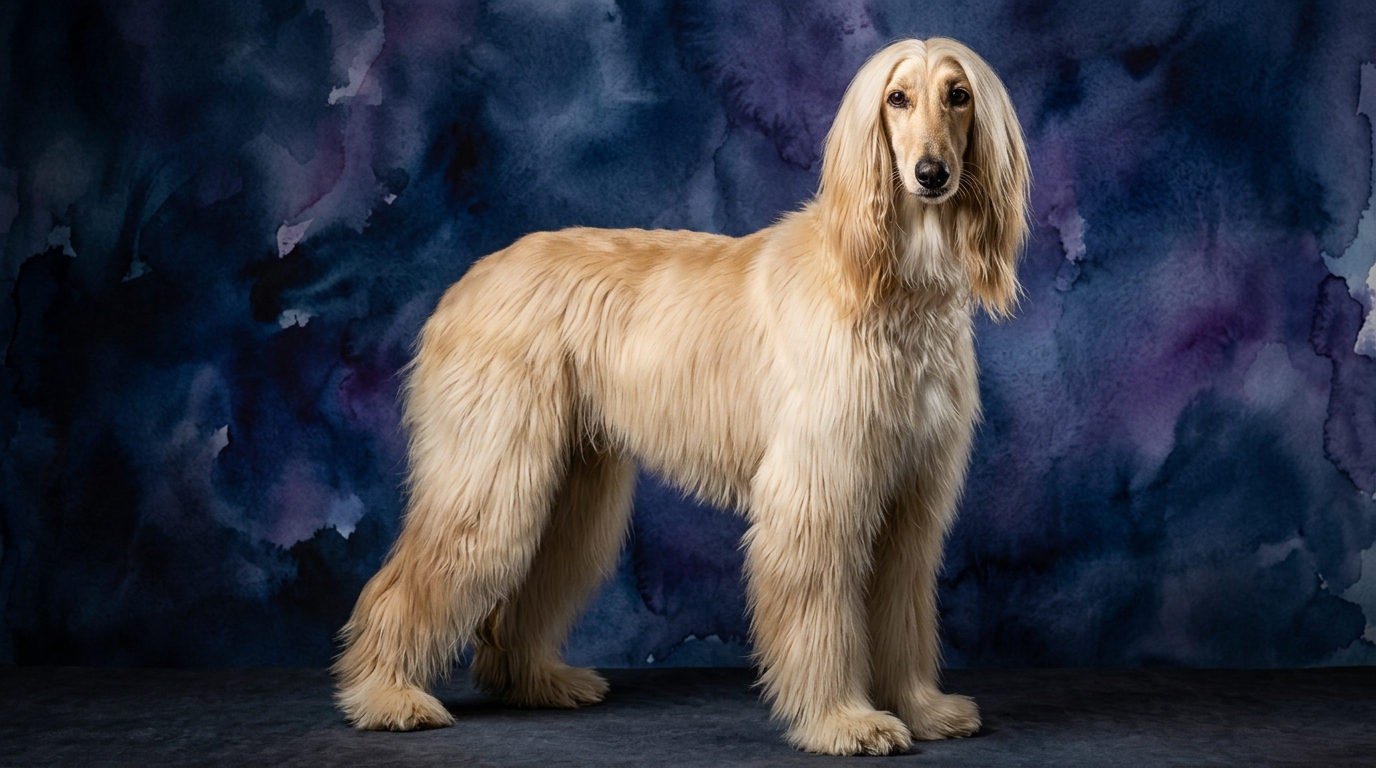
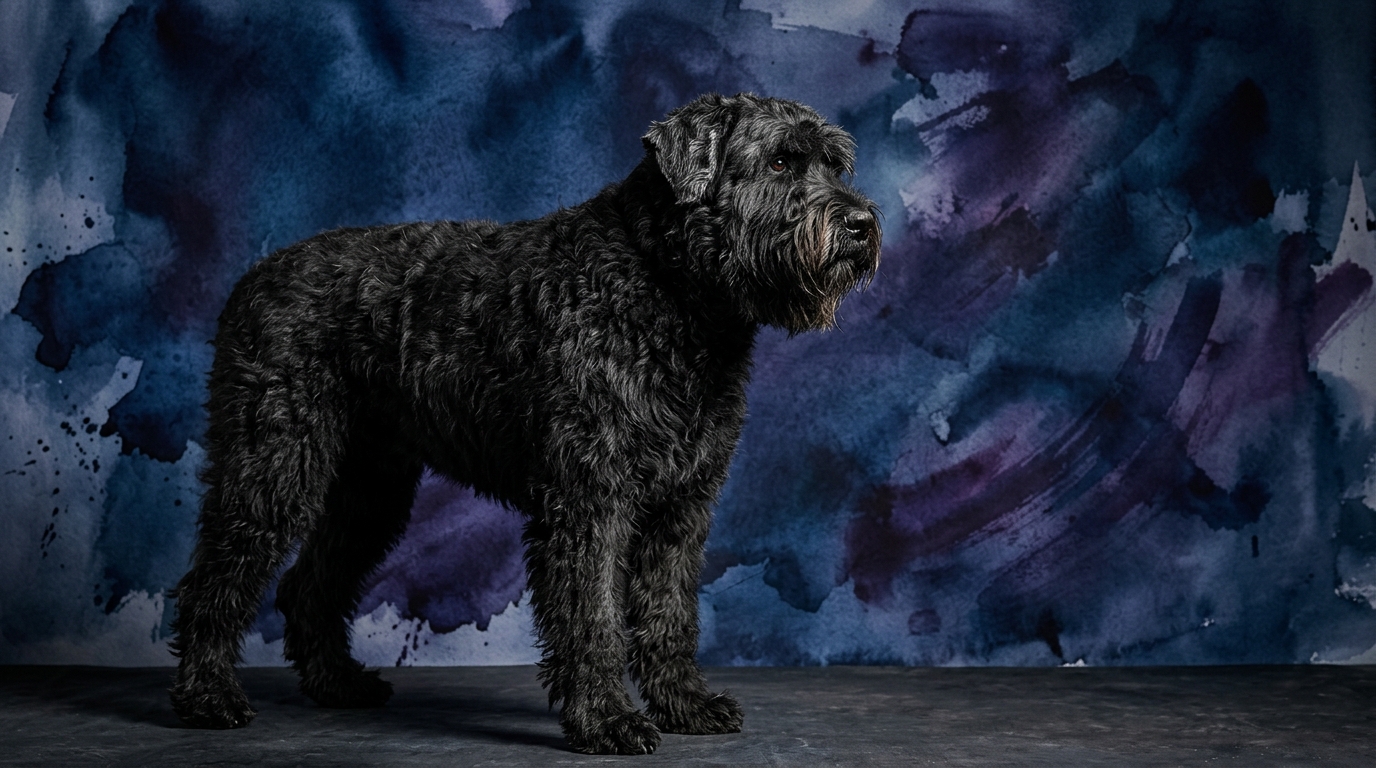
Side-by-Side IQ Profiles: Afghan Hound vs. Bouvier des Flandres
The Afghan Hound’s cognitive landscape is distinctly shaped by its sighthound heritage, emphasizing self-sufficiency and acute sensory perception for hunting. Its Problem Solving is rated 4/5, indicating an excellent capacity for independent strategy and adapting to environmental challenges without direct human intervention, particularly in pursuit scenarios. Training Speed, however, stands at a low 1/5, reflecting a breed less inclined to quickly grasp and consistently execute human commands. Social Intelligence is 2/5, suggesting a more reserved and less people-pleasing demeanor, often content with its own company. Its Instinctive Drive is a powerful 5/5, dominated by an intense prey drive and an inherent need to run and chase. Memory is a moderate 3/5, capable of recalling routines and familiar individuals, but perhaps less so for complex sequences of commands.
In contrast, the Bouvier des Flandres presents a more balanced cognitive profile, typical of a versatile working dog. Its Problem Solving is 3/5, demonstrating competence in practical tasks and learning through experience, though perhaps not with the same independent, abstract flair as the Afghan Hound. Training Speed is 3/5, indicating a steady, consistent learner who responds well to structured instruction and positive reinforcement. Social Intelligence is also 3/5, meaning the Bouvier is generally responsive to its human companions and capable of forming strong, cooperative bonds. Instinctive Drive is 3/5, encompassing a strong work ethic, herding instincts, and protective tendencies, but generally more controllable and channeled than the Afghan Hound's intense prey drive. Memory is 3/5, sufficient for retaining a wide range of commands and routines necessary for its working roles.
Where the Afghan Hound Cognitively Excels
The Afghan Hound truly shines in its capacity for independent problem-solving, particularly when it pertains to its primary instinctive drive: the chase. With a 4/5 in Problem Solving and a perfect 5/5 in Instinctive Drive, this breed demonstrates remarkable cognitive agility in situations demanding self-reliance. When tracking prey across varied terrain, an Afghan Hound doesn't wait for human direction; it assesses the environment, calculates trajectories, and adapts its strategy in real-time, relying on keen eyesight and an innate understanding of movement. This isn't about solving puzzles for a treat, but about making split-second decisions that ensure success in an ancient, high-stakes game. This cognitive strength means they excel in activities like lure coursing, where their natural talents are fully engaged, requiring them to navigate complex courses and maintain focus on a moving target without explicit human cues. Their intelligence here is less about compliance and more about autonomous, goal-directed action.
Where the Bouvier des Flandres Cognitively Excels
The Bouvier des Flandres demonstrates its cognitive strengths in areas that demand cooperation, consistency, and a practical application of its drives. With a 3/5 in Training Speed and 3/5 in Social Intelligence, the Bouvier is adept at understanding and responding to human communication, making it a capable partner in various tasks. Its problem-solving, though rated 3/5, is geared towards practical, real-world applications such as navigating a flock, guarding property, or excelling in obedience and protection sports. This breed thrives on structured learning and mental engagement alongside its human handler. Their balanced instinctive drive (3/5) means their protective or herding behaviors can be channeled and refined through training, rather than overwhelming it. They excel at deciphering complex sequences of commands and applying learned behaviors to new, similar situations, showcasing a flexible and adaptable mind that is eager to work collaboratively.
Trainability: A Tale of Two Temperaments
When considering ease of training, the Bouvier des Flandres generally presents a more straightforward path. Its Training Speed of 3/5 signifies a dog that learns at a steady pace, capable of grasping new commands and routines with consistent positive reinforcement. This is further supported by its Social Intelligence of 3/5; Bouviers are typically more responsive to their handlers' cues and often seek to please, making them biddable partners in training. Their instinctive drives, while robust for herding and guarding, are typically manageable and can be shaped into desired behaviors. For instance, their natural inclination to 'gather' can be channeled into rally or obedience exercises where focus and precision are rewarded. They are often described as 'thinking dogs' who enjoy the mental challenge of learning.
The Afghan Hound, with its Training Speed of 1/5 and Social Intelligence of 2/5, offers a considerably different training experience. This breed's profound independence and powerful instinctive drive (5/5 for chase) mean it often prioritizes its own motivations over human directives. While capable of learning, an Afghan Hound may choose not to comply if it perceives a more compelling alternative, such as a squirrel in the distance. Training requires immense patience, creativity, and a deep understanding of sighthound motivation, often relying on positive reinforcement that makes the desired behavior more rewarding than their inherent desires. Real behavioral differences include an Afghan Hound's tendency to bolt after perceived prey, making off-leash reliability a significant challenge, whereas a Bouvier's natural inclination to stick with its 'flock' (family) makes recall training more attainable.
Matching Breeds to Lifestyles: Active vs. Relaxed Owners
For the truly active owner, the choice between these breeds depends heavily on the *type* of activity desired. Owners seeking a diligent, versatile working partner for activities like obedience, agility, herding trials, or protection sports will find the Bouvier des Flandres a superb match. This breed thrives on structured activity, consistent training, and mental engagement. Its balanced instinctive drive and higher social intelligence mean it enjoys collaborative work and can keep pace with an owner dedicated to canine sports or long, purposeful hikes. Bouviers require significant daily exercise and mental stimulation to prevent boredom and destructive behaviors, making them ideal for owners who are committed to integrating their dog into an active, goal-oriented lifestyle.
The Afghan Hound, while requiring substantial physical exercise, suits a different kind of active owner. This is an owner who appreciates the breed's independent spirit and can provide ample, secure space for the hound to run at full, exhilarating speed, often in short, intense bursts. Activities like lure coursing or free running in a very large, fenced area are perfect outlets for their powerful instinctive drive. However, their lower training speed and social intelligence mean they are less suited for owners seeking a highly biddable companion for complex obedience routines or off-leash adventures in open, unfenced areas. They can be content with periods of relaxation indoors, but their need for a vigorous, instinct-fulfilling run is non-negotiable, making them a fit for owners who can facilitate this unique exercise requirement without demanding constant interaction or complex cognitive tasks from the dog.
The Verdict: When to Choose Each Breed
The Verdict
Choose the Afghan Hound if you appreciate an independent, elegant companion, are prepared for a strong chase drive, and can provide secure, vast spaces for its instinctual, high-speed running. This breed suits an owner who values stunning appearance and a unique, somewhat aloof personality over eager biddability.
Opt for the Bouvier des Flandres if you desire a protective, versatile working dog that thrives on consistent training and collaborative tasks, and you are ready to provide ample mental and physical stimulation. This breed excels as a dedicated family guardian and partner in various canine sports for an engaged, active owner.
🧠 Find Your Pet's IQ Score
Our Pet IQ Lab assessment covers 25+ tests across 5 cognitive dimensions — personalized to your breed.
Take the Full IQ Test →Frequently Asked Questions
Are Afghan Hounds difficult to train?
Afghan Hounds are considered challenging to train due to their low training speed and strong independent nature. They often prioritize their own motivations, like chasing, over human commands, requiring immense patience and creative, highly rewarding training methods.
Do Bouvier des Flandres make good family pets?
Bouvier des Flandres can make excellent family pets, provided they receive consistent training and socialization from a young age. Their social intelligence and protective instincts mean they bond strongly with their family, but their strong drives require experienced guidance.
Which breed needs more exercise?
Both breeds require significant exercise, but of different types. Afghan Hounds need regular opportunities for high-speed, instinctual running in secure areas, while Bouvier des Flandres thrive on consistent, purposeful activity that engages both their body and mind, like long walks, hikes, or canine sports.