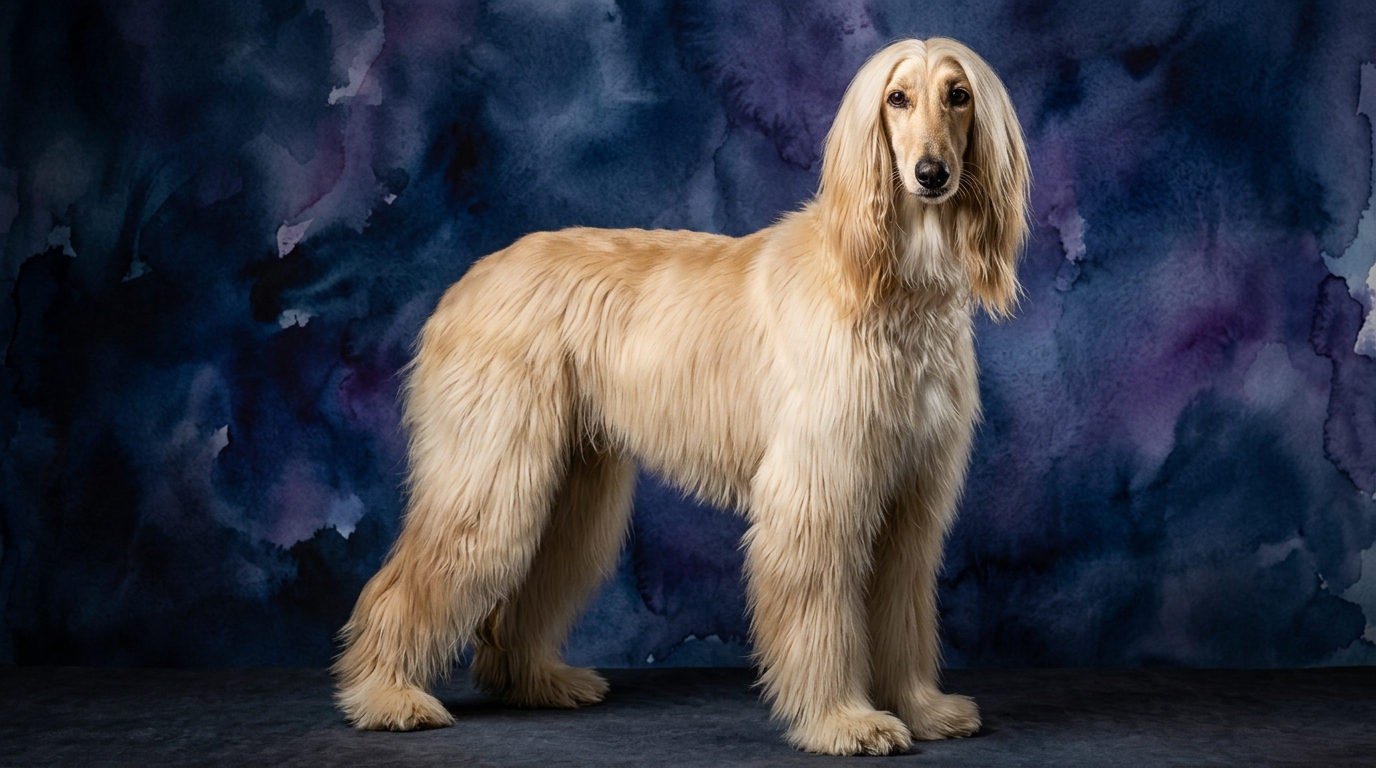
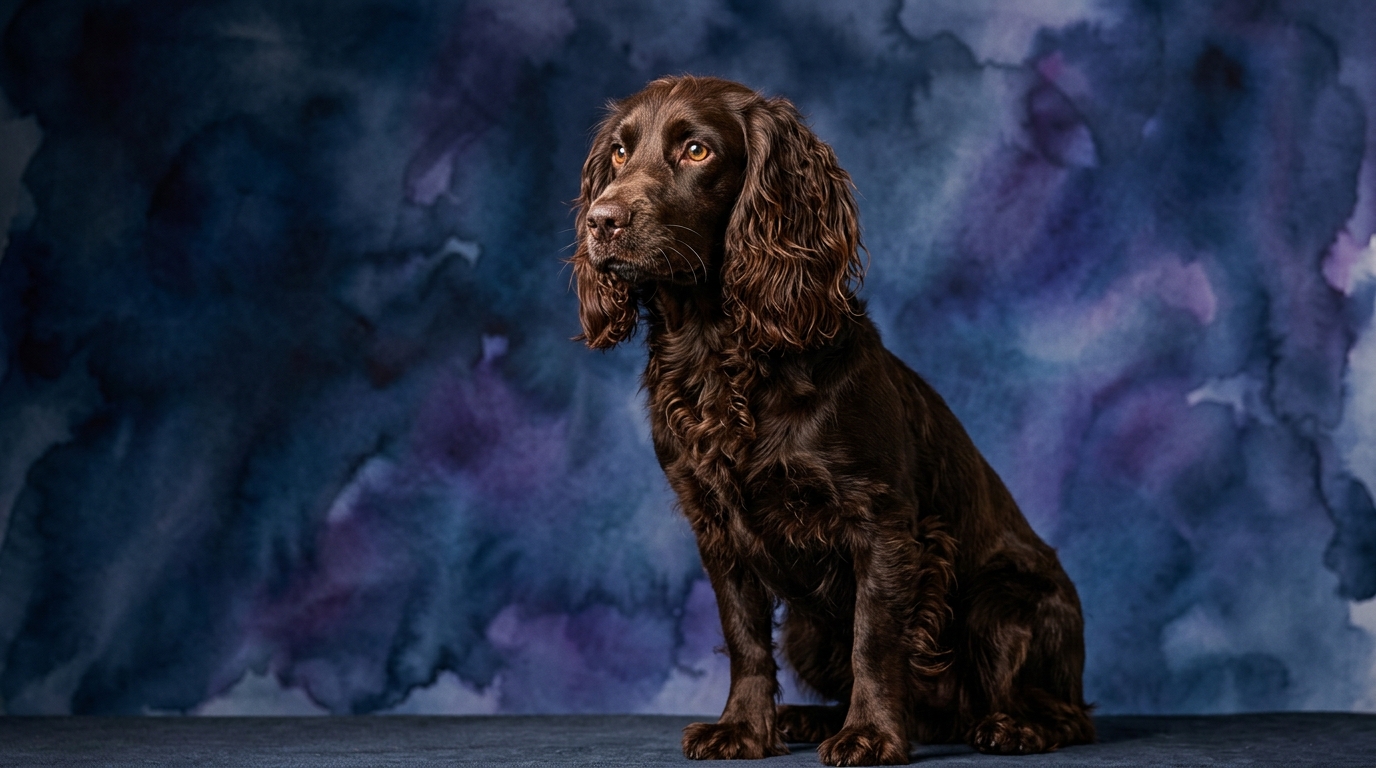
A Side-by-Side Look at Cognitive Profiles
The Afghan Hound, ranked #79 by Coren, presents a unique cognitive blueprint. Its Problem Solving ability scores a notable 4/5, indicating a capacity for independent thought and creative solutions, often driven by instinct rather than direct instruction. However, this breed's Training Speed is marked at a challenging 1/5; they learn at their own pace, often requiring significant motivation and patience due to a strong sense of self-will. Social Intelligence stands at 2/5, suggesting a more reserved and selective approach to social interactions, preferring the company of their trusted few over broad engagement. The Instinctive Drive is exceptionally high at 5/5, reflecting their powerful sighthound heritage for pursuing movement with unwavering focus. Memory, rated at 3/5, allows them to retain learned behaviors and experiences, though often filtered through their independent nature.
In contrast, the Boykin Spaniel, while not Coren-ranked, shows a balanced and cooperative cognitive profile. Their Problem Solving ability is rated 3/5, demonstrating practical intelligence geared towards their working tasks, often seeking solutions within a cooperative framework. Training Speed is a solid 3/5, indicating a willingness and aptitude for learning new commands and routines with moderate repetition and positive reinforcement. Social Intelligence also scores 3/5, highlighting their affable nature and desire to engage with both human and canine companions, making them adaptable family members. Instinctive Drive is a balanced 3/5, reflecting their spaniel heritage for flushing and retrieving game, but without the singular, all-consuming focus of a sighthound. Memory, like the Afghan, is 3/5, supporting their ability to recall training and past experiences reliably.
Where the Afghan Hound Cognitively Excels
The Afghan Hound’s cognitive strengths lie profoundly in its capacity for autonomous problem-solving and its unparalleled instinctive drive. With a Problem Solving score of 4/5, these dogs often devise their own strategies to navigate obstacles or achieve goals, a trait honed over centuries as independent hunters in challenging terrains. This isn't about following a command, but about assessing a situation and reacting with an intrinsic, often swift, decision-making process. For instance, an Afghan encountering a complex scent trail might employ novel approaches to follow it, rather than waiting for handler direction.
Their Instinctive Drive, a perfect 5/5, is the core of their being. This manifests as an intense focus on movement and a relentless pursuit of anything that triggers their prey drive. While it can pose training challenges, it's also a testament to their incredible sensory processing and physical coordination. This drive isn't just about chasing; it's about an entire cognitive system dedicated to detection, tracking, and the swift execution of ancient hunting patterns. This deep-seated, self-directed motivation allows them to excel in activities that tap into their natural sighthound abilities, demonstrating a distinct form of specialized intelligence.
Where the Boykin Spaniel Cognitively Shines
The Boykin Spaniel’s cognitive advantages are rooted in their cooperative nature, primarily evident in their Training Speed and Social Intelligence. Their Training Speed of 3/5 reflects a breed eager to please and quick to form associations between commands and actions. Unlike the Afghan Hound, the Boykin is typically motivated by the desire to work alongside their human, making them responsive to traditional training methods. This moderate speed means they grasp new concepts efficiently, often requiring fewer repetitions to solidify a behavior, a hallmark of a biddable gundog.
A Social Intelligence score of 3/5 further underscores their adaptability and desire for connection. Boykins are generally attuned to human emotions and social cues, making them excellent companions and therapy candidates. This isn't just about friendliness; it's about an inherent understanding of their role within a social unit and a willingness to integrate. They thrive on interaction and reciprocate affection, demonstrating a strong capacity for bonding and understanding the dynamics of their human family. This social acumen directly contributes to their trainability and overall harmonious integration into various living situations.
Training Dynamics: Independence vs. Cooperation
When it comes to training, the differences between the Afghan Hound and the Boykin Spaniel are stark and directly linked to their cognitive profiles. The Afghan Hound's Training Speed of 1/5 is not an indicator of inability to learn, but rather a reflection of their strong independent will. They process information and commands, but their decision to comply often hinges on whether it aligns with their own perceived interests or instincts. This means trainers must employ immense patience, positive reinforcement, and often, creative methods to make training feel like a suggestion rather than a demand. Repetitive drills can quickly lead to disengagement, requiring handlers to be constantly engaging and innovative.
In contrast, the Boykin Spaniel's Training Speed of 3/5, coupled with their 3/5 Social Intelligence, makes them far more amenable to conventional training. They actively seek to understand and please, thriving on positive reinforcement and clear directives. Boykins are eager to participate, making them excellent candidates for obedience, agility, and field work. Their behavioral differences stem from centuries of selective breeding for cooperative hunting; they are wired to work *with* humans, whereas the Afghan Hound was bred to work *for* themselves, albeit with human direction from a distance. This fundamental distinction means that while both can learn, the path to achieving desired behaviors is significantly less steep and more direct with a Boykin Spaniel.
Matching Breeds to Owner Lifestyles
The ideal owner for an Afghan Hound is someone who appreciates and can manage significant physical exercise and an independent spirit. With their 5/5 Instinctive Drive, Afghans require extensive opportunities to run and expend energy, ideally in securely fenced areas or through supervised sighthound-specific activities. Their 4/5 Problem Solving means they can be clever escape artists or find ways to entertain themselves if under-stimulated, which might not always align with human preferences. A relaxed owner who prefers minimal activity might find the Afghan Hound’s energy and self-directed nature overwhelming, as their need for mental and physical engagement is non-negotiable for their well-being.
For the Boykin Spaniel, a moderately active owner who enjoys engaging in activities with their dog would be an excellent match. Their balanced 3/5 Instinctive Drive means they enjoy walks, hikes, and retrieving games, but don't typically demand the same intensity or vast open spaces as an Afghan. Their 3/5 Social Intelligence makes them adaptable family members who enjoy being involved in daily life, whether it's a quiet evening at home or a weekend adventure. They thrive on companionship and structured interaction, making them suitable for owners who want a dog that is an active participant in their lifestyle, without requiring extreme dedication to managing a powerful independent hunting drive.
The Verdict
Choose the Afghan Hound if you are an experienced owner who cherishes a truly independent, elegant, and highly driven sighthound, prepared to invest significantly in specialized exercise and patient, creative training methods.
Opt for the Boykin Spaniel if you desire a biddable, sociable, and moderately active companion eager to learn and participate in family life, suitable for a range of engaging activities.
🧠 Find Your Pet's IQ Score
Our Pet IQ Lab assessment covers 25+ tests across 5 cognitive dimensions — personalized to your breed.
Take the Full IQ Test →Frequently Asked Questions
Is the Afghan Hound truly difficult to train given its low training speed score?
The Afghan Hound isn't 'difficult' in the sense of being unable to learn, but rather 'independent.' Their 1/5 Training Speed reflects a preference for self-direction; they learn best when training is engaging, positive, and feels like their idea, requiring patience and consistency from the owner.
Why isn't the Boykin Spaniel Coren-ranked, and what does this mean for its intelligence?
The Coren ranking primarily focused on breeds commonly found and studied at the time of its creation, and not all breeds were included. The Boykin Spaniel's absence from the list doesn't imply a lack of intelligence; their 3/5 scores across several cognitive dimensions indicate a capable, balanced, and cooperative learner well-suited for their working roles and companionship.
Which breed is better for a first-time dog owner?
For a first-time dog owner, the Boykin Spaniel would generally be a more suitable choice. Their biddable nature, moderate training speed, and higher social intelligence make them more forgiving and easier to integrate into a new owner's routine compared to the independent and more challenging training requirements of the Afghan Hound.