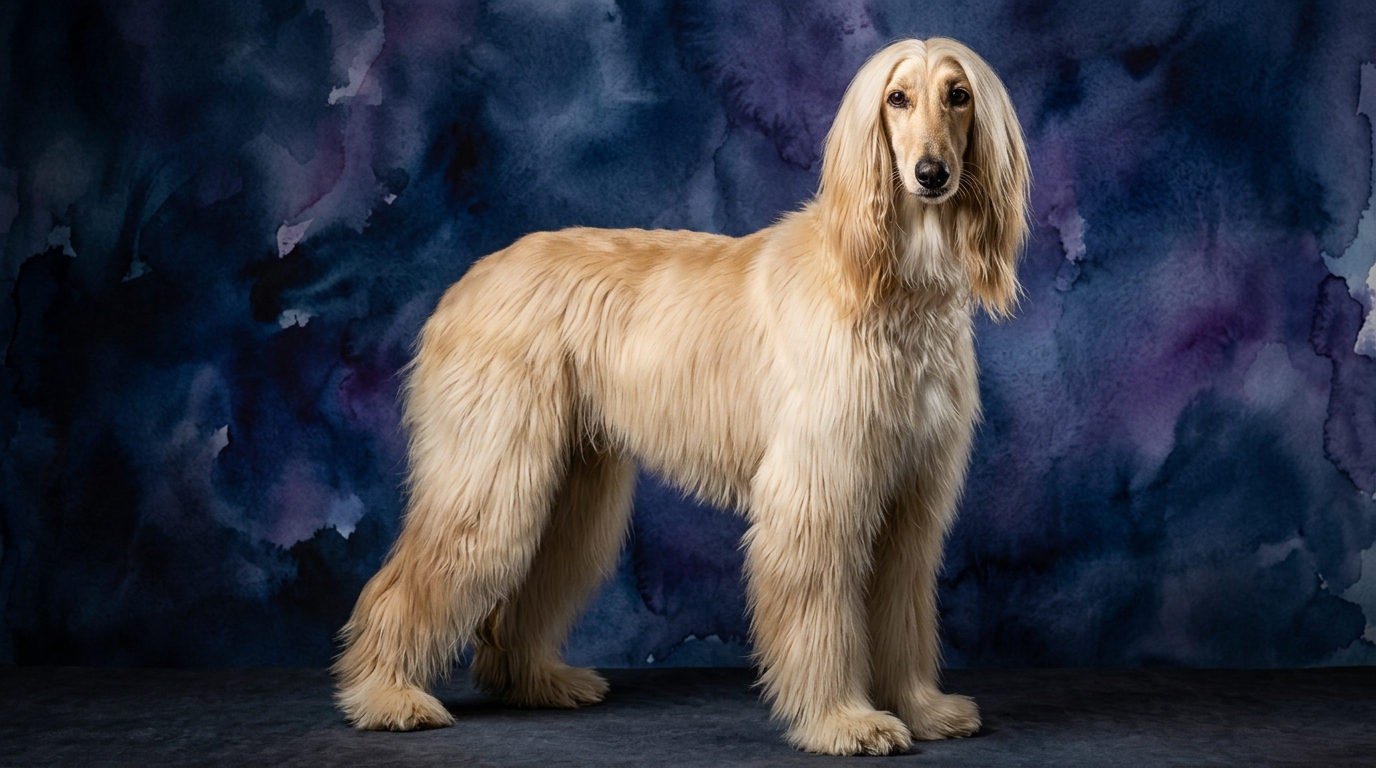
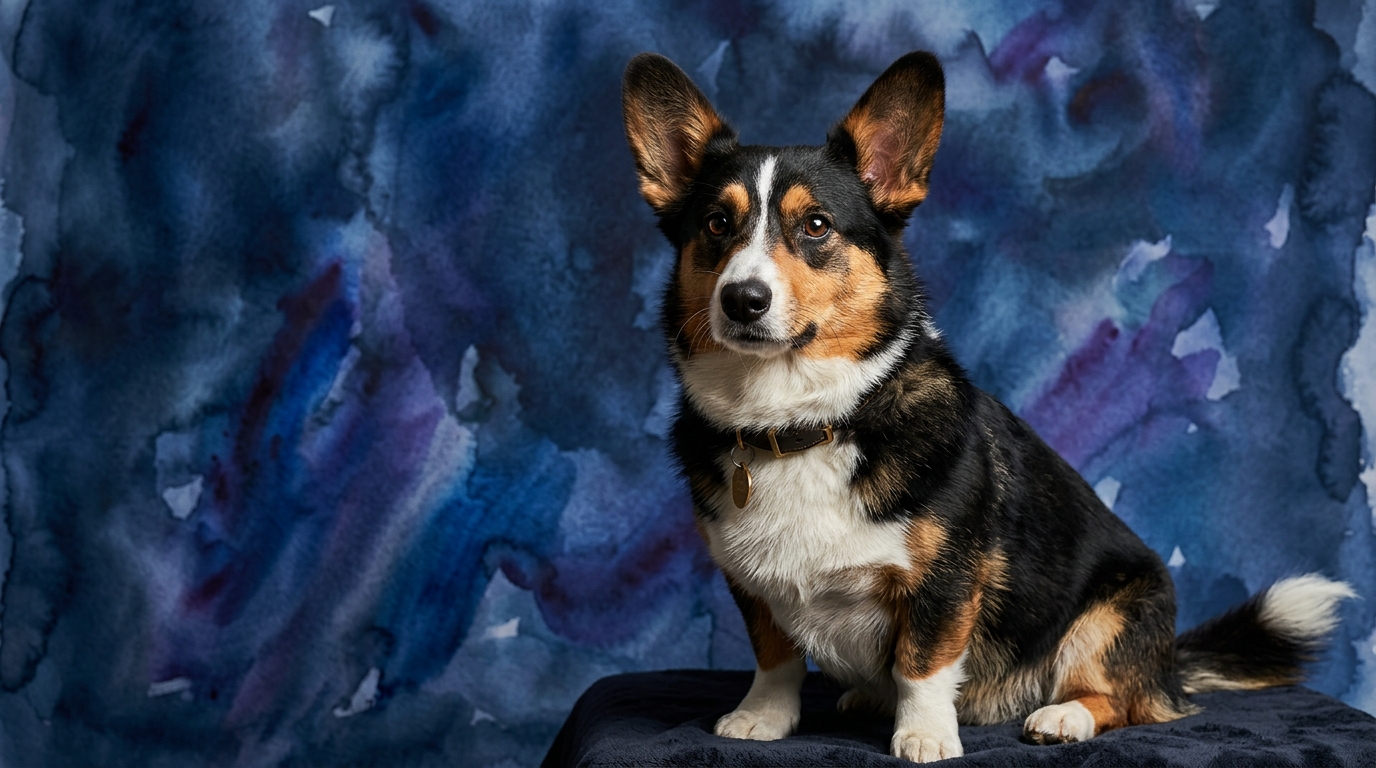
Side-by-Side IQ Profile: Afghan Hound vs. Cardigan Welsh Corgi
To understand the cognitive landscape of these two distinct breeds, The Cosmic Pet Pet IQ Lab employs a five-dimensional framework: Problem Solving, Training Speed, Social Intelligence, Instinctive Drive, and Memory.
The Afghan Hound, ranked #79 by Coren for working and obedience intelligence, demonstrates a Problem Solving capacity of 4/5, indicating a strong ability to navigate complex situations independently. However, their Training Speed is notably low at 1/5, suggesting a challenge in absorbing new commands quickly. Their Social Intelligence is measured at 2/5, reflecting a more aloof and self-reliant demeanor, while their Instinctive Drive is a commanding 5/5, showcasing a powerful intrinsic motivation for tasks like chasing. Memory for this breed stands at 3/5, indicating an adequate retention of experiences and routines.
In contrast, the Cardigan Welsh Corgi, with a much higher Coren rank of #26, presents a different cognitive profile. They share the Afghan Hound's Problem Solving score of 4/5, but apply it within a more collaborative context. Their Training Speed is significantly higher at 4/5, meaning they learn new tasks with remarkable efficiency. Social Intelligence for the Corgi is 3/5, indicating a balanced engagement with humans, while their Instinctive Drive is 3/5, reflecting their herding instincts rather than high-speed pursuit. The Corgi's Memory is also impressive at 4/5, allowing for strong retention of commands and social cues.
Where the Afghan Hound Wins Cognitively
The Afghan Hound’s primary cognitive strength lies in its exceptional blend of Problem Solving (4/5) and unparalleled Instinctive Drive (5/5), particularly within an independent context. This combination allows them to excel at self-directed tasks, such as navigating intricate environments or overcoming obstacles to reach a desired object, often without explicit human instruction. Their profound instinctive drive, honed over centuries for hunting by sight, means they possess an innate ability to process visual information rapidly and make autonomous decisions in pursuit of a goal.
While their Social Intelligence is lower, this contributes to their cognitive win in areas requiring independent thought rather than reliance on human cues. An Afghan Hound can analyze a situation and devise a solution based on its own assessment, rather than waiting for direction. This self-sufficiency, coupled with their capacity for complex thought, means they are adept at solving problems that align with their inherent motivations, showcasing a unique form of practical intelligence driven by their ancient lineage as sighthounds.
Where the Cardigan Welsh Corgi Wins Cognitively
The Cardigan Welsh Corgi shines in areas demanding rapid acquisition of information, strong retention, and social engagement. Their high Training Speed (4/5) and excellent Memory (4/5) make them adept at learning and recalling a vast repertoire of commands and routines, often with fewer repetitions than many other breeds. This cognitive advantage stems from their history as herding dogs, where understanding and responding to complex signals from a human handler was crucial for their work.
Furthermore, their Social Intelligence (3/5), while not the highest, is perfectly suited for collaborative tasks, allowing them to effectively interpret human intentions and adjust their behavior accordingly. Their Problem Solving (4/5) is frequently applied to strategic thinking within a structured environment, such as figuring out how to manipulate objects in a puzzle toy or strategically moving livestock. This capacity for quick learning and strong memory, coupled with a willingness to engage with human partners, positions the Corgi as a highly adaptable and responsive cognitive performer in diverse training and activity settings.
Which is Easier to Train and Why
Without question, the Cardigan Welsh Corgi is significantly easier to train than the Afghan Hound. This difference is directly attributable to their respective IQ profiles, particularly in Training Speed, Memory, and Social Intelligence. The Corgi's Training Speed of 4/5 means they grasp new commands quickly, often with a few repetitions, and their 4/5 Memory ensures these lessons are retained over time. Their Social Intelligence of 3/5 also means they are more inclined to work alongside their human, often finding motivation in pleasing their handler or earning a reward for cooperation.
In stark contrast, the Afghan Hound's Training Speed of 1/5 and Social Intelligence of 2/5 present a considerable challenge. They are not inherently driven by a desire to please and often require extensive, patient, and creative training methods. An Afghan Hound might understand a command but choose not to execute it if it doesn't align with its current interest or intrinsic motivation. Their independent nature, a hallmark of sighthounds bred to hunt autonomously, means they perceive commands as suggestions rather than directives, demanding an owner who can make training intrinsically rewarding rather than relying on traditional obedience models. This behavioral difference translates into a far steeper learning curve for the owner of an Afghan Hound compared to a Corgi.
Which Suits Active Owners vs. Relaxed Owners
When considering an owner's lifestyle, the Afghan Hound and Cardigan Welsh Corgi cater to distinct preferences. The Afghan Hound, with its commanding 5/5 Instinctive Drive, is unequivocally suited for active owners who relish providing extensive, high-energy outlets. These dogs were bred for endurance and speed, requiring substantial physical exercise like long runs, secure off-leash activities, or sighthound-specific sports. Beyond physical activity, their independent problem-solving nature and training challenges demand an actively engaged owner committed to understanding their unique motivations and investing significant time in creative, patient guidance rather than expecting rote obedience. They are not a choice for an owner seeking a low-maintenance companion; rather, they thrive with an owner who appreciates their majestic, self-reliant spirit and is prepared for a dedicated partnership.
The Cardigan Welsh Corgi, while not a couch potato, is better suited for owners who might be described as moderately active, or who prefer structured, mentally stimulating activities over sheer physical exertion. Their 3/5 Instinctive Drive means they need regular exercise, such as brisk walks and playtime, but their primary need is for consistent mental engagement. Owners who enjoy training, participate in dog sports like agility or obedience, or provide ample puzzle toys will find the Corgi a rewarding companion. They thrive on having a "job" to do, even if it's just learning new tricks or solving a treat puzzle. Therefore, an owner who enjoys interactive, brain-game-oriented activities and can provide moderate physical output will find a Corgi to be an excellent fit, making them a more adaptable choice for various active lifestyles that aren't solely focused on high-speed endurance.
The Verdict
Choose the Afghan Hound if you are an experienced, highly active owner who values an independent, majestic companion and is prepared for a significant, patient commitment to understanding their unique, self-directed nature.
Opt for the Cardigan Welsh Corgi if you seek a highly trainable, socially engaged partner for various activities, and can provide consistent mental stimulation alongside moderate physical exercise in a structured environment.
🧠 Find Your Pet's IQ Score
Our Pet IQ Lab assessment covers 25+ tests across 5 cognitive dimensions — personalized to your breed.
Take the Full IQ Test →Frequently Asked Questions
How does Coren rank relate to IQ scores?
Coren rank primarily reflects a breed's working and obedience intelligence, which aligns closely with our 'Training Speed' dimension, where a lower numerical rank indicates faster learning and easier training.
Are Afghan Hounds truly difficult to train?
Yes, their independent nature and low training speed mean they require exceptional patience, creative motivation, and consistency. They often learn on their own terms, performing tasks when they see intrinsic value rather than simply to please.
What kind of mental enrichment do Corgis need?
Corgis thrive on puzzle toys, obedience training, agility, and tasks that engage their natural herding instincts, requiring them to think and problem-solve within a structured, interactive context with their owner.