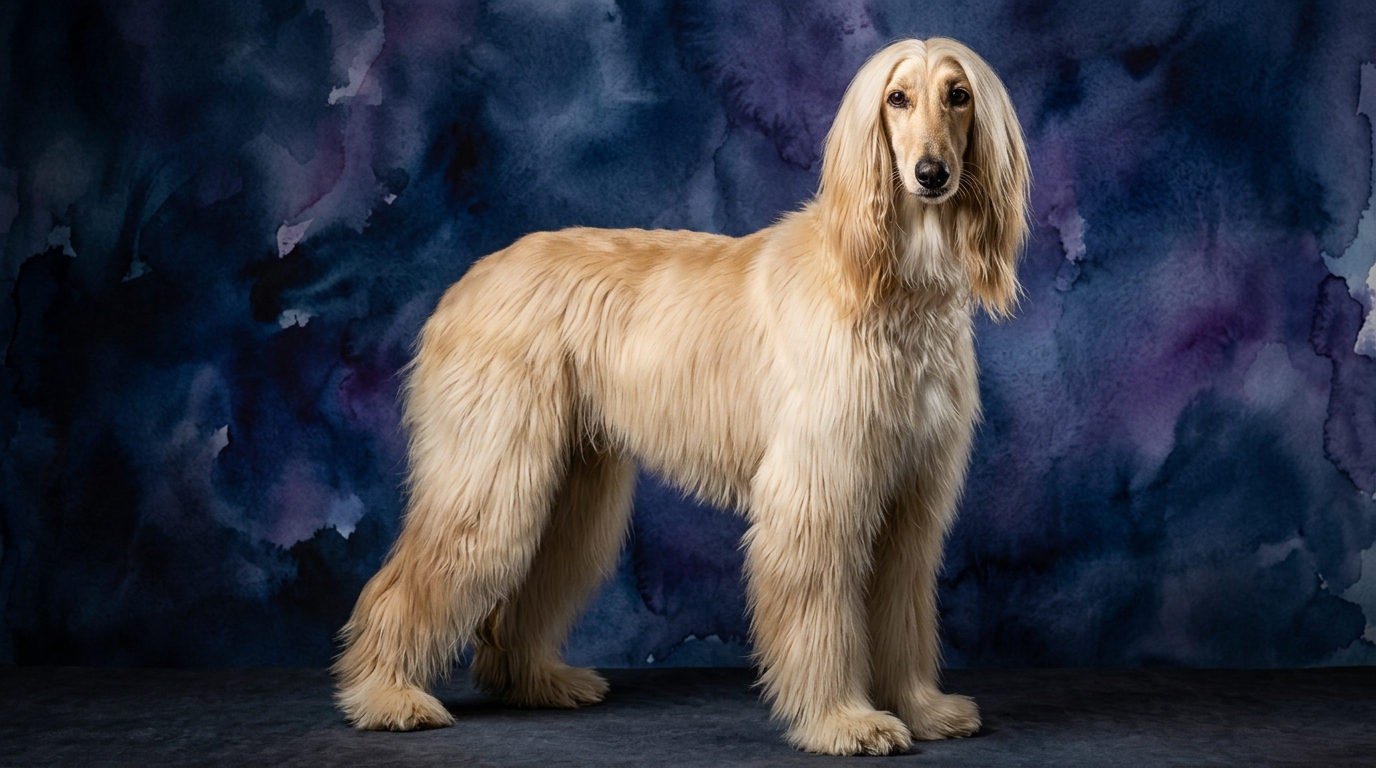
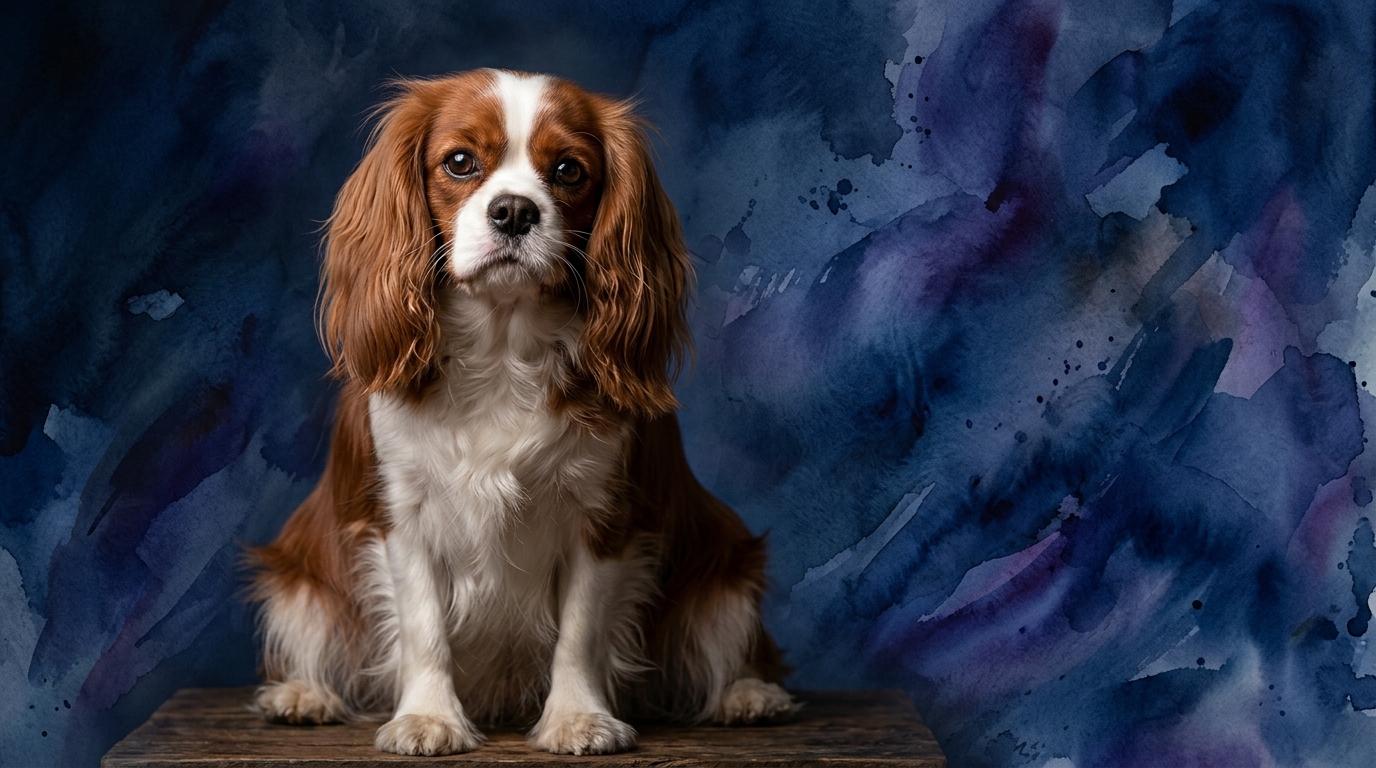
Side-by-Side IQ Profile: Afghan Hound vs. Cavalier King Charles Spaniel
**Afghan Hound:** The Afghan Hound's cognitive makeup is a study in independence and ancient instinct, reflected across its five intelligence dimensions.
**Problem Solving (4/5):** The Afghan Hound demonstrates a strong capacity for independent thought, often devising ingenious solutions to navigate complex situations or achieve its goals without direct human intervention. This self-reliance highlights an intuitive intellect focused on practical, environmental challenges.
**Training Speed (1/5):** With a notably low training speed, Afghan Hounds require exceptional patience, consistency, and highly motivating techniques, as they are not inherently driven by a desire for rapid obedience. Their independent nature often leads them to evaluate commands on their own terms.
**Social Intelligence (2/5):** Afghan Hounds generally exhibit lower social intelligence, being less attuned to subtle human cues and not primarily motivated by social bonding for direction. They tend to be more aloof, preferring selective affection and maintaining a dignified, self-contained demeanor.
**Instinctive Drive (5/5):** Possessing an exceptionally high instinctive drive, the Afghan Hound is profoundly influenced by its sighthound heritage, with an almost insatiable urge to chase, run, and hunt based on visual stimuli. This powerful innate motivation dictates much of their engagement with the world.
**Memory (3/5):** Afghan Hounds show an average memory for routines, familiar places, and people, though recall for less-reinforced commands can be inconsistent due to their selective obedience. They remember experiences, often choosing to act on them based on their own judgment.
**Cavalier King Charles Spaniel:** The Cavalier's intelligence profile is marked by its profound social aptitude and willingness to connect, as seen in its scores.
**Problem Solving (3/5):** The Cavalier King Charles Spaniel displays moderate problem-solving abilities, adept at learning household routines and simple tasks, and navigating familiar environments effectively. Their problem-solving often centers on achieving comfort or proximity to their human companions.
**Training Speed (3/5):** Cavaliers have a moderate training speed, generally eager to learn and respond well to positive reinforcement and gentle guidance. Their desire to please their owners makes them fairly receptive to picking up basic commands and house rules at a reasonable pace.
**Social Intelligence (5/5):** With a perfect score in social intelligence, the Cavalier is profoundly attuned to human emotions and cues, making them incredibly empathetic and responsive companions. They thrive on interaction and excel at reading and reciprocating social signals, valuing deep connection.
**Instinctive Drive (3/5):** The Cavalier's instinctive drive is moderate; while they may exhibit some chasing instincts for small animals, these are generally manageable and do not dominate their behavior. Their primary motivation often remains companionship and social engagement.
**Memory (3/5):** Cavaliers also demonstrate an average memory, reliably recalling routines, learned commands, and the faces of their beloved family members. Their strong social bond often enhances consistent recall, associating positive memories with human interactions.
Where the Afghan Hound Wins Cognitively
The Afghan Hound truly excels in areas demanding independent thought and primal instinct, making its Problem Solving score of 4/5 a defining cognitive strength. These dogs are adept at assessing situations and devising their own solutions, whether it involves navigating complex terrain or figuring out how to reach an intriguing object. This self-sufficiency, combined with an unparalleled Instinctive Drive of 5/5, means they possess a powerful, innate motivation to pursue and explore, leveraging their keen senses and physical prowess. Their cognitive victories manifest in action and autonomy, demonstrating a deep, experiential understanding of their environment. For owners appreciating a dog with a strong, self-directed will, the Afghan Hound offers a fascinating glimpse into a mind wired for ancient pursuits and independent decision-making, rather than constant human validation.
Where the Cavalier King Charles Spaniel Wins Cognitively
In contrast, the Cavalier King Charles Spaniel shines brightest in social and emotional cognition, boasting a perfect 5/5 in Social Intelligence. This exceptional ability allows them to flawlessly interpret human moods, intentions, and subtle cues, making them extraordinarily empathetic and responsive companions. They often anticipate needs and offer comfort, demonstrating a profound understanding of the human-canine bond. Their moderate Training Speed of 3/5 is also a cognitive advantage, as their willingness to engage and please their owners facilitates learning and cooperation in daily life. This combination of social acumen and trainability means Cavaliers are adept at navigating complex social dynamics within a family, often acting as intuitive communicators and emotional anchors. Their cognitive strengths are rooted in their capacity for deep connection and their natural talent for integrating seamlessly into human social structures, prioritizing harmony and companionship.
Which is Easier to Train, and Why?
When comparing ease of training, the Cavalier King Charles Spaniel holds a clear advantage over the Afghan Hound, primarily due to their differing social intelligence and instinctive drives. The Cavalier’s perfect 5/5 Social Intelligence makes them inherently motivated to please their human companions, rendering them highly receptive to cues and eager to cooperate during training. Their moderate Training Speed of 3/5, coupled with this strong desire for social connection, translates into a dog that typically learns new commands with reasonable consistency and positive reinforcement. They thrive on praise and gentle guidance, viewing training as an opportunity for bonding. Conversely, the Afghan Hound’s low Training Speed of 1/5 and lower Social Intelligence of 2/5 present significant challenges. Their potent Instinctive Drive of 5/5 means they are often more engrossed in pursuing a scent or visual stimulus than in performing a requested behavior. They are not intrinsically driven by a desire to please and will often weigh the perceived value of a command against their own independent urges, rendering traditional obedience methods less effective. Training an Afghan Hound demands exceptional patience, creativity, and an understanding of their sighthound nature, often focusing on motivation through play or prey drive rather than strict obedience.
Which Suits Active Owners vs. Relaxed Owners
The distinct cognitive profiles of these breeds offer clear guidance for matching them with owner lifestyles. The Afghan Hound, with its high Problem Solving (4/5) and supreme Instinctive Drive (5/5), is suited for active owners who appreciate a dog with a strong independent spirit and a need for substantial physical and mental exertion. Owners who enjoy long runs, lure coursing, or activities that tap into their hound’s natural chasing instincts will find a fulfilling partnership. They thrive with owners who can provide outlets for their intelligence and drive, understanding this breed needs space to run and opportunities for independent decision-making. In contrast, the Cavalier King Charles Spaniel, with its exceptional Social Intelligence (5/5) and moderate Instinctive Drive (3/5), is the quintessential companion for relaxed owners seeking a devoted, empathetic presence. Their contentment stems from close proximity to their human family, making them ideal for individuals or families who prefer cozy evenings, gentle walks, and consistent companionship. Cavaliers adapt beautifully to calmer home environments, preferring to spend their energy on social interaction and emotional connection.
The Verdict
Choose an Afghan Hound if you are an experienced, active owner who appreciates an independent, self-reliant dog with a powerful instinctive drive for running and exploration, willing to invest significant time in creative, patient training.
Choose a Cavalier King Charles Spaniel if you desire a highly affectionate, socially attuned companion who thrives on close human interaction, adapts well to a relaxed home life, and is eager to please during training.
🧠 Find Your Pet's IQ Score
Our Pet IQ Lab assessment covers 25+ tests across 5 cognitive dimensions — personalized to your breed.
Take the Full IQ Test →Frequently Asked Questions
Is an Afghan Hound difficult to live with due to its low training speed?
While Afghan Hounds have a low training speed and strong independent streak, they are not necessarily difficult, but they require owners who understand and appreciate their unique cognitive makeup. Their independence means they often choose when to obey, demanding consistent, patient, and creative training methods focused on motivation rather than strict compliance.
How does the Cavalier's high social intelligence impact its daily behavior?
A Cavalier's exceptionally high social intelligence means they are highly attuned to human emotions and thrive on interaction, making them incredibly empathetic and eager to please. This translates into a dog that loves being close to its family, often anticipating needs, and responding well to social cues, making them wonderful therapy or emotional support companions.
Can an Afghan Hound be trained for advanced obedience despite its low training speed?
While an Afghan Hound's training speed is low, they are capable of learning advanced behaviors, but it requires extraordinary patience, positive reinforcement, and a deep understanding of their sighthound nature. Owners often find success by making training a game, leveraging their instinctive drives, and accepting that their compliance might be selective rather than absolute.