A Tale of Two Canines: Afghan Hound vs. Chesapeake Bay Retriever Intelligence
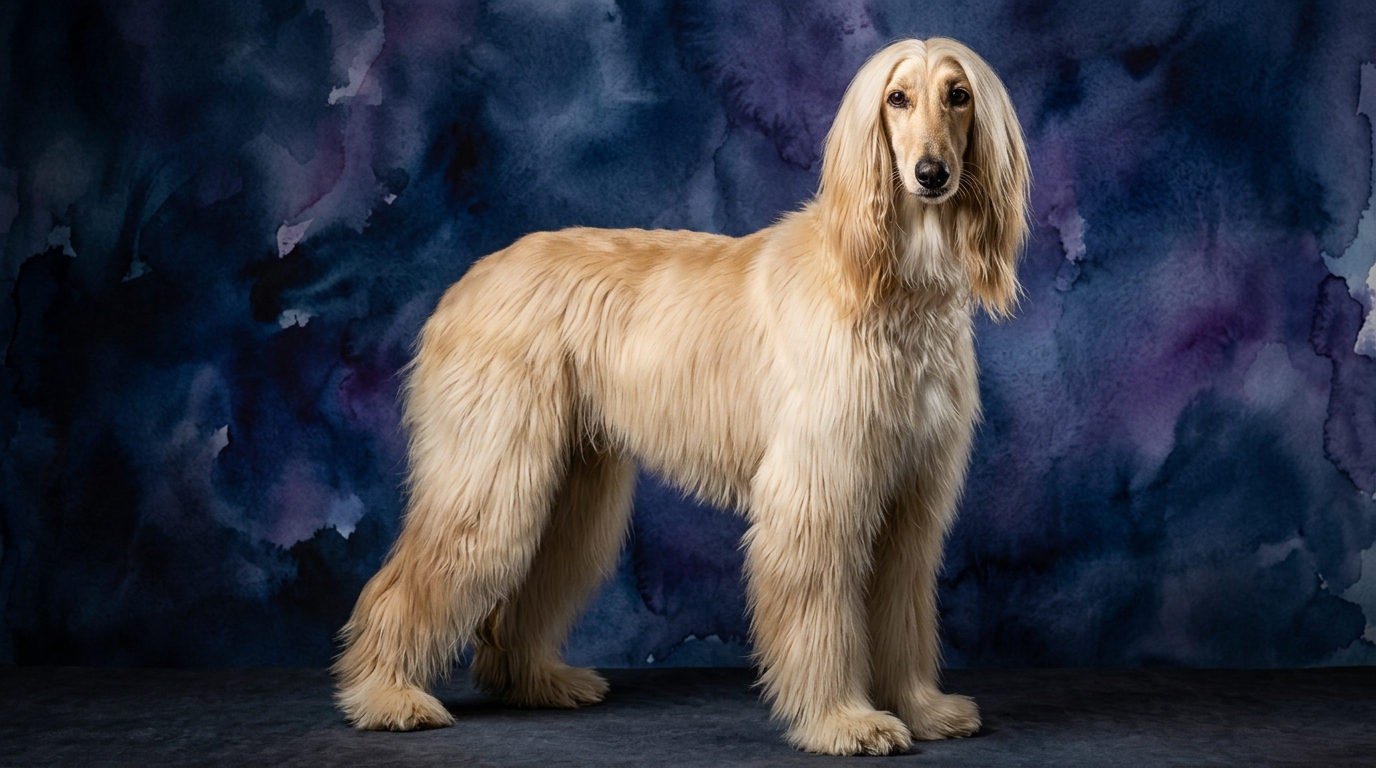
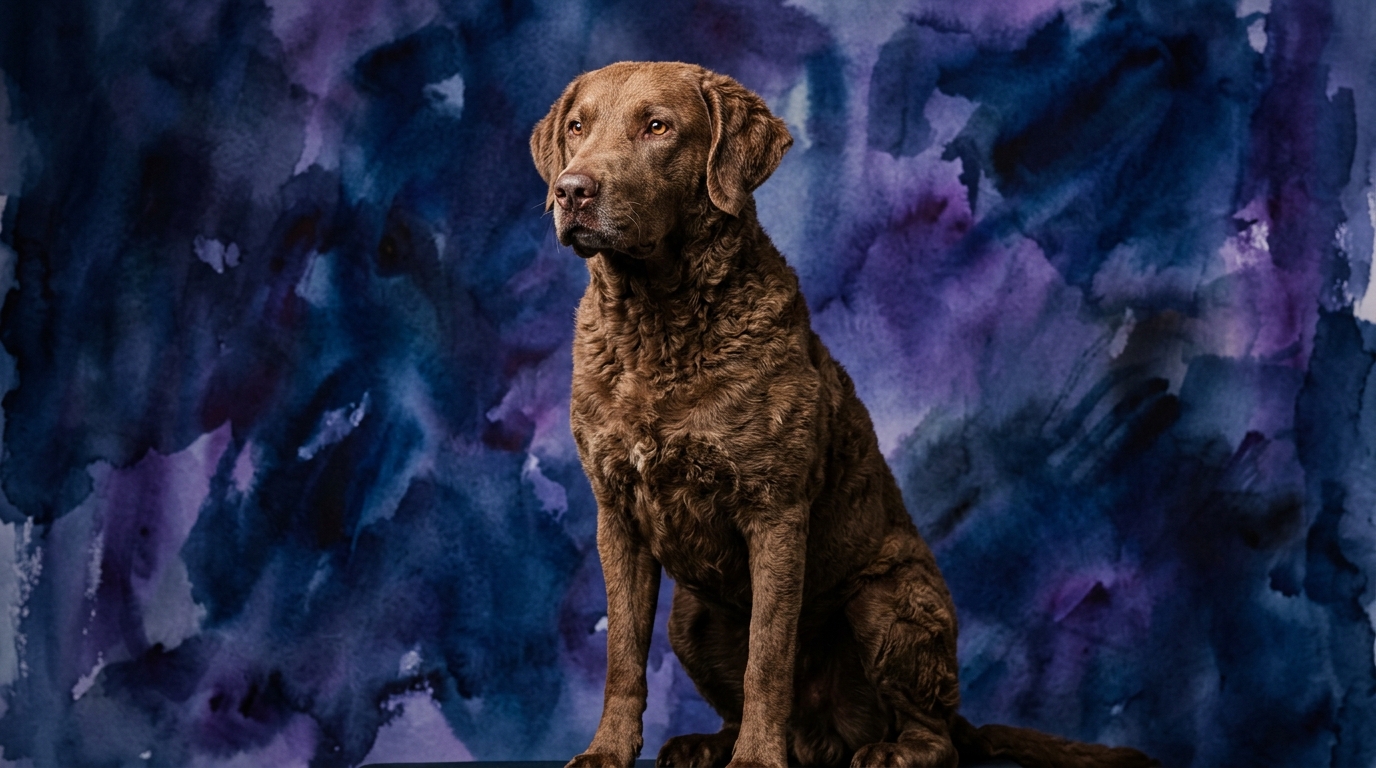
On one side, we have the Afghan Hound, a sighthound of ancient lineage, known for its regal appearance and independent spirit, historically tasked with hunting large game across vast terrains. On the other, the Chesapeake Bay Retriever, a robust water dog bred for retrieving waterfowl in challenging conditions, requiring both resilience and keen cooperation. These deep-seated historical roles have profoundly influenced their cognitive development, leading to distinct strengths and approaches to the world.
Understanding their intelligence means looking beyond generalized notions of 'smartness' and instead dissecting the specific dimensions of their minds. Our Cosmic Pet Pet IQ Lab analysis provides a unique lens, evaluating each breed across problem-solving, training speed, social intelligence, instinctive drive, and memory, allowing us to pinpoint precisely where their cognitive abilities diverge and converge.
Side-by-Side Cognitive Profiles: Decoding Their Minds
The Afghan Hound presents a cognitive profile centered on autonomy and primal instinct. Their Problem Solving is rated at 4/5, indicating a capacity for independent thought and finding solutions, often to their own satisfaction. However, their Training Speed is a notably low 1/5, suggesting a strong disinclination towards rote obedience or quick acquisition of human-initiated commands. Social Intelligence stands at 2/5, implying a less pronounced interest in human social cues, fostering an aloof demeanor. A formidable Instinctive Drive of 5/5 underscores their powerful hunting heritage, making them exceptionally driven by scent and sight. Their Memory is a moderate 3/5, sufficient for navigating known territories but perhaps not for complex, multi-step tasks.
In contrast, the Chesapeake Bay Retriever exhibits a more collaborative and task-oriented intelligence. Like the Afghan, their Problem Solving is 4/5, yet it's often applied to overcoming obstacles in service of a goal, such as retrieving. Their Training Speed is a robust 4/5, reflecting a strong eagerness to learn and respond to instruction, a vital trait for a working retriever. Social Intelligence is rated 3/5, indicating a better attunement to human communication and a desire for partnership. Their Instinctive Drive is 3/5, channeled effectively into retrieving and working tasks rather than independent pursuit. Finally, their Memory is a strong 4/5, crucial for recalling complex sequences of commands or the location of multiple retrieves.
Where the Afghan Hound's Cognition Shines Brightest
The Afghan Hound’s cognitive pinnacle lies in its extraordinary Instinctive Drive, rated a perfect 5/5. This isn't just a strong urge; it's a finely tuned, ancient mechanism for survival and pursuit. This drive allows them to operate with unparalleled focus and independence when a target is sighted, making split-second decisions and executing complex maneuvers across varied terrain without human intervention. Their long history of hunting across vast landscapes ingrained an autonomous problem-solving ability directly tied to this drive, enabling them to outmaneuver prey or navigate challenging environments based purely on their own keen senses and judgment.
Their Problem Solving at 4/5, when viewed through the lens of their sighthound heritage, emphasizes ingenuity geared towards self-sufficiency. An Afghan Hound might excel at figuring out how to open a gate or reach a forbidden treat, not necessarily to please an owner, but to achieve a self-motivated goal. This is a mind built for independent action and strategic thinking in pursuit of its own interests, showcasing a distinct form of canine intellect that values autonomy above all else.
Unpacking the Chesapeake Bay Retriever's Cognitive Strengths
The Chesapeake Bay Retriever's cognitive prowess is most evident in its exceptional Training Speed (4/5) and Memory (4/5), which are deeply intertwined with its working role. These dogs are quick to grasp and retain complex commands, making them highly efficient learners. Their ability to remember intricate sequences of instructions or multiple retrieve locations, even amidst distractions or challenging environments, is critical for a waterfowl retriever. This combination allows them to consistently perform demanding tasks, demonstrating a reliable and enduring cognitive capacity for applied learning.
Furthermore, their Problem Solving (4/5) and Social Intelligence (3/5) work in concert to facilitate effective partnership. A Chessie's problem-solving is often directed towards overcoming obstacles to complete a task for their handler, such as navigating icy waters or dense cover to retrieve a bird. Their social intelligence enables them to better interpret their owner's intentions and adjust their actions accordingly, fostering a collaborative dynamic that is central to their utility as a working dog and companion.
Training Dynamics: A Study in Contrasts
The stark contrast in Training Speed (Afghan Hound 1/5 vs. Chesapeake Bay Retriever 4/5) paints a clear picture of their differing approaches to learning from humans. The Afghan Hound's low score signifies a dog that is not inherently motivated by pleasing an owner or quickly adopting human-centric rules. Their high instinctive drive means they are often more interested in pursuing a fleeting squirrel than responding to a 'sit' command. Training an Afghan requires profound patience, creativity, and an understanding of their independent nature, often necessitating methods that make the desired behavior intrinsically rewarding, rather than relying on their desire for cooperation. Expect a longer, more challenging journey to achieve reliable obedience, focusing on building a relationship that respects their self-directed mindset.
Conversely, the Chesapeake Bay Retriever's 4/5 training speed makes them a far more receptive student. They are eager to engage, learn, and form a working partnership. Their higher social intelligence means they are more attuned to human cues and find satisfaction in performing tasks alongside their owner. While they still require consistent, firm, and positive training, their natural inclination to cooperate and their robust memory make the process considerably more efficient and rewarding for most owners. They thrive on structure and purpose, readily absorbing commands and applying them in various situations.
Lifestyle Suitability: Active Pursuit vs. Dedicated Partnership
For owners considering an Afghan Hound, an understanding of their unique activity requirements is crucial. With an Instinctive Drive of 5/5, these dogs require considerable opportunities for vigorous, often independent, exercise. They are not content with short leashed walks; they need safe, enclosed spaces where they can gallop freely and satisfy their innate urge to run and chase. An owner must be prepared to manage this powerful drive, providing outlets that respect their sighthound heritage while ensuring their safety. They thrive with individuals who appreciate their independent spirit and can provide consistent, high-energy mental and physical stimulation tailored to their specific instincts.
The Chesapeake Bay Retriever also demands an active lifestyle, but their activity is fundamentally collaborative. Their ideal owner is one who enjoys outdoor activities and seeks a dedicated partner for adventures. Chessies excel in situations where they can work alongside their human, whether it's retrieving, swimming, hiking, or participating in dog sports. Their drive is best channeled into purposeful activities that strengthen the bond and provide mental stimulation through shared tasks. They are less about independent pursuit and more about shared purpose, making them excellent companions for active individuals or families who want a dog deeply integrated into their adventurous life.
The Verdict
Choose the Afghan Hound if you appreciate a truly independent spirit, possess immense patience for training, and can provide ample, safe opportunities for them to express their profound instinctive drive and unparalleled athleticism.
Opt for the Chesapeake Bay Retriever if you seek a dedicated, trainable partner for outdoor adventures, value a dog eager to learn and work alongside you, and are prepared for consistent training and engagement.
🧠 Find Your Pet's IQ Score
Our Pet IQ Lab assessment covers 25+ tests across 5 cognitive dimensions — personalized to your breed.
Take the Full IQ Test →Frequently Asked Questions
Are Afghan Hounds difficult to train?
With a training speed of 1/5, Afghan Hounds present a significant training challenge due to their independent nature and strong instinctive drives. They respond best to patient, consistent positive reinforcement that taps into their motivations rather than relying on obedience for its own sake, often requiring a creative approach.
How do Chesapeake Bay Retrievers perform in dog sports?
Chesapeake Bay Retrievers excel in dog sports, particularly those involving retrieving, swimming, and obedience, thanks to their 4/5 training speed, 4/5 memory, and cooperative social intelligence. They are eager to work and learn complex routines with their handlers, thriving on purpose-driven activities.
Which breed requires more independent exercise?
The Afghan Hound, with its 5/5 instinctive drive, requires more opportunities for independent, high-speed running to satisfy its sighthound instincts. The Chesapeake Bay Retriever also needs vigorous exercise, but often prefers it to be cooperative and task-oriented, such as retrieving or swimming alongside their owner.