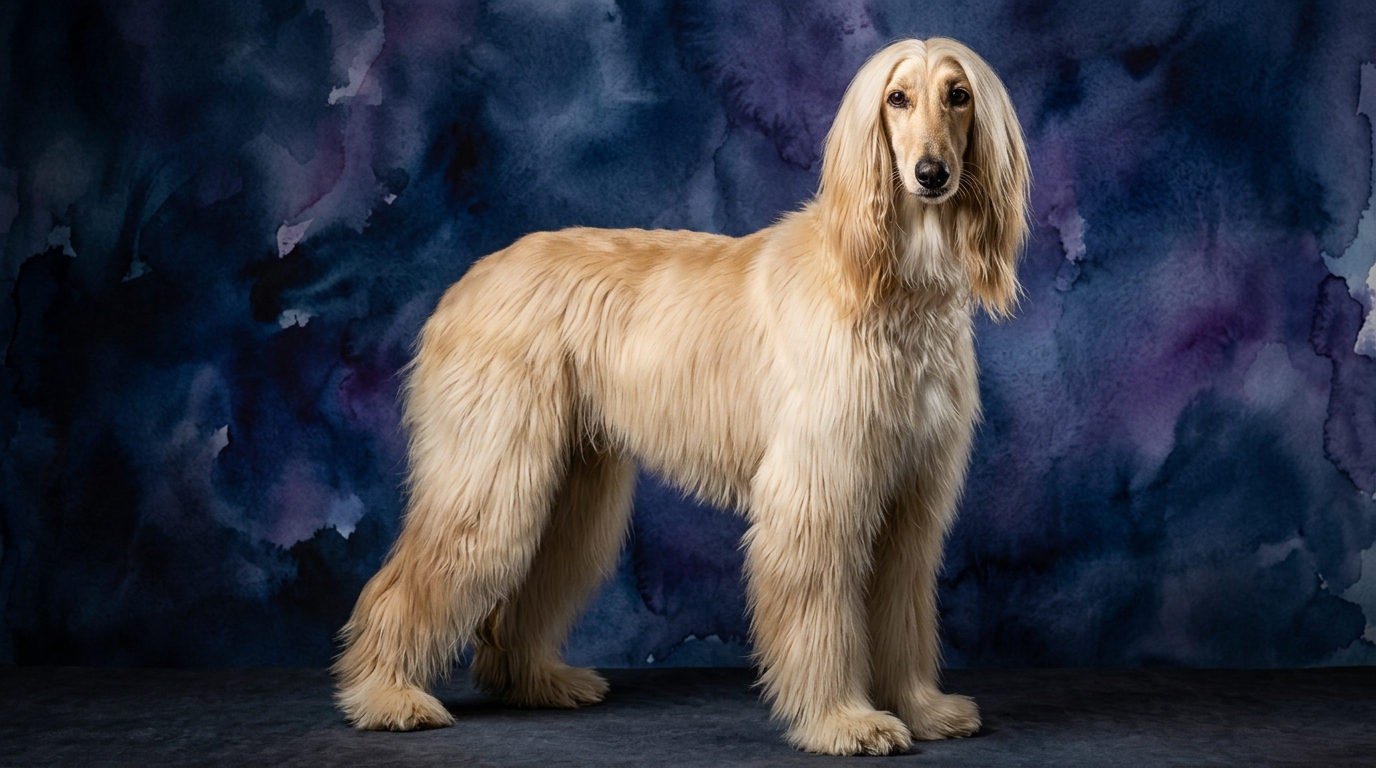
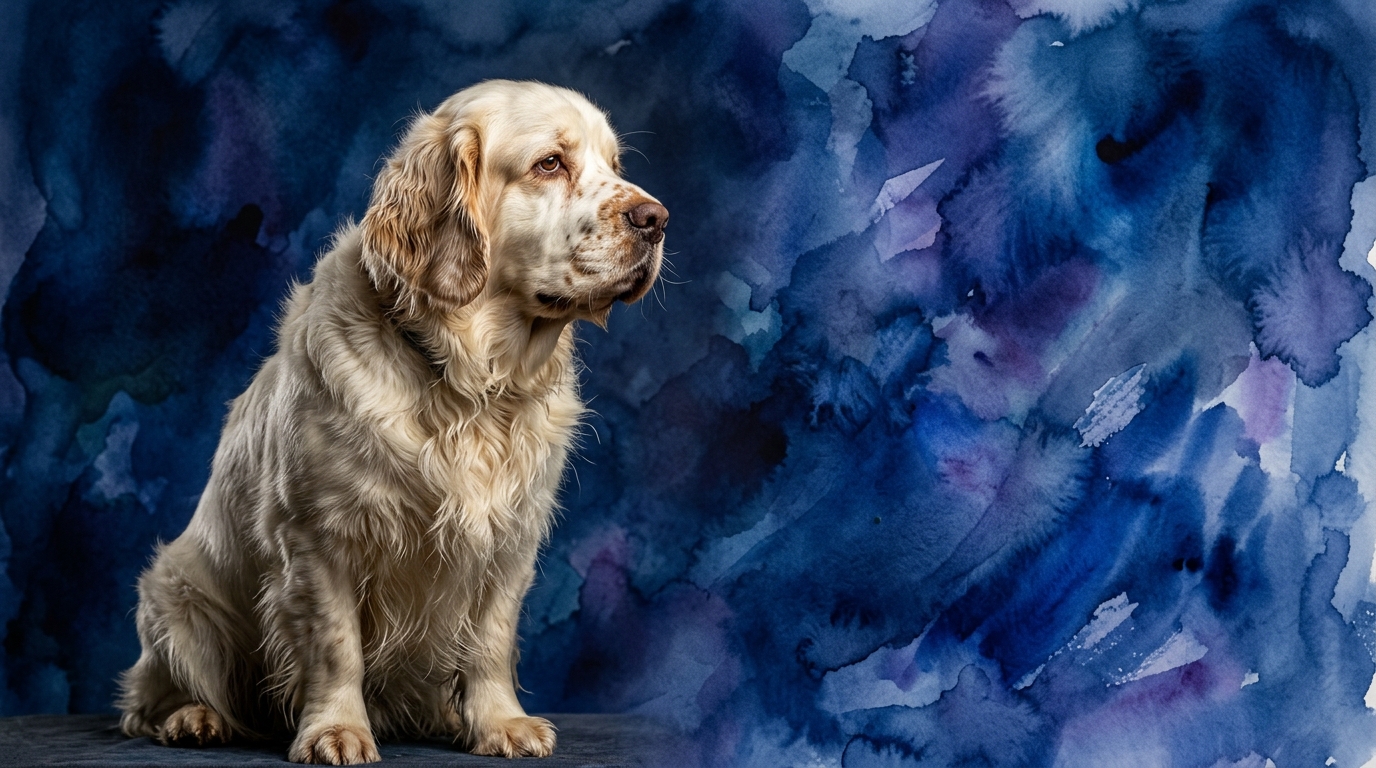
Side-by-Side Cognitive Profiles: Afghan Hound vs. Clumber Spaniel
The Afghan Hound, a breed often admired for its majestic appearance, holds a Coren rank of #79, indicating a working and obedience intelligence that requires consistent effort and patience. Their problem-solving ability scores a notable 4/5, suggesting a capacity for independent thought and devising solutions to challenges, often through observation and experimentation. However, their training speed is a challenging 1/5, meaning they require many repetitions to grasp new commands and may exhibit inconsistent recall. Social intelligence is rated at 2/5, implying a reserved nature and less reliance on human social cues. A dominant feature of their cognition is an instinctive drive of 5/5, fueling their powerful prey drive and independent pursuit. Their memory stands at a moderate 3/5, allowing them to retain learned experiences and routines to an average degree.
In contrast, the Clumber Spaniel, known for its gentle demeanor and robust build, ranks at #55 on the Coren scale, placing them in the average working and obedience intelligence category. Their problem-solving capacity is a steady 3/5, indicating they can navigate moderately complex situations, often relying on learned associations and scent. With a training speed of 3/5, they are generally willing learners, picking up new commands at a reasonable pace with positive reinforcement. Their social intelligence also scores 3/5, reflecting an amiable nature and a moderate ability to interpret human intentions and emotions. The Clumber Spaniel's instinctive drive is 3/5; while they possess a strong drive to flush game, it is typically more cooperative and less independently overwhelming than a sighthound's. Their memory is also rated at 3/5, allowing for consistent recall of learned behaviors and routines.
Where the Afghan Hound Excels Cognitively
The Afghan Hound’s cognitive strengths are particularly evident in two key areas. Their problem-solving ability, rated 4/5, surpasses that of the Clumber Spaniel. This means they are more adept at independent reasoning, capable of assessing novel situations and devising their own solutions, especially when motivated by their instincts. For example, an Afghan Hound might more quickly figure out how to open a complex latch or navigate an intricate outdoor environment by observing and experimenting, rather than waiting for human guidance. This self-directed cognitive approach allows them to be resourceful in unexpected scenarios.
Furthermore, their instinctive drive, scoring an exceptional 5/5, represents a highly specialized cognitive strength. This intense drive for pursuit and independent action enables them to process visual information rapidly, maintain focus on distant moving objects, and make split-second decisions in high-stakes, fast-paced environments. This isn't just about physical speed; it’s about a finely tuned predatory cognition that allows them to react to environmental stimuli with remarkable efficiency, often without requiring human input. This deep-seated instinct shapes much of their world view and problem-solving strategies.
Where the Clumber Spaniel Holds the Cognitive Edge
The Clumber Spaniel demonstrates clear cognitive advantages in areas emphasizing cooperation and learning efficiency. Their training speed of 3/5 is significantly higher than the Afghan Hound's 1/5. This indicates a greater cognitive predisposition for processing and integrating new commands with fewer repetitions, making the learning process smoother and more rewarding for both dog and owner. Their willingness to engage with human instruction and their more direct cognitive pathway for associating actions with verbal cues set them apart.
Moreover, the Clumber Spaniel's social intelligence, rated 3/5, provides them with a superior aptitude for understanding and responding to human social signals. They are more likely to pick up on subtle changes in vocal tone, body language, and emotional states, allowing them to adapt their behavior to maintain harmony within a family unit. This makes them more empathetic companions and better at navigating complex social dynamics. Their cognitive framework is inherently more geared towards harmonious co-existence and partnership.
Finally, their higher Coren rank of #55, compared to the Afghan Hound’s #79, reflects their superior working intelligence in terms of consistent responsiveness to known commands. This isn't solely about how quickly they learn, but also about the reliability and cognitive bandwidth they dedicate to understanding and performing human-directed tasks, making them generally more biddable in structured environments.
Trainability: The Easier Path
When considering ease of training, the Clumber Spaniel is unequivocally the more straightforward choice. Their training speed of 3/5 means they absorb new commands at a moderate pace, showing a marked willingness to comply, which is directly linked to their social intelligence (3/5). Clumber Spaniels historically worked in close cooperation with hunters, developing a cognitive predisposition for partnership and a desire to please their handler. This translates into a dog that generally enjoys learning and responds well to positive reinforcement and clear, consistent guidance. For example, a Clumber Spaniel will likely focus on a handler's commands during a walk, while an Afghan Hound might be more distracted by distant visual stimuli.
In stark contrast, the Afghan Hound’s training speed of 1/5 is a significant hurdle. Their independent nature, coupled with an intense instinctive drive (5/5), often means their cognitive efforts are self-directed rather than focused on human directives. While they are capable of problem-solving, their solutions frequently prioritize their own desires, such as chasing perceived prey, over obedience. This means consistent recall or obedience can be a monumental challenge; an Afghan Hound might perfectly understand a command but choose not to comply if their instincts conflict with it. Their strong prey drive means that even a well-trained Afghan Hound might ignore commands when a squirrel or rabbit crosses their path, making off-leash reliability a rare achievement.
Matching Breeds to Lifestyles: Active vs. Relaxed Owners
The Afghan Hound, despite their elegant and seemingly serene appearance, is best suited for owners who are prepared to accommodate a profound need for physical activity that aligns with their instinctive drive (5/5). They are not merely active; they require specific outlets for running at full speed in securely fenced areas or engaging in sighthound-specific sports like lure coursing. Owners must also be prepared for independent problem-solving (4/5) that can manifest as creative escapes or determined pursuits of perceived prey. They thrive with individuals who admire an independent companion and are committed to extensive, breed-appropriate exercise, understanding that their cognitive focus is often on their environment rather than solely on their human.
Conversely, the Clumber Spaniel, with its moderate instinctive drive (3/5) and problem-solving (3/5), aligns well with more relaxed owners or families seeking a traditional, amiable companion. While they benefit from regular, moderate exercise like daily walks and garden play, their energy requirements are less intense and more adaptable to a comfortable home life. Their higher social intelligence (3/5) means they genuinely enjoy companionship and structured interactions, making them content with being part of daily family activities without the constant urge to patrol, hunt, or engage in high-speed chases. They are excellent for owners who appreciate a generally biddable dog that enjoys being near its people and thrives on a predictable routine.
The Verdict
Choose the Afghan Hound if you appreciate an independent, visually driven companion with unmatched athletic grace and are prepared for a significant commitment to managing their strong instincts and unique training approach.
Opt for the Clumber Spaniel if you seek a mellow, cooperative companion that is relatively easier to train, enjoys a comfortable routine, and thrives on social interaction with its family.
🧠 Find Your Pet's IQ Score
Our Pet IQ Lab assessment covers 25+ tests across 5 cognitive dimensions — personalized to your breed.
Take the Full IQ Test →Frequently Asked Questions
Is the Afghan Hound truly untrainable given its low training speed score?
No, 'untrainable' is too strong a word. The Afghan Hound's 1/5 training speed means they learn at a much slower pace and require immense patience, consistency, and positive reinforcement. Their independence means they often choose not to comply if their instincts conflict with a command, rather than being incapable of understanding.
How does the Clumber Spaniel's problem-solving compare in real-world scenarios?
A Clumber Spaniel's 3/5 problem-solving ability suggests they can navigate common challenges like finding a hidden toy or figuring out a simple puzzle feeder. They might rely more on learned patterns and scent rather than the Afghan Hound's independent visual assessment or trial-and-error for complex, novel situations.
What does 'instinctive drive' mean for daily life with these breeds?
For the Afghan Hound (5/5), it means a profound urge to chase anything that moves, requiring secure leashing and fenced areas to prevent them from bolting. For the Clumber Spaniel (3/5), it translates to a strong desire to follow scents and flush game, but typically in a more cooperative manner, making them less prone to bolt off independently and more likely to work with a handler.