Side-by-Side IQ Profile
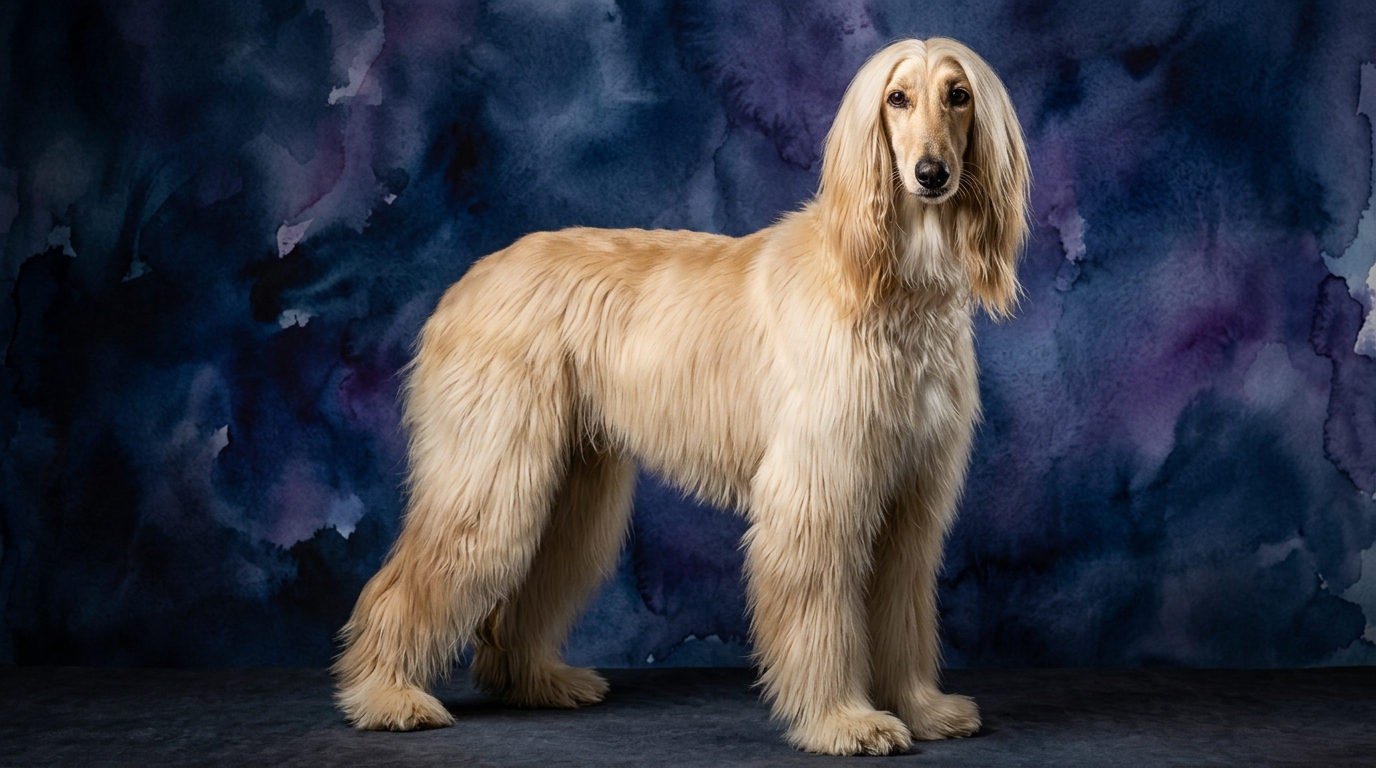
The Cosmic Pet Pet IQ Lab data provides a granular look at the cognitive strengths and inclinations of these two distinct breeds. The Afghan Hound, ranking #79 in Coren's intelligence scale, presents a fascinating blend of independent thought and formidable instinct. Its problem-solving ability is rated at 4/5, indicating a strong capacity for independent strategizing, often in pursuit of its own objectives rather than human-directed tasks. However, its training speed is a low 1/5, reflecting a significant challenge in traditional obedience. Social intelligence for the Afghan Hound is 2/5, suggesting a discerning and often aloof nature, while its instinctive drive is an exceptional 5/5, a testament to its sighthound heritage. Its memory stands at 3/5, capable of retaining routines but potentially overshadowed by immediate instinctual impulses.
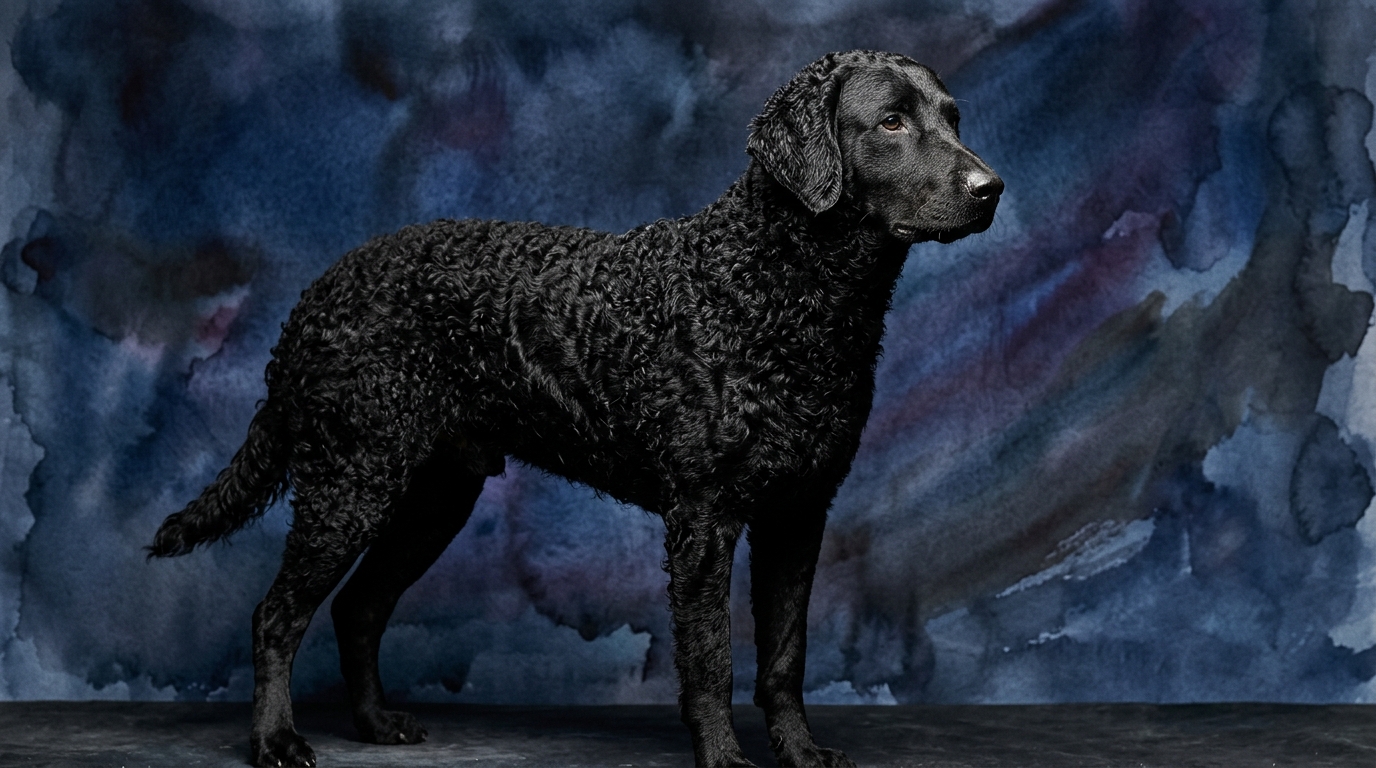
In contrast, the Curly-Coated Retriever, positioned significantly higher at Coren rank #41, demonstrates a more cooperative and biddable cognitive profile. Its problem-solving ability is rated 3/5, indicating practical intelligence often applied to task completion. The breed’s training speed is a moderate 3/5, suggesting a reasonable pace of learning new commands and behaviors. With a social intelligence of 3/5, the Curly-Coated Retriever typically exhibits a good understanding of human cues and a willingness to engage in partnership. Its instinctive drive is also 3/5, primarily manifesting as a controlled retrieving desire, and its memory is a strong 4/5, enabling consistent recall of learned behaviors and experiences.
Where Afghan Hound Wins Cognitively
The Afghan Hound truly excels in its capacity for autonomous thought and its profound connection to its ancestral purpose. Its problem-solving score of 4/5 signifies a powerful ability to independently assess situations and devise solutions, particularly when navigating complex environments or pursuing a distant sight. This isn't about solving puzzles designed by humans, but rather efficiently achieving its own goals, like finding the quickest route across a field or outsmarting an obstacle to continue a chase.
Furthermore, the Afghan Hound's instinctive drive, rated at a perfect 5/5, represents a pinnacle of highly specialized cognitive function. This drive is a complex interplay of visual acuity, rapid decision-making, and unparalleled pursuit endurance, allowing it to operate as a self-sufficient hunter. While challenging for owners, this intense, self-directed drive is a testament to an ancient, effective form of intelligence, showcasing a breed that thinks and acts on a grand scale, driven by deep-seated genetic programming.
Where Curly-Coated Retriever Wins Cognitively
The Curly-Coated Retriever’s cognitive strengths lie firmly in its adaptability, biddability, and capacity for structured learning and retention. Its superior memory, rated 4/5, is a significant advantage, allowing it to consistently recall a wide array of commands, routines, and past experiences. This high memory score means the Curly is less likely to "forget" training, making it a more reliable and predictable partner in various activities.
Coupled with a moderate training speed (3/5) and social intelligence (3/5), the Curly-Coated Retriever demonstrates a cognitive architecture well-suited for collaboration with humans. Its social intelligence helps it understand and respond to human intentions, while its training speed means it can acquire new skills at a reasonable pace. This combination fosters a dog that learns efficiently and remembers what it has learned, making it adept at complex tasks like retrieving, scent work, or advanced obedience, where consistent application of learned behaviors is paramount.
Which is Easier to Train and Why
When it comes to ease of training, the Curly-Coated Retriever holds a distinct advantage over the Afghan Hound, a difference clearly reflected in their Coren ranks and IQ profiles. The Curly-Coated Retriever, ranking #41, typically requires 25-40 repetitions to understand a new command and obeys the first command 50% of the time or better. This is largely due to its moderate training speed (3/5), higher social intelligence (3/5), and superior memory (4/5), which collectively contribute to a more responsive and cooperative learner. They are often eager to please and find satisfaction in working alongside their human partners.
Conversely, the Afghan Hound, with its Coren rank of #79, presents a significant training challenge. Its training speed of 1/5 means it may require 80 to 100 or more repetitions to grasp a new command, and even then, it will obey the first command less than 25% of the time. This is not due to a lack of problem-solving ability (which is high at 4/5), but rather an independent cognitive style and an overwhelming instinctive drive (5/5) that often prioritize self-interest or a fleeting scent/sight over human directives. Training an Afghan Hound demands immense patience, consistent positive reinforcement, and a deep understanding of its independent and often aloof nature, recognizing that their intelligence is applied differently than a typical working dog.
Which Suits Active Owners vs Relaxed Owners
Both breeds require significant engagement, making neither truly suitable for genuinely "relaxed" owners who prefer minimal interaction or physical activity. However, the type of activity and cognitive engagement they demand differs greatly. The Afghan Hound, with its extreme instinctive drive (5/5), is best suited for active owners who understand and respect its sighthound heritage. These owners must be prepared for long, vigorous bursts of exercise, such as lure coursing, secure off-leash running in vast, fenced areas, or consistent, fast-paced walks to satisfy their prey drive. Owners must also be mentally active, prepared to engage with a dog that thinks independently and often chooses its own path, requiring creative and patient management rather than strict obedience.
The Curly-Coated Retriever, while also active, suits owners who desire a more collaborative and task-oriented partner. Its moderate instinctive drive (3/5) means it thrives on structured activities like retrieving games, swimming, hiking, or dog sports that leverage its biddability, memory, and moderate problem-solving. These owners are often active themselves and seek a canine companion to share these pursuits, enjoying the process of training and working together. While a Curly will settle indoors, its mental and physical needs require consistent, directed engagement, making it a poor fit for owners seeking a purely decorative or low-maintenance pet.
The Verdict
Choose the Afghan Hound if you are drawn to an elegant, independent spirit, appreciate a dog with exceptional problem-solving for its own goals, and are prepared for a lifelong commitment to patient, positive training that respects its profound instinctive drive and discerning social intelligence.
Choose the Curly-Coated Retriever if you seek a cooperative, intelligent partner for activities, value a dog with strong memory and social intelligence that thrives on structured engagement, and are ready to channel its moderate instinctive drive into shared tasks and adventures.
🧠 Find Your Pet's IQ Score
Our Pet IQ Lab assessment covers 25+ tests across 5 cognitive dimensions — personalized to your breed.
Take the Full IQ Test →Frequently Asked Questions
Are Afghan Hounds truly "untrainable" due to their low training speed?
No, Afghan Hounds are not untrainable, but their training speed of 1/5 means they require immense patience and a different approach compared to more biddable breeds. They learn, but often on their own terms, prioritizing their high instinctive drive and independent problem-solving over human commands, so owners must be prepared for a long and often challenging training journey focused on positive reinforcement and understanding their unique motivations.
What kind of mental stimulation do Curly-Coated Retrievers need to thrive?
Curly-Coated Retrievers thrive on mental stimulation that engages their moderate problem-solving, strong memory, and retrieving drive. Activities like complex retrieving games, scent work, advanced obedience or agility training, and puzzle toys are excellent ways to keep their minds sharp and satisfy their desire for purpose-driven tasks.
How do their Coren ranks of #79 and #41 reflect their daily behavior and owner experience?
The Afghan Hound's #79 rank reflects its independent nature, low training speed, and strong instinctive drive, meaning owners should expect a dog that often makes its own decisions and requires significant effort in traditional obedience. The Curly-Coated Retriever's #41 rank indicates a more biddable dog with moderate training speed and good memory, suggesting a more responsive and cooperative companion that learns and retains commands more readily, making daily interactions generally more predictable.