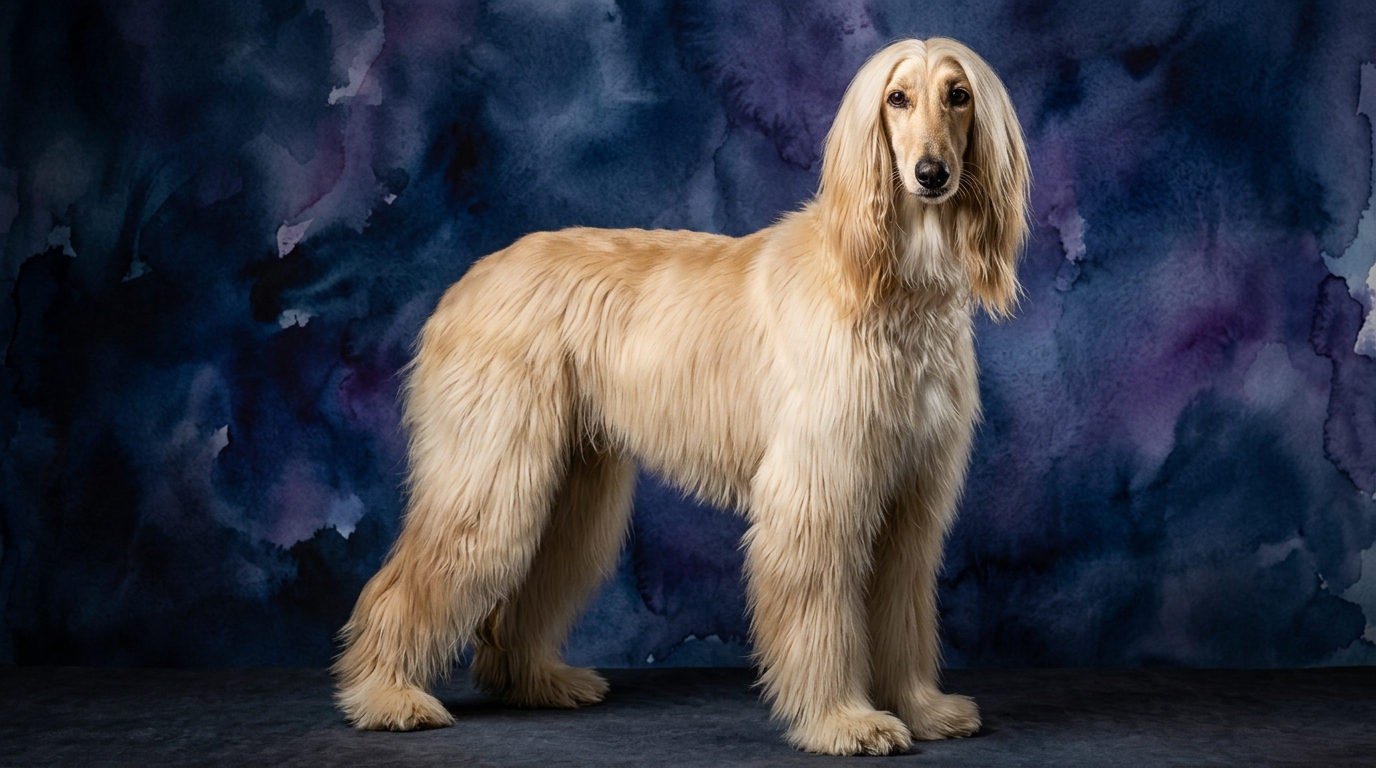
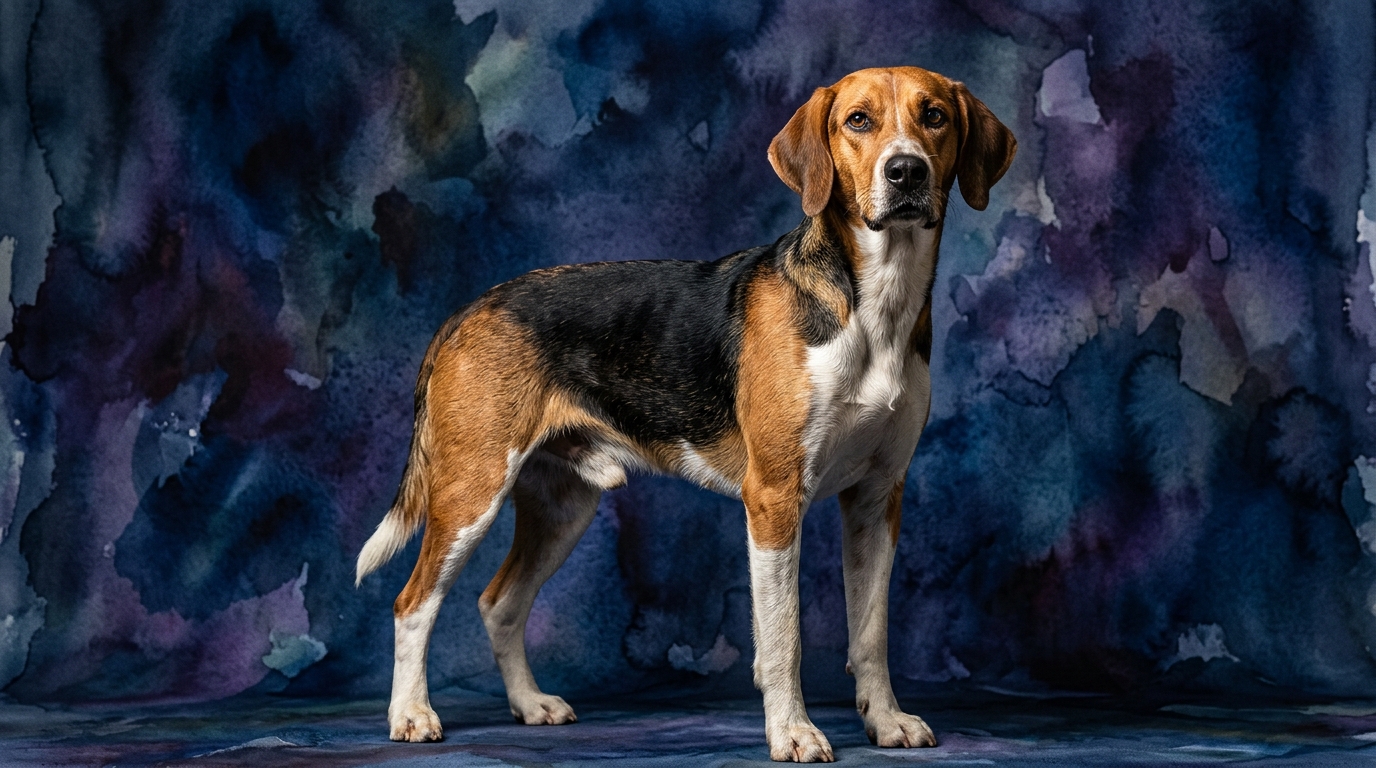
Side-by-Side Cognitive Profiles: Afghan Hound vs. English Foxhound
To understand the nuances of their intellect, we break down five key cognitive dimensions, assessing how each breed processes information, learns, and interacts with its environment and companions. These dimensions provide a framework for appreciating their unique mental strengths and challenges.
**Afghan Hound (Coren Rank #79)**: This majestic sighthound presents a unique cognitive blueprint, shaped by its history of independent hunting. Its intelligence is characterized by strong self-reliance and instinctual prowess.
* **Problem Solving (4/5)**: Afghan Hounds demonstrate a high capacity for independent thought and finding solutions to obstacles, particularly those related to achieving a personal goal, such as spotting and pursuing quarry. This strength isn't about seeking human direction but about autonomously navigating environmental challenges to reach an objective.
* **Training Speed (1/5)**: Scoring very low in this dimension, the Afghan Hound exhibits profound independence and a lack of inherent desire to comply with human directives. While they are capable of learning, their motivation to consistently perform learned behaviors on command is minimal, often requiring immense patience and highly rewarding incentives from their handler.
* **Social Intelligence (2/5)**: They tend to be more aloof and self-contained. While they form deep bonds, these connections are often on their own terms, and they may not actively seek extensive social interaction or readily interpret subtle cues from humans or other dogs outside their immediate, chosen circle.
* **Instinctive Drive (5/5)**: This breed possesses an overwhelming, deeply ingrained urge to chase anything that moves quickly. This powerful sighthound drive dictates much of their behavior and mental focus, often overriding other considerations and making off-leash reliability challenging in open, unfenced spaces.
* **Memory (3/5)**: Afghan Hounds possess a moderate memory, capable of recalling routines, people, and places, and certainly the location of interesting things. However, their independent nature means remembering a command does not always translate into a willingness to perform it consistently.
**English Foxhound (Not Coren-Ranked)**: Bred for cooperative pack hunting, the English Foxhound’s cognitive profile reflects its need for teamwork and consistent work ethic, showcasing a more amenable and focused intelligence.
* **Problem Solving (3/5)**: English Foxhounds are competent problem solvers within a pack context, adept at navigating complex scent trails and coordinating with others to achieve a common goal. Their problem-solving is often collaborative and task-oriented, less about individual innovation and more about effective execution.
* **Training Speed (3/5)**: With a moderate score, English Foxhounds are generally more willing to engage in structured training and can pick up commands at a reasonable pace. Their pack mentality makes them more amenable to leadership and working in concert with a handler, facilitating a smoother learning process.
* **Social Intelligence (3/5)**: This breed shows moderate social intelligence, a direct reflection of their origins as pack animals. They are generally more attuned to social dynamics within a group, capable of reading cues and participating cooperatively, whether with other dogs or their human family.
* **Instinctive Drive (3/5)**: While possessing a strong scent drive for trailing, it is typically more focused and manageable than the Afghan Hound's visual prey drive. Their drive is geared towards a specific task—following a scent—which can be channeled through appropriate activities and training.
* **Memory (3/5)**: English Foxhounds have a good memory for trails, pack members, and learned commands, which is essential for their cooperative hunting role. This moderate memory supports their ability to retain training and navigate familiar environments effectively.
Where the Afghan Hound Excels Cognitively
The Afghan Hound truly excels in **Problem Solving (4/5)**, exhibiting a remarkable capacity for independent thought. Unlike breeds that might look to a human for guidance, an Afghan Hound is more likely to assess a situation and devise its own solution, particularly if it involves reaching a desired object or navigating a complex environment to pursue something that has caught its eye. This cognitive strength stems from their history as solo hunters in challenging terrains, where quick, autonomous decisions were crucial for survival. Their **Instinctive Drive (5/5)** is also exceptionally potent. This isn't just about chasing; it's a profound, innate compulsion that dictates much of their behavior and mental focus, making them incredibly driven and persistent when their instincts are engaged, whether it's spotting a distant movement or sensing an opportunity for a sprint.
Where the English Foxhound Excels Cognitively
The English Foxhound demonstrates superior cognitive strengths in areas revolving around cooperation and learnability. Their **Training Speed (3/5)** is notably higher than the Afghan Hound's, indicating a greater willingness and capacity to quickly grasp and consistently perform new commands. This reflects a foundational difference in their approach to human interaction and structured learning. Furthermore, their **Social Intelligence (3/5)** is more developed, a direct result of their heritage as pack hunters. Foxhounds are generally more attuned to the nuances of group dynamics, whether canine or human, making them more receptive to social cues and more inclined towards cooperative activities. This translates to a dog that is typically more engaged with its handler's intentions and more comfortable operating within a defined social structure.
Trainability: A Tale of Two Hounds
When considering ease of training, the English Foxhound holds a clear advantage, primarily due to its **Training Speed (3/5)** compared to the Afghan Hound’s stark **1/5**. The Afghan Hound's low score doesn't imply a lack of ability to learn, but rather a profound independence and often a disinterest in performing actions simply because a human requests them. They might understand a command perfectly but choose not to execute it, driven instead by their own internal motivations or their overwhelming instinctive drive. Training an Afghan Hound requires exceptional patience, creative motivation, and an acceptance that compliance will often be optional, demanding a handler who appreciates their unique, self-directed nature. In contrast, the English Foxhound, with its moderate training speed, is generally more tractable and eager to please within a working partnership. Their pack-oriented mindset means they are predisposed to follow a leader and find satisfaction in cooperative tasks, making them more responsive to traditional training methods and more consistent in their responses to commands. This difference is not about one being 'smarter,' but about their inherent motivations and willingness to collaborate with humans on command.
Matching Breeds to Lifestyles: Active vs. Relaxed Owners
The stark differences in **Instinctive Drive** and **Social Intelligence** between these two breeds dictate very different ideal owner profiles. The Afghan Hound, with its maximum **Instinctive Drive (5/5)** and lower **Social Intelligence (2/5)**, is best suited for highly active owners who appreciate an independent companion and are prepared to manage a powerful prey drive. These owners must provide ample opportunities for safe, vigorous exercise, such as lure coursing or securely fenced off-leash running, to satisfy their deep-seated need to run and chase. They thrive with owners who understand that companionship might be expressed more subtly and who don't demand constant, effusive social engagement, valuing their often regal and reserved demeanor. Conversely, the English Foxhound, with its moderate **Instinctive Drive (3/5)** and higher **Social Intelligence (3/5)**, suits active owners who enjoy communal outdoor activities and a more cooperative canine partner. While still requiring significant exercise to satisfy their scenting and running needs, their drive is often more focused and manageable, making them suitable for long hikes, jogging, or dog sports. They flourish in environments where they can be part of a family unit, enjoying group walks, structured training, or simply being part of a busy household, appreciating the social interaction and cooperative engagement that comes with it.
The Verdict
Choose an Afghan Hound if you are an experienced, active owner who values an independent, majestic companion with a profound, untamed spirit, and you are prepared for the unique challenges of training a dog driven by its own strong will.
Opt for an English Foxhound if you are an active individual or family seeking a cooperative, social, and trainable hound for outdoor adventures and a more integrated, responsive family member.
🧠 Find Your Pet's IQ Score
Our Pet IQ Lab assessment covers 25+ tests across 5 cognitive dimensions — personalized to your breed.
Take the Full IQ Test →Frequently Asked Questions
Which breed is better for a first-time dog owner?
The English Foxhound is generally more suitable for first-time dog owners due to its higher training speed and more cooperative social intelligence. Afghan Hounds require significant experience and patience to manage their independence and strong instinctive drives effectively.
Do Afghan Hounds or English Foxhounds require more exercise?
While both breeds require substantial exercise, the Afghan Hound's exceptionally high instinctive drive typically demands more intense, focused outlets for running and chasing. English Foxhounds need consistent activity, but their drive is often more manageable and can be satisfied with varied outdoor activities like long walks or jogs.
How do their social needs differ with other pets?
The Afghan Hound's strong prey drive (5/5) means they might view smaller, fast-moving pets as quarry, requiring careful management and socialization from a young age. The English Foxhound's moderate social intelligence and drive (3/5) generally make them more adaptable to living with other dogs, though their scent drive still necessitates supervision with non-canine pets.