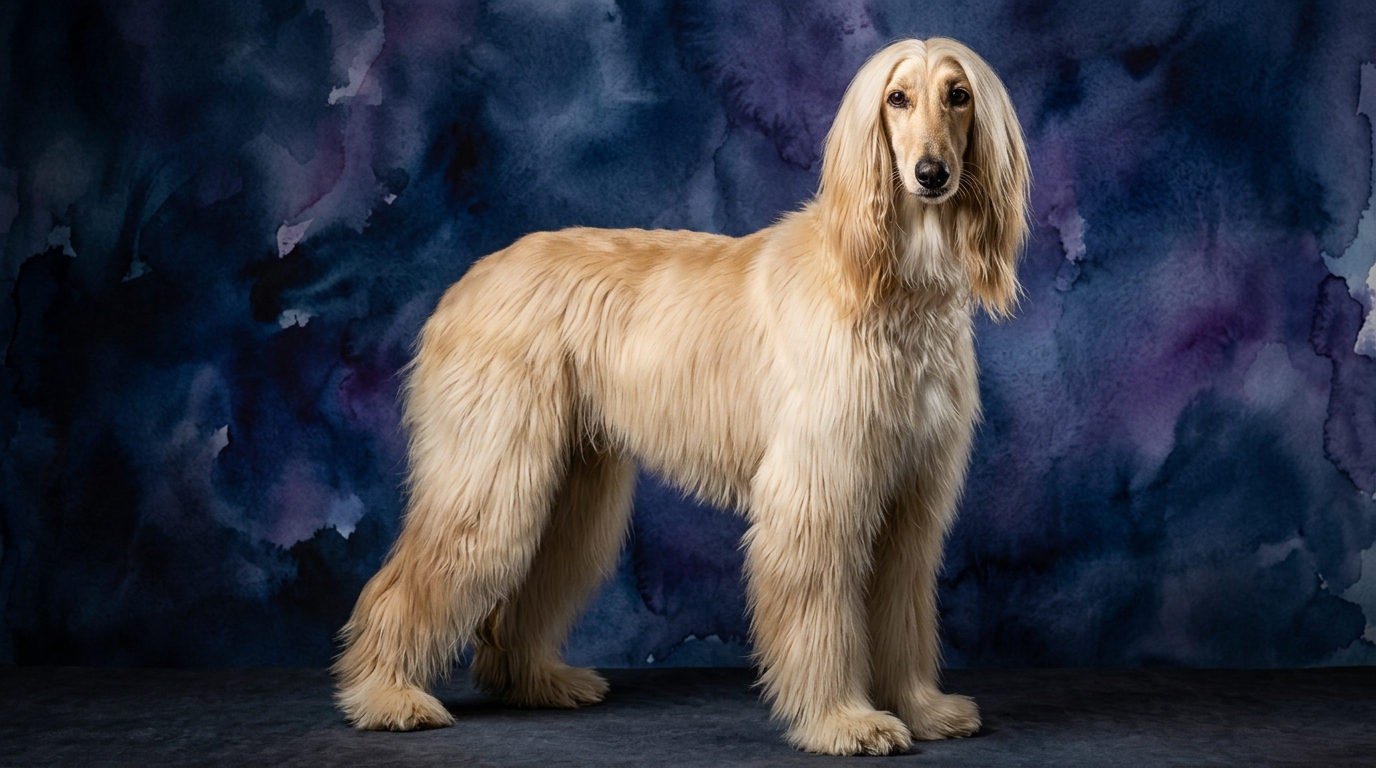
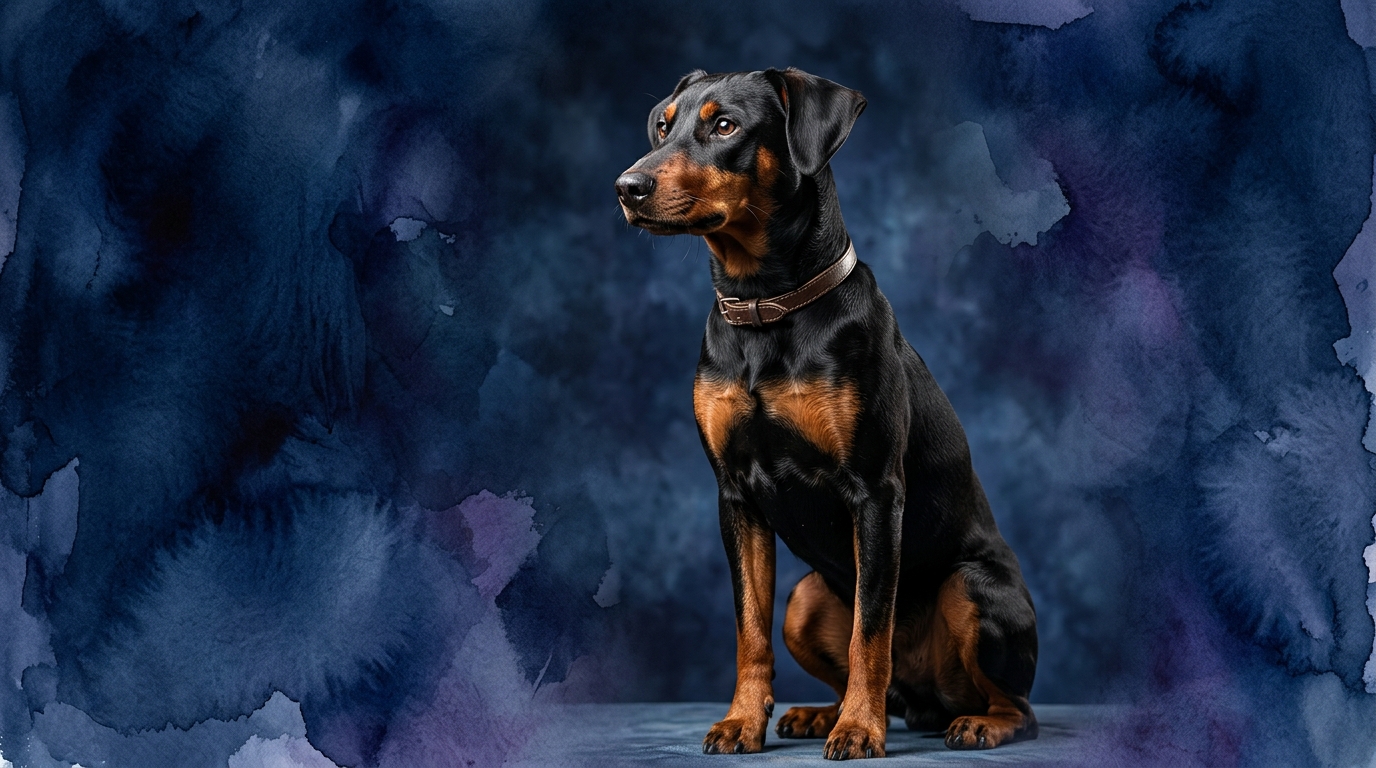
Side-by-Side IQ Profile: Afghan Hound vs. German Pinscher
The Afghan Hound presents a unique cognitive blueprint, excelling in problem-solving with a score of 4 out of 5, suggesting a capacity for independent thought and navigating complex situations on its own terms. However, its training speed is notably low at 1 out of 5, indicating a strong independent streak that often prioritizes self-directed action over human-initiated commands. Social intelligence, at 2 out of 5, reflects a selective engagement with its environment and companions, often appearing aloof rather than overtly seeking interaction or approval. A powerful instinctive drive of 5 out of 5 underscores its heritage as a hunter, manifesting as a strong prey drive and an inherent need to pursue. Its memory, at 3 out of 5, is average, capable of retaining information but perhaps not always applying it in ways humans might expect.
In contrast, the German Pinscher offers a more balanced cognitive profile, starting with a problem-solving score of 3 out of 5, indicating a practical intelligence capable of finding solutions within a structured environment. Its training speed, rated at 3 out of 5, positions it as a reasonably responsive learner, willing to engage with training exercises and grasp new commands at a moderate pace. Social intelligence, also at 3 out of 5, suggests a more cooperative and attentive nature, making it more inclined to interact and form strong bonds with its human family. The instinctive drive is a moderate 3 out of 5, present but generally more manageable than that of the Afghan Hound, reflecting its working heritage without an overwhelming prey drive. Memory, like the Afghan Hound, stands at 3 out of 5, providing a solid foundation for learning and recall.
Where the Afghan Hound Wins Cognitively
The Afghan Hound's cognitive strengths truly shine in its exceptional problem-solving abilities and unparalleled instinctive drive. With a problem-solving score of 4/5, this breed demonstrates a remarkable capacity for independent thought and strategic action, often devising its own solutions to obstacles rather than relying on human direction. This translates into a dog that can navigate complex physical environments, figure out how to access desired areas, or even outwit perceived barriers with a self-assured ingenuity. This isn't about following commands, but about innate, goal-oriented mental processing.
Furthermore, its instinctive drive, rated at a perfect 5/5, is a profound cognitive advantage rooted in its sighthound heritage. This isn't merely a physical urge but a deeply ingrained mental framework that prioritizes detection, chase, and capture. This manifests as an extraordinary focus and determination when something triggers its prey drive, a cognitive tunnel vision that allows it to process environmental stimuli for specific targets with incredible efficiency. While challenging for owners, this intense drive represents a peak of specialized cognitive function for its original purpose.
Where the German Pinscher Wins Cognitively
The German Pinscher truly excels where the Afghan Hound shows restraint, particularly in its training speed and social intelligence. With a training speed of 3/5, the German Pinscher demonstrates a quicker uptake of new commands and routines, making it a more receptive student in structured learning environments. This isn't just about physical execution; it reflects a cognitive willingness to engage with human instruction and an ability to form associations between cues and actions more readily. Owners will often find this breed grasps concepts like 'sit' or 'stay' with fewer repetitions and greater enthusiasm.
Its social intelligence, also rated 3/5, is another significant cognitive advantage. This indicates a greater capacity for understanding social cues, responding to human emotions, and generally being more attuned to the dynamics of its human family. This manifests as a more cooperative and companion-oriented demeanor, where the Pinscher is often seeking interaction and approval, making the bond deeper and communication more fluid. Unlike the more independent Afghan Hound, the German Pinscher's cognitive framework is more geared towards collaborative engagement and reciprocal social interaction, which greatly aids in cohabitation and shared activities.
Which is Easier to Train and Why
Between these two breeds, the German Pinscher is unequivocally the easier to train, a difference rooted directly in their contrasting cognitive profiles. The Pinscher's superior training speed (3/5 vs. Afghan Hound's 1/5) means it processes and internalizes commands much faster. It exhibits a greater cognitive flexibility and desire to learn from its human counterparts, making positive reinforcement highly effective. This breed typically enjoys the mental engagement of training sessions and shows a clear understanding of cause and effect in learning new behaviors.
Complementing this is the German Pinscher's higher social intelligence (3/5 vs. Afghan Hound's 2/5). This cognitive attribute makes the Pinscher more inclined to seek human guidance and approval, perceiving training as a collaborative activity rather than an imposition. Their attentiveness to human cues and a desire to please significantly reduce the effort required for consistent training. In contrast, the Afghan Hound's strong independent streak and lower social intelligence mean it often perceives training as optional, relying on its own judgment rather than human directives. Its immense instinctive drive (5/5) also means that external stimuli, particularly anything resembling prey, can easily override any learned commands, making consistent focus a perpetual challenge. For the Afghan Hound, training requires immense patience, creativity, and an understanding that its cognitive priority is often self-preservation and pursuit, not human-directed obedience.
Suitability for Active vs. Relaxed Owners
When considering lifestyle compatibility, the Afghan Hound leans heavily towards owners who appreciate and can accommodate its unique cognitive and physical needs, rather than necessarily 'active' in the conventional sense of constant exercise. Its powerful instinctive drive (5/5) and independent problem-solving (4/5) mean it thrives with owners who can provide consistent mental stimulation that respects its sighthound nature, such as secure off-leash running opportunities in fenced areas or participation in lure coursing. A relaxed owner might struggle with its aloof social intelligence (2/5) and low training speed (1/5), as it requires a deep understanding of its independent decision-making and a willingness to work *with* its instincts, not against them. Owners must be prepared for a dog that thinks for itself and doesn't always seek to please.
The German Pinscher, with its balanced cognitive profile, offers more versatility for both active and moderately active owners. Its moderate instinctive drive (3/5) and higher social intelligence (3/5) mean it enjoys engaging in activities with its family, whether that's long walks, hiking, or dog sports like agility. Its quicker training speed (3/5) allows it to learn and enjoy various structured activities, making it a suitable companion for owners who want to teach tricks or participate in obedience. While it certainly benefits from regular exercise and mental engagement, its cooperative nature means it's generally more adaptable to a household's rhythm. A 'relaxed' owner who still provides consistent engagement and mental stimulation will find the German Pinscher a rewarding companion, as its cognitive framework is built for partnership.
The Verdict
Choose the Afghan Hound if you are drawn to a deeply independent companion with exceptional intrinsic problem-solving skills and a powerful, unyielding drive, understanding that training will be a journey of patience and respect for its unique spirit.
Opt for the German Pinscher if you desire a highly trainable, socially engaged partner eager to participate in activities and form a strong, cooperative bond, thriving with consistent interaction and guidance.
🧠 Find Your Pet's IQ Score
Our Pet IQ Lab assessment covers 25+ tests across 5 cognitive dimensions — personalized to your breed.
Take the Full IQ Test →Frequently Asked Questions
Is the Afghan Hound truly difficult to train?
Yes, its training speed is rated 1/5 and social intelligence 2/5, indicating a strong independent streak and a tendency to prioritize its own instincts over human commands. This requires exceptional patience and creative, highly motivating training methods.
How does the German Pinscher's problem-solving compare to the Afghan Hound's?
The German Pinscher scores 3/5 in problem-solving, capable of practical solutions within known structures, whereas the Afghan Hound scores 4/5, demonstrating a more self-directed and ingenious approach to overcoming obstacles.
What does 'instinctive drive' mean for these breeds in daily life?
For the Afghan Hound (5/5), it means a powerful, often irresistible urge to chase anything that moves, requiring secure environments. For the German Pinscher (3/5), this drive is present but more manageable, allowing for easier redirection and less intense prey pursuit.