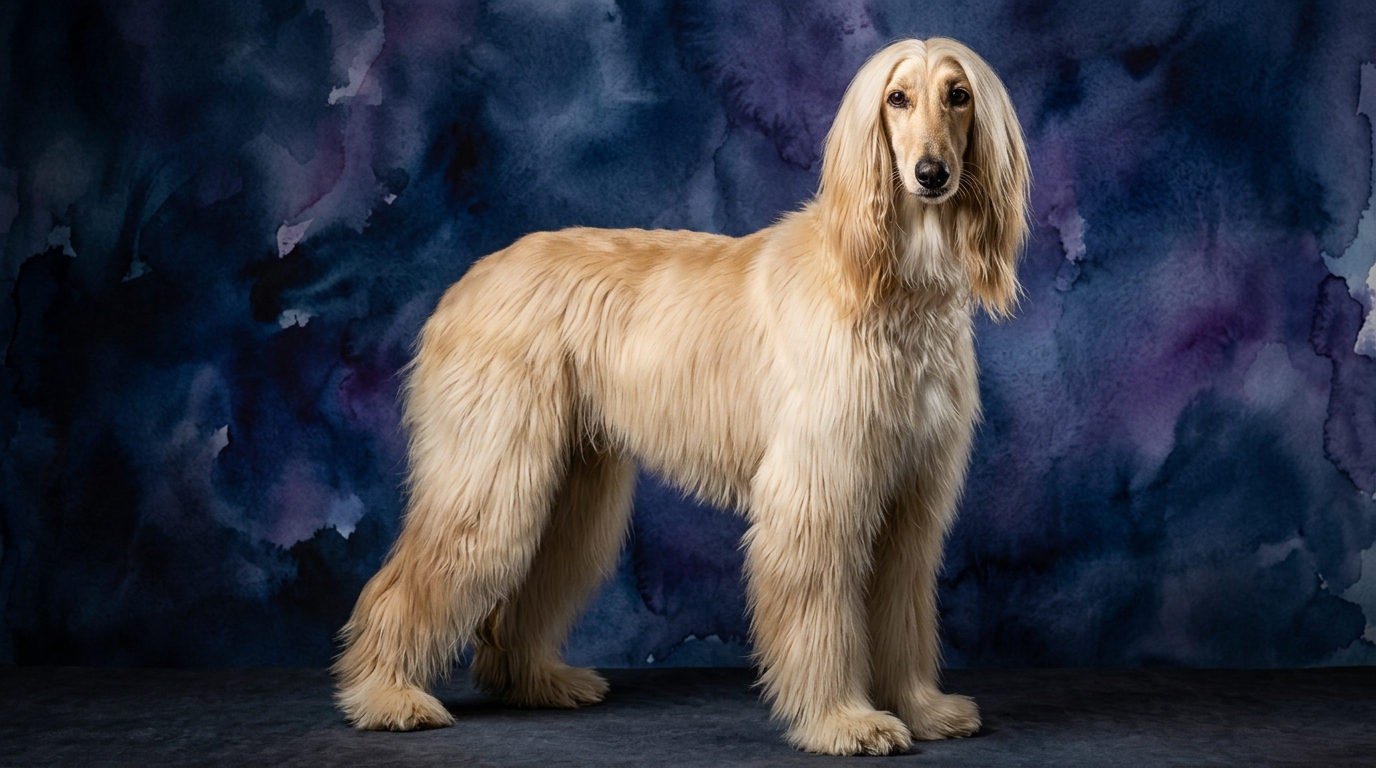
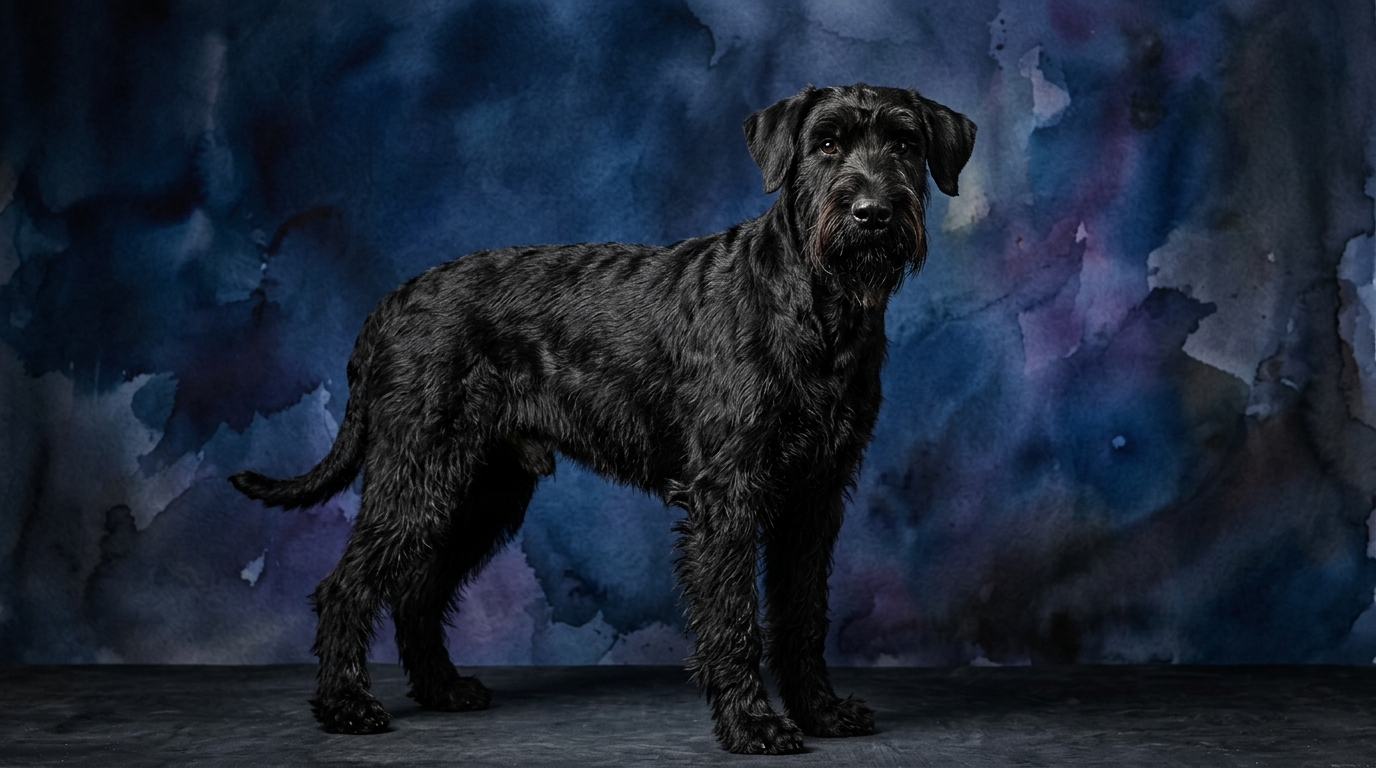
Side-by-Side IQ Profile: Afghan Hound vs. Giant Schnauzer
To understand the cognitive landscape of these distinct breeds, The Cosmic Pet Pet IQ Lab assesses five key dimensions of intelligence. These scores provide a nuanced view beyond simplistic 'smartness,' highlighting how each breed's mind is uniquely wired.
Both the Afghan Hound and Giant Schnauzer demonstrate a solid 4/5 in Problem Solving. For the Afghan Hound, this manifests as independent thinking, quickly assessing and overcoming environmental obstacles during pursuit, without needing human direction. The Giant Schnauzer's 4/5 indicates its capacity for strategic thinking in structured tasks, adeptly resolving complex obedience scenarios or multi-step commands with purpose.
Training Speed presents a stark contrast: the Afghan Hound scores 1/5, while the Giant Schnauzer achieves 4/5. The Afghan Hound's low score reflects a profound independence, often prioritizing its own motivations over human directives, making repetition less effective. The Giant Schnauzer, conversely, grasps new commands and behaviors with impressive speed, eager to engage and work cooperatively with humans, requiring fewer repetitions to solidify skills.
In Social Intelligence, the Afghan Hound rates 2/5, and the Giant Schnauzer 3/5. The Afghan Hound's score indicates a reserved, selective approach to social interactions; they observe and respond on their own terms. The Giant Schnauzer exhibits a greater aptitude for reading and responding to human emotional states, forming stronger bonds and generally being more attuned to family members.
Instinctive Drive is paramount for the Afghan Hound at 5/5, while the Giant Schnauzer scores 3/5. The Afghan Hound's 5/5 signifies an overwhelming, innate sighthound pursuit drive, almost impossible to override once triggered. The Giant Schnauzer's 3/5 drive is more balanced, encompassing protective and working instincts that are generally more manageable and channelable into specific tasks.
Finally, Memory scores are 3/5 for the Afghan Hound and 4/5 for the Giant Schnauzer. The Afghan Hound's 3/5 suggests adequate retention for routines and experiences relevant to its independent activities. The Giant Schnauzer's 4/5 indicates a more robust memory, crucial for retaining complex training sequences, specific commands over time, and intricate social interactions, directly aiding its trainability.
Where the Afghan Hound Wins Cognitively
The Afghan Hound truly excels in areas demanding independent thought and an unwavering instinctive drive. Its 5/5 instinctive drive, paired with a 4/5 problem-solving capacity, means this breed possesses an unparalleled ability to act autonomously to achieve a goal, especially when that goal involves pursuit. They are masters of self-directed action, capable of making split-second decisions in dynamic environments without relying on human input. This isn't a deficiency in intellect, but a specialized form of intelligence honed for survival and hunting; they are not waiting for instruction but rather executing an innate strategy. Their cognitive strength lies in their ability to assess a situation and commit fully to a course of action based on their deep-seated drives, a trait invaluable in their original role as sighthounds.
Where the Giant Schnauzer Wins Cognitively
Conversely, the Giant Schnauzer shines where cooperation, rapid learning, and retention are paramount. Its 4/5 training speed, combined with a 4/5 memory and 3/5 social intelligence, positions it as a highly adaptable and eager learner. This breed processes and internalizes new commands quickly, building upon previous lessons to master complex tasks. Their cognitive strength is in their capacity for structured learning and their desire to engage with their human counterparts to achieve a shared objective. The Giant Schnauzer's memory allows them to retain a vast repertoire of commands and behaviors, making them exceptional candidates for advanced obedience, protection work, or dog sports. Their moderate social intelligence further aids this by fostering a more receptive and responsive demeanor during training interactions.
Which is Easier to Train and Why
When evaluating ease of training, the Giant Schnauzer unequivocally holds the advantage. Their 4/5 training speed is a testament to their readiness to learn and their inherent desire to collaborate. They are generally eager to please and respond well to positive reinforcement, quickly forming associations between commands and actions. This cooperative spirit, coupled with a solid memory, means that once a behavior is taught, it tends to stick. For the Giant Schnauzer, training is a partnership, a shared activity that strengthens their bond and fulfills their working drive.
In contrast, the Afghan Hound's 1/5 training speed makes it a significant challenge for even experienced trainers. This isn't due to a lack of understanding, but rather a profoundly independent nature and a strong intrinsic motivation that often outweighs the desire to comply with human requests. Their powerful 5/5 instinctive drive means that if something more compelling (like a squirrel darting across the park) enters their awareness, all learned commands can become secondary. Training an Afghan Hound requires immense patience, creativity, and an understanding that their compliance is often conditional on their own perceived value of the task, rather than an automatic response to authority. Behavioral differences stem from their ancestral roles: the Giant Schnauzer was bred to guard and drive cattle, requiring responsiveness and partnership, while the Afghan Hound was bred to hunt independently across vast distances, making self-reliance a key trait.
Which Suits Active Owners vs. Relaxed Owners
The cognitive profiles of these two breeds dictate vastly different owner lifestyles. An Afghan Hound, with its boundless 5/5 instinctive drive and a reserved 2/5 social intelligence, thrives with owners who understand and respect its independent nature and provide specific outlets for its primal instincts. These are not dogs content with casual strolls; they require consistent, vigorous exercise, ideally in secure, expansive areas where they can gallop freely. Owners must be prepared for a dog that may not always seek interaction but needs its physical and mental freedom. The 'active' owner for an Afghan Hound isn't necessarily one who runs marathons with their dog, but one who actively manages and channels its profound chase drive and independent spirit, perhaps through lure coursing or secure off-leash running.
For a truly relaxed owner seeking a low-maintenance companion, the Afghan Hound would likely prove frustrating due to its specific needs for activity and its distinct approach to social engagement. The Giant Schnauzer, however, with its 3/5 instinctive drive balanced by a 4/5 training speed and 3/5 social intelligence, requires a different kind of active owner. This breed needs consistent mental engagement through structured training, dog sports, or a 'job' to do. While they also need physical exercise, their intelligence demands more than just running; they crave puzzles, learning new skills, and engaging in cooperative activities with their human. A relaxed owner who isn't prepared to dedicate time to consistent mental stimulation and structured training would likely find a Giant Schnauzer becoming bored and potentially destructive. Therefore, the Giant Schnauzer suits an owner who is active in a participatory sense, enjoying training and shared activities, while the Afghan Hound suits an owner who is active in providing specific, independent outlets for its deep-seated drives.
The Verdict
Choose the Afghan Hound if you appreciate a noble, independent companion who thrives on self-directed activity and you are prepared to manage a powerful, innate chase drive with patience and understanding.
Opt for the Giant Schnauzer if you desire a highly trainable, engaged partner for structured activities, seeking a dog that enjoys learning and working cooperatively with its human.
🧠 Find Your Pet's IQ Score
Our Pet IQ Lab assessment covers 25+ tests across 5 cognitive dimensions — personalized to your breed.
Take the Full IQ Test →Frequently Asked Questions
Do Afghan Hounds genuinely understand commands despite their low training speed?
Yes, Afghan Hounds certainly understand commands; their 4/5 problem-solving score attests to their cognitive capacity. Their low training speed, however, stems from a strong independent streak and a tendency to prioritize their own internal motivations over human directives, rather than a lack of comprehension. They often choose whether or not to comply based on their own assessment of the situation.
Is the Giant Schnauzer's higher social intelligence a sign of greater affection?
While the Giant Schnauzer's 3/5 social intelligence indicates a greater aptitude for reading and responding to human cues compared to the Afghan Hound, it doesn't automatically equate to overt affection. It suggests a stronger capacity for forming cooperative bonds and understanding social dynamics within the family. Their affection might be expressed through loyalty and a desire to work alongside their owner, rather than constant physical closeness.
How does the Afghan Hound's 5/5 instinctive drive impact daily life for owners?
The Afghan Hound's profound 5/5 instinctive drive means owners must be perpetually vigilant, especially in unsecured areas. This drive manifests as an almost irresistible urge to chase anything moving, from squirrels to blowing leaves. Daily life involves meticulous leash training, secure fencing, and providing safe, expansive spaces for them to run freely, ensuring their innate needs are met without risk.