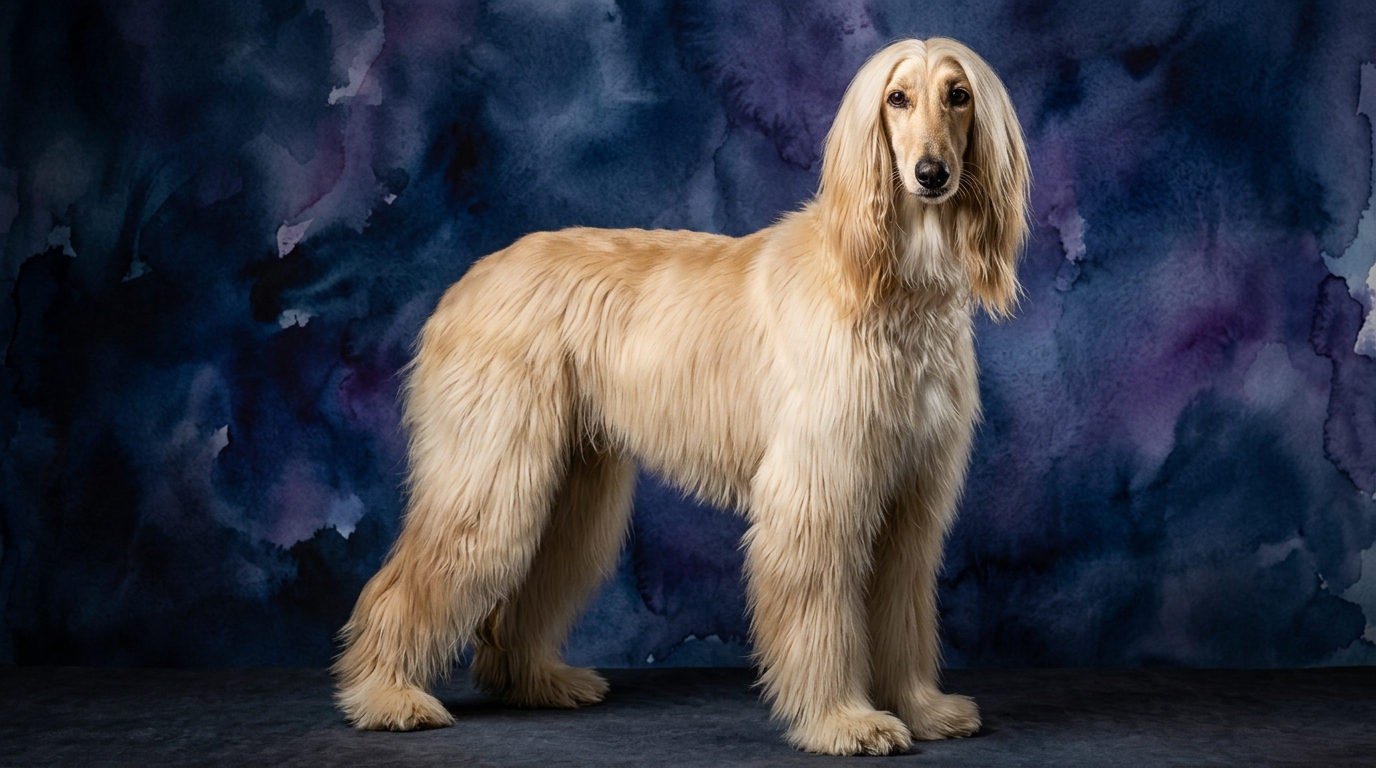
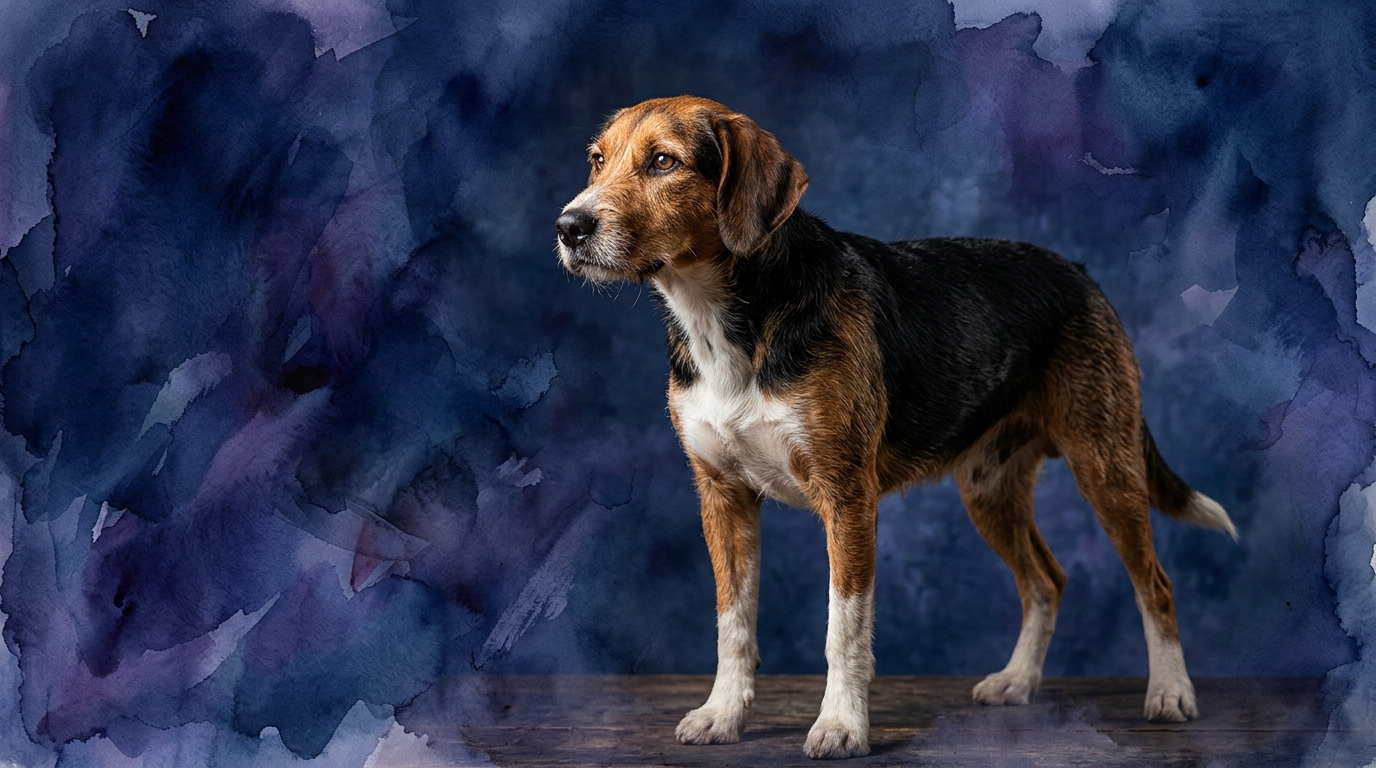
Side-by-Side IQ Profile: Afghan Hound vs. Harrier
The Cosmic Pet Pet IQ Lab employs five key dimensions to assess canine cognition, offering a granular view beyond simple measures. Comparing the Afghan Hound, Coren-ranked at #79, with the Harrier, which is not Coren-ranked, reveals distinct cognitive blueprints.
For the **Afghan Hound**, its cognitive scores paint a picture of elegant independence: **Problem Solving (4/5)** indicates a strong capacity for self-directed ingenuity, often applied to achieving personal objectives rather than human-directed tasks. Its **Training Speed (1/5)** score is a testament to its profound self-will, meaning it learns commands slowly and often chooses whether or not to comply based on its own assessment of the situation. **Social Intelligence (2/5)** suggests a reserved and selective nature, preferring a small, trusted circle over broad social engagement. An **Instinctive Drive (5/5)** highlights its powerful sighthound heritage, driven intensely by visual stimuli and the thrill of the chase. Finally, its **Memory (3/5)** is moderate, capable of recalling routines and familiar people, but perhaps selective in retaining commands deemed unimportant by the dog itself.
The **Harrier**, in contrast, presents a more balanced and cooperative cognitive profile: Its **Problem Solving (3/5)** score reflects a practical intelligence, adept at figuring out tasks, especially when a clear goal like tracking is involved, and often benefiting from group effort. A **Training Speed (3/5)** indicates a moderate pace of learning, generally receptive to instruction and responsive to positive reinforcement. **Social Intelligence (3/5)** points to a sociable, pack-oriented disposition, comfortable within a group and generally good at reading social cues. Its **Instinctive Drive (3/5)** is moderate, primarily scent-driven, and often channeled into collaborative hunting or scent work rather than purely independent pursuit. Like the Afghan, its **Memory (3/5)** is moderate, reliably retaining commands and routines that are consistently reinforced and relevant to its activities.
Where the Afghan Hound Wins Cognitively
The Afghan Hound’s cognitive strengths shine brightest in its exceptional **Problem Solving (4/5)** and unparalleled **Instinctive Drive (5/5)**. This breed doesn't just react; it strategizes. Their problem-solving isn't about performing tricks for human amusement, but rather about independently navigating their environment to achieve their own desires. This might manifest as ingeniously figuring out how to open a seemingly secure gate, or finding a novel path to access an intriguing scent or visual stimulus. This self-directed ingenuity requires a sophisticated level of cognitive mapping and strategic thinking, often surprising owners with their resourcefulness.
Furthermore, their **Instinctive Drive (5/5)** represents a highly refined cognitive specialization. As sighthounds, their brains are wired for rapid visual processing, pattern recognition, and instantaneous decision-making in pursuit. This isn't merely a physical drive; it's a profound cognitive ability to lock onto a distant movement, calculate trajectories, and execute a chase with breathtaking precision and focus. This deep-seated, intense drive means they are masters of independent action when their instincts are engaged, a cognitive strength that has been honed over centuries for a specific purpose.
Where the Harrier Wins Cognitively
The Harrier's cognitive advantages lean towards cooperation, adaptability, and group dynamics. Its **Training Speed (3/5)** is a significant asset, indicating a brain more readily open to human instruction and consistent learning. Harriers are generally more receptive to cues and find satisfaction in working alongside their human companions, making the process of teaching new behaviors or commands a more collaborative and rewarding experience for both parties. This contrasts sharply with the independent learning style of the Afghan Hound, which often requires a different approach to motivation.
Moreover, the Harrier's **Social Intelligence (3/5)** highlights its proficiency in understanding and navigating group interactions. Originating as pack hunters, they possess an inherent ability to read social cues, integrate into family structures, and generally coexist harmoniously with other pets or people. This cognitive strength makes them more amenable to multi-dog households and family environments, as they tend to be less aloof and more engaged with their social circle. While the Afghan Hound's instinctive drive is higher, the Harrier's **moderate Instinctive Drive (3/5)** is often more manageable for a companion animal, allowing its keen scenting abilities to be channeled into human-directed activities like scent work or tracking sports, offering a productive outlet for their natural inclinations without overwhelming their owners.
Which Is Easier to Train and Why
Based on their cognitive profiles, the **Harrier is considerably easier to train** than the Afghan Hound. The Harrier’s **Training Speed (3/5)**, coupled with its **Social Intelligence (3/5)**, means it is more inclined to form a cooperative bond with its owner and respond positively to instruction. Harriers generally find satisfaction in working as part of a 'pack' and are motivated by social interaction and praise, making them more receptive to traditional training methods. Their moderate instinctive drive, while present, is often more amenable to redirection and can be channeled into structured activities, allowing for a more consistent and predictable learning curve.
The Afghan Hound, with its **Training Speed of 1/5**, presents a much greater challenge. This low score isn't an indicator of a lack of mental capacity, but rather a reflection of its profound independence and self-determination. Afghan Hounds learn, but they often choose whether or not to obey based on their own assessment of the command's value or their current interest. Their powerful instinctive drive means they can easily become fixated on a visual stimulus, overriding any learned commands in pursuit. Training an Afghan Hound requires immense patience, creativity, and an understanding of their deep-seated independence, often necessitating methods that convince the dog that compliance is its own idea rather than a direct command.
Which Suits Active Owners vs. Relaxed Owners
Neither the Afghan Hound nor the Harrier are breeds suited for truly 'relaxed' or sedentary owners, as both are hounds with inherent needs for activity. However, their cognitive profiles dictate different types of engagement. **Owners seeking a more collaborative, engaged companion for active pursuits will find the Harrier a better fit.** Their moderate instinctive drive and higher social intelligence mean they thrive on shared adventures – long hikes, scent games, even dog sports like agility or rally. They enjoy being an active participant in family life and generally adapt well to varied outdoor activities alongside their human companions, responding well to training that channels their energy productively.
The **Afghan Hound, with its intense instinctive drive and independent problem-solving, is better suited for highly active owners who appreciate a dog with a distinct mind of its own and are prepared for specific management strategies.** These owners must be committed to providing ample, consistent opportunities for vigorous exercise in secure environments to satisfy their sighthound instincts. Their independent nature means they may not always want to participate in human-directed activities in the same collaborative way as a Harrier, preferring to explore or pursue their own interests. Owners must understand that managing an Afghan Hound's exercise needs and strong will is a significant commitment, requiring more than just casual walks.
The Verdict
Choose the Afghan Hound if you are captivated by an independent, visually driven companion with an aristocratic air, and are prepared for unique training challenges and extensive grooming.
Choose the Harrier if you seek an amiable, cooperative pack member for active adventures, who readily engages in training and thrives on shared experiences with their family.
🧠 Find Your Pet's IQ Score
Our Pet IQ Lab assessment covers 25+ tests across 5 cognitive dimensions — personalized to your breed.
Take the Full IQ Test →Frequently Asked Questions
Are Afghan Hounds difficult to live with?
Afghan Hounds possess a high degree of independence and a powerful instinctive drive, meaning they require consistent management, secure environments, and owners who understand their sighthound nature. While not malicious, their self-directed and strong-willed temperament can be challenging for inexperienced owners seeking an overtly obedient companion.
Do Harriers have a strong prey drive?
Harriers possess a moderate instinctive drive, primarily scent-driven, which means they can be inclined to follow interesting smells and may pursue small animals. While present, their drive is generally more manageable than a sighthound's visual prey drive and can often be channeled into activities like nose work or tracking.
How do their grooming needs compare?
The Afghan Hound requires extensive, regular grooming due to its long, flowing coat, demanding significant time and effort to prevent mats and maintain its distinctive appearance. The Harrier, with its short, dense coat, has minimal grooming needs, typically just weekly brushing to remove loose hair and occasional baths.