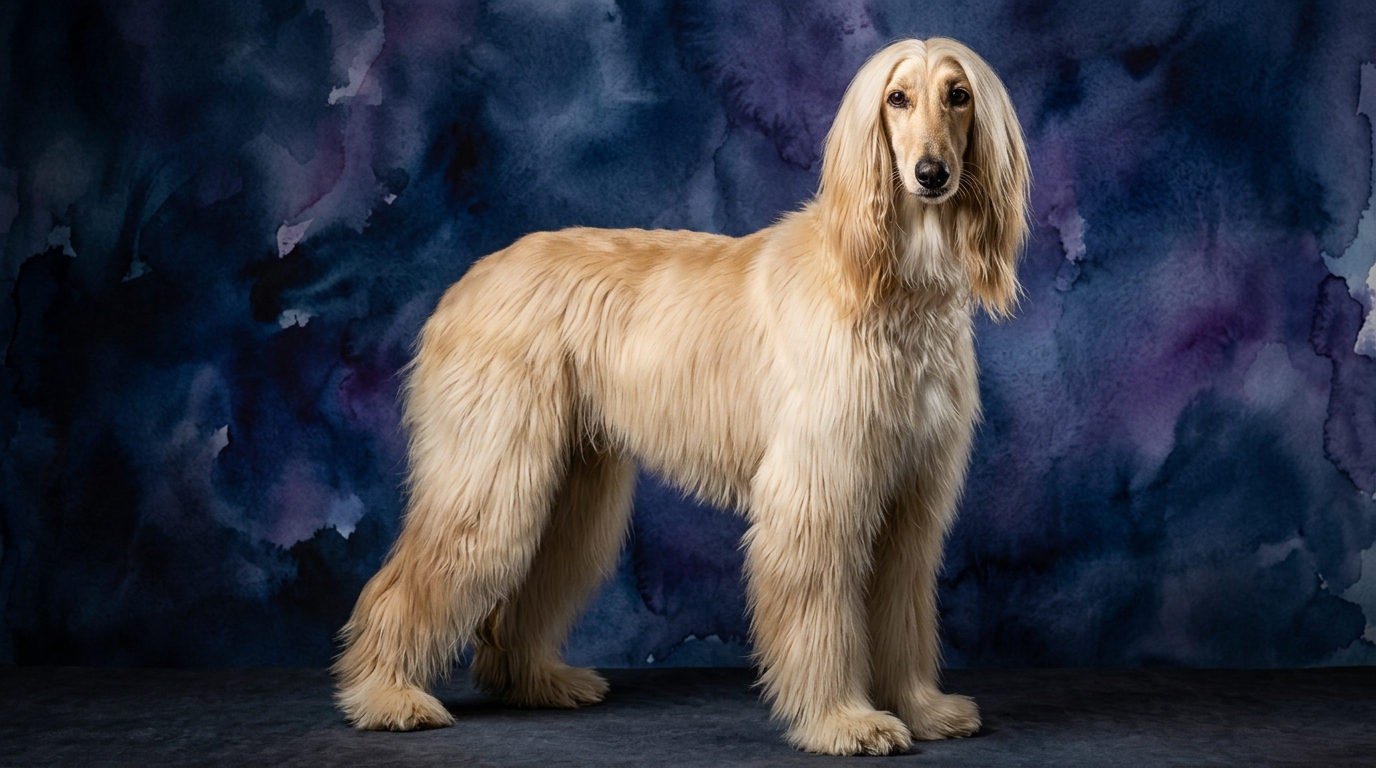
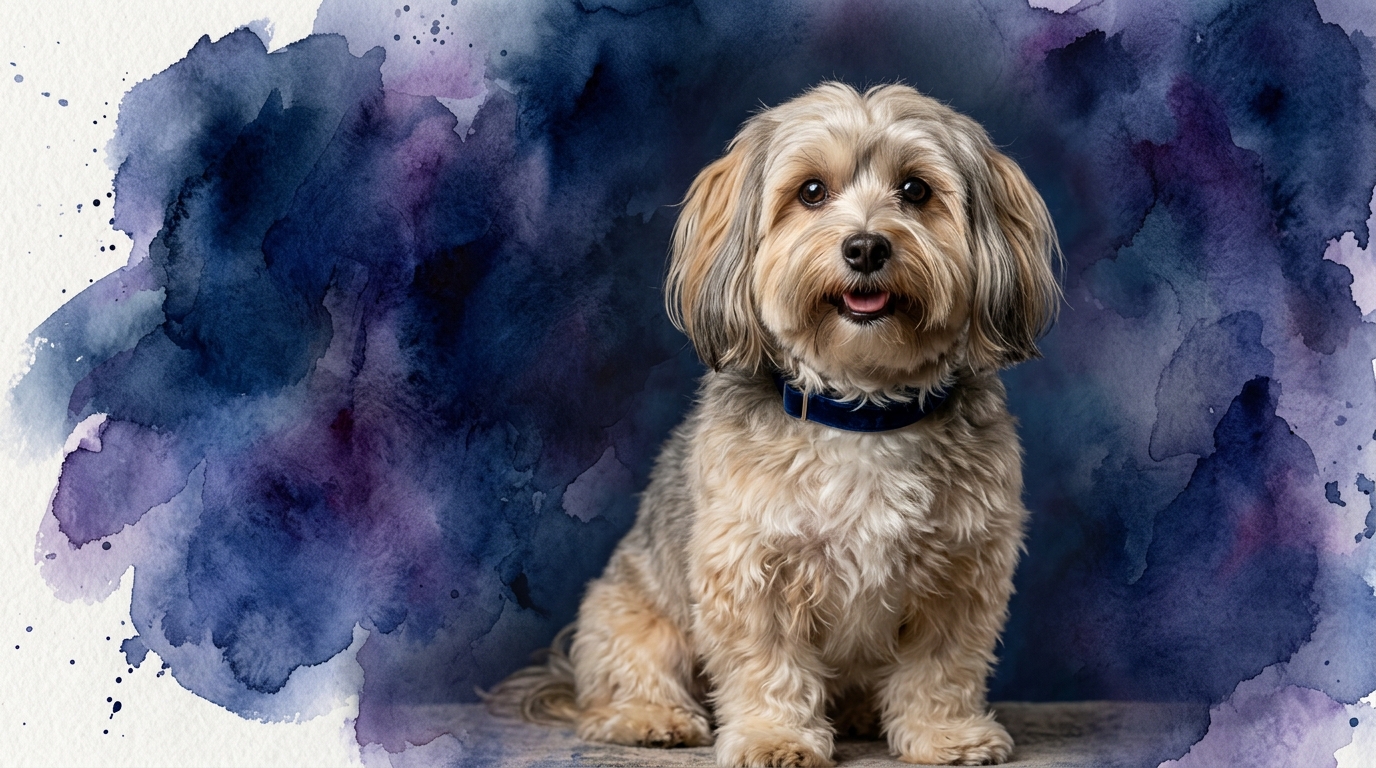
Side-by-Side Cognitive Profile: Afghan Hound vs. Havanese
To truly understand the cognitive landscape of these two breeds, The Cosmic Pet Pet IQ Lab employs a five-dimensional framework. For the Afghan Hound, a breed historically tasked with independent hunting across vast terrains, its profile reflects self-reliance and primal instinct. Its problem-solving capacity (4/5) is high, demonstrating a strong aptitude for independent decision-making in dynamic situations, particularly those involving pursuit or navigation without human intervention. This isn't about solving complex puzzles for a treat, but rather the strategic thinking required to outmaneuver prey or find the most efficient route during a chase. However, its training speed is notably low (1/5), meaning it requires significant repetition and patience, often appearing to learn at its own pace rather than striving for immediate compliance. Social intelligence for the Afghan Hound stands at 2/5, indicating a reserved nature; while it forms deep bonds, it doesn't overtly seek constant human interaction or approval, often prioritizing its own agenda. Its instinctive drive is exceptional (5/5), an unyielding urge to spot, chase, and pursue movement, reflecting its sighthound heritage. Finally, its memory is rated 3/5, capable of retaining relevant information, but often selectively recalling commands based on perceived utility or motivation.
In contrast, the Havanese, bred for companionship and social engagement, presents a dramatically different cognitive blueprint. Its problem-solving ability is moderate (3/5); while capable of navigating puzzles and learning complex sequences, it often looks to its human companions for cues and guidance, solving problems within a social context rather than autonomously. The Havanese exhibits a moderate training speed (3/5), learning at a reasonable pace due to its eagerness to engage and its responsiveness to positive reinforcement. Where the Havanese truly shines is in its social intelligence (5/5). This breed is exceptionally attuned to human emotions, body language, and vocal tones, thriving on companionship and adapting its behavior to maintain social harmony. Its instinctive drive is comparatively low (2/5), focusing more on social play and interaction than independent pursuit, though it enjoys chasing toys within a domestic setting. Its memory is also rated 3/5, effective for remembering routines, social cues, and learned behaviors, particularly those that foster positive human interaction.
Where the Afghan Hound Excels Cognitively
The Afghan Hound’s cognitive strengths shine brightest in areas demanding independent action and sharp sensory processing, particularly its problem-solving capacity (4/5). This breed doesn’t typically wait for human instruction when faced with a challenge in its environment; instead, it exhibits a strong aptitude for autonomous decision-making. Imagine an Afghan Hound navigating varied terrain during a pursuit, assessing the most efficient path, or outmaneuvering a perceived quarry – these are scenarios where its intrinsic cognitive abilities for strategic, independent thought come to the fore. This isn't about mastering complex puzzle toys for treats, but rather employing a deep-seated intelligence for self-directed action in dynamic, real-world situations. Complementing this is its unparalleled instinctive drive (5/5). This powerful, innate urge to spot, chase, and pursue is not merely a physical attribute but a cognitive one, involving rapid visual processing, immediate threat assessment (from a prey perspective), and sustained focus on a moving target. The Afghan Hound’s mind is wired for the hunt, demonstrating a profound capacity for sustained, instinct-driven cognitive tasks that require minimal external prompting.
Where the Havanese Excels Cognitively
Conversely, the Havanese excels in the realm of social cognition and cooperative learning, particularly its exceptional social intelligence (5/5). This breed possesses a remarkable ability to read and interpret human emotions, intentions, and subtle body language. A Havanese will often anticipate its owner’s mood or desires, offering comfort or initiating play at just the right moment. This isn't merely being 'friendly'; it's a sophisticated cognitive skill involving empathy, observational learning, and an innate drive to connect and communicate with its human companions. This high social attunement directly contributes to its relatively strong training speed (3/5). While not a lightning-fast learner like some herding breeds, the Havanese’s eagerness to please and its deep desire for social interaction make it highly receptive to positive reinforcement. It processes human feedback effectively, readily associating actions with desired outcomes, especially when those outcomes involve praise, affection, or shared activities. Its cognitive strengths lie in its ability to integrate into the human social fabric, learn from it, and adapt its behavior for harmonious coexistence.
Training Dynamics: Which Breed is Easier?
When evaluating ease of training, the Havanese clearly holds an advantage over the Afghan Hound. The Havanese’s training speed, rated at 3/5, combined with its outstanding social intelligence (5/5), makes it a far more cooperative student. Havanese dogs are inherently motivated by human approval and companionship. They are attentive to their trainers, eager to engage in interactive learning, and readily form associations between commands and rewards. Their desire to be involved in family activities means they often view training as a positive bonding experience. Real behavioral differences underscore this; a Havanese is likely to offer behaviors to gain attention or a treat, and once a behavior is linked to a cue, they generally strive to repeat it. In stark contrast, the Afghan Hound’s training speed is rated a challenging 1/5, compounded by its lower social intelligence (2/5) and powerful instinctive drive (5/5). This breed was developed to hunt independently, making its own decisions without human intervention. Consequently, Afghan Hounds often perceive commands as suggestions rather than directives. Their deep-seated independence means they aren't driven by the same desire to please or cooperate as a Havanese. Training an Afghan Hound requires extraordinary patience, creativity, and a deep understanding of sighthound motivations, often relying on high-value rewards and making training seem like their idea. They remember what they want to remember, and compliance can be selective, a direct reflection of their cognitive wiring for self-sufficiency rather than human-centric partnership.
Matching Cognitive Profiles to Owner Lifestyles
Choosing between these two breeds also hinges significantly on an owner’s lifestyle and activity level. For active owners, particularly those who relish outdoor adventures and understand the nuanced needs of a sighthound, the Afghan Hound is a compelling match. Its robust instinctive drive (5/5) and capacity for independent problem-solving (4/5) mean it thrives with substantial physical exercise, such as long, vigorous runs in secure, open spaces, or participation in lure coursing, which taps directly into its innate pursuit instincts. These activities are not just about burning energy; they provide vital mental stimulation for a mind wired for the chase and independent thought. A relaxed owner, however, would likely find the Afghan Hound's energy and independence overwhelming, potentially leading to frustration for both dog and human if its cognitive and physical needs aren't met. Conversely, the Havanese is an ideal companion for more relaxed owners. With an instinctive drive of 2/5 and a stellar social intelligence of 5/5, this breed is far more content with moderate daily walks, indoor playtime, and, most importantly, consistent companionship. Havanese dogs are happiest when they are an integral part of family life, thriving on close interaction and being included in daily routines. Their cognitive makeup leans towards social engagement and comfort, making them perfect for those seeking a devoted, adaptable companion who prefers cuddling on the sofa to chasing imaginary prey across a field.
The Verdict
Choose an Afghan Hound if you are an experienced, active owner who appreciates an independent spirit, values a dog with deep hunting instincts, and is prepared to dedicate significant time to meeting its specific exercise and cognitive stimulation needs through activities like lure coursing.
Opt for a Havanese if you desire a highly social, adaptable companion, are prepared for consistent positive reinforcement training, and seek a devoted family member who thrives on close human interaction and moderate activity.
🧠 Find Your Pet's IQ Score
Our Pet IQ Lab assessment covers 25+ tests across 5 cognitive dimensions — personalized to your breed.
Take the Full IQ Test →Frequently Asked Questions
Are Afghan Hounds difficult to live with?
Afghan Hounds can be challenging for inexperienced owners due to their profound independence and high instinctive drive. They require extensive socialization, consistent, patient training, and ample opportunities to express their natural sighthound behaviors in a safe environment, making them best suited for those who understand and respect their unique nature.
Do Havanese bark a lot?
Havanese dogs can be prone to barking, especially if left alone for extended periods or if not properly socialized and trained. Their high social intelligence means they thrive on companionship, and excessive barking often stems from boredom, separation anxiety, or an attempt to communicate with their human family.
Which breed is better with children?
The Havanese is generally considered better with children due to its high social intelligence and adaptable nature, thriving on family interaction when properly socialized. Afghan Hounds, while loyal, can be more reserved and less tolerant of boisterous play, making them a better fit for families with older, respectful children who understand their independent demeanor.