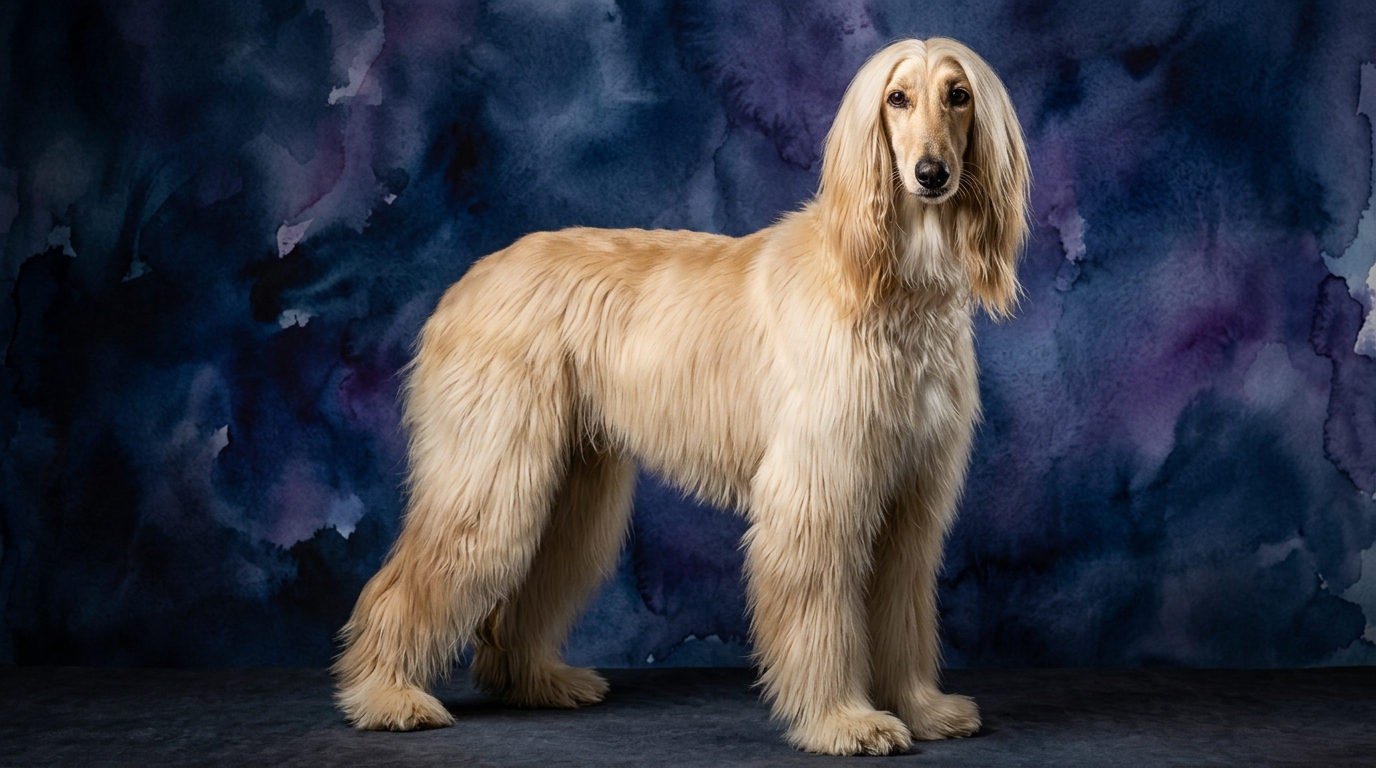
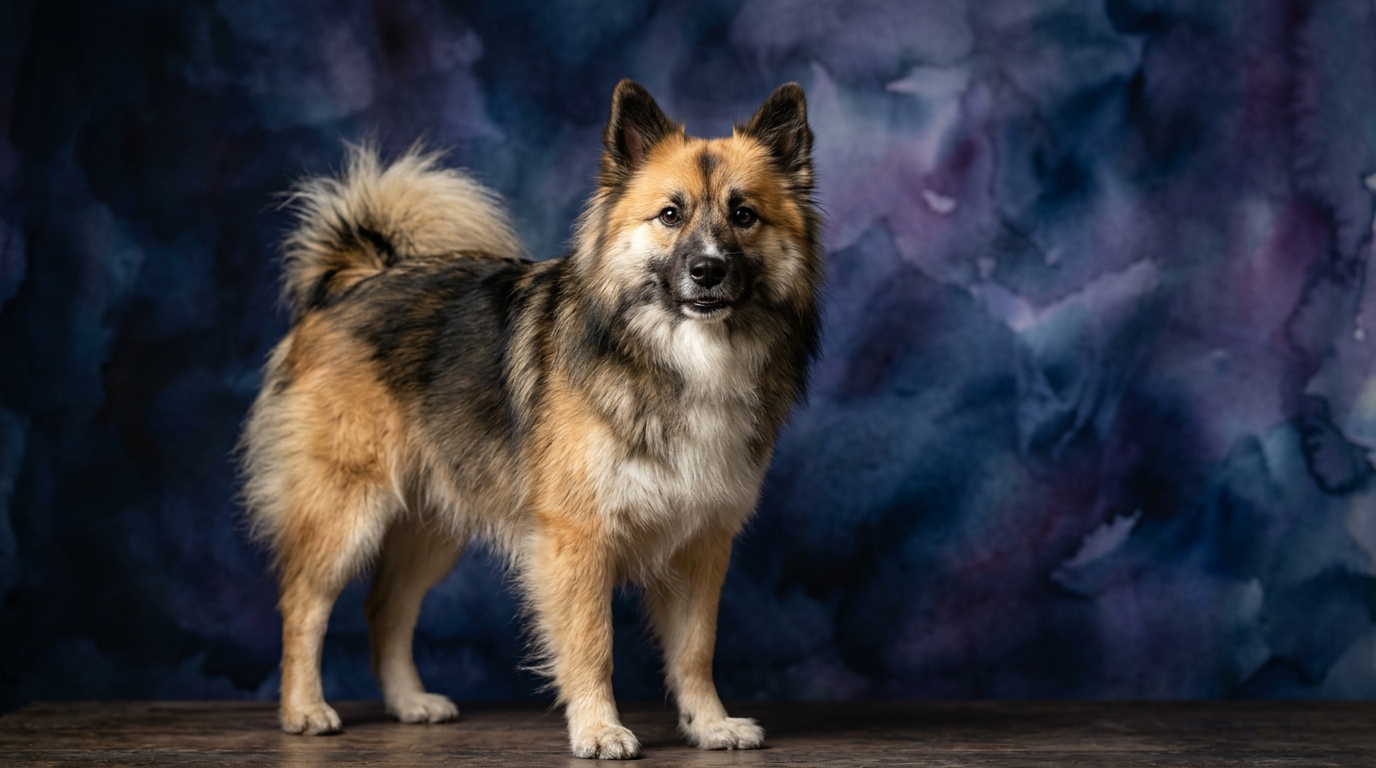
Side-by-Side Cognitive Profile
The Afghan Hound presents a cognitive profile shaped by its role as an independent hunter, reflected in its Coren rank of #79, placing it among breeds with more selective obedience. Their problem-solving ability, rated 4/5, indicates a strong capacity for autonomous decision-making, particularly in navigating complex environments and strategizing without direct human intervention. However, this independence translates to a low training speed of 1/5, meaning they are not inherently eager to please and require significant motivation to learn traditional commands. Their social intelligence, at 2/5, suggests a reserved nature, forming deep bonds with their immediate family but often aloof with strangers, and not always attuned to subtle human cues. An extreme instinctive drive (5/5), primarily for chase and prey, is a dominant force in their behavior, while their memory is a moderate 3/5, capable of retaining routes and experiences, but perhaps less focused on repetitive command recall.
In contrast, the Icelandic Sheepdog, a breed not Coren-ranked but celebrated for its herding acumen, exhibits a balanced and cooperative cognitive makeup. Their problem-solving score of 3/5 reflects a practical intelligence, adept at real-world tasks related to their herding legacy, such as locating livestock or navigating familiar terrain, often in partnership with humans. A training speed of 3/5 highlights their willingness to learn and eagerness to engage, making them generally responsive to instruction and positive reinforcement. Their social intelligence is also rated 3/5, indicating an affectionate nature, a good understanding of human moods, and a desire to be involved in family life. The instinctive drive, at 3/5, is present but manageable, primarily focused on herding and alerting, rather than an overwhelming prey drive. Finally, their memory, also 3/5, allows for good recall of commands, routines, and past social interactions, contributing to their adaptability.
Where the Afghan Hound Excels Cognitively
The Afghan Hound's cognitive strengths shine brightest in scenarios demanding independent thought and swift, self-directed action, particularly when their intrinsic drives are engaged. Their problem-solving score of 4/5 reflects an impressive capacity for autonomous decision-making, especially when it involves navigating complex outdoor environments or executing tasks related to their sighthound heritage. This isn't about solving human-centric puzzle toys, but rather the intricate spatial reasoning required to track and pursue, or to find the most efficient path through varied terrain, often at speed. They excel at identifying targets and devising strategies to reach them without constant human input. Their unparalleled instinctive drive, rated 5/5, acts as a powerful engine for this independence, fueling their focus and persistence in tasks they deem intrinsically rewarding, such as a chase, exploration, or guarding their space. They are masters of self-preservation and resourcefulness in appropriate contexts, demonstrating a unique form of intelligence rooted in ancient hunting practices.
Where the Icelandic Sheepdog Holds Cognitive Advantages
The Icelandic Sheepdog demonstrates a different, yet equally valuable, set of cognitive advantages, particularly in areas of cooperation, adaptability, and social engagement. Their training speed of 3/5, coupled with a social intelligence score of 3/5, indicates a keen willingness to engage with human direction and a capacity to understand complex social cues, making them far more receptive to learning commands and routines. Unlike the Afghan Hound's singular focus, the Icelandic Sheepdog's moderate instinctive drive (3/5) is more amenable to guidance, allowing their herding instincts to be channeled into constructive activities rather than dominating all behavior. This breed excels at collaborative problem-solving within a human-dog partnership, demonstrating an ability to learn and adapt based on feedback, and a generally optimistic approach to new experiences. Their cognitive strengths lie in their ability to integrate seamlessly into a family unit and contribute as a working companion, valuing interaction, shared tasks, and a clear communication loop with their human counterparts, making them highly responsive to their environment and people.
Training: A Tale of Two Temperaments
When it comes to ease of training, the Icelandic Sheepdog clearly holds a significant advantage over the Afghan Hound, a difference rooted deeply in their respective cognitive profiles and historical roles. The Icelandic Sheepdog's training speed is rated 3/5, reflecting their inherent eagerness to please and their cooperative nature, traits honed over centuries of working closely with humans to manage livestock. They are receptive to positive reinforcement and respond well to consistent, clear communication, often enjoying the process of learning new commands as a form of engagement and bonding. Their moderate social intelligence further aids this, allowing them to better interpret human intentions and cues, which facilitates a smoother, more rewarding training experience for both dog and owner. They are motivated by companionship and praise, making them generally compliant and eager pupils.
In stark contrast, the Afghan Hound scores a mere 1/5 for training speed. This isn't due to a lack of capacity to learn, but rather a profound independence and a strong self-will. Bred to hunt autonomously, they are not naturally inclined to defer to human commands or to perform repetitive tasks for external rewards if those tasks do not align with their own interests. Their motivation stems more from their powerful instinctive drives, making traditional obedience training a significant challenge that requires immense patience, creativity, and a deep understanding of their sighthound psychology. An Afghan Hound will often consider if a command aligns with its own agenda or if there's a more appealing alternative, rather than simply complying, demanding a trainer who can make learning profoundly engaging and relevant to their natural behaviors.
Matching Breeds to Owner Lifestyles
Both breeds require active engagement, but the *nature* of that activity differs significantly, influencing their suitability for various owner lifestyles. The Afghan Hound, despite its regal appearance, is an athlete built for speed and endurance, demanding substantial physical exercise, often in the form of secure off-leash running opportunities where they can truly stretch out and satisfy their powerful desire to chase. Their extreme instinctive drive means they need outlets for their prey drive, making structured lure coursing or similar activities ideal for their mental and physical well-being. This breed suits owners who are highly active and understand the unique needs of a sighthound: someone willing to provide extensive, safe running space and who appreciates an independent, sometimes aloof, companion rather than a constantly interactive one. They are not for relaxed owners seeking a couch potato, as their energy, when pent up, can lead to frustration and potentially destructive behaviors.
The Icelandic Sheepdog, while also active, thrives on a different kind of engagement. Their moderate instinctive drive and social intelligence mean they require consistent daily exercise, but also significant mental stimulation through interactive play, training sessions, and constant companionship. They are very much a 'people dog' who enjoys being involved in family activities, whether it's hiking, dog sports, or simply being an ever-present, cheerful companion in daily adventures. This breed is ideal for active owners who want a highly engaged, cooperative partner, one that thrives on shared experiences and seeks to participate actively in family life. They are less suited for owners who prefer a dog that entertains itself or requires minimal interaction, as their social nature means they can become bored or anxious without sufficient human engagement and mental stimulation.
The Verdict
Choose the Afghan Hound if you are an experienced, patient owner who values independence, appreciates a dog with a unique, reserved personality, and can provide extensive, secure environments for their powerful running instincts and independent pursuits.
Choose the Icelandic Sheepdog if you seek an amiable, cooperative, and highly engaged canine partner for an active lifestyle, thriving on interaction and joint ventures, and valuing a dog that is generally eager to please and trainable.
🧠 Find Your Pet's IQ Score
Our Pet IQ Lab assessment covers 25+ tests across 5 cognitive dimensions — personalized to your breed.
Take the Full IQ Test →Frequently Asked Questions
Is the Afghan Hound truly untrainable?
The Afghan Hound is not untrainable, but their low training speed score (1/5) reflects their independent nature and lack of inherent desire to please, making traditional obedience challenging. Training requires immense patience, creativity, and a deep understanding of their unique motivations, often succeeding best when tasks align with their natural drives rather than demanding rote compliance.
Do Icelandic Sheepdogs bark a lot?
Yes, Icelandic Sheepdogs are known for being vocal. Their moderate instinctive drive includes a strong herding and alerting instinct, leading them to bark to communicate, warn, or gather, which requires consistent training to manage appropriately. This trait is a natural part of their heritage as farm dogs.
Which breed is better for a family with children?
The Icelandic Sheepdog is generally considered more suitable for families with children due to their social intelligence (3/5) and amiable, cooperative nature, though proper introductions and supervision are always essential. The Afghan Hound's more reserved and independent temperament (social intelligence 2/5) means they might prefer a quieter environment and less boisterous interaction, making them less ideal for very young or energetic children.