Side-by-Side IQ Profile: Afghan Hound vs. Komondor
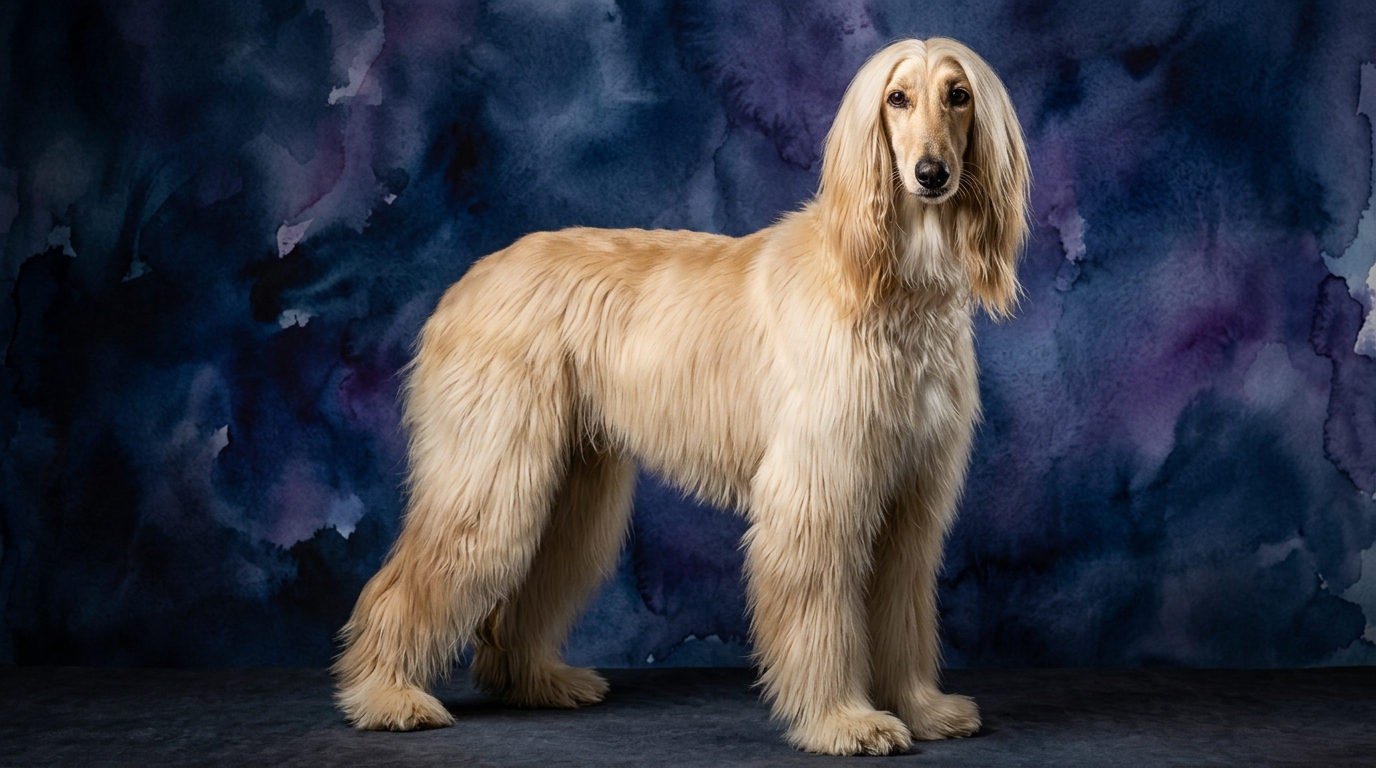
The Afghan Hound's cognitive makeup reflects its heritage as a hunter of fast-moving prey across vast, open terrains. Its Problem Solving ability, rated at 4/5, indicates a breed adept at independent decision-making, crucial for tracking and cornering game without human direction. However, its Training Speed is notably low at 1/5, suggesting a mind less inclined towards rote obedience and more towards self-directed action. Social Intelligence, at 2/5, points to a reserved nature, often forming deep bonds with its primary human but less concerned with broader social cues or group dynamics. The Instinctive Drive is exceptionally high at 5/5, a testament to its powerful prey drive and unwavering focus on its inherent hunting tasks. Memory, at 3/5, is sufficient for retaining crucial environmental information and past experiences, aiding in navigation and recognizing hunting patterns.
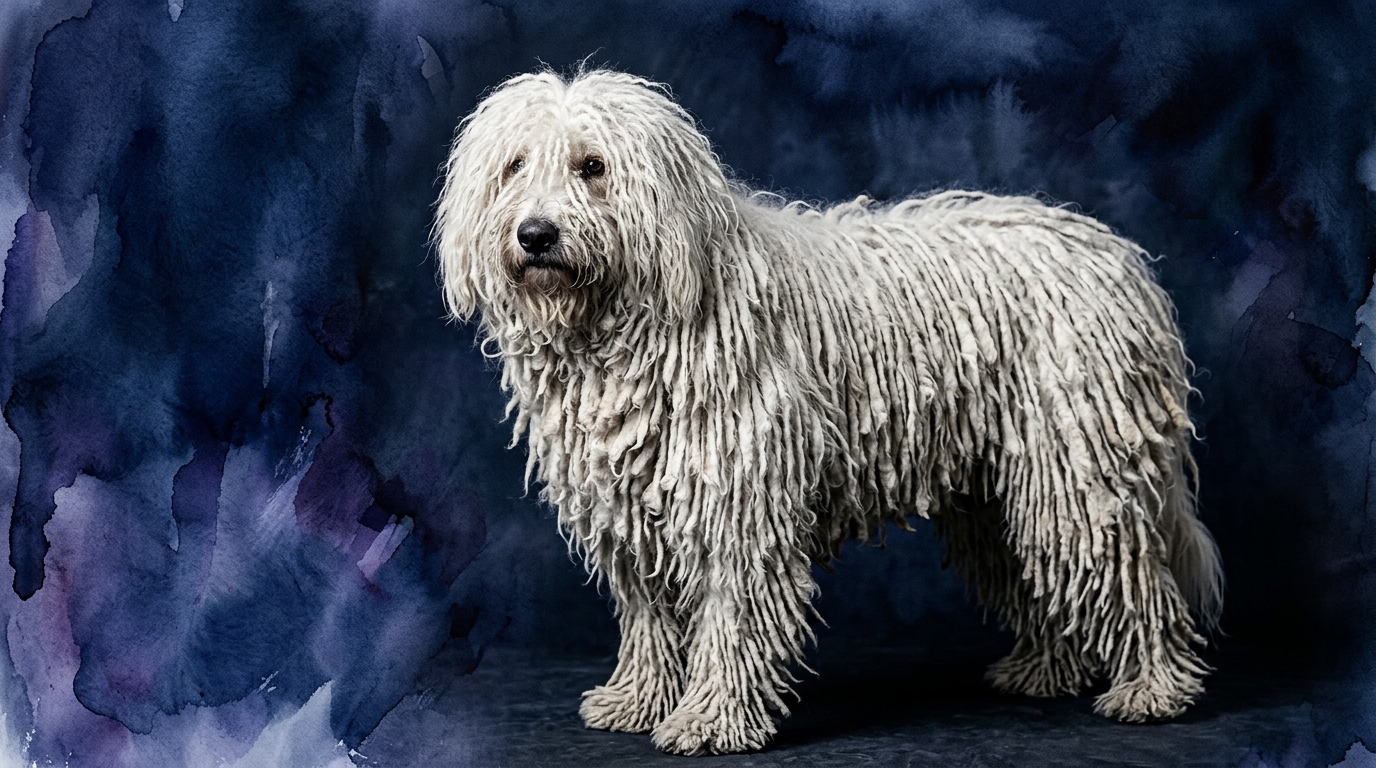
The Komondor, a dedicated livestock guardian, exhibits a cognitive profile tailored for watchful protection and autonomous judgment. Its Problem Solving score of 3/5 reflects a capacity for independent thought in assessing threats and protecting its flock, though perhaps not with the same creative flair as the Afghan Hound. Training Speed, at 3/5, is moderate, indicating a dog capable of learning commands but often requiring patience and understanding of its guardian instincts. Social Intelligence, also 3/5, suggests a more nuanced understanding of its environment and social hierarchy, crucial for interacting with both its charges and potential threats. Instinctive Drive, rated 3/5, is primarily focused on guarding and protection, a strong intrinsic motivation to patrol and defend rather than hunt. Memory, at 3/5, supports its ability to recall routines, recognize familiar faces, and remember potential dangers within its territory.
Where the Afghan Hound Wins Cognitively
The Afghan Hound's cognitive strengths lie profoundly in its capacity for autonomous action and exceptional prey drive. Its superior Problem Solving score of 4/5, compared to the Komondor’s 3/5, means an Afghan Hound is more likely to independently strategize and execute complex tasks, especially those involving pursuit or navigation of intricate environments. For instance, when presented with an obstacle course designed to simulate hunting terrain, an Afghan Hound might devise its own innovative path through or around impediments, prioritizing the 'catch' rather than waiting for human instruction. This breed’s Instinctive Drive, a perfect 5/5, is another area where it truly excels. This isn't merely about chasing squirrels; it's about an unwavering, deeply ingrained compulsion to detect, track, and pursue, making it incredibly persistent in tasks that tap into its sighthound heritage. This profound independence and singular focus on its primary drive are distinct cognitive advantages for tasks requiring self-reliance and intense, sustained effort.
Where the Komondor Wins Cognitively
The Komondor's cognitive profile demonstrates clear advantages in areas crucial for its role as a vigilant protector. Its moderate Training Speed (3/5 vs. Afghan Hound's 1/5) means it is generally more receptive to learning and retaining commands, making structured training sessions more productive. While not lightning-fast, a Komondor is more likely to process and respond to cues within a reasonable timeframe, linking actions to consequences more readily. Furthermore, its Social Intelligence, also 3/5 compared to the Afghan Hound's 2/5, provides a distinct edge in understanding complex social dynamics and environmental nuances. A Komondor is better equipped to read subtle shifts in human body language, assess the temperament of strangers, and discern between genuine threats and harmless visitors. This heightened social awareness is vital for its guardian duties, allowing it to make more informed judgments about when to intervene and how to appropriately protect its charges. This cognitive ability to interpret and react to social signals with greater discernment makes the Komondor a more adaptable and context-aware companion in social settings.
Which is Easier to Train and Why
When evaluating ease of training, the Komondor presents a more cooperative and responsive learning partner than the Afghan Hound. The Komondor's Training Speed of 3/5, coupled with its Social Intelligence of 3/5, means it is generally more inclined to engage with human instruction and understand the purpose behind commands. A Komondor, while independent by nature due to its guardian role, seeks to understand its position within the family unit and respond to its human's leadership. This translates into a dog that, with consistent and fair methods, can learn a broad range of commands and integrate them into its daily routine. In contrast, the Afghan Hound's Training Speed of 1/5 and lower Social Intelligence of 2/5 indicate a breed that approaches training with a distinct disinterest in human-imposed structures. An Afghan Hound often perceives commands as suggestions rather than mandates, prioritizing its own instincts and desires. Its strong independent streak, fueled by its high instinctive drive, means it can be notoriously difficult to motivate and may simply choose not to comply if it sees no immediate benefit or if a more compelling scent or sight distracts it. Therefore, for an owner seeking a dog that will readily learn and execute commands, the Komondor, with its more balanced cognitive profile for cooperation, will prove significantly easier to train.
Which Suits Active Owners vs. Relaxed Owners
Defining "active" and "relaxed" owners takes on different dimensions when considering these two breeds. The Afghan Hound, despite its elegant appearance, is suited for owners who define "active" as providing extensive opportunities for running and mental stimulation related to its chase drive. Its high Instinctive Drive (5/5) means it requires consistent outlets for physical exertion, such as lure coursing, long off-leash runs in secure areas, or fast-paced games. A relaxed owner, in the sense of someone preferring minimal engagement or short walks, would find an Afghan Hound challenging, as unmet physical and mental needs often lead to undesirable behaviors. The breed's independent problem-solving mind also benefits from activities that engage its intellect in a self-directed manner, beyond simple obedience.
The Komondor, conversely, might appeal to an "active" owner who defines activity more around mental engagement, vigilance, and purposeful work, rather than pure speed. While Komondors need regular exercise, their activity is often characterized by patrolling, observation, and monitoring their territory. An owner who is "active" in terms of providing structured training, consistent leadership, and opportunities for the Komondor to fulfill its guardian instincts (even if metaphorically, like overseeing a family or property) will find success. A "relaxed" owner for a Komondor might be someone who appreciates a watchful, calm presence but still understands the need for mental stimulation related to its protective nature and consistent, firm guidance. Neither breed is truly suited for a purely "relaxed" owner who seeks a low-maintenance companion; both demand specific types of engagement, albeit along different cognitive and behavioral axes.
The Verdict
Choose the Afghan Hound if you value a highly independent, self-driven companion with exceptional problem-solving skills for tasks requiring singular focus and relentless pursuit, and you are prepared for a dog that prioritizes its instincts over human commands.
Opt for the Komondor if you seek a vigilant, socially aware protector capable of moderate training responsiveness and independent judgment in guardianship, and you are ready to provide consistent leadership and channel its protective instincts.
🧠 Find Your Pet's IQ Score
Our Pet IQ Lab assessment covers 25+ tests across 5 cognitive dimensions — personalized to your breed.
Take the Full IQ Test →Frequently Asked Questions
Is the Afghan Hound truly difficult to train?
Yes, the Afghan Hound's low training speed and strong independent nature mean it often finds human commands less compelling than its own instincts or environmental stimuli. Training requires immense patience, consistency, positive reinforcement, and understanding that compliance is often optional for this breed.
Do Komondors get along with other pets?
Komondors can coexist with other pets, especially if raised with them, due to their social intelligence and guardian instincts. However, their protective nature means they may view new animals as potential threats to their "flock," requiring careful introductions and supervision.
Which breed needs more mental stimulation?
Both breeds require significant mental stimulation, but of different types. The Afghan Hound thrives on activities that engage its independent problem-solving and chase drive, like lure coursing. The Komondor needs mental engagement related to its guardian role, such as patrolling, observing, and structured training that reinforces its purpose.