Side-by-Side Cognitive Profile
To understand the unique intelligence of the Afghan Hound and Lhasa Apso, we examine five key cognitive dimensions, alongside their Coren ranking, which primarily reflects obedience and working intelligence. It's important to remember that a lower Coren rank doesn't signify a lack of intelligence, but rather a different kind of cognitive wiring, often geared towards independence rather than cooperative obedience.
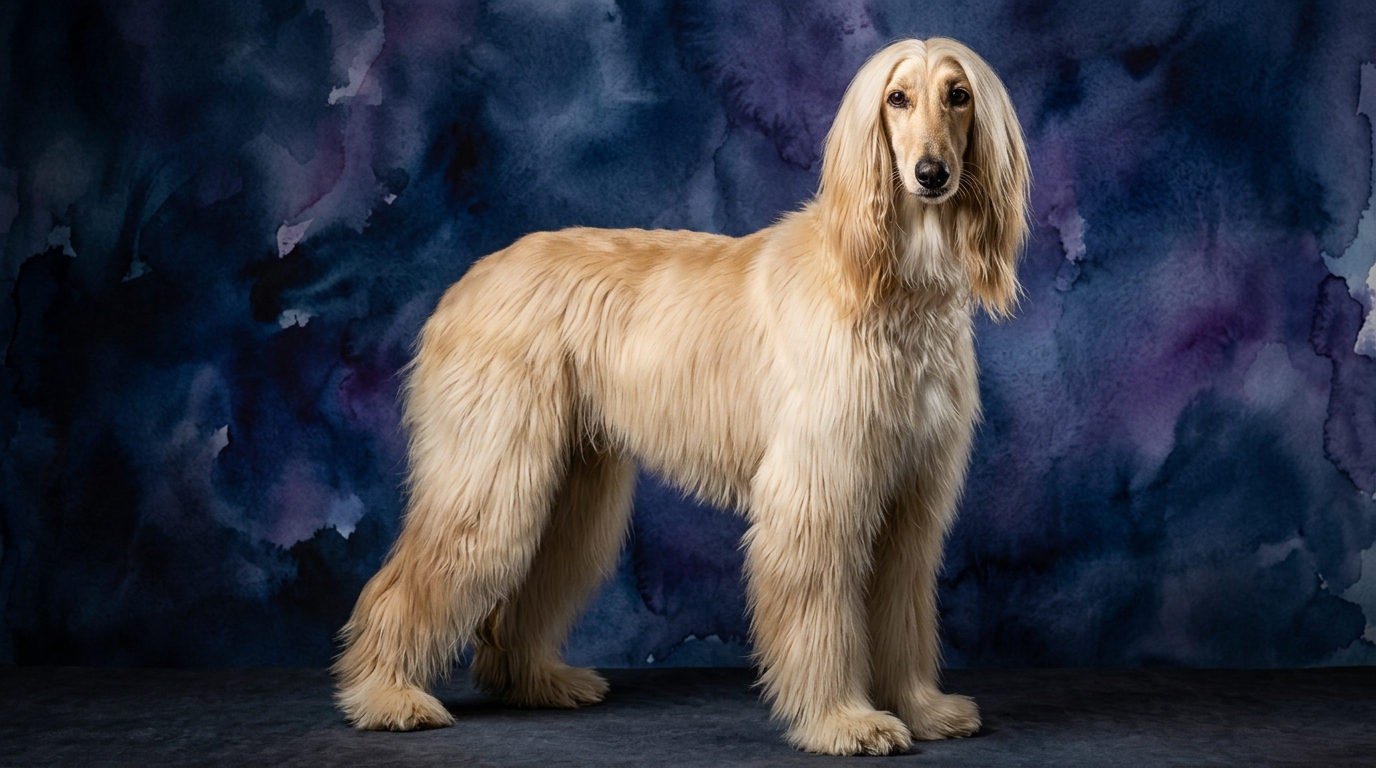
The Afghan Hound, with a Coren rank of #79, presents a distinctive cognitive blueprint. Their Problem Solving ability is rated at 4/5, indicating a strong capacity for independent thought and finding solutions to challenges, often in pursuit of their own objectives. However, their Training Speed is notably low at 1/5; these hounds are not quick to pick up new commands and require significant patience and repetition due to their independent nature. Social Intelligence, at 2/5, suggests they are less attuned to human social cues and motivations compared to more biddable breeds, preferring to operate on their own terms. Instinctive Drive is exceptionally high at 5/5, reflecting their powerful prey drive and historical role as hunters, making them intensely motivated by natural instincts. Their Memory is moderate at 3/5, meaning they retain information adequately but may not recall commands consistently if their motivation wanes.
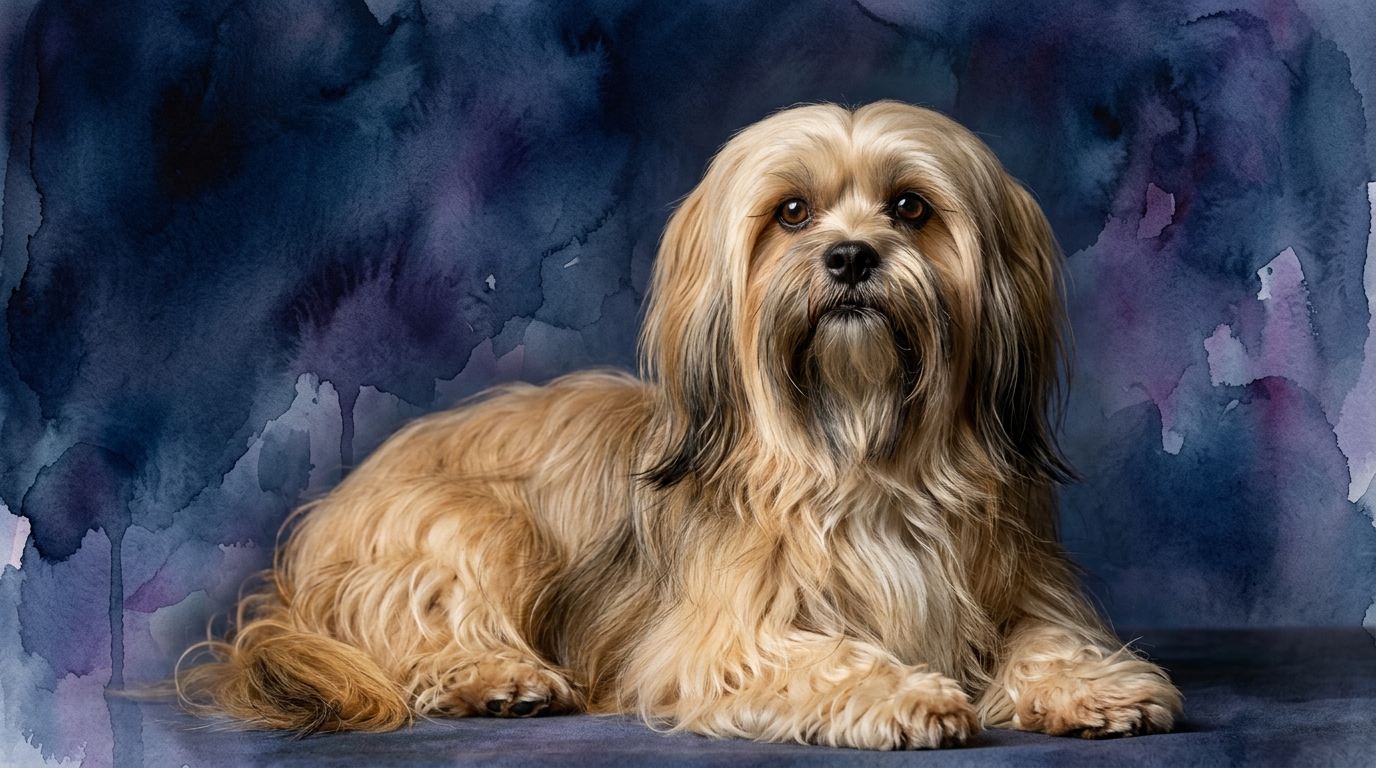
In contrast, the Lhasa Apso, holding a Coren rank of #68, exhibits a more balanced cognitive profile, reflecting its role as a watchful companion. Their Problem Solving capability is rated 3/5, demonstrating a competent ability to navigate their environment and solve issues, particularly those related to their guarding duties. Training Speed is moderate at 3/5, meaning they are capable of learning commands and routines at a reasonable pace, though they can have a stubborn streak. Social Intelligence is also moderate at 3/5, indicating a fair understanding of human cues and a willingness to engage, especially within their family unit. Instinctive Drive, at 3/5, is present but more focused on territoriality and alert barking rather than intense prey pursuit. Their Memory is rated 3/5, allowing them to remember learned behaviors and routines reliably.
Where the Afghan Hound Excels Cognitively
The Afghan Hound truly shines in areas demanding independent thought and powerful instinctive action. Their 4/5 Problem Solving score means they are adept at figuring things out for themselves, especially when it comes to navigating complex terrain or strategizing a chase. This isn't about solving puzzles for human approval, but rather about effective, self-directed action in their environment. For instance, an Afghan Hound might expertly find a way around an obstacle to pursue something of interest, demonstrating a practical, goal-oriented intelligence that requires minimal human input.
Their exceptional 5/5 Instinctive Drive is another cognitive strength. This intense drive fuels their focus and determination, making them tenacious in pursuing what their instincts dictate. While this can manifest as a challenge in training (e.g., chasing squirrels), it also means they possess an incredible innate capacity for specific tasks—like sprinting with unparalleled focus—that aligns with their ancient purpose. This powerful internal motivation means they don't necessarily need external encouragement to engage with their world; their drives are sufficient.
Where the Lhasa Apso Shows Cognitive Strengths
The Lhasa Apso demonstrates its cognitive strengths in areas of cooperative learning and social awareness. Their 3/5 Training Speed, while not lightning fast, means they are more receptive to structured learning than the Afghan Hound. They are capable of absorbing and responding to commands with consistent effort, making them more pliable in a domestic setting. This moderate pace allows for a more traditional training approach to yield results.
Furthermore, their 3/5 Social Intelligence gives them an edge in understanding and responding to human social cues. While independent, they are more likely to engage with their human companions on a social level, interpreting subtle body language or tone of voice. This makes them more amenable to living closely with families, as they possess a greater capacity for social bonding and interaction that can translate into more harmonious cohabitation and a willingness to cooperate within a social structure.
Which Breed is Easier to Train, and Why?
When it comes to ease of training, the Lhasa Apso generally presents a more straightforward experience than the Afghan Hound. This difference largely stems from their respective scores in Training Speed and Social Intelligence, which directly impact their biddability and responsiveness to human instruction. The Lhasa Apso's moderate 3/5 Training Speed means they are capable of learning at a reasonable pace, and their 3/5 Social Intelligence indicates a greater willingness to pay attention to and interpret human commands. They respond better to positive reinforcement and can be motivated by praise and treats, making the training process a more collaborative effort.
The Afghan Hound's 1/5 Training Speed, combined with their 2/5 Social Intelligence, paints a picture of a dog that is far less interested in being told what to do. Their independent problem-solving (4/5) and powerful instinctive drive (5/5) mean they are often more focused on their own internal agenda or external stimuli than on human directives. Training an Afghan Hound requires immense patience, creativity, and an understanding that compliance is often conditional on their own motivation, rather than a strong desire to please. They will learn, but on their own timeline and often requiring highly compelling rewards to capture their attention away from their innate drives, making them significantly more challenging for the average owner.
Suitability for Active vs. Relaxed Owners
The cognitive profiles of these two breeds distinctly influence their suitability for different owner lifestyles. The Afghan Hound, with its powerful 5/5 Instinctive Drive and 4/5 Problem Solving, thrives with active owners who can meet its substantial needs for physical exertion and mental engagement. These dogs were bred to run long distances and independently pursue game, meaning they require extensive opportunities to stretch their legs in secure environments, often needing more than just a walk around the block. Owners who enjoy activities like lure coursing, long hikes, or consistent, vigorous exercise will find a more harmonious match with an Afghan Hound, as their mental and physical well-being depend on these outlets. Their independent nature also means they appreciate owners who understand and respect their desire for self-direction.
Conversely, the Lhasa Apso, with its more moderate 3/5 Instinctive Drive and 3/5 Problem Solving, is generally better suited for owners with a more relaxed lifestyle, provided their territorial instincts are managed. While they enjoy walks and playtime, their exercise requirements are not as demanding as the Afghan Hound's. Their moderate Social Intelligence means they value companionship but are also content with periods of quiet observation, fulfilling their role as a watchful house dog. Relaxed owners who appreciate a dog that is alert and protective of its home, but doesn't require constant, high-intensity activity, will find the Lhasa Apso to be a good fit. They are adaptable to apartment living as long as their need for a secure territory and regular, moderate exercise is met.
The Verdict
Choose an Afghan Hound if you are an experienced, patient owner dedicated to providing extensive exercise and mental stimulation for an independent, instinct-driven companion.
Opt for a Lhasa Apso if you seek a vigilant, moderately active companion who can be trained with consistent effort and thrives in a stable, family-oriented environment.
🧠 Find Your Pet's IQ Score
Our Pet IQ Lab assessment covers 25+ tests across 5 cognitive dimensions — personalized to your breed.
Take the Full IQ Test →Frequently Asked Questions
Do Afghan Hounds respond well to traditional obedience training?
Afghan Hounds typically do not respond quickly to traditional obedience training due to their low training speed and independent nature, often requiring unique, highly motivated approaches and significant patience from their owners. Their strong instinctive drive frequently outweighs their desire to comply with human commands.
Are Lhasa Apsos good apartment dogs?
Yes, Lhasa Apsos can be good apartment dogs due to their moderate exercise needs and territorial instincts that make them vigilant indoor guardians. They require regular walks and mental engagement, but they don't demand the vast open spaces or intense physical activity of some larger, more driven breeds.
Which breed is more prone to chasing small animals?
The Afghan Hound, with its exceptional 5/5 Instinctive Drive, is significantly more prone to chasing small animals due to its strong prey drive as a sighthound. The Lhasa Apso's instinctive drive is more focused on territorial guarding rather than active pursuit, making them less likely to engage in high-speed chases.