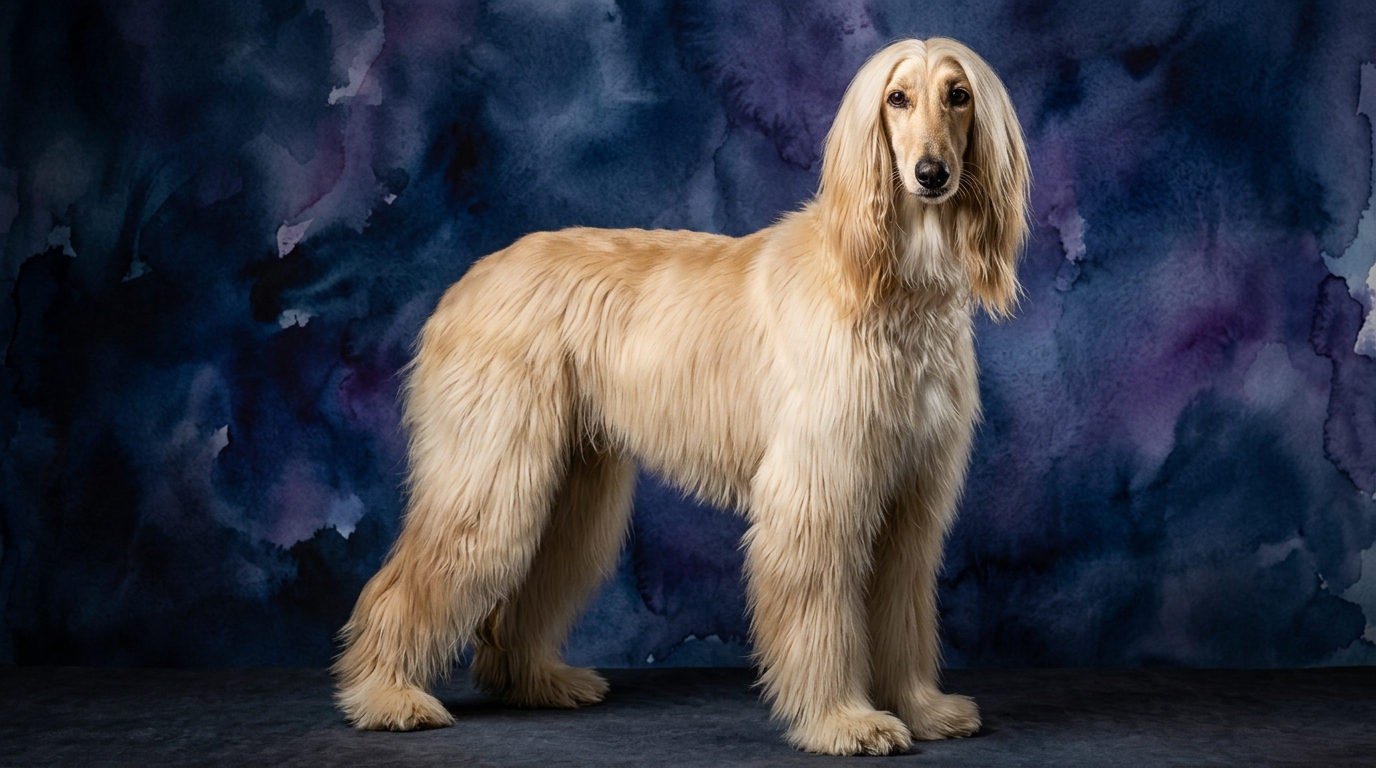
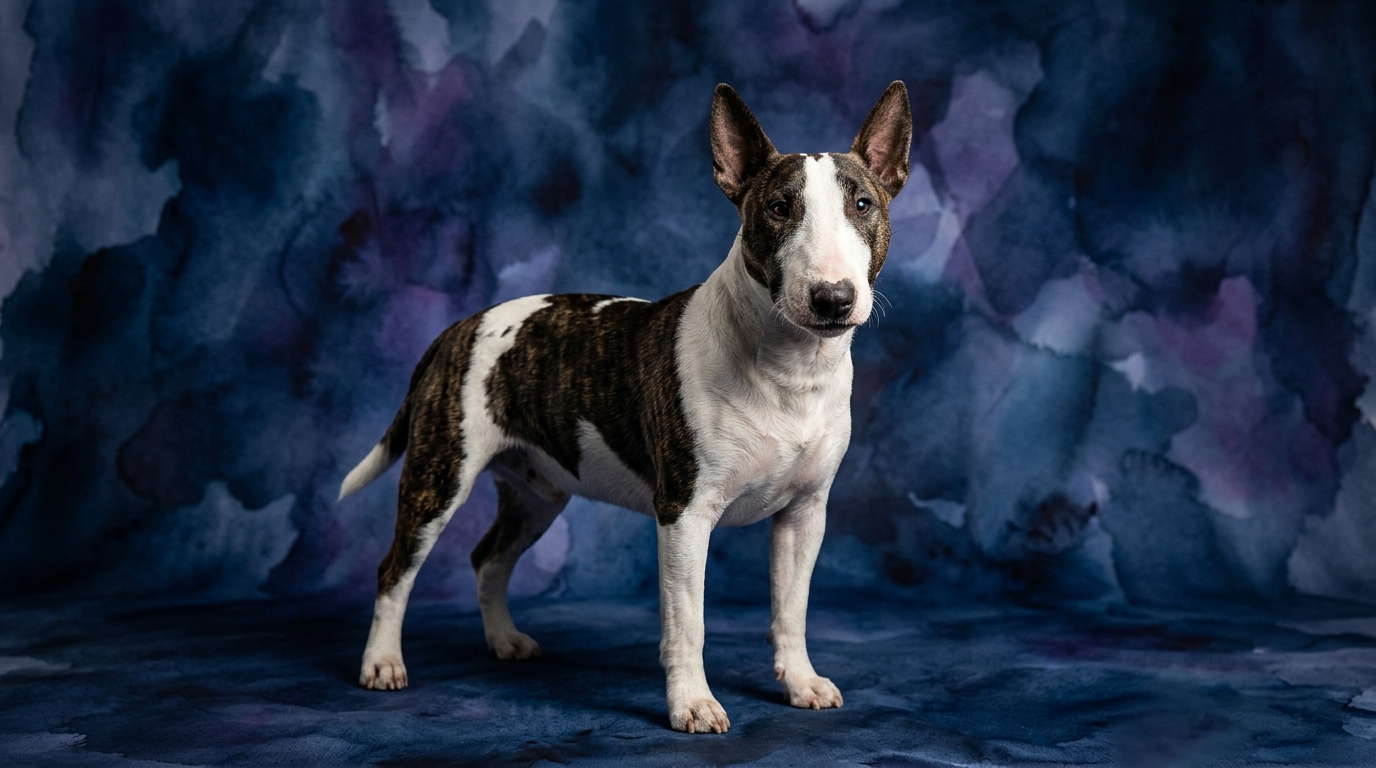
Side-by-Side IQ Profile: Afghan Hound vs. Miniature Bull Terrier
At The Cosmic Pet Pet IQ Lab, we evaluate canine intelligence across five key dimensions, offering a nuanced view beyond traditional obedience metrics. Our analysis of the Afghan Hound and Miniature Bull Terrier reveals two very different cognitive blueprints.
The Afghan Hound, a majestic sighthound, holds a Coren rank of #79, placing it among breeds that require more repetitions to learn new commands. Its IQ profile is distinct: Problem Solving 4/5, indicating a strong capacity for independent thought and strategic action; Training Speed 1/5, reflecting a profound disinterest in rote obedience; Social Intelligence 2/5, suggesting a reserved and often aloof demeanor; Instinctive Drive 5/5, an unparalleled focus on pursuit and visual tracking; and Memory 3/5, adequate for routines but less for arbitrary commands.
In contrast, the Miniature Bull Terrier, a spirited terrier, is not Coren-ranked, often due to its unique blend of tenacity and charm that doesn't always fit traditional working categories. Its IQ scores present a more balanced picture: Problem Solving 3/5, demonstrating practical, often determined approaches to challenges; Training Speed 3/5, indicating a moderate willingness and ability to learn; Social Intelligence 3/5, suggesting a generally friendly and adaptable nature; Instinctive Drive 3/5, a typical terrier drive for digging and chasing but more manageable; and Memory 3/5, solid recall for experiences and consistent commands.
These profiles immediately highlight that 'intelligence' isn't a monolithic trait but a spectrum of capabilities, each suited to different roles and lifestyles.
Where the Afghan Hound Wins Cognitively
The Afghan Hound's cognitive strengths shine in areas demanding self-sufficiency and raw instinct. Its Problem Solving score of 4/5 is a testament to its capacity for independent thought. Unlike breeds that look to their handlers for every cue, an Afghan Hound excels at figuring things out on its own, especially when the 'problem' involves navigating complex environments or strategizing a chase. This isn't about solving puzzles for human approval, but about elegant, self-directed solutions born from necessity and innate drive, such as finding the most efficient path to intercept a moving object.
Furthermore, the Afghan Hound’s Instinctive Drive at 5/5 is a dominant cognitive feature. This isn't merely a physical attribute; it's a profound mental focus. When its sighthound instincts are engaged, whether by a distant movement or a lure, the Afghan demonstrates an unwavering commitment and a remarkable ability to filter out distractions. This intense, singular focus allows for incredible endurance and purpose in tasks that align with its predatory heritage, making it a master of its original hunting role.
Where the Miniature Bull Terrier Wins Cognitively
The Miniature Bull Terrier's cognitive profile offers a more adaptable and generally agreeable set of strengths for a companion animal. Its Training Speed of 3/5 significantly surpasses the Afghan Hound's 1/5, indicating a much greater receptiveness to learning new commands and routines. While still possessing a terrier's independent streak, the Mini Bull Terrier processes instructions more readily and is generally more inclined to engage in structured learning activities with its owner. This translates to a more straightforward and less frustrating training journey for many.
The Mini Bull Terrier also edges out the Afghan Hound in Social Intelligence, scoring 3/5 compared to 2/5. This higher score means they are typically more attuned to human and canine social cues, making them more adaptable in varied social settings. They tend to integrate into family life with greater ease, showing more overt affection and responsiveness to their owners' moods and intentions. Their balanced approach to interaction means they are generally less aloof and more overtly participatory in social dynamics.
Overall, the Miniature Bull Terrier’s consistent 3/5 across most IQ dimensions highlights a balanced cognitive profile. While not reaching the extreme peaks of the Afghan’s instinctive drive or independent problem-solving, this balance makes them a more versatile and predictable companion, less prone to the cognitive 'blind spots' that can make living with a more specialized breed challenging.
Which is Easier to Train, and Why?
When it comes to ease of training, the Miniature Bull Terrier holds a distinct advantage. Its Training Speed of 3/5 means that with consistent, positive reinforcement, these dogs grasp new commands and behaviors at a moderate pace. Their Social Intelligence of 3/5 implies a greater willingness to interact and cooperate with their handler, often motivated by praise and play. While they possess a characteristic terrier stubbornness, this can be managed through engaging training sessions that make learning fun and rewarding. They respond well to structured lessons and clear expectations, typically internalizing what they've learned with reasonable effort.
The Afghan Hound, with its Training Speed of 1/5, presents a considerably greater challenge. Their independence means they often see commands as optional suggestions rather than directives. They are not inherently driven to please humans, as reflected in their 2/5 Social Intelligence. Their powerful 5/5 Instinctive Drive means that any fleeting distraction, such as a distant movement, can instantly override any command, making off-leash reliability in unsecured areas nearly impossible. Training an Afghan Hound requires exceptional patience, creativity, and a deep understanding of their sighthound nature. Owners must find ways to make training intrinsically rewarding for the dog, often by linking it to their natural instincts or making it feel like the dog's own idea, rather than expecting rote obedience. They learn best when *they* perceive the value in a task, not just because a human asked.
Which Suits Active Owners vs. Relaxed Owners?
The Afghan Hound is undeniably suited for active owners who are prepared to embrace and channel a formidable instinctive drive. With a 5/5 Instinctive Drive, these dogs require daily, intense exercise that allows them to run at full speed, ideally in a securely fenced area or through activities like lure coursing. Their problem-solving abilities thrive when given opportunities to explore and navigate complex physical spaces. Owners must be proactive in managing their environment to prevent their powerful drive from leading to dangerous situations, such as chasing perceived prey into traffic. They are not content with a simple walk around the block; they need to truly stretch their legs and engage their keen senses, making them ideal for individuals or families with a commitment to high-energy outdoor pursuits.
The Miniature Bull Terrier, while still an active breed, suits owners who appreciate a more varied approach to activity. Their moderate Instinctive Drive (3/5) means they enjoy regular exercise, including walks, vigorous playtime, and perhaps dog sports, but they don't typically demand the sheer mileage or specialized outlets of an Afghan. Their balanced Social Intelligence and Training Speed make them adaptable to a wider range of activities, from hiking to agility, and they generally integrate more smoothly into family outings. They thrive with owners who can provide consistent exercise to prevent boredom and channel their energy, but who also enjoy a companion that is content to relax indoors after their physical and mental needs have been met. They are suitable for active families seeking a versatile companion rather than a pure performance animal.
The Verdict
Choose the Afghan Hound if you are drawn to a dog with exceptional independent problem-solving skills and an unparalleled instinctive drive, and you are prepared to respect its aloof nature and provide outlets for intense, specific exercise.
Opt for the Miniature Bull Terrier if you seek a dog with a more balanced cognitive profile, offering moderate trainability, better social adaptability, and a tenacious yet agreeable disposition for a variety of activities and family integration.
🧠 Find Your Pet's IQ Score
Our Pet IQ Lab assessment covers 25+ tests across 5 cognitive dimensions — personalized to your breed.
Take the Full IQ Test →Frequently Asked Questions
Is an Afghan Hound difficult to live with due to its low training speed?
Living with an Afghan Hound requires a deep understanding of its independent nature and a realistic approach to training. While they are not eager to please or quick to learn traditional commands, they can be taught essential life skills with patience, positive reinforcement, and by making training engaging and relevant to their instincts. Their aloofness means they value personal space, which some owners find appealing.
Do Miniature Bull Terriers have a strong prey drive like other terriers?
Miniature Bull Terriers possess a moderate instinctive drive (3/5), including a typical terrier prey drive. They enjoy chasing and digging, but this drive is generally more manageable and less all-consuming than that of a sighthound like the Afghan Hound. Consistent training and appropriate outlets for their energy can help channel this instinct effectively.
How does Coren's ranking relate to the IQ scores provided?
Coren's ranking primarily assesses 'working and obedience intelligence,' which correlates closely with a dog's training speed and willingness to comply with human commands. The Pet IQ Lab's scores offer a broader cognitive profile, breaking intelligence into multiple dimensions. For example, an Afghan Hound's low Coren rank and 1/5 training speed align, but its 4/5 problem-solving score highlights a different kind of mental acuity not fully captured by Coren's metric.