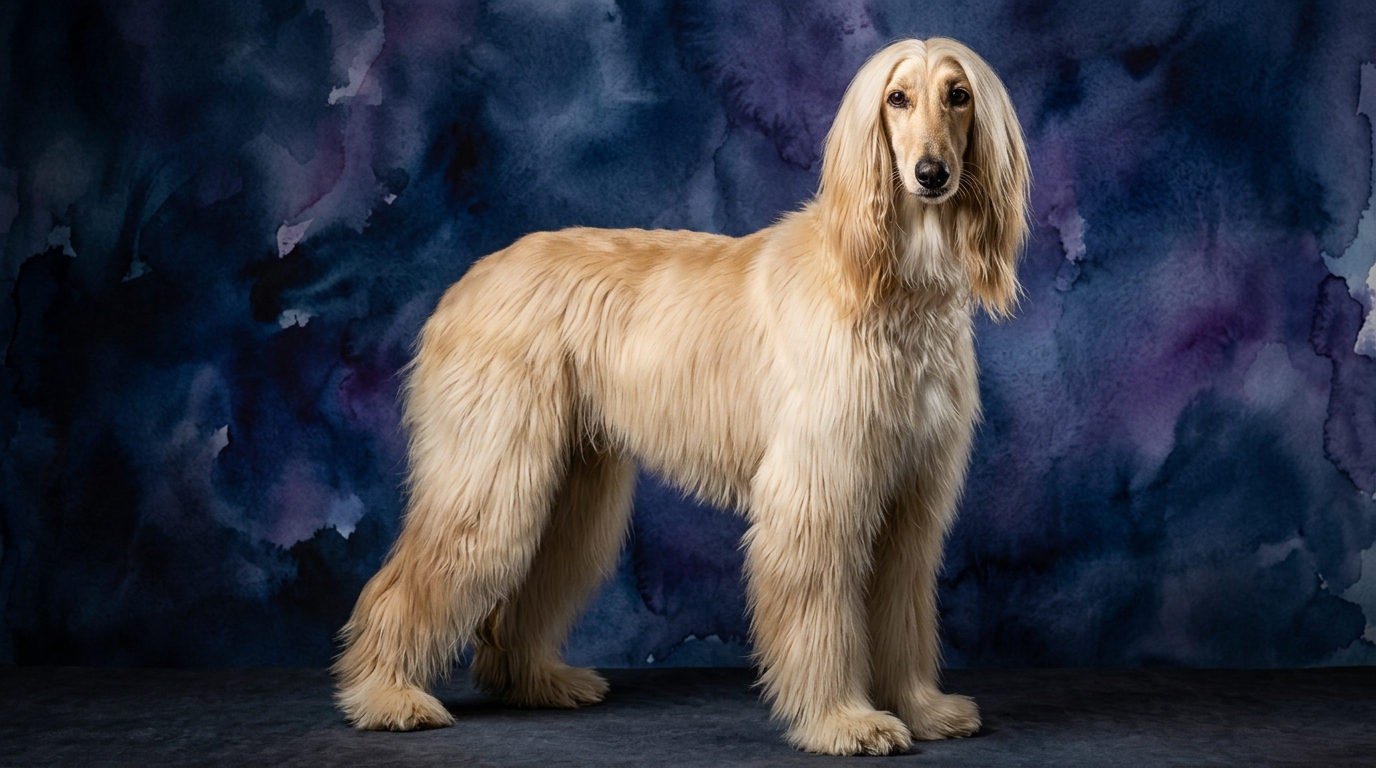
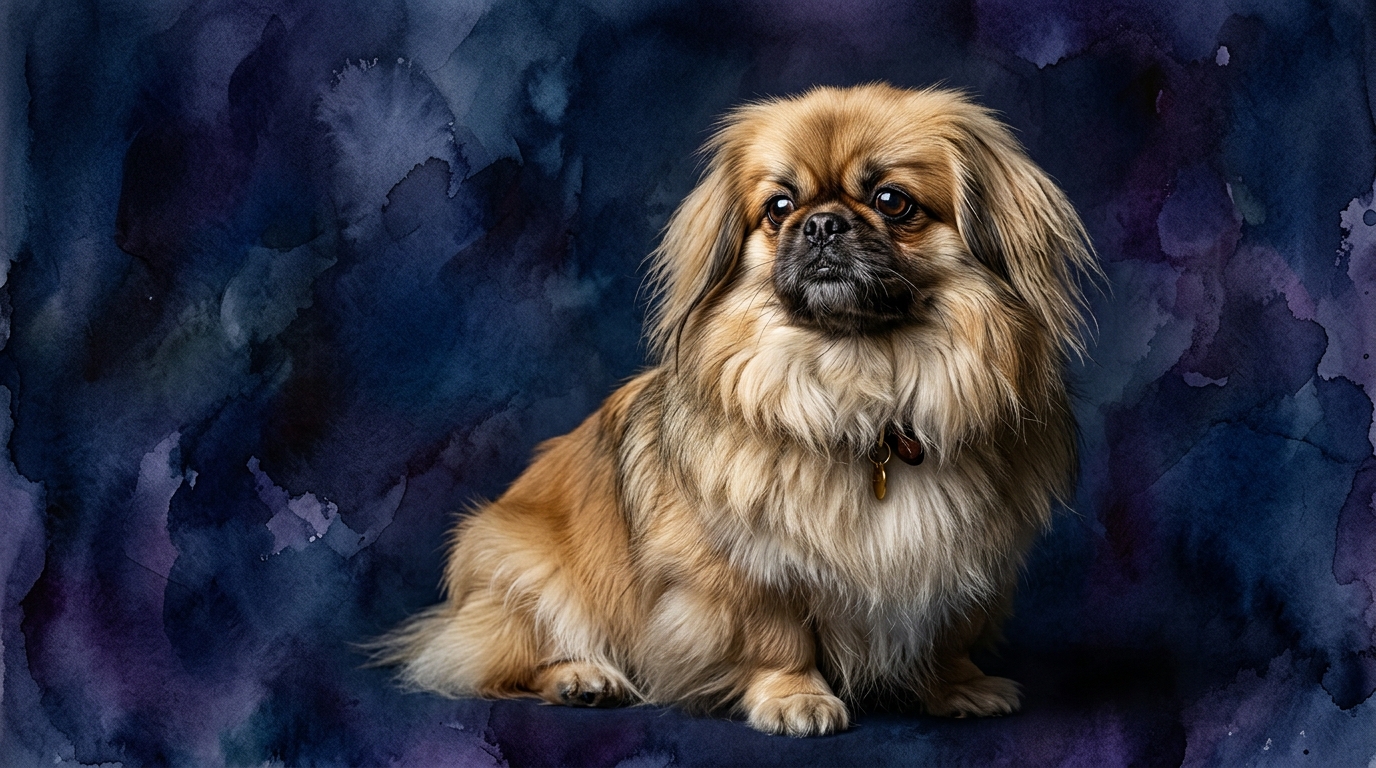
Side-by-Side Cognitive Profiles: Afghan Hound vs. Pekingese
To truly understand the unique cognitive makeup of these two breeds, The Cosmic Pet Pet IQ Lab employs a five-dimensional assessment, revealing their inherent strengths and challenges. The Afghan Hound, ranking #79 in Coren's intelligence scale, presents a profile geared towards independence and instinct, while the Pekingese, at Coren rank #77, shows a more balanced and domestically-oriented cognitive blend.
For the **Afghan Hound**, their Problem Solving scores a robust 4/5, indicating a strong capacity for independent thought and devising their own solutions to environmental challenges, often leveraging their physical prowess. Training Speed, however, is a mere 1/5; they require extensive repetition and motivation, as their independent nature often prioritizes their own agenda over human directives. Social Intelligence sits at 2/5, meaning they form bonds but are not typically eager-to-please or highly attuned to subtle human emotional cues, preferring interactions on their own terms. Their Instinctive Drive is an exceptional 5/5, a powerful force particularly in their sight hound prey drive, manifesting as an almost unshakeable focus when triggered. Memory is moderate at 3/5; they recall experiences and routines, but their willingness to apply learned commands consistently can be variable.
The **Pekingese** presents a different picture. Their Problem Solving is 3/5, a moderate capacity allowing them to navigate their environment effectively and figure out basic challenges, often to achieve comfort or attention. Training Speed is also 3/5, indicating they are generally receptive to learning new commands with patience and positive reinforcement, though not as swiftly as some working breeds. Social Intelligence matches at 3/5; they form strong bonds with their chosen family and can be quite discerning, understanding household hierarchies and using their charm to influence outcomes. Instinctive Drive is 3/5; while they retain some inherent urges like digging or chasing, these are not overwhelming forces. Memory for the Pekingese is 3/5, similar to the Afghan Hound, allowing them to remember people, places, and established routines, contributing to their adaptability within a stable home.
Where the Afghan Hound’s Cognition Shines
The Afghan Hound's cognitive strengths are most apparent in its exceptional Problem Solving (4/5) and unparalleled Instinctive Drive (5/5). This breed possesses an innate, almost primal ability to assess a situation and independently devise a course of action, often driven by their powerful sight hound instincts. This means they are brilliant at tasks requiring self-directed initiative, such as finding creative ways to explore their environment, navigating complex terrain, or pursuing a distant object with single-minded focus. Their cognitive architecture is geared towards autonomous action and rapid, instinctual decision-making in real-world scenarios, making them adept at navigating the world on their own terms rather than waiting for instruction.
Where the Pekingese’s Cognition Excels
The Pekingese shines in areas where adaptability to a domestic setting and a balanced approach to learning are valued. Their moderate Training Speed (3/5) and Social Intelligence (3/5) give them a distinct edge in fostering harmonious cohabitation with humans. They are more amenable to structured learning and tend to be more receptive to human guidance, making the process of teaching house rules, basic manners, and acceptable behaviors less arduous. Their cognitive profile suggests a greater willingness to integrate into a human-centric household dynamic, using their social awareness to navigate interactions and achieve their comfort, often through charming persuasion rather than forceful independence.
Training Dynamics: Afghan Hound vs. Pekingese
When it comes to ease of training, the Pekingese is demonstrably more manageable than the Afghan Hound, a difference rooted deeply in their divergent cognitive profiles and inherent behavioral inclinations. The Pekingese's moderate Training Speed (3/5) means they absorb new commands and routines with a reasonable amount of repetition and consistent positive reinforcement. They generally possess a greater desire to please their primary caregivers, coupled with a moderate instinctive drive (3/5) that is less likely to override their focus during training sessions. A Pekingese often views training as an engaging interaction, responding well to praise and rewards, and their social intelligence allows them to understand and respond to human expectations.
In stark contrast, the Afghan Hound's extremely low Training Speed (1/5) means they require immense patience, creativity, and unwavering consistency. Their strong independent nature and overwhelming Instinctive Drive (5/5) often mean they find human-directed tasks far less compelling than pursuing their own interests, particularly if a stimulating scent or movement captures their attention. An Afghan Hound is not necessarily "stubborn" in a defiant sense, but rather highly self-directed; their brain is wired for autonomous action, making compliance with arbitrary human commands a secondary consideration. For an Afghan, a command is frequently an invitation for negotiation or an optional suggestion, whereas for a Pekingese, it is more readily perceived as a directive to be followed, especially if a reward is involved. This fundamental difference in cognitive priorities makes the training journey vastly different for prospective owners of each breed.
Matching Breed to Lifestyle: Active vs. Relaxed Owners
For active owners who relish outdoor adventures, structured exercise, and perhaps even engaging in specialized activities like lure coursing, the Afghan Hound is the clear choice. Their exceptional Instinctive Drive (5/5) and robust physical capabilities demand a lifestyle filled with opportunities for vigorous running, exploration, and engaging their natural hunting instincts in safe, controlled environments. They thrive when given ample space to stretch their long legs and satisfy their profound urge to chase. An Afghan Hound allowed to be sedentary will likely become restless and potentially destructive, as their cognitive and physical needs are not being met. A relaxed owner might struggle immensely with the Afghan's need for consistent, demanding activity, potentially leading to frustration for both the dog and the human.
Conversely, the Pekingese is ideally suited for relaxed owners who appreciate a companion more inclined towards indoor comfort and leisurely, shorter strolls. Their moderate instinctive drive (3/5) and preference for a cozy, secure environment mean they are content with shorter, less intense periods of exercise, often satisfied with a few daily walks around the block and playtime in a secure yard. They are perfectly happy to curl up on the couch, requiring less demanding physical output and instead offering a steady, comforting presence. Their cognitive profile aligns with a more serene household, where their social intelligence allows them to integrate seamlessly into a human-centric routine without the constant need for high-energy outlets.
The Verdict
If you are an experienced, active owner seeking a magnificent, independent companion who excels in self-directed problem-solving and possesses an unparalleled zest for physical pursuit, and you are prepared for significant training challenges, the Afghan Hound will reward you with a deep, unique bond.
If you desire a charming, adaptable companion for a more relaxed lifestyle, one who is generally more amenable to training and thrives on consistent human interaction within the home, the Pekingese offers a delightful and devoted presence.
🧠 Find Your Pet's IQ Score
Our Pet IQ Lab assessment covers 25+ tests across 5 cognitive dimensions — personalized to your breed.
Take the Full IQ Test →Frequently Asked Questions
Is the Afghan Hound truly untrainable?
While their training speed is very low, Afghan Hounds are not untrainable; they simply require immense patience, consistent positive reinforcement, and a deep understanding of their independent nature. Owners must adapt their methods to the breed's self-directed cognitive style rather than expecting immediate compliance.
Do Pekingese have any unique cognitive quirks?
Pekingese often exhibit a "royal" demeanor, which translates into a cognitive quirk where they are adept at subtly manipulating situations to their comfort or benefit, using charm rather than overt displays of intelligence. They are astute observers of their human companions, learning quickly what actions yield desired results like cuddles or treats.
How does instinctive drive impact daily life for these breeds?
For the Afghan Hound, a high instinctive drive means an almost constant readiness to chase, requiring secure leashes and fenced areas, and making off-leash reliability challenging. For the Pekingese, a moderate instinctive drive means they might occasionally chase a squirrel but are generally more focused on their human family and home comforts, making them easier to manage in varied environments.