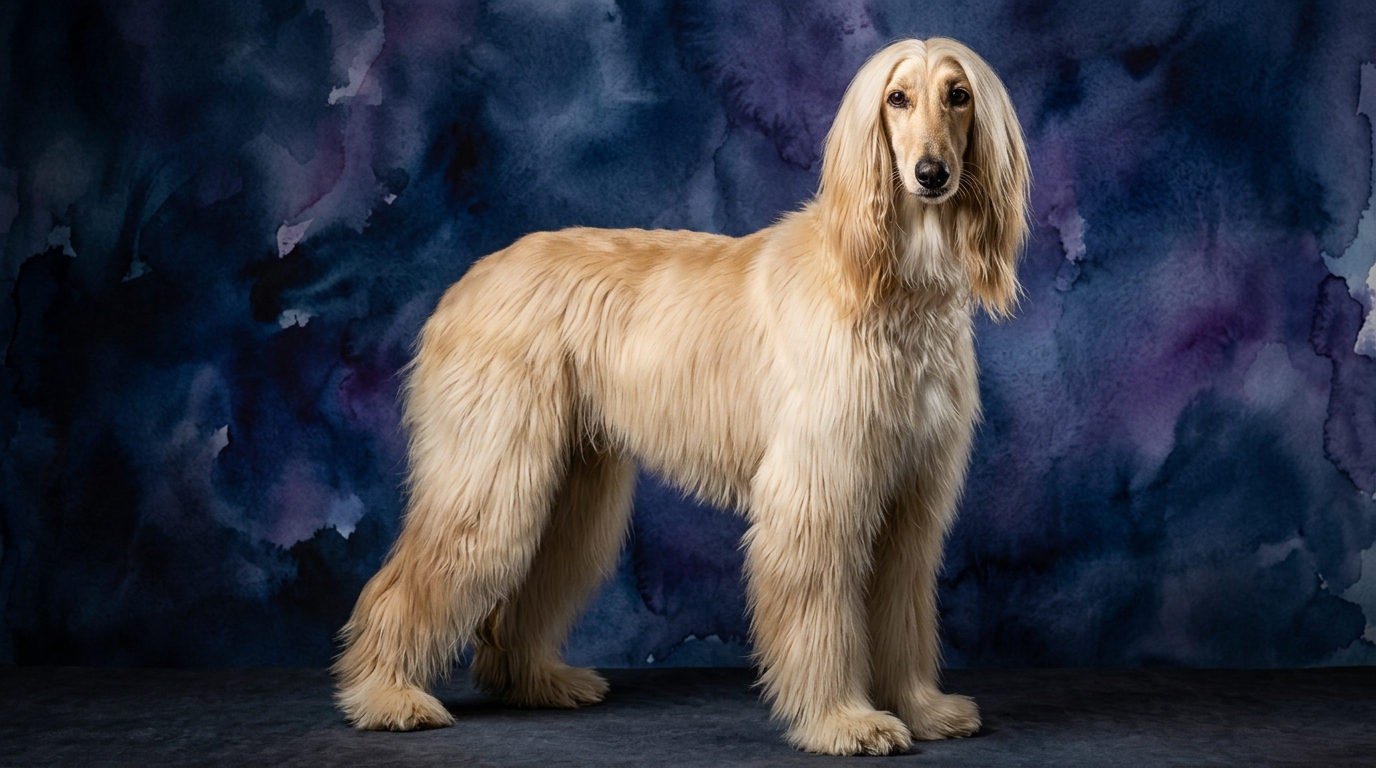
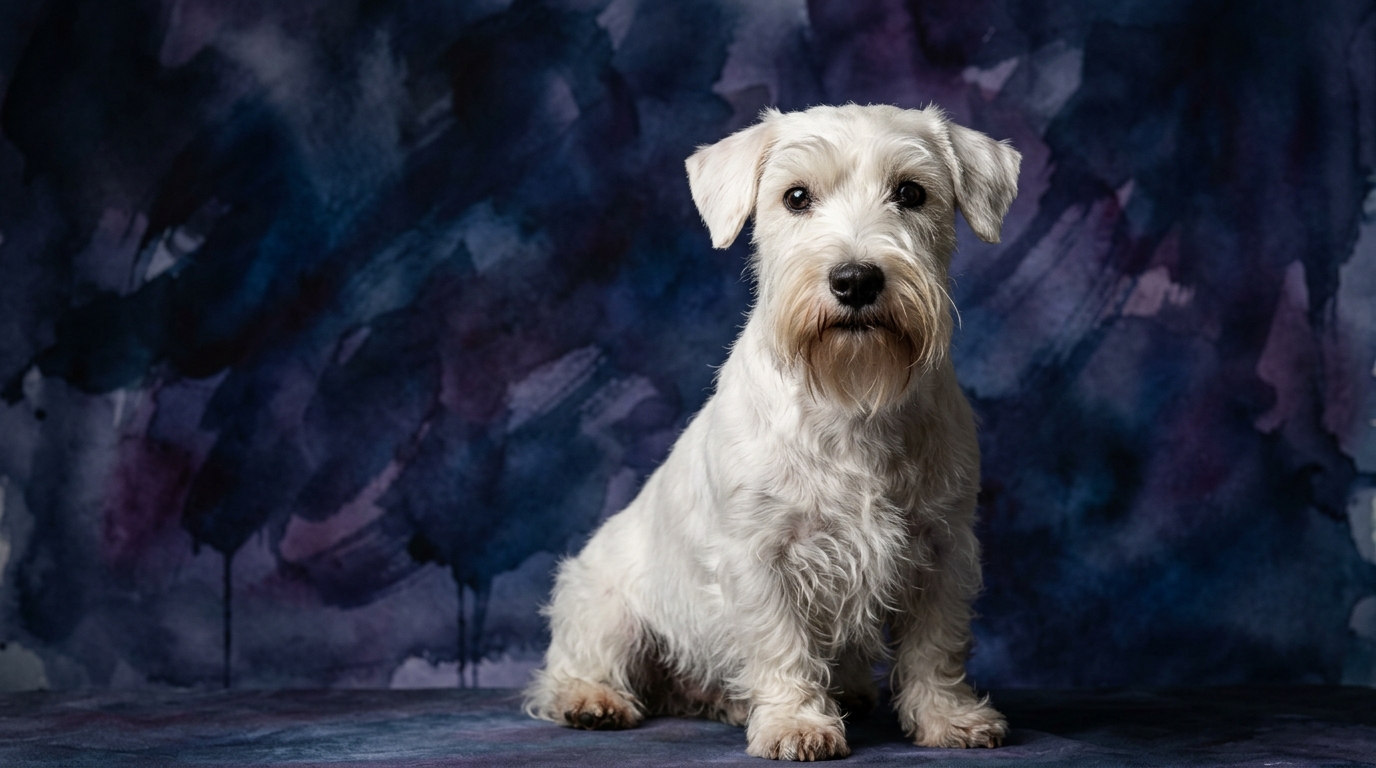
Side-by-Side IQ Profile: Afghan Hound vs. Sealyham Terrier
The Cosmic Pet Pet IQ Lab categorizes canine intelligence across five critical dimensions, allowing for a nuanced understanding of each breed's mental makeup. For the Afghan Hound, its profile reveals a creature of profound independence and instinct. Its Problem Solving is rated at 4/5, indicating a significant capacity for independent thought and figuring out complex situations without direct human guidance. They can navigate obstacles, strategize to reach desired objects, or solve environmental puzzles with notable ingenuity, demonstrating intrinsic intellectual resourcefulness. However, its Training Speed stands at a challenging 1/5, reflecting a strong independence and often a disinterest in performing repetitive tasks solely for human approval. Their motivation often stems from their own desires rather than a desire to please, making traditional obedience training a slow, challenging endeavor requiring immense patience and creative, high-value rewards. Social Intelligence for the Afghan Hound is 2/5, suggesting a reserved or somewhat aloof nature in social interactions. While they recognize their human companions, their engagement might be more on their terms, showing less overt enthusiasm or seeking constant interaction compared to other breeds, tending to form strong bonds with a select few. The Afghan Hound's Instinctive Drive is a paramount 5/5, indicating an extremely powerful, innate drive to hunt and chase. This instinct is deeply embedded, influencing much of their behavior and requiring careful management, especially in environments with small animals or where off-leash reliability is desired, strongly reflecting their original purpose as sighthounds. Finally, their Memory is 3/5, representing an average capacity for retaining information, remembering routines, people, and specific experiences, but perhaps not with the vivid detail or long-term recall seen in breeds with higher scores, particularly when it comes to remembering specific commands they prefer not to execute.
In contrast, the Sealyham Terrier presents a more balanced and generally more biddable cognitive profile. Its Problem Solving is 3/5, showing a solid, practical ability to solve problems. They can figure out how to access areas, manipulate objects, or overcome minor obstacles, often with a determined, persistent approach characteristic of terriers. Their problem-solving is generally geared towards achieving a specific, often self-serving, goal. The Sealyham Terrier's Training Speed is 3/5, suggesting a moderate willingness and capacity for learning new commands and behaviors. While not as eager to please as some breeds, they are generally receptive to training when motivated effectively, responding to consistent methods and positive reinforcement, possessing a reasonable attention span for learning sessions. Social Intelligence for the Sealyham Terrier is also 3/5, indicating a balanced social demeanor. Sealyhams are typically friendly and outgoing with their family, capable of interacting politely with strangers and other animals, though their terrier assertiveness might surface, making them generally adaptable to various social settings without being overly clingy or overly reserved. Their Instinctive Drive is 3/5, reflecting a moderate, but present, prey drive and a strong inclination towards typical terrier activities like digging and exploring. While not as overwhelming as a sighthound's drive, it's a significant aspect of their personality that requires outlets and management, particularly concerning small critters. Like the Afghan Hound, the Sealyham Terrier's Memory is 3/5, suggesting an average ability to recall experiences, commands, and routines, which contributes to their overall trainability and adaptability within a structured environment.
Where the Afghan Hound Wins Cognitively
The Afghan Hound exhibits a distinct cognitive edge in its remarkable Problem Solving (4/5) and an exceptionally powerful Instinctive Drive (5/5). Their problem-solving prowess isn't about following instructions, but about independent thought and strategic action. This means an Afghan might brilliantly figure out how to open a complex gate, bypass a fence, or retrieve a toy from a seemingly inaccessible spot, purely through their own reasoning and initiative. They are not waiting for a human to show them the way; they are calculating and executing. This independent problem-solving is intrinsically linked to their sighthound heritage, where quick, autonomous decisions were crucial for hunting. Furthermore, their unparalleled Instinctive Drive (5/5) means they possess a laser-focused, deeply ingrained desire to pursue. This isn't just about chasing a squirrel; it's about a primal, all-consuming urge that overrides many other stimuli. While challenging for owners, this drive represents a magnificent cognitive specialization for their original purpose, showcasing a mind utterly dedicated to its primary function. They don't just 'like' to chase; they are neurologically wired for it, making them incredibly effective at tasks requiring sustained, independent pursuit.
Where the Sealyham Terrier Wins Cognitively
The Sealyham Terrier demonstrates cognitive strengths in areas where the Afghan Hound faces challenges, particularly in Training Speed (3/5) and Social Intelligence (3/5). While the Afghan Hound's training speed is remarkably low at 1/5, the Sealyham's 3/5 indicates a significantly more receptive and cooperative learner. This breed is more inclined to engage with training exercises and understand what is being asked of them, making the process of teaching commands and desirable behaviors far more straightforward. They possess a practical intelligence that applies well to structured learning, responding positively to consistent methods and clear communication. Their higher Social Intelligence (3/5) also sets them apart. Unlike the Afghan Hound's somewhat aloof 2/5, the Sealyham is generally more engaged and adaptable in social contexts. They are typically more attuned to human cues, more overtly affectionate with their family, and more willing to interact with strangers or integrate into diverse social environments. This balanced social cognitive profile contributes to their versatility as companions, making them generally easier to integrate into various family dynamics and public settings without the reservedness or independence seen in the Afghan.
Which is Easier to Train and Why
Based on their cognitive profiles, the Sealyham Terrier is unequivocally easier to train than the Afghan Hound. The Sealyham's Training Speed of 3/5 signifies a dog that is generally willing to learn and can grasp new commands and routines with reasonable consistency. They respond well to positive reinforcement and clear instructions, making them suitable for standard obedience classes and household manners training. Their problem-solving (3/5) is practical and often applied to understanding what their human wants, provided the motivation is present. In contrast, the Afghan Hound's Training Speed of 1/5 is one of the lowest possible scores, indicating extreme independence and a profound lack of interest in performing tasks on command. Their high problem-solving (4/5) is often used to avoid training or to achieve their own goals, not necessarily to comply with human requests. They possess a 'what's in it for me?' attitude that makes traditional obedience an uphill battle. Training an Afghan Hound requires exceptional patience, creativity, and an understanding that their cooperation is earned, not given. They are not unintelligent; rather, their intelligence manifests as independent reasoning rather than biddability, making them challenging students for conventional training methods.
Which Suits Active Owners vs. Relaxed Owners
The choice between these two breeds significantly hinges on an owner's lifestyle. The Afghan Hound, with its powerful Instinctive Drive (5/5) and independent problem-solving (4/5), is best suited for highly active, experienced owners who appreciate a dog with a profound sense of self and an intense need for physical exertion. Their high drive means they require extensive opportunities to run and burn energy, ideally in securely fenced areas where their prey drive won't lead them astray. Owners must be prepared for a dog that thinks for itself, often independently of human wishes, and requires a dedicated approach to training and management of its natural instincts. This is not a dog for casual strolls or a sedentary lifestyle; they need vast spaces to stretch their legs and minds. Conversely, the Sealyham Terrier, with its balanced Instinctive Drive (3/5) and more cooperative nature (Training Speed 3/5, Social Intelligence 3/5), aligns better with moderately active to relaxed owners. While they certainly enjoy activity, their needs are less demanding than the Afghan's. Daily walks, playtime in a yard, and engaging mental stimulation will keep a Sealyham content. They are adaptable to apartment living provided they receive adequate exercise and interaction, and their more biddable nature makes them easier to manage in various settings. They thrive on companionship and structured routines, making them a more forgiving choice for those seeking a charming, robust companion without the intense demands of a sighthound.
The Verdict
Opt for the Afghan Hound if you are an experienced, highly active individual seeking a truly independent, majestic companion with an unparalleled prey drive, prepared for significant training challenges and a dog that largely thinks for itself.
Select the Sealyham Terrier if you desire a charming, more biddable companion with a balanced temperament, suitable for moderately active homes and more traditional training methods.
🧠 Find Your Pet's IQ Score
Our Pet IQ Lab assessment covers 25+ tests across 5 cognitive dimensions — personalized to your breed.
Take the Full IQ Test →Frequently Asked Questions
Does Coren's ranking apply to these breeds?
Coren's ranking places breeds based on their working intelligence (obedience and working IQ), with the Afghan Hound at #79, indicating a lower ranking in obedience performance. The Sealyham Terrier is not specifically ranked, suggesting it falls outside the top tiers, but its individual IQ scores suggest it's more biddable than the Afghan Hound.
Are Afghan Hounds truly unintelligent due to their low training speed?
No, Afghan Hounds are not unintelligent; their low training speed reflects extreme independence and a disinterest in obedience for its own sake, rather than a lack of cognitive capacity. Their high problem-solving score demonstrates significant intellectual ability, just applied differently than expected in traditional training.
How does 'instinctive drive' impact daily life for these breeds?
For the Afghan Hound, a 5/5 instinctive drive means a powerful, almost uncontrollable urge to chase, requiring secure containment and careful management around small animals. For the Sealyham Terrier, a 3/5 drive implies a moderate inclination for digging and chasing, manageable with consistent training and providing appropriate outlets like toys or supervised activities.