A Side-by-Side Look at Cognitive Profiles
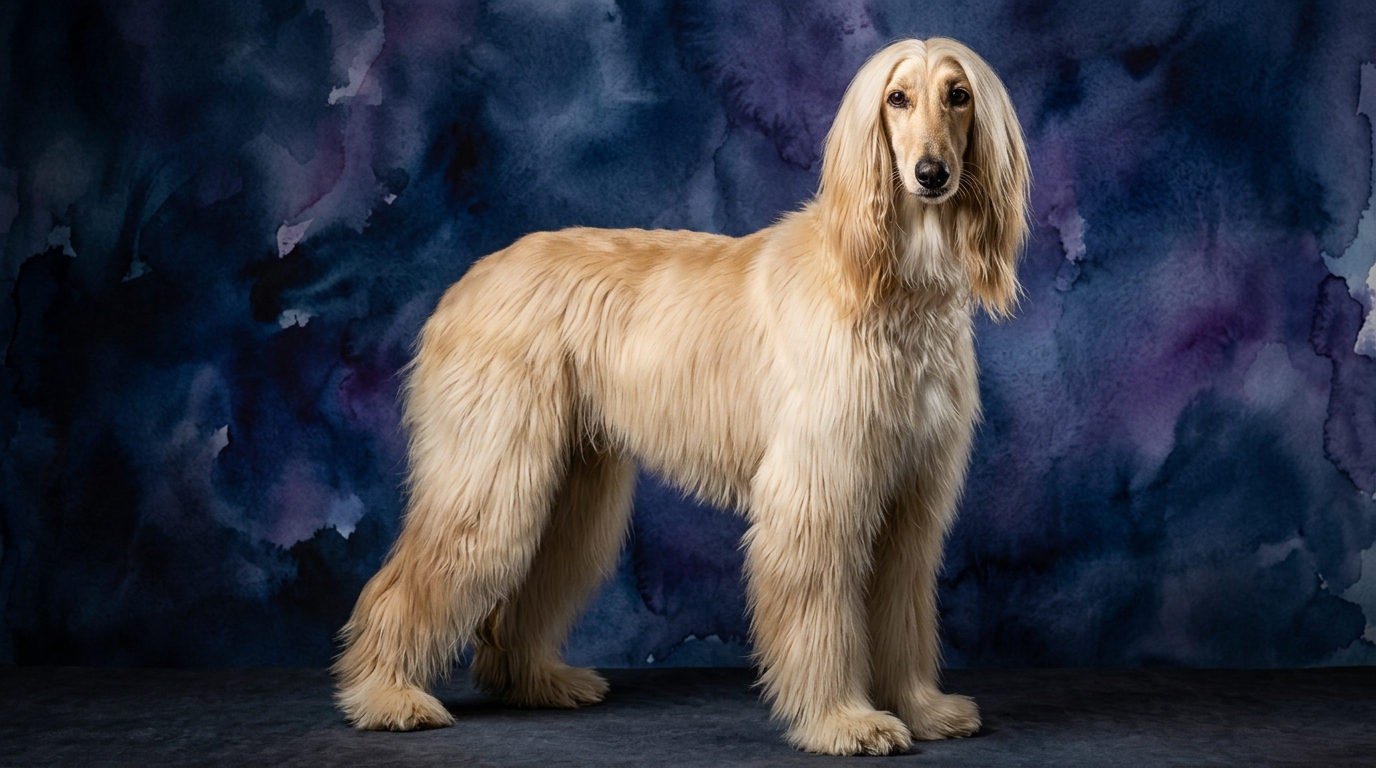
The Cosmic Pet IQ Lab provides a unique lens into canine cognition, assessing five key dimensions. For the majestic Afghan Hound, we observe a distinct profile: Problem Solving at 4/5, Training Speed at 1/5, Social Intelligence at 2/5, Instinctive Drive at a powerful 5/5, and Memory at 3/5. This paints a picture of a visually acute, independent thinker driven by ancient instincts, yet less inclined toward human-led instruction or social conformity.
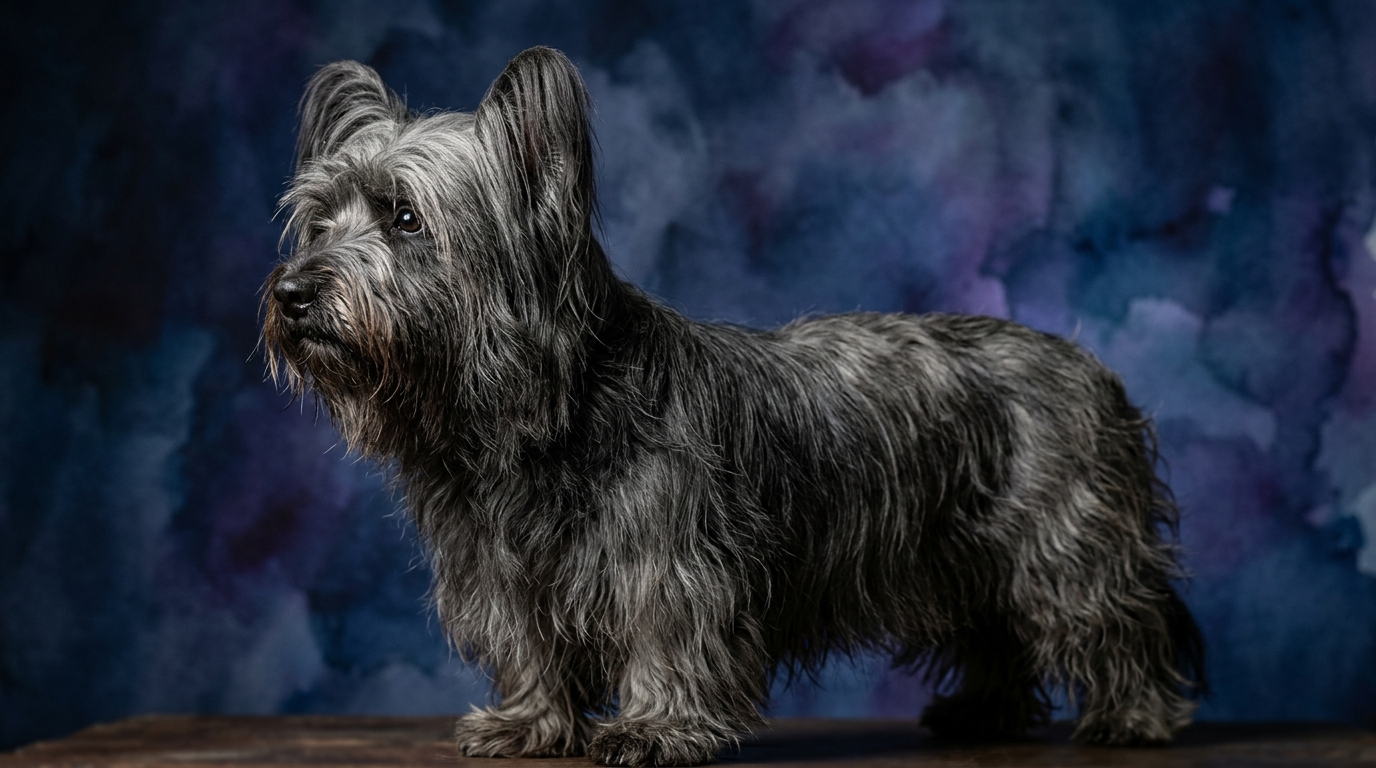
In contrast, the tenacious Skye Terrier presents a more balanced, albeit different, set of cognitive traits. Their Problem Solving rates at 3/5, Training Speed at 3/5, Social Intelligence also at 3/5, Instinctive Drive at 3/5, and Memory at 3/5. This breed's profile suggests a resourceful, moderately trainable companion with a solid connection to its human family, but without the extreme specializations seen in the Afghan Hound.
Where the Afghan Hound Excels Cognitively
The Afghan Hound's cognitive strengths are deeply rooted in its heritage as a sighthound, primarily evident in its exceptional Problem Solving (4/5) and unparalleled Instinctive Drive (5/5). These dogs possess a remarkable ability to analyze and react to visual stimuli, making split-second strategic decisions during a chase. Their problem-solving isn't about deciphering complex human puzzles, but rather about independently navigating vast, varied terrains and outmaneuvering fast-moving prey, often over long distances. This involves sophisticated spatial reasoning and predictive tracking, a testament to their ancient hunting prowess.
Their Instinctive Drive is not merely a strong urge to chase; it's a profound commitment to their primary function. This drive translates into an unwavering focus and endurance, allowing them to pursue a visual target with singular determination. When an Afghan Hound locks onto something with its eyes, its entire cognitive system is geared towards the pursuit, demonstrating an incredible capacity for sustained, goal-directed behavior that few other breeds can match.
Where the Skye Terrier Shows its Cognitive Prowess
The Skye Terrier, while not built for the open-field chase, demonstrates cognitive strengths that are equally vital to its own historical role and domestic life. Their moderate Problem Solving (3/5) indicates a resourceful nature, allowing them to effectively navigate their immediate environment and overcome obstacles, particularly when it comes to exploring or finding hidden treasures. They are astute at figuring out how to get what they want within their more confined world, often employing clever tactics to achieve their aims.
Perhaps the Skye Terrier's most significant cognitive advantages lie in its Training Speed (3/5) and Social Intelligence (3/5). While not the fastest learners, they are more receptive to human instruction and collaboration than the Afghan Hound. Their social intelligence fosters a deeper, more cooperative bond with their primary caregivers, enabling them to better interpret human cues and respond to commands. This balance makes them more adaptable to structured learning and household dynamics, allowing for a more harmonious integration into family life and a greater responsiveness to their owners' desires.
Training Aptitude: Independence vs. Cooperation
When it comes to ease of training, the Skye Terrier holds a distinct advantage over the Afghan Hound, largely due to their differing scores in Training Speed and Social Intelligence. The Skye Terrier's Training Speed (3/5) and Social Intelligence (3/5) mean they are generally more amenable to learning and more inclined to work alongside their human companions. They possess a terrier's characteristic determination but often couple it with a desire to please their family, making consistent, positive reinforcement training quite effective.
The Afghan Hound, with its Training Speed of 1/5 and Social Intelligence of 2/5, presents a unique training challenge. These dogs were bred to hunt independently, making their own decisions without human direction. This translates into a strong independent streak; they often perceive commands as suggestions rather than directives, and if they don't see the immediate purpose or benefit, they may simply choose not to comply. Training an Afghan Hound requires immense patience, creativity, and a deep understanding of their sighthound motivations, focusing on making training fun and intrinsically rewarding rather than relying on strict obedience.
Matching Breeds to Lifestyles: Active vs. Relaxed Owners
The Afghan Hound is ideally suited for active owners who understand and can accommodate a dog with a powerful Instinctive Drive (5/5) and a need for considerable physical exertion. These owners should be prepared for long, vigorous runs in securely fenced areas where the hound can truly stretch its legs and indulge its natural sprinting abilities. They thrive with individuals who appreciate an independent spirit and are content with a dog that may not always seek constant interaction but rather enjoys a mutual, respectful coexistence. Owners who prefer a dog that thinks for itself and isn't overly concerned with human validation will find a fulfilling partnership with an Afghan.
Conversely, the Skye Terrier, with its more moderate activity requirements and stronger social inclination, is a better fit for owners who might describe themselves as relaxed, but consistently engaged. While they enjoy walks and playtime, they don't demand the extensive, high-speed exercise of an Afghan. Skye Terrier owners should be prepared to engage in consistent mental stimulation and positive reinforcement training, providing a secure, loving environment for a loyal companion who values its family. They suit individuals who desire a devoted, resilient companion that is more attuned to household routines and family interaction, without the extreme energy demands.
The Verdict: Choosing Your Canine Companion
The Verdict
Choose the Afghan Hound if you admire an independent, visually driven athlete with a unique, somewhat aloof charm, and are prepared for a challenging yet rewarding training journey focused on partnership and understanding rather than strict obedience.
Opt for the Skye Terrier if you seek a loyal, resilient companion with a good balance of terrier grit and domestic adaptability, willing to engage in consistent, positive training and enjoy a strong, devoted bond within a family setting.
🧠 Find Your Pet's IQ Score
Our Pet IQ Lab assessment covers 25+ tests across 5 cognitive dimensions — personalized to your breed.
Take the Full IQ Test →Frequently Asked Questions
Are Afghan Hounds truly difficult to train?
Afghan Hounds are not 'difficult' in the sense of lacking cognitive ability, but their 1/5 Training Speed and independent nature mean they are less inclined to perform repetitive tasks or obey commands they deem arbitrary. Training requires immense patience, positive reinforcement, and making the process enjoyable and meaningful to them.
Do Skye Terriers need a lot of exercise despite their smaller size?
While not requiring the vast, open-field sprints of an Afghan Hound, Skye Terriers do need regular, moderate exercise. Daily walks and opportunities for secure playtime are essential to keep them physically and mentally stimulated, preventing boredom and potential mischief.
Which breed is generally better with children?
With a Social Intelligence of 3/5, the Skye Terrier is generally more adaptable and patient within a family setting, often forming strong bonds with children when properly socialized and supervised. The Afghan Hound (2/5 Social Intelligence) can be more reserved and may prefer a quieter environment, making supervision critical, especially with very young or boisterous children.