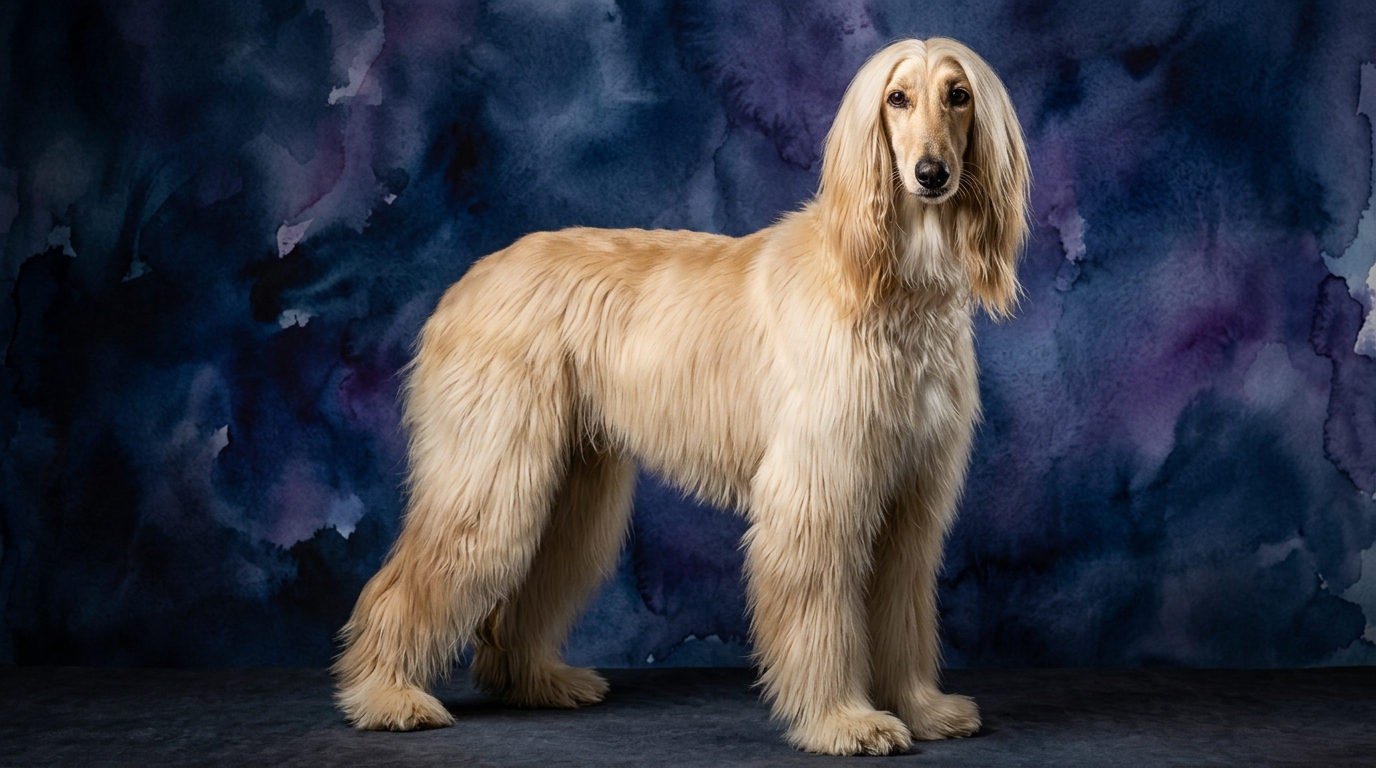
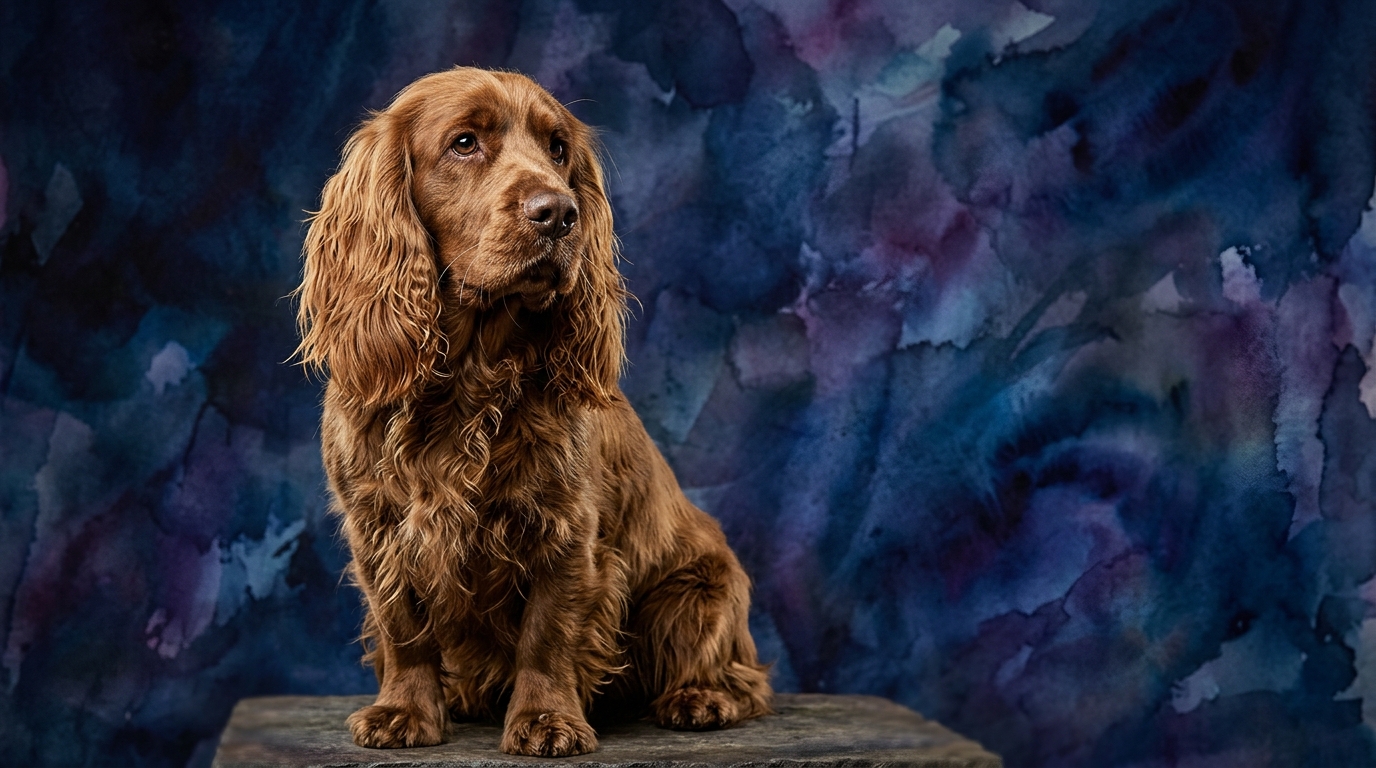
Side-by-Side Cognitive Profiles: Afghan Hound vs. Sussex Spaniel
To truly understand these breeds, we must look beyond their Coren rankings, which place the Sussex Spaniel at #62 and the Afghan Hound at #79, indicating a general difference in their perceived working intelligence. Our Pet IQ Lab metrics offer a more nuanced view, breaking down cognitive function into five critical dimensions for each dog. The Afghan Hound, a sighthound known for its independent nature, scores a remarkable 4/5 in Problem Solving, suggesting a strong capacity for figuring things out on its own. However, its Training Speed is a low 1/5, indicating a significant challenge in teaching new commands, and its Social Intelligence sits at 2/5, meaning it's less attuned to human social cues. Its Instinctive Drive is exceptionally high at 5/5, reflecting a powerful innate urge for pursuit, while its Memory is a moderate 3/5.
In contrast, the Sussex Spaniel, a gundog bred for flushing game, presents a more balanced cognitive profile. Its Problem Solving ability is rated at 3/5, demonstrating a competent but perhaps less independent approach to challenges than the Afghan Hound. Its Training Speed is a solid 3/5, making it generally receptive to learning new tasks, and its Social Intelligence also scores 3/5, indicating a reasonable awareness of and responsiveness to human interaction. The Sussex Spaniel's Instinctive Drive is a moderate 3/5, reflecting a balanced drive for its working purpose without overwhelming intensity, and its Memory matches the Afghan Hound at 3/5. These distinct profiles paint a clear picture of how each breed approaches the world.
Where the Afghan Hound Excels Cognitively
The Afghan Hound’s cognitive strengths lie primarily in its exceptional Problem Solving (4/5) and unparalleled Instinctive Drive (5/5). This breed possesses an innate ability to independently assess situations and devise solutions, particularly when motivated by its strong prey drive. For instance, an Afghan Hound might quickly learn to open a seemingly secure gate or navigate a complex landscape to follow an interesting scent trail, not because it was taught, but because it figured it out. This high problem-solving capacity means they are not easily deterred by obstacles when pursuing a goal they deem worthwhile, making them adept at independent exploration and strategic thinking in their environment.
Their 5/5 Instinctive Drive translates into an intense, unwavering focus on tasks related to their sighthound heritage. This isn't just about chasing; it's about the entire sensory-motor sequence of detection, pursuit, and capture. While this can make them challenging to redirect once fixated, it also means they excel in activities like lure coursing, where their natural talents are fully engaged. This deep-seated drive, combined with their problem-solving prowess, allows them to operate with impressive autonomy, often making decisions based on their own assessment of the environment rather than waiting for human direction. This independence is a hallmark of their cognitive style, making them fascinating, albeit sometimes challenging, companions.
Where the Sussex Spaniel Shines Cognitively
The Sussex Spaniel's cognitive advantages are most evident in its balanced scores for Training Speed (3/5) and Social Intelligence (3/5), which collectively contribute to a more cooperative and amenable disposition compared to the Afghan Hound. A 3/5 Training Speed means they are generally quicker to grasp and retain new commands, making positive reinforcement techniques quite effective. They are not as quick as some of the top-ranking breeds, but they are far from the bottom, offering a rewarding learning experience for owners willing to invest consistent effort. This moderate receptiveness to training means they are more likely to integrate new behaviors into their routine with fewer repetitions.
Furthermore, their 3/5 Social Intelligence indicates a greater awareness of and responsiveness to human cues and emotional states. This allows for a more fluid communication and bond, as the Sussex Spaniel is more inclined to seek interaction and respond to its owner’s mood or commands. This isn't just about obedience; it's about forming a deeper, more reciprocal relationship where the dog is more attuned to its human companion's intentions and desires. Unlike the Afghan Hound's independent streak, the Sussex Spaniel is more likely to work alongside its owner, making it a more naturally integrated family member in terms of cognitive engagement.
Training Dynamics: Afghan Hound vs. Sussex Spaniel
When it comes to trainability, the contrast between these two breeds is stark and directly reflects their cognitive profiles. The Sussex Spaniel, with its 3/5 Training Speed and 3/5 Social Intelligence, is generally considered much easier to train. They possess a moderate desire to please and a better understanding of human social cues, making them more responsive to verbal commands and body language. This means they typically learn basic obedience commands like 'sit,' 'stay,' or 'come' with reasonable consistency and fewer repetitions, making the training process a more positive and less frustrating experience for both dog and owner. Their moderate instinctive drive also means they are less likely to become singularly fixated on an external stimulus, allowing for easier redirection during training sessions.
The Afghan Hound, on the other hand, presents a significant training challenge, scoring a mere 1/5 in Training Speed and 2/5 in Social Intelligence. This breed is famously independent and not particularly motivated by human approval or traditional rewards. They often perceive commands as suggestions rather than imperatives, requiring immense patience, creativity, and a deep understanding of sighthound psychology from their owners. Their high problem-solving skills combined with low training speed mean they might figure out how to avoid a command rather than comply with it, or simply choose not to engage if they don't see the immediate benefit. Training an Afghan Hound often involves understanding their intrinsic motivations and making tasks feel like their idea, rather than direct instruction, making 'easier to train' a phrase rarely associated with this majestic, yet wilful, breed. Their Coren ranking of #79 reflects this perceived difficulty in traditional obedience.
Matching Breeds to Owner Lifestyles: Active vs. Relaxed
Understanding the cognitive makeup of the Afghan Hound and Sussex Spaniel is crucial for matching them to suitable owner lifestyles. For active owners who appreciate a dog with an independent spirit and a formidable drive, the Afghan Hound can be an exceptional companion. Its 5/5 Instinctive Drive demands significant outlets for chasing and running, often requiring secure, expansive off-leash areas or participation in activities like lure coursing. Owners must be prepared for a dog that needs ample physical exercise, not just a walk around the block, but also mental stimulation that appeals to its 4/5 Problem Solving skills, such as scent work or puzzle toys that challenge its independent thinking. They thrive with owners who understand and respect their aloof nature and don't demand constant attention or unwavering obedience, preferring a partner that marches to the beat of its own drum.
Conversely, the Sussex Spaniel is better suited for owners seeking a more relaxed, yet still engaged, companion. While they are a sporting breed with a 3/5 Instinctive Drive, their exercise needs are moderate compared to the Afghan Hound; daily walks and opportunities for sniffing and exploring are usually sufficient to keep them content. Their 3/5 Training Speed and Social Intelligence make them more adaptable to various family activities and more inclined to participate in shared experiences, from leisurely strolls to backyard play. They thrive on companionship and are more likely to be content with a cozy spot on the couch after a good walk, making them an excellent choice for owners who enjoy a balanced lifestyle that includes both outdoor activity and relaxed indoor companionship, without the intense independent demands of a sighthound.
The Verdict
Choose the Afghan Hound if you are an experienced owner seeking an independent, elegant companion with a profound drive for pursuit, willing to invest significant effort in understanding and managing its unique cognitive style and providing extensive secure exercise opportunities.
Choose the Sussex Spaniel if you desire a biddable, sociable companion amenable to moderate training and activity, who values a dog more attuned to human interaction and thrives in a balanced home environment.
🧠 Find Your Pet's IQ Score
Our Pet IQ Lab assessment covers 25+ tests across 5 cognitive dimensions — personalized to your breed.
Take the Full IQ Test →Frequently Asked Questions
Which breed is better for first-time dog owners?
The Sussex Spaniel is generally a better choice for first-time dog owners due to its more balanced training speed and social intelligence, making it more receptive to learning and easier to manage. The Afghan Hound's extreme independence and low training speed can be overwhelming for those new to dog ownership.
Do Afghan Hounds enjoy puzzle toys or mental games?
Yes, Afghan Hounds, with their 4/5 Problem Solving score, can enjoy puzzle toys that offer a genuine challenge and require independent thought to solve. However, their motivation is often intrinsic, meaning the puzzle itself must be rewarding enough, rather than relying on human praise.
How much exercise does a Sussex Spaniel need daily?
A Sussex Spaniel typically requires moderate daily exercise, around 45-60 minutes, which can include walks, playtime, and mental stimulation. While they have an instinctive drive, it's not as intense as a sighthound's, making them adaptable to varied activity levels.