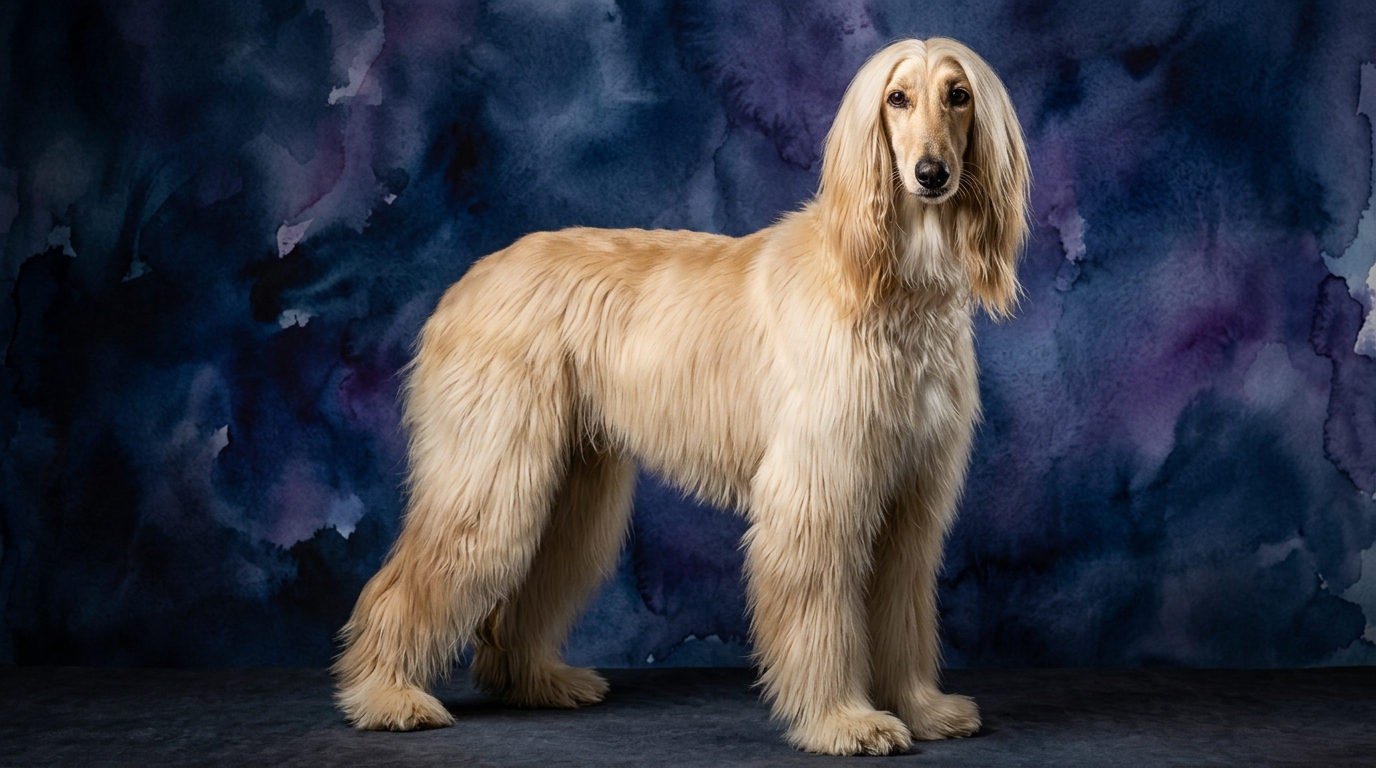
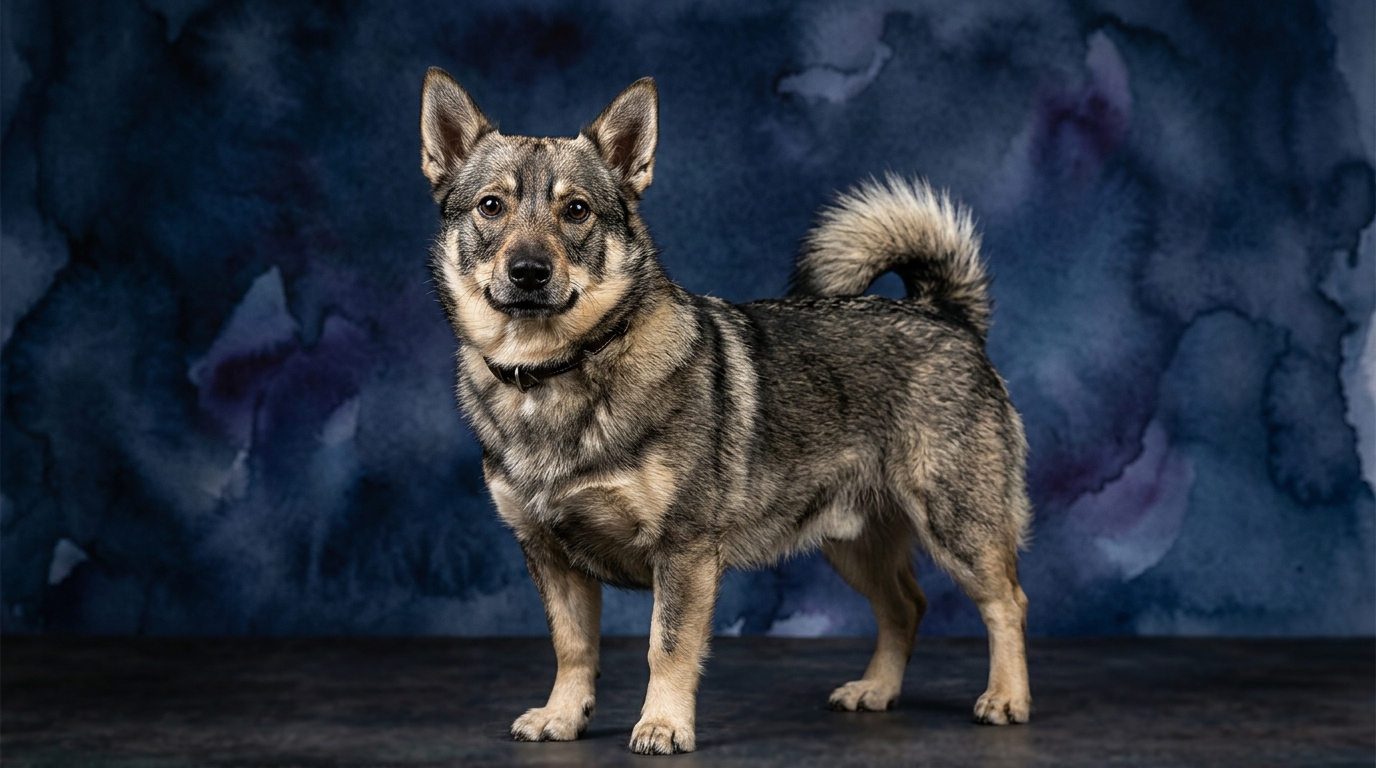
Side-by-Side IQ Profile: Afghan Hound vs. Swedish Vallhund
The Cosmic Pet IQ Lab's assessment offers a granular view of each breed's cognitive strengths and challenges, moving beyond simple obedience rankings.
For the Afghan Hound, a majestic sighthound with a Coren rank of #79, its profile is distinct: Problem Solving 4/5, Training Speed 1/5, Social Intelligence 2/5, Instinctive Drive 5/5, and Memory 3/5. This suggests a dog with significant independent thought and powerful natural instincts, but a low inclination to follow human direction.
The Swedish Vallhund, a resilient herding breed not Coren-ranked, presents a more balanced profile: Problem Solving 3/5, Training Speed 3/5, Social Intelligence 3/5, Instinctive Drive 3/5, and Memory 3/5. This indicates a generally adaptable and cooperative dog with average capabilities across most cognitive dimensions, reflecting its working heritage.
Afghan Hound: Where Its Cognition Shines
The Afghan Hound truly excels in the realm of independent problem-solving, scoring a remarkable 4/5. Their cognitive strength lies in autonomously assessing situations and devising solutions, particularly when their powerful instinctive drive (5/5) is engaged. For instance, an Afghan Hound might expertly navigate a complex outdoor environment, bypassing obstacles or finding a path around a barrier to pursue a scent or perceived quarry, relying on its own reasoning rather than human direction.
This isn't about following instructions, but about intrinsic strategic thinking and resourcefulness in achieving a self-determined goal. Their superior problem-solving is intrinsically linked to their sighthound heritage, where quick, decisive, and unassisted action was crucial for survival and hunting success across vast terrains without constant human guidance. This breed thinks for itself with impressive agility when motivated by its core drives.
Swedish Vallhund: Its Cognitive Advantages
The Swedish Vallhund’s cognitive strengths lie in its balanced and cooperative intellectual profile, particularly in its training speed (3/5) and social intelligence (3/5), which are significantly higher than the Afghan Hound's. This breed demonstrates a greater willingness and capacity to learn from human instruction and integrate into a human-centric routine.
A Vallhund is more adept at understanding and responding to social cues, making them receptive to collaborative tasks and less likely to act on pure impulse. Their problem-solving (3/5) is often applied in a context of working alongside their human, such as figuring out a puzzle toy or learning a complex agility sequence through guided effort, rather than solely independent action. This cooperative intelligence makes them highly adaptable to varied living situations and training regimes, making them reliable partners in many activities.
Trainability: Which Breed is Easier and Why?
Without a doubt, the Swedish Vallhund is considerably easier to train than the Afghan Hound, a distinction rooted in their fundamental behavioral differences. The Vallhund boasts a training speed of 3/5 and social intelligence of 3/5, indicating a dog that is generally eager to engage with its owner and responsive to commands. Their herding background means they are accustomed to working in partnership, making them biddable and motivated by positive reinforcement. They learn new cues relatively quickly and are more inclined to repeat desired behaviors for their human.
In stark contrast, the Afghan Hound's training speed is a mere 1/5, paired with a social intelligence of 2/5. This breed is famously independent and possesses a strong sense of self-will, often perceiving training commands as suggestions rather than directives. Their powerful instinctive drive (5/5) means they are easily distracted by environmental stimuli, and their aloof nature makes them less motivated by human approval. Training an Afghan Hound requires immense patience, creativity, and a deep understanding of sighthound temperament, often feeling like a negotiation rather than instruction, as their primary motivation is rarely pleasing their handler. They possess a memory of 3/5, meaning they *remember* commands, but their willingness to execute them consistently remains low.
Matching Breeds to Owner Lifestyles
The choice between these two breeds for active versus relaxed owners hinges significantly on their inherent drives and cognitive engagement styles. The Afghan Hound, with its profound instinctive drive (5/5) and independent problem-solving (4/5), thrives with owners who embrace a highly active lifestyle, particularly those involving long, vigorous runs or secure off-leash areas where their sighthound instincts can be safely indulged. They need an owner who understands their need for autonomous physical and mental stimulation, rather than one who expects constant interaction or structured activities. A relaxed owner expecting a biddable companion would likely find the Afghan Hound's independent spirit and high exercise requirements challenging and frustrating.
Conversely, the Swedish Vallhund, with its moderate instinctive drive (3/5) and balanced social intelligence (3/5), suits owners who are active but also appreciate a dog that can transition to a relaxed home environment. While they enjoy activities like agility, herding games, or long walks, their cooperative nature means they are often content to be involved in family life and can adapt to varied activity levels, as long as they receive consistent mental and physical engagement. They are more forgiving for an owner seeking a balanced companion who enjoys both adventure and downtime without extreme demands.
The Verdict
If you seek an independent, majestic companion, are prepared for extensive, creative training, and can fulfill a profound need for instinctual exercise, the Afghan Hound will be a unique and rewarding partner.
Opt for the Swedish Vallhund if you desire a versatile, cooperative, and trainable companion for a moderately active family, valuing a dog that integrates well into daily routines and enjoys collaborative learning.
🧠 Find Your Pet's IQ Score
Our Pet IQ Lab assessment covers 25+ tests across 5 cognitive dimensions — personalized to your breed.
Take the Full IQ Test →Frequently Asked Questions
Are Afghan Hounds truly difficult to train?
Yes, their training speed is rated 1/5 due to their independent nature and low desire to please. They require significant patience and creative methods, as they often view commands as optional, preferring to follow their strong instincts.
Do Swedish Vallhunds have a strong prey drive?
While they have an instinctive drive (3/5), it's typically a herding drive, not a strong prey drive like a sighthound. They may try to 'herd' people or other pets, but it's generally manageable and can be channeled through training and activities.
Which breed is better for first-time dog owners?
The Swedish Vallhund is generally a better fit for first-time owners due to its balanced temperament, higher trainability (3/5 training speed), and greater social intelligence (3/5). Afghan Hounds, with their extreme independence and low training speed, are often overwhelming for novices.