A Side-by-Side Look at Cognitive Profiles
The Cosmic Pet Pet IQ Lab's proprietary framework allows us to dissect the nuanced cognitive abilities of different breeds. For the Afghan Hound and the Xoloitzcuintli, we observe distinct patterns across five key dimensions: problem-solving, training speed, social intelligence, instinctive drive, and memory.
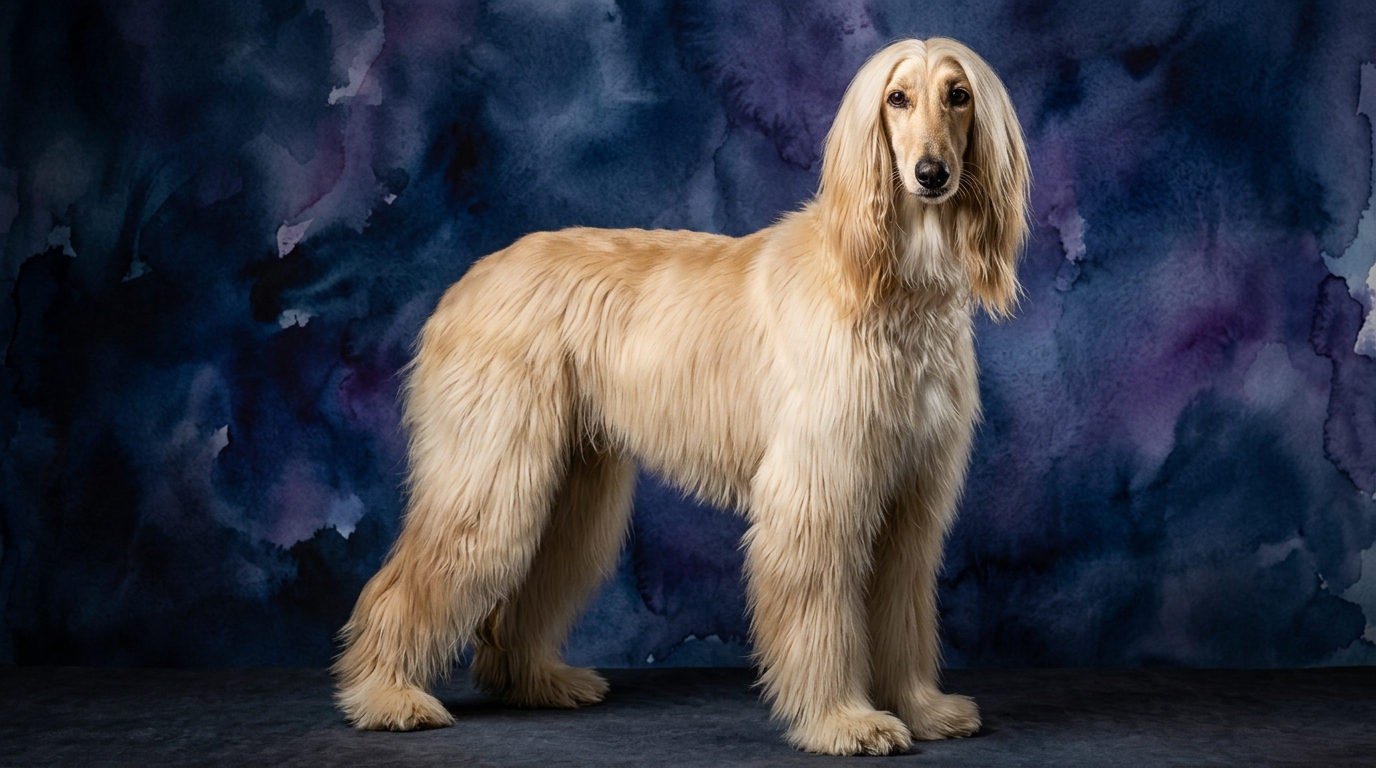
The Afghan Hound, a sighthound breed, registers a Coren rank of #79, indicating a specific type of working intelligence rather than high obedience. Its IQ profile includes a problem-solving score of 4/5, reflecting a strong capacity for independent thought and strategic action. However, its training speed is notably low at 1/5, suggesting a reluctance towards repetitive compliance. Social intelligence for the Afghan Hound sits at 2/5, pointing to a more aloof and self-reliant nature. Instincive drive is exceptionally high at 5/5, a hallmark of its hunting heritage, while memory is a moderate 3/5, sufficient for retaining relevant experiences and routes.
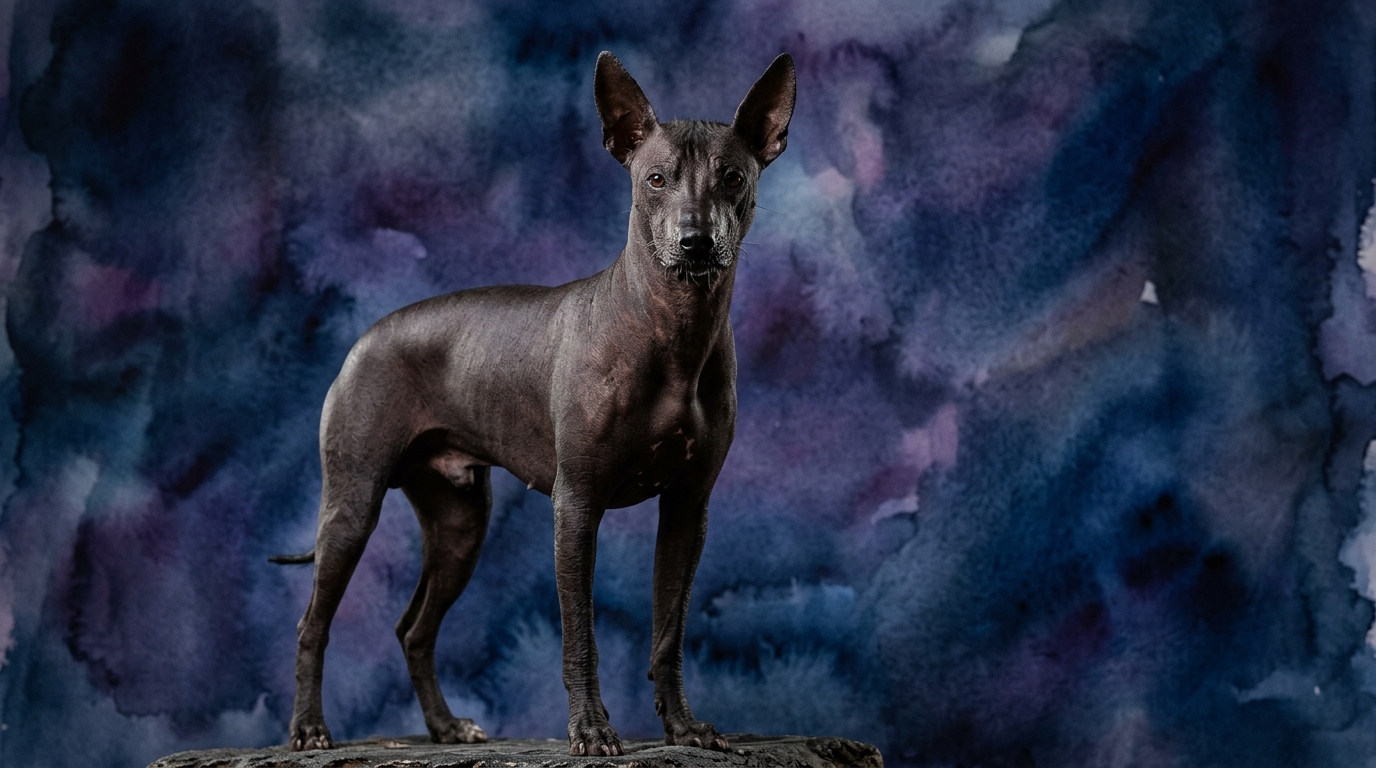
In contrast, the Xoloitzcuintli, a non-sporting breed, is not Coren-ranked, which often implies its historical roles did not prioritize the same type of obedience. Its problem-solving ability scores a balanced 3/5, indicating a competent but perhaps less independently driven approach to challenges. The Xolo's training speed is a respectable 3/5, suggesting a moderate willingness to learn and retain commands. Social intelligence also scores 3/5, indicating a capacity for connection and responsiveness to human cues. Its instinctive drive is a moderate 3/5, present but not overwhelming, and its memory is also a balanced 3/5, allowing for adequate retention of routines and learned behaviors.
These profiles paint a picture of two breeds with fundamentally different cognitive architectures, each optimized for distinct historical roles and modern companionship.
Where the Afghan Hound's Mind Shines Brightest
The Afghan Hound's cognitive strength lies in its profound ability to independently navigate complex situations to achieve its own objectives, often related to its sighthound heritage. Its problem-solving score of 4/5 doesn't necessarily translate to solving puzzles *for* a human, but rather finding ingenious ways to pursue quarry or bypass obstacles in their environment with remarkable cunning. This breed exhibits a deep, innate understanding of its surroundings and how to exploit them.
This self-directed intelligence is powerfully fueled by an almost unparalleled instinctive drive, scoring 5/5. This drive is the engine of their determination and resourcefulness, making them formidable in tasks requiring self-directed initiative rather than human collaboration. Their memory, while average at 3/5, is likely excellent for recalling hunting routes and successful strategies, demonstrating a selective recall focused on what is relevant to their inherent drives. They are masters of their own domain, requiring minimal human direction to execute their intentions.
The Xoloitzcuintli's Balanced Cognitive Strengths
The Xoloitzcuintli offers a more balanced cognitive profile, particularly excelling in areas that foster harmonious cohabitation and adaptability. Their moderate training speed of 3/5 indicates a willingness and capacity to learn and retain commands without the profound stubborn resistance sometimes seen in more independent breeds. This makes them generally more amenable to conventional training methods and household rules.
Coupled with a moderate social intelligence (3/5), Xolos are generally more attuned to their human companions' moods and expectations, making them responsive and cooperative. This breed's instinctive drive, while present at 3/5, is less overwhelming than the Afghan Hound's, allowing their other cognitive facets to be more accessible for human interaction. Their balanced problem-solving (3/5) and memory (3/5) further contribute to a well-rounded intellect, capable of adapting to various living situations and learning new routines with relative ease, making them a more predictable and engaged companion.
Training: A Tale of Two Temperaments
Training an Afghan Hound is a journey that demands exceptional patience and a deep understanding of its unique cognitive makeup. With a training speed of 1/5, this breed is not easily swayed by conventional obedience methods. Their profound independence and powerful sighthound instincts mean they learn quickly what *they* want to learn, but not necessarily what *you* want to teach. They perceive commands as suggestions rather than directives, often prioritizing their own agenda, particularly if a compelling scent or visual stimulus is present. Success hinges on making training a game that appeals to their self-interest and innate drives, rather than relying on rote repetition or stern commands. Positive reinforcement, coupled with an appreciation for their independent spirit, is paramount.
In contrast, the Xoloitzcuintli, with a training speed of 3/5, presents a more straightforward training experience. They are generally more biddable and possess a greater eagerness to please their human companions. Their moderate social intelligence helps them connect with their trainer and respond positively to consistent, reward-based methods. While not a "super learner" that grasps complex commands instantly, the Xolo is typically responsive and capable of mastering basic obedience, house manners, and even some advanced tricks with regular, positive reinforcement. Their less intense instinctive drive means fewer distractions and a greater focus on the task at hand, making them a more cooperative student.
Lifestyle Match: Active Pursuits vs. Companionship
Matching a dog's cognitive profile with an owner's lifestyle is crucial for a harmonious relationship. The Afghan Hound is best suited for experienced owners who embrace independent thinkers and are prepared for a dog with a powerful, self-directed drive. Their exceptional instinctive drive (5/5) necessitates long, vigorous, supervised runs in securely fenced areas where they can gallop freely. These are not dogs for casual off-leash park visits unless exceptionally well-trained and in a safe, enclosed space, due to their strong prey drive. Owners must appreciate a dog with its own agenda and not expect an overly biddable companion; instead, they should relish the challenge of channeling a magnificent, ancient hunter's instincts.
The Xoloitzcuintli, on the other hand, aligns well with owners seeking a loyal, adaptable, and companionable dog that enjoys moderate activity. Their balanced instinctive drive (3/5) means they are content with daily walks, playtime, and engaging in family activities. They adapt well to various living situations, including apartment life, provided their needs for companionship and regular exercise are met. Owners who appreciate a sensitive, family-oriented dog that forms strong bonds and is generally responsive to guidance will find the Xoloitzcuintli a rewarding companion. They offer a more predictable and integrated presence in the home compared to the independent spirit of the Afghan Hound.
The Verdict
Choose the Afghan Hound if you are an experienced owner who cherishes a highly independent, visually driven companion and are prepared for the significant commitment required to manage its powerful instincts and unique training challenges. This breed thrives with individuals who admire its self-sufficient problem-solving and provide ample opportunities for supervised, high-speed exercise.
Opt for the Xoloitzcuintli if you seek a loyal, adaptable, and moderately trainable companion that forms deep bonds with its family and is content with a balanced activity level. This breed is suitable for owners who appreciate a dog with good social intelligence and a willingness to engage in cooperative learning.
🧠 Find Your Pet's IQ Score
Our Pet IQ Lab assessment covers 25+ tests across 5 cognitive dimensions — personalized to your breed.
Take the Full IQ Test →Frequently Asked Questions
Is the Afghan Hound truly difficult to train?
The Afghan Hound's training speed ranks low (1/5) due to its profound independence and strong instinctive drive, making it less inclined to follow human commands consistently. While capable of learning, their motivation often aligns with their own sighthound instincts rather than pleasing a trainer, requiring exceptional patience and understanding.
How does the Xoloitzcuintli's social intelligence manifest?
The Xoloitzcuintli's moderate social intelligence (3/5) means they form strong attachments to their families and are generally responsive to their owners' cues. They are often described as sensitive and attuned to household dynamics, making them good companions who enjoy being part of family activities.
Which breed requires more physical exercise?
The Afghan Hound, with its instinctive drive of 5/5, requires significantly more vigorous and sustained exercise, ideally in a secure, large area where it can gallop freely. The Xoloitzcuintli's moderate instinctive drive (3/5) means it needs regular daily walks and playtime, but its exercise requirements are generally more manageable for the average owner.