
Side-by-Side Cognitive Profile
The Cosmic Pet Pet IQ Lab's assessment offers a granular look into the mental faculties of these two distinct breeds, highlighting where their cognitive strengths lie. The Airedale Terrier, a breed acknowledged by Coren for its working intelligence, presents a profile reflecting its heritage as a versatile hunter and guardian. Its Problem Solving is rated at 4/5, indicating a strong capacity for independent analytical thought and devising solutions to achieve objectives. Training Speed also scores 4/5, suggesting a quick grasp of new commands and routines, though their independent spirit means engagement and motivation are key to consistent performance. Social Intelligence stands at 3/5, meaning they understand human cues well but may prioritize their own perceived tasks. Instinctive Drive is moderate at 3/5, encompassing their innate terrier traits for scent tracking and pursuit. Finally, their Memory is strong at 4/5, ensuring good retention of learned behaviors and experiences.
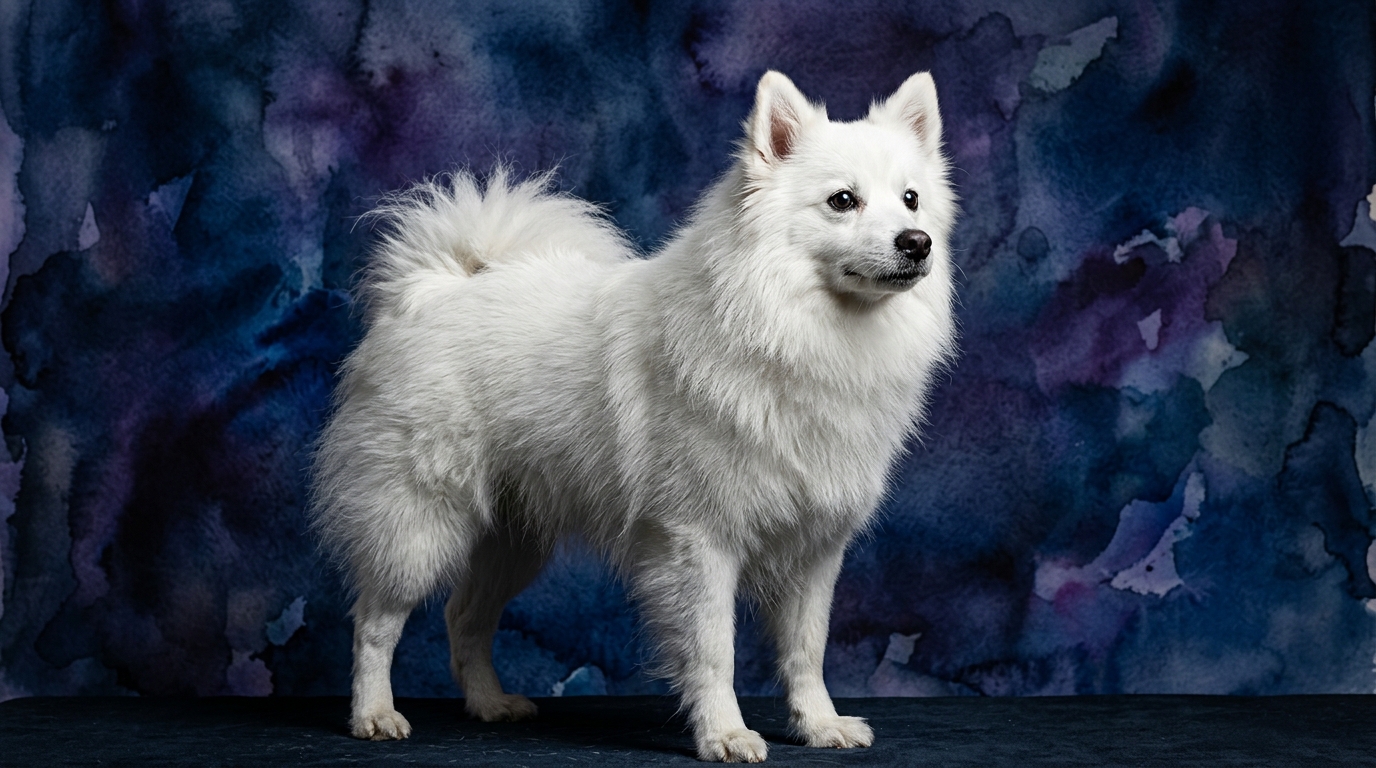
The American Eskimo Dog, while not Coren-ranked, possesses a balanced cognitive profile that underscores its role as a companion and performer. Their Problem Solving ability is rated 3/5, indicating they are capable of navigating challenges, often relying on learned strategies and observational skills, though they may prefer human guidance in complex scenarios. Training Speed is 3/5, meaning they learn at a steady and reliable pace, responding well to positive reinforcement and clear instruction. Social Intelligence is 3/5, showing they are typically attuned to their human companions' moods and intentions, often eager to engage and participate in family activities. Instinctive Drive is also 3/5, often manifesting as a desire to bark at perceived intruders or a general alertness, rather than strong prey drive. Their Memory is rated 3/5, meaning they retain information adequately, remembering commands and past interactions, which supports consistent training and builds strong bonds through shared experiences.
Where the Airedale Terrier Demonstrates Cognitive Advantages
The Airedale Terrier exhibits a discernible edge in Problem Solving, scoring 4/5, a trait deeply ingrained from their working heritage where independent decision-making was paramount. This means they are often adept at figuring out how to open gates, retrieve objects from unusual places, or navigate complex environments without constant human direction. Their cognitive strength lies in their capacity for analytical thought and self-directed action, making them excel in activities requiring strategic thinking, such as advanced obedience or agility courses with novel obstacles. Owners seeking a canine partner for intricate tasks will find the Airedale's mental agility particularly rewarding.
Their superior Memory, also rated 4/5, further amplifies this advantage; an Airedale not only solves a puzzle but also remembers the solution, applying it to similar future challenges. This means once they learn a specific sequence or command, it tends to stick, allowing for the building of intricate behavioral repertoires over time. This robust memory also contributes to their effectiveness in tasks requiring a sequence of actions or recalling specific locations, making them reliable partners for complex working roles. For owners who invest heavily in diverse training, this strong recall ensures that efforts yield lasting results.
The Airedale's Training Speed, a full point above the American Eskimo Dog at 4/5, highlights their efficiency in acquiring new behaviors. This is not just about quick comprehension but also about the readiness with which they form neural connections between commands and actions. While their independent streak requires an engaging trainer, once motivated, they can absorb extensive vocabulary and complex routines with remarkable alacrity, enabling them to progress through training levels more rapidly than many other breeds. This speed makes them a compelling choice for individuals passionate about advanced canine sports or working disciplines.
Where the American Eskimo Dog's Cognitive Profile Excels
While the American Eskimo Dog's IQ scores are consistently 3/5, their cognitive profile, particularly their balanced Social Intelligence and Instinctive Drive, offers distinct advantages for owners seeking a different type of canine partnership. Their Social Intelligence, while numerically similar to the Airedale's, often manifests as a more overt eagerness to please and strong family bonding, which can translate into a highly responsive and agreeable companion. This inherent desire for interaction makes them exceptionally receptive to positive reinforcement and fosters a cooperative learning environment, ideal for integrated family life.
Their moderate Instinctive Drive, also 3/5, means they generally exhibit less intense prey drive or territorial aggression compared to many working breeds. This cognitive balance can simplify management, as owners may spend less time mitigating strong innate urges to chase or hunt. Instead, their drives often channel into vigilance, making them effective, vocal watchdogs who alert to novel stimuli without necessarily escalating to aggressive pursuit, providing a sense of security within the home environment. This makes them a suitable choice for those desiring a guardian presence without extreme working drives.
The American Eskimo Dog's consistent Training Speed (3/5) and Memory (3/5), while not as rapid as the Airedale's, contribute to a steady and predictable learning curve. This reliability means that with consistent, patient training, they will reliably acquire and retain commands, making them an excellent choice for owners who appreciate a dog that learns at a comfortable pace and consistently applies what they've learned without the independent "interpretation" sometimes seen in higher problem-solvers. Their cognitive makeup supports a harmonious, teachable companion, well-suited for a variety of home environments and owner experience levels.
Training Dynamics: Airedale Terrier vs. American Eskimo Dog
Determining which breed is "easier" to train depends significantly on an owner's approach and expectations. The Airedale Terrier, with its Training Speed of 4/5, often grasps new commands and concepts remarkably quickly. They form connections between cues and actions with speed, which can be incredibly satisfying for an experienced trainer. However, their robust Problem Solving (4/5) and independent nature mean they aren't merely robots; they think for themselves. If training isn't consistently engaging, challenging, and varied, an Airedale might become bored, or decide there's a more efficient "terrier way" to achieve an outcome, leading to stubbornness. Their high cognitive capacity demands mental stimulation, and a lack thereof can manifest as challenging behaviors rather than a lack of understanding, requiring an owner who can consistently provide intellectual outlets.
In contrast, the American Eskimo Dog, with a Training Speed of 3/5, learns at a more measured pace, but often with a strong desire to cooperate. Their Social Intelligence (3/5) typically leads to an eagerness to please their human companions, making them highly responsive to positive reinforcement and clear guidance. While they may require more repetitions to solidify a command compared to an Airedale, their generally less independent disposition means they are often more inclined to follow instructions rather than devise their own strategies. This can make them feel "easier" to train for novice owners or those who prefer a dog that consistently looks to them for direction, as their compliance often outweighs their moderate learning speed. Their teachability stems from a desire for partnership rather than an independent drive to solve problems.
Lifestyle Match: Active vs. Relaxed Owners
For the truly active owner who thrives on structured activities, mental challenges, and outdoor adventures, the Airedale Terrier is an exceptional match. Their cognitive profile, with high Problem Solving (4/5) and Training Speed (4/5), means they require significant mental engagement beyond basic walks. These dogs excel in advanced obedience, agility, tracking, and even protection sports, demanding an owner who can consistently provide outlets for their sharp minds and energetic bodies. An Airedale left without sufficient mental and physical stimulation is likely to become bored and channel their considerable cognitive abilities into less desirable behaviors, such as digging or redecorating the house. They need an owner who is not only active but also committed to ongoing cognitive enrichment and can match their robust mental and physical demands.
The American Eskimo Dog, while also needing regular exercise and mental engagement, offers a more adaptable lifestyle that can suit owners who are active but perhaps less intensely structured in their daily routines. With moderate scores across the board, including Instinctive Drive (3/5), they enjoy walks, playtime, and learning new tricks, but may not demand the same level of complex, high-impact activities as an Airedale. Their Social Intelligence (3/5) means they thrive on interaction and being part of family activities, making them content with consistent companionship and moderate daily exercise like brisk walks, fetch in the yard, or puzzle toys. They are well-suited for owners who enjoy a responsive companion for daily life and are willing to engage in regular, but not necessarily extreme, mental and physical stimulation. They can adapt to a slightly more relaxed pace, provided their social needs are consistently met.
The Verdict
Opt for the Airedale Terrier if you are an experienced, active owner seeking a truly independent problem-solver capable of complex tasks and thrive on consistent, engaging training and mental challenges.
Select the American Eskimo Dog if you desire a highly responsive, adaptable companion who enjoys regular interaction and moderate activity, and will reliably learn with patient, positive reinforcement.
🧠 Find Your Pet's IQ Score
Our Pet IQ Lab assessment covers 25+ tests across 5 cognitive dimensions — personalized to your breed.
Take the Full IQ Test →Frequently Asked Questions
Does the American Eskimo Dog's lack of Coren ranking mean it's not as capable?
Not necessarily; Coren's rankings primarily assess obedience intelligence, and a dog's overall cognitive profile is much broader, encompassing problem-solving, social understanding, and instinctive drives. The Eskie's balanced scores indicate a capable and adaptable companion, excelling in different areas than a traditional working breed.
How does the Airedale's independence impact training for a first-time dog owner?
The Airedale's strong problem-solving and independent nature can be a significant challenge for a first-time owner, as they require consistent, firm, and engaging training to prevent them from making their own rules. Their cognitive strength demands an owner who can channel their abilities productively and patiently.
Are American Eskimo Dogs prone to excessive barking due to their instinctive drive?
American Eskimo Dogs do have an instinctive drive (3/5) that often manifests as vigilance, making them excellent watchdogs and potentially prone to barking at novel stimuli. Early socialization and consistent training can help manage this vocal tendency, channeling their alertness appropriately without becoming a nuisance.