
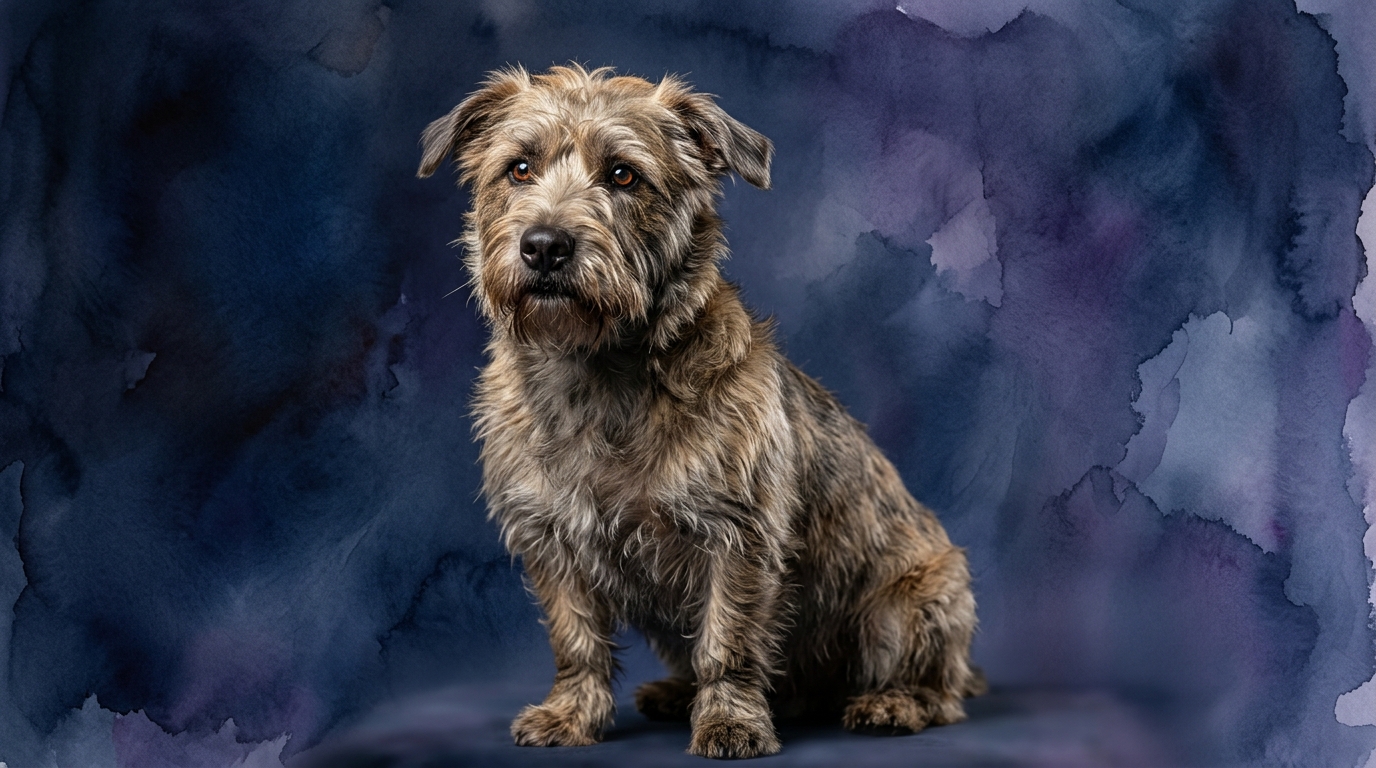
Side-by-Side Cognitive Profile
At The Cosmic Pet Pet IQ Lab, we evaluate canine intelligence across five key dimensions. For the Airedale Terrier, ranked #29 by Coren, and the unranked but equally compelling Glen of Imaal Terrier, these profiles illuminate their inherent capabilities and tendencies.
The Airedale Terrier demonstrates a Problem Solving score of 4/5, indicating a strong capacity to analyze novel situations and devise effective strategies, often involving multi-step solutions to achieve goals like retrieving a hidden object or bypassing a barrier. Their Training Speed is 4/5, showcasing a quick uptake of new commands and complex routines, making them highly responsive to instruction. Social Intelligence stands at 3/5, reflecting an ability to discern social cues within their immediate family and form strong bonds, though they can be reserved with strangers. Their Instinctive Drive is 3/5, characterized by a manageable yet present prey drive and territorial awareness. Finally, their Memory is 4/5, allowing for excellent long-term recall of learned behaviors and past experiences.
In contrast, the Glen of Imaal Terrier presents a consistent profile across the board: Problem Solving 3/5, Training Speed 3/5, Social Intelligence 3/5, Instinctive Drive 3/5, and Memory 3/5. Their Problem Solving leans towards practical, persistent effort rather than intricate planning, excelling in tasks requiring sustained focus. A Training Speed of 3/5 means they learn steadily, requiring consistent reinforcement to solidify new behaviors. Social Intelligence at 3/5 indicates deep loyalty to their inner circle and an ability to recognize familiar dynamics, though they are typically reserved with outsiders. Their Instinctive Drive, also 3/5, is particularly evident in their earth-dog heritage, manifesting as a strong inclination for digging and pursuit. Their Memory of 3/5 is reliable for established routines and core commands, though less frequently practiced skills might require refreshers.
Where the Airedale Terrier Excels Cognitively
The Airedale Terrier exhibits a more expansive and adaptive cognitive toolkit, particularly in navigating complex, novel challenges. Their superior Problem Solving (4/5) means they don't just react to their environment; they actively strategize, often attempting multiple approaches to achieve a desired outcome, whether it's figuring out how to open a gate or solve a puzzle toy. This capacity for flexible thinking and understanding cause-and-effect is a hallmark of their intellectual approach, allowing them to adapt strategies when initial attempts prove unsuccessful. Furthermore, their enhanced Training Speed (4/5) isn't merely about quick comprehension; it speaks to a higher capacity for associative learning and generalization, enabling them to apply learned concepts to new situations more readily. Coupled with their robust Memory (4/5), Airedales can retain a vast repertoire of commands and experiences, making their training more durable and requiring fewer refreshers over their lifetime. This cognitive resilience makes them exceptional candidates for complex tasks, multi-stage obedience routines, or even roles requiring adaptive decision-making, reflecting a breed that thrives on mental engagement and intellectual challenge.
Where the Glen of Imaal Terrier Excels Cognitively
While the Glen of Imaal Terrier's consistent cognitive profile (3/5 across all dimensions) might suggest a simpler approach, it’s crucial to understand this isn't a limitation but a specialization finely tuned for their original purpose. Their strengths lie in their unwavering persistence and focused determination, particularly when engaging with their instinctive drives. For instance, their Problem Solving (3/5) is less about abstract strategizing and more about tenacious, methodical application of effort, precisely what made them effective badger and fox hunters. They might not devise an elaborate scheme to retrieve a toy, but they will dig relentlessly, demonstrating a singular focus until the task is complete. This tenacity, combined with their practical Training Speed (3/5), means that once a behavior is learned and deemed valuable, it becomes deeply ingrained and consistently executed. They excel in tasks requiring sustained attention and physical endurance rather than rapid-fire command changes. Their Social Intelligence (3/5) is characterized by a quiet loyalty and a discerning nature, leading to deep, stable bonds with their chosen family, rather than a broad, outwardly expressive social engagement. This focused, persistent, and loyal cognitive style is not just effective; it's a testament to a breed whose intelligence is finely tuned for purpose and steadfast companionship.
Training Dynamics: Airedale vs. Glen of Imaal
The Airedale Terrier generally presents an easier training experience due to its higher Training Speed (4/5) and Problem Solving capabilities. An Airedale will typically grasp new commands and sequences of behaviors more quickly, often requiring fewer repetitions to achieve proficiency. Their inherent cognitive flexibility allows them to understand the 'why' behind a command sooner, making them responsive to varied training methods and capable of learning more intricate routines. For example, an Airedale might learn a multi-part agility course sequence in a handful of sessions, quickly associating each obstacle with its corresponding cue and demonstrating a keen desire to please and engage in the learning process.
In contrast, the Glen of Imaal Terrier, with its Training Speed of 3/5, requires a more patient, consistent, and often repetitive approach. While certainly capable of learning, they tend to be more deliberate, needing foundational commands solidified through frequent practice before moving to advanced concepts. A Glen might take longer to master a complex routine, but once a behavior is truly learned and deemed worthwhile by the dog, it tends to stick with remarkable tenacity. Their strong-willed terrier nature also means that trainers must employ positive reinforcement and make training rewarding to overcome potential stubbornness. An Airedale might be quicker to offer a new behavior in hopes of a reward, while a Glen might need more convincing that the behavior is truly beneficial or engaging. Therefore, for owners seeking a dog that picks up complex tasks rapidly, the Airedale holds an advantage, whereas the Glen thrives with a steady, structured, and understanding trainer.
Matching Breeds to Lifestyles: Active vs. Relaxed Owners
The Airedale Terrier, with its higher problem-solving and training speed, thrives with active owners who can provide consistent mental and physical stimulation. Their capacity for complex learning means they excel in activities like advanced obedience, agility, tracking, or even scent work, all of which require significant owner engagement and time commitment. An Airedale that isn't sufficiently challenged cognitively or physically can become bored, potentially manifesting in undesirable behaviors like excessive barking, destructive chewing, or digging. They need owners who are prepared to be active participants in their dog's mental development, offering varied experiences and continuous learning opportunities to channel their considerable intellect and energy constructively.
Conversely, the Glen of Imaal Terrier, while still a terrier needing regular exercise, is generally a better fit for owners who prefer a more relaxed pace but are still committed to daily walks and consistent, structured training sessions. Their focused, persistent nature means they appreciate routine and a clear sense of purpose. While they enjoy outdoor adventures, they are often content with a good daily walk, some playtime in a secure yard, and indoor companionship. Their generally lower energy output compared to many terriers, combined with their discerning social intelligence, means they are often described as 'big dogs in a small package' who enjoy their comfort zones. They don't demand constant, high-intensity mental gymnastics but require owners who understand and respect their independent spirit and provide firm, fair guidance. For the owner who values a steadfast, less overtly demanding companion but is still prepared for a terrier's inherent drive, the Glen is often a harmonious match.
The Verdict
Opt for the Airedale Terrier if you are an active, experienced owner eager to engage in advanced training, dog sports, or roles requiring adaptive problem-solving and rapid learning from a robust companion.
Select the Glen of Imaal Terrier if you appreciate a steadfast, tenacious companion for a moderately active lifestyle, valuing consistent routines and a discerning, loyal disposition in a more compact package.
🧠 Find Your Pet's IQ Score
Our Pet IQ Lab assessment covers 25+ tests across 5 cognitive dimensions — personalized to your breed.
Take the Full IQ Test →Frequently Asked Questions
Are Airedale Terriers difficult to manage due to their intelligence?
While Airedales possess high problem-solving abilities and learn quickly, this capacity needs appropriate outlets; without sufficient mental and physical stimulation, they can become bored and develop undesirable behaviors, making management challenging for unprepared owners. However, with consistent training and engaging activities, their intelligence makes them highly capable and rewarding companions.
Do Glen of Imaal Terriers make good family pets despite their lower training speed?
Yes, Glen of Imaal Terriers can be excellent family pets, known for their loyal and affectionate nature towards their immediate family, often forming strong bonds with children. Their training speed of 3/5 simply means that patience and consistency are key; once they grasp a command, they tend to retain it well, making them reliable and agreeable companions in a structured home environment.
Which breed is better for first-time dog owners?
Neither breed is typically recommended for absolute first-time dog owners due to their strong terrier traits and independent natures, which require a confident and consistent handler. However, if a first-timer is committed to extensive research, consistent positive reinforcement training, and understanding terrier specificities, the Glen of Imaal Terrier might be slightly more manageable due to its generally lower energy level compared to the Airedale's more demanding cognitive and physical needs.