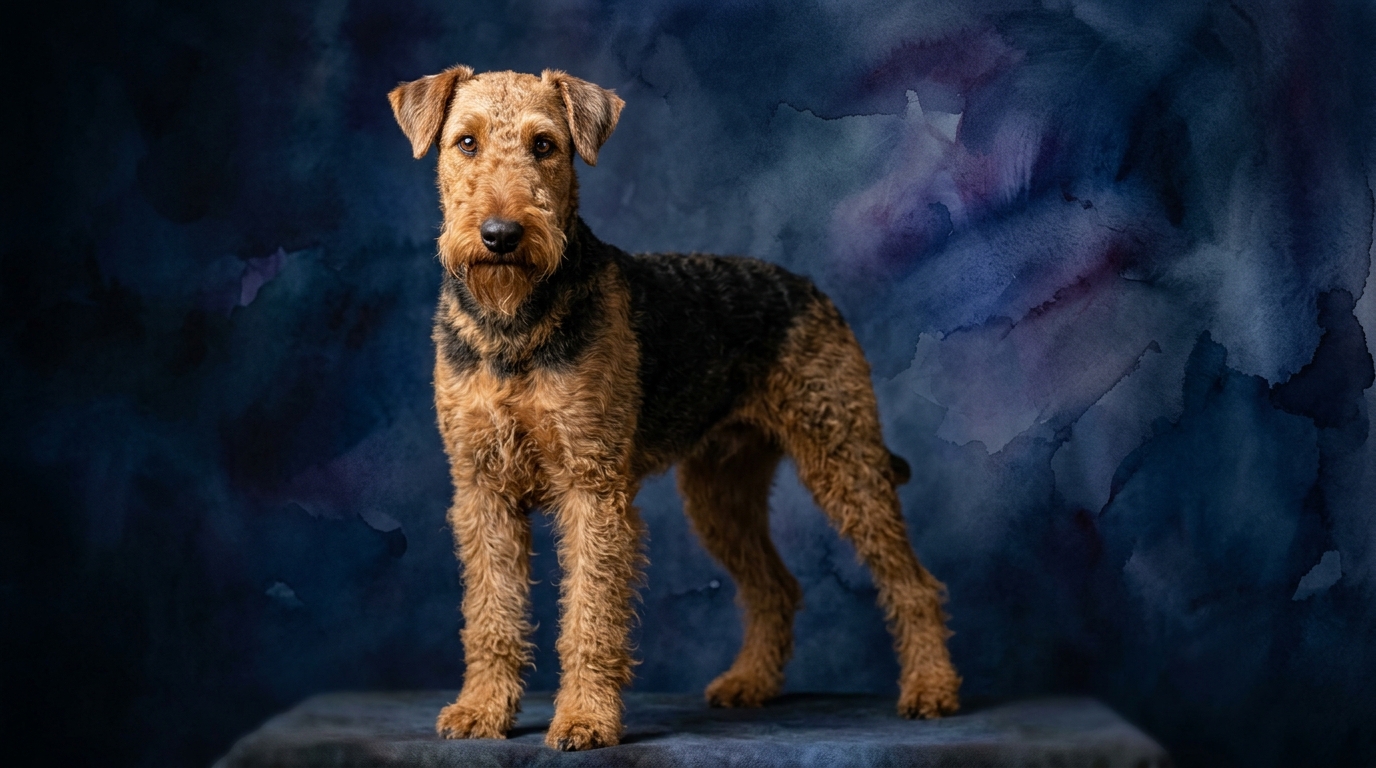
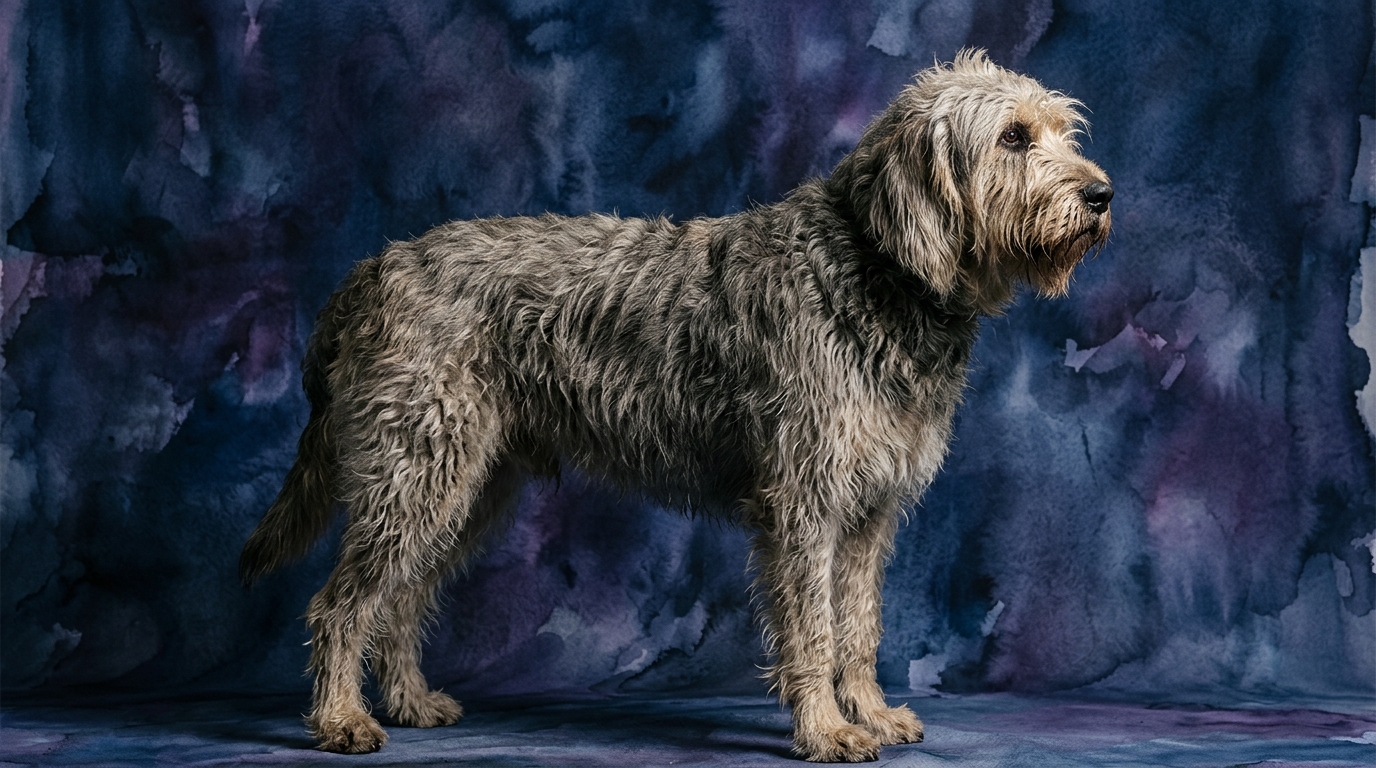
Side-by-Side Cognitive Profile
The Cosmic Pet Pet IQ Lab employs a five-dimensional framework to assess canine cognition, providing a nuanced understanding beyond simple obedience. Let's examine how the Airedale Terrier and Otterhound measure up across these specific dimensions.
For the Airedale Terrier, ranked #29 by Coren, its profile is as follows: Problem Solving (4/5) indicates a strong capacity for independent thought and figuring out solutions to environmental challenges, such as manipulating latches or navigating complex obstacle courses. Training Speed (4/5) suggests they grasp new commands and routines with impressive quickness, though their independent streak means consistent motivation is key. Social Intelligence (3/5) shows they form strong bonds with immediate family, often observing new people before offering acceptance. Instinctive Drive (3/5), reflecting their ancestral role, manifests as a moderate but present interest in chasing small animals. Memory (4/5) demonstrates excellent retention of learned behaviors, routines, and specific locations, aiding training consistency over time.
The Otterhound, not Coren-ranked, presents a different cognitive landscape: Problem Solving (3/5) primarily through their profound sense of smell, often revolving around tracking and locating rather than abstract reasoning. Training Speed (3/5) means they require more repetition and patience, as their olfactory focus easily distracts them. Social Intelligence (3/5) highlights their amiable and jovial disposition, generally getting along well with people and other dogs, often displaying a friendly, if sometimes boisterous, interaction style. Instinctive Drive (3/5) is dominated by their exceptional tracking ability, specifically for scent, which is incredibly powerful and often overrides other stimuli. Memory (3/5) is functional for commands and routines, though their memory for scent trails is exceptional, allowing them to follow complex olfactory paths with precision.
Where the Airedale Terrier Excels Cognitively
The Airedale Terrier clearly holds an edge in areas demanding quick mental processing and adaptable learning. Their Problem Solving score of 4/5 indicates a breed that actively thinks through situations, often devising novel solutions rather than relying solely on instinct. This makes them adept at learning complex sequences, mastering intricate agility courses, or even opening doors if not properly secured. Coupled with a Training Speed of 4/5, Airedales absorb new commands and concepts rapidly, making them highly responsive to varied training methodologies. Owners seeking a canine partner for advanced obedience, rally, or even trick training will find the Airedale's cognitive framework particularly rewarding. Their strong memory (4/5) reinforces this, ensuring that once a skill is learned, it tends to stick, allowing for progressive training without constant re-teaching. This blend of quick learning, effective problem-solving, and solid retention makes the Airedale a formidable companion for those who enjoy engaging a dog's mind.
Where the Otterhound Excels Cognitively
While the Otterhound's numerical scores might suggest a less 'academic' intelligence, their cognitive strengths lie in a different, equally profound domain. Their exceptional instinctive drive (3/5, but specifically for scent) is not just a trait; it's the core of their specialized cognition. Otterhounds possess an olfactory processing capability that far surpasses many breeds, allowing them to interpret and follow complex scent trails with unwavering focus and endurance. Their Problem Solving score of 3/5, when viewed through this lens, indicates a masterful ability to 'solve' the puzzle of a lost scent, navigating varied terrains and distractions with single-minded determination. This isn't about manipulating objects; it's about persistent, methodical tracking. Their Social Intelligence (3/5) also manifests differently; while not necessarily quicker to learn abstract social cues, their inherent amiability and desire for companionship make them naturally agreeable and less prone to territoriality, fostering harmonious coexistence. For tasks requiring sustained focus on a sensory input, particularly scent, and a cooperative nature within a hunting pack, the Otterhound's unique cognitive profile is unparalleled.
Training Ease: Airedale Terrier vs. Otterhound
Between these two breeds, the Airedale Terrier generally presents an easier training experience for the average owner, primarily due to their higher Training Speed (4/5) and Problem Solving (4/5) scores. Airedales grasp new commands quickly, often connecting cause and effect with fewer repetitions. Their independent thinking, while sometimes leading to stubbornness, also means they can generalize learned behaviors to new contexts more readily. However, their terrier nature means training requires firmness, consistency, and engaging methods to prevent boredom or defiance, as they are not merely automatons following orders.
The Otterhound, with its Training Speed of 3/5, demands a more patient and persistent approach. Their powerful instinctive drive for scent often means their attention is easily diverted by environmental stimuli, making it challenging to maintain focus during structured sessions. Training an Otterhound requires understanding that their nose often dictates their priorities, and a compelling scent can override any command. Positive reinforcement, short and highly engaging sessions, and incorporating scent work into training can be highly effective. Owners must be prepared for slower progress and a need for greater consistency to counteract their strong olfactory distractions. Teaching a reliable recall is particularly crucial and often more difficult with an Otterhound, given their tendency to become engrossed in a trail.
Matching Canine Cognition to Owner Lifestyle
Both the Airedale Terrier and the Otterhound are robust, large breeds that require substantial physical activity, meaning neither is truly suited for a sedentary lifestyle. However, their activity profiles cater to different types of active engagement.
The Airedale Terrier is an excellent match for active owners who enjoy structured activities and mental challenges. Their high problem-solving and training speed mean they thrive in dog sports like agility, obedience, or flyball, which engage both their bodies and their sharp minds. They need daily vigorous exercise, such as long runs, hikes, or intense play sessions, coupled with consistent mental stimulation to prevent boredom-induced mischief. Owners who appreciate a dog that can learn complex tasks and participate actively in various competitive or recreational pursuits will find the Airedale a fulfilling partner, as they are always up for an intellectual game.
The Otterhound, while also requiring significant exercise, suits active owners who appreciate more exploratory and scent-driven activities. Their deep-rooted instinctive drive for tracking means they excel at long, meandering walks where they can follow interesting smells, or participate in scent work and tracking trials. They need ample outdoor space and securely fenced areas, as their nose can lead them far astray. While they can be calm and affectionate indoors after sufficient exercise, their daily routine must accommodate their need for extensive, often self-directed, olfactory exploration. Owners who enjoy long rambles, are patient with a dog that follows its nose, and can provide opportunities for extensive sniffing will find the Otterhound a joyful, if sometimes single-minded, companion.
The Verdict
For owners prioritizing a quick-learning, versatile companion capable of mastering complex tasks and thriving in structured mental challenges, the Airedale Terrier is the clear choice.
If, however, you seek a steadfast, amiable companion whose unique cognitive strengths lie in unparalleled scent tracking and persistent outdoor exploration, then the Otterhound, with its charmingly independent nose, will be a deeply rewarding addition to your life.
🧠 Find Your Pet's IQ Score
Our Pet IQ Lab assessment covers 25+ tests across 5 cognitive dimensions — personalized to your breed.
Take the Full IQ Test →Frequently Asked Questions
Are Airedale Terriers good family dogs?
Airedales form strong bonds with their families and can be very loyal and protective. Their social intelligence allows them to integrate well into family dynamics, though early socialization is crucial for them to be amiable with children and other pets. They thrive on being included in family activities and can be quite playful.
How much exercise does an Otterhound need daily?
Otterhounds require substantial daily exercise, typically an hour or more of vigorous activity. This should ideally include opportunities for off-leash exploration in a secure area where they can indulge their powerful scent drive, as well as long walks or runs. Without adequate exercise, they can become restless and prone to mischief.
Can an Otterhound live in an apartment?
Due to their large size, need for significant exercise, and strong scent drive, Otterhounds are generally not well-suited for apartment living. They thrive in homes with a securely fenced yard where they can explore and burn off energy. Their boisterous nature can also be challenging in smaller, confined spaces.