Side-by-Side Cognitive Profiles: Airedale Terrier vs. PBGV
The Cosmic Pet Pet IQ Lab employs a five-dimensional framework to assess canine intelligence, offering a nuanced view beyond simple labels. Let's apply this framework to the Airedale Terrier, a robust member of the Terrier group, and the Petit Basset Griffon Vendéen (PBGV), a charming scenthound.
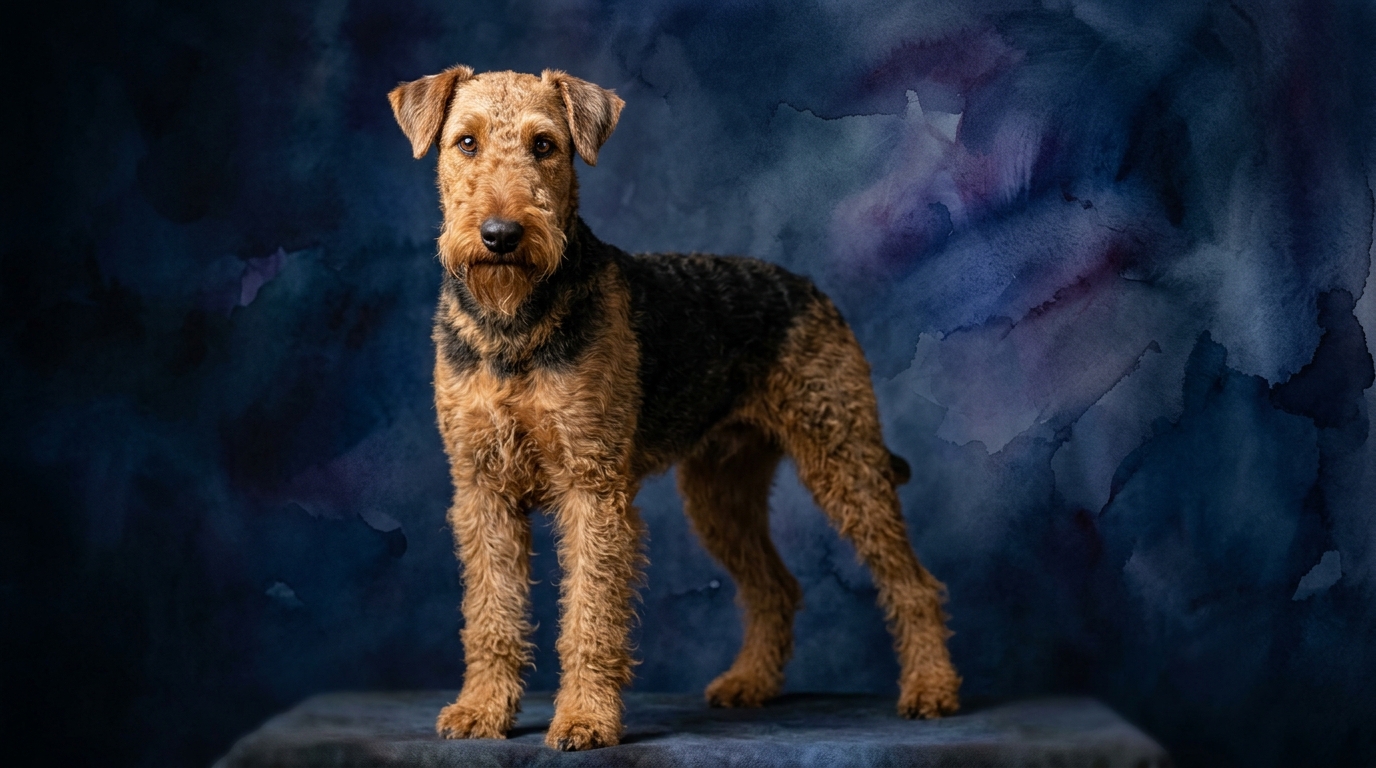
The Airedale Terrier, recognized for its versatility and often referred to as the 'King of Terriers,' exhibits strong cognitive attributes. Its Problem Solving is rated 4/5, indicating a capacity for complex thought and strategic maneuvering to achieve goals. Training Speed is also 4/5, suggesting a quick grasp of new commands and routines. Social Intelligence sits at 3/5, meaning they understand human cues but often retain an independent streak. Their Instinctive Drive is 3/5, reflecting a potent terrier urge for pursuit and exploration that requires channeling. Finally, their Memory is a notable 4/5, allowing for excellent retention of learned behaviors and experiences.
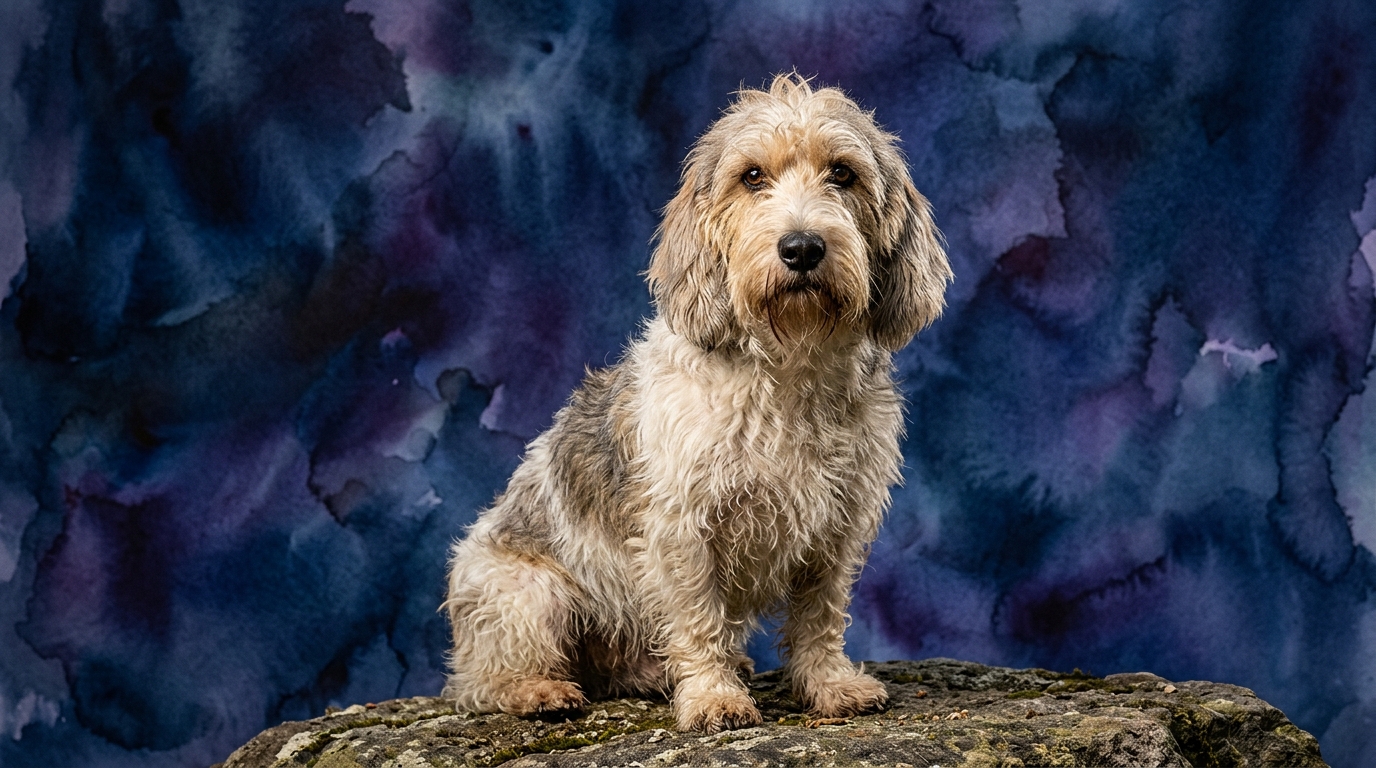
In contrast, the Petit Basset Griffon Vendéen, a lively and boisterous hound, presents a different cognitive blueprint. Its Problem Solving is rated 3/5, showing resourcefulness, particularly in scent-related tasks, but perhaps less abstract reasoning than the Airedale. Training Speed is 3/5, indicating a moderate learning pace that benefits from engaging and consistent methods. Social Intelligence is 3/5, reflecting an affectionate and responsive nature to familiar people, though environmental stimuli can easily divert their attention. Their Instinctive Drive is 3/5, dominated by an intense hound-specific scent drive that can override other motivations. Their Memory is also 3/5, meaning they retain information, but may require more repetitions for tasks not directly linked to their instincts.
Where the Airedale Terrier Excels Cognitively
The Airedale Terrier demonstrates clear cognitive advantages in several key areas. With a Problem Solving score of 4/5 compared to the PBGV's 3/5, Airedales are often more adept at figuring out mechanical puzzles, opening latches, or devising strategies to access desired objects. This terrier heritage imbues them with an independent, resourceful mindset, allowing them to dissect novel challenges and work out solutions that require more than just persistence or scent tracking. For instance, an Airedale might more quickly learn to manipulate a complex puzzle feeder or navigate a new agility course by understanding its underlying structure.
Their Training Speed of 4/5, against the PBGV's 3/5, means Airedales typically absorb new commands and routines with fewer repetitions. They process information, associate actions with consequences, and generalize learned behaviors more rapidly. This makes them particularly receptive to structured learning environments and allows for a broader, more intricate repertoire of commands to be built efficiently. An Airedale can often progress through obedience levels at a faster clip, making them a satisfying partner for those who enjoy advanced training.
Furthermore, the Airedale's Memory, rated 4/5 compared to the PBGV's 3/5, provides a robust foundation for their quick training. They demonstrate superior recall of learned behaviors, the location of objects, and past experiences. This strong memory ensures that once a lesson is learned, it is retained with greater fidelity and for longer periods, reducing the need for constant refreshers. An Airedale is more likely to remember a complex sequence of commands or a specific route after fewer exposures, showcasing a lasting cognitive imprint.
Where the Petit Basset Griffon Vendéen Shows Unique Strengths
While the PBGV's raw IQ scores might appear lower in some categories, their cognitive profile reveals unique strengths, particularly in areas tied to their ancestral purpose. Their Instinctive Drive, rated 3/5, is intensely focused on scent work, a highly specialized form of intelligence. This drive underpins an exceptional ability to track and interpret complex scent trails, a nuanced cognitive function where a generalized problem-solver like the Airedale might not possess the same dedication or innate skill. A PBGV's persistent, methodical tracking represents a peak of hound-specific cognitive engagement, demonstrating a deep understanding of their olfactory world.
The PBGV's Social Intelligence, also 3/5, manifests differently from the Airedale's. While Airedales can be more reserved or independent, PBGVs are often described as overtly sociable and charming. Their social cognition expresses itself as an eager, communicative engagement with their human companions, characterized by their boisterous enthusiasm and desire to be part of the family's activities. Though their nose can distract them, their natural exuberance and willingness to interact openly with familiar people can be a distinct social advantage for owners seeking a more demonstrative companion.
Moreover, the PBGV exhibits a remarkable cognitive trait not explicitly captured by the scores: specialized persistence. Driven by their powerful scent instinct, they demonstrate a relentless focus when on a trail, overcoming obstacles and ignoring distractions with singular determination. This isn't just brute force; it's a cognitive tenacity where their problem-solving (3/5) is entirely dedicated to a specific, instinct-driven goal. This focused persistence, a hallmark of many scenthounds, allows them to achieve objectives that might elude a breed with a more generalized problem-solving approach, showcasing a profound dedication to their innate purpose.
Training Dynamics: Which Breed is Easier to Shape?
When considering ease of training, the Airedale Terrier generally presents a more straightforward path due to its higher Training Speed (4/5) and Memory (4/5). They grasp new concepts quickly and retain them well, allowing for faster progression through obedience or specialized training. However, their Problem Solving (4/5) can sometimes be a double-edged sword; an Airedale might cleverly figure out how to circumvent a command or exploit inconsistencies in training. Their independent streak, rooted in their Social Intelligence (3/5) and Instinctive Drive (3/5), means training needs to be consistently engaging and fair, as they are not simply automatons but thinking partners who might choose not to comply if bored or if their strong terrier instincts are not adequately managed or channeled.
The Petit Basset Griffon Vendéen, with its moderate Training Speed (3/5) and Memory (3/5), typically requires more patience and repetition. They learn, but at a more deliberate pace. The most significant challenge in training a PBGV is their potent Instinctive Drive (3/5) for scent. Once their nose is engaged, it can be incredibly difficult to redirect their attention to human-directed tasks. This means training sessions must be highly rewarding, varied, and short to maintain their interest. While their Social Intelligence (3/5) ensures they respond to positive reinforcement and connection with their people, their independent nature as a scenthound means that a compelling smell will often take precedence over a command. Owners must embrace this aspect of their cognition and incorporate it into training, perhaps through scent games, rather than fighting against it.
Matching Canine Cognition to Owner Lifestyles
The cognitive profiles of these two breeds suggest they are best suited for owners who can match their specific intellectual and physical needs. For active owners seeking a true working partner, the Airedale Terrier is an excellent fit. Their problem-solving mind and physical stamina demand consistent mental and physical stimulation to prevent boredom and potential destructive behaviors. An Airedale thrives on challenging activities such as agility, advanced obedience, dog sports, or even scent work when structured by an owner who appreciates their quick learning and robust memory. An active owner who enjoys engaging their dog in structured, varied tasks will find an Airedale a highly rewarding and capable companion.
The PBGV also benefits from active owners, though their activity needs are rooted in their hound instincts. They require ample physical exercise that allows them to explore their world through scent, such as long walks, hikes, or safe off-leash romps in securely fenced areas. While they enjoy lounging with their family, their strong scent drive and moderate energy levels mean they are not suited for truly relaxed owners who prefer minimal interaction or short, infrequent walks. An owner who enjoys outdoor adventures, appreciates a dog deeply connected to its olfactory senses, and possesses a good sense of humor for their charmingly independent nature would find a PBGV a delightful, if sometimes challenging, companion. Neither breed is ideal for a genuinely sedentary lifestyle, as both possess significant cognitive and physical needs that, if unmet, can lead to frustration for both dog and owner.
The Verdict
Choose the Airedale Terrier if you seek a cognitively agile and quickly learning companion who thrives on complex challenges and consistent, engaging training that channels their independent spirit. They offer a rewarding partnership for those interested in advanced obedience or dog sports.
Opt for the Petit Basset Griffon Vendéen if you appreciate a charming, persistent hound whose world revolves around scent exploration, and you're prepared to embrace their moderate training speed and strong instincts with patience and a good sense of humor, enjoying their unique hound-specific brilliance.
🧠 Find Your Pet's IQ Score
Our Pet IQ Lab assessment covers 25+ tests across 5 cognitive dimensions — personalized to your breed.
Take the Full IQ Test →Frequently Asked Questions
Is the Airedale Terrier truly 'smarter' than the PBGV?
Based on our metrics, the Airedale generally exhibits quicker learning and stronger abstract problem-solving abilities. However, the PBGV possesses a specialized cognitive brilliance in scent work and persistence that the Airedale doesn't match; it's a difference in cognitive style and focus, not an overall measure of superiority.
Can a PBGV be trained for complex tasks like an Airedale?
While a PBGV can certainly learn many commands and tricks, their training speed and memory scores suggest they might require more patience and repetition than an Airedale for complex, multi-step tasks. This is especially true if those tasks don't directly engage their natural scent drive, as their independent hound nature means compelling smells often take precedence over commands.
How does 'Instinctive Drive' impact their intelligence?
Instinctive Drive represents a powerful, innate motivation that significantly shapes other cognitive functions. For the PBGV, it fuels their specialized scent-tracking problem-solving, but can also make them less attentive to human-directed tasks. For the Airedale, their terrier drive contributes to their independent problem-solving but also requires management to prevent unwanted behaviors and channel their energy productively.