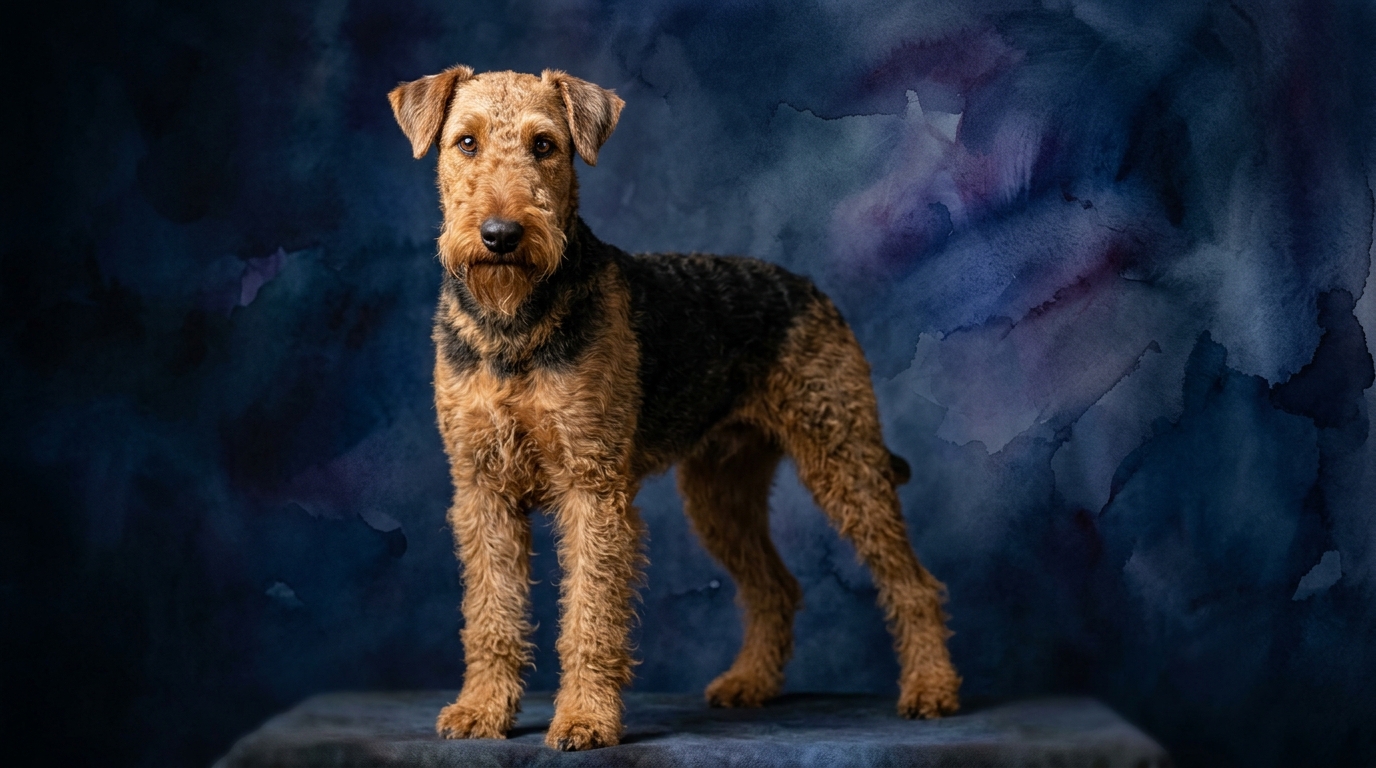
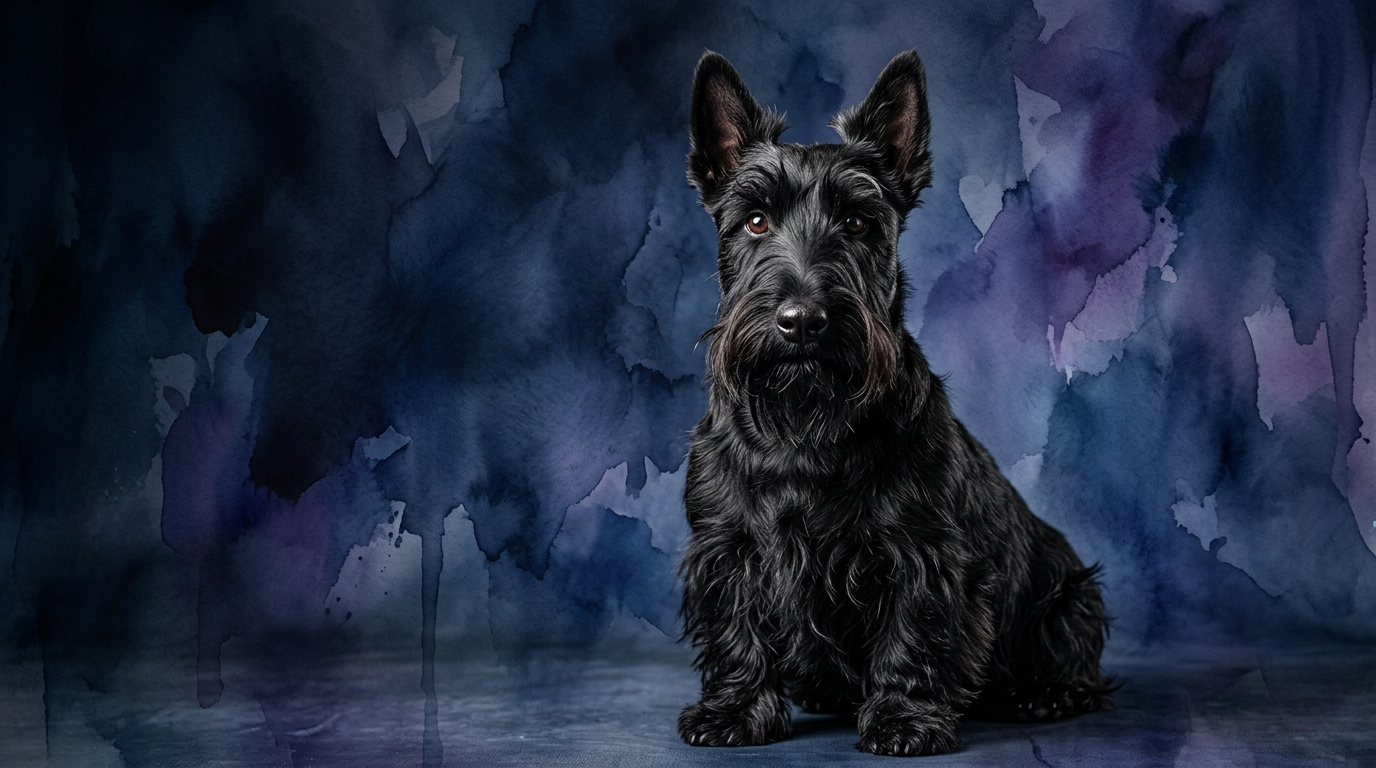
Side-by-Side IQ Profile: Airedale Terrier vs. Scottish Terrier
The Cosmic Pet Pet IQ Lab provides a five-dimensional cognitive framework to understand each breed's mental strengths. For the Airedale Terrier, ranked #29 by Coren, its profile is marked by strong analytical and learning capabilities.
Airedale Terrier IQ Breakdown:
Problem Solving (4/5): This breed demonstrates a robust capacity for independent thought, often devising creative solutions to environmental challenges rather than waiting for human intervention. Their analytical approach allows them to quickly grasp complex tasks and navigate novel situations.
Training Speed (4/5): Airedales typically pick up new commands and routines with impressive alacrity, processing information rapidly and forming associations quickly. This makes them responsive to structured learning environments, showing a readiness to engage in training exercises.
Social Intelligence (3/5): Their social understanding is solid, allowing them to interpret human cues and interact appropriately within a family structure. While not overly effusive, they form strong bonds and can adapt to various social settings, though they retain a certain independent streak.
Instinctive Drive (3/5): The Airedale's instinctive drive is balanced, reflecting their history as versatile working dogs. They possess a keen prey drive and a natural inclination to explore, yet this is often manageable and can be channeled effectively through engaging activities.
Memory (4/5): Airedales exhibit a strong memory, retaining learned behaviors, commands, and experiences over long periods. This cognitive trait contributes significantly to their training success and their ability to recall past events or routines.
In contrast, the Scottish Terrier, holding Coren rank #65, presents a profile reflecting a more deliberate, persistent cognitive style, deeply rooted in their history.
Scottish Terrier IQ Breakdown:
Problem Solving (3/5): Scottish Terriers approach problems with a more deliberate, sometimes stubborn, methodology. They can solve puzzles and navigate obstacles, but their process might involve more trial and error or a less immediate grasp of abstract concepts compared to some other breeds.
Training Speed (3/5): While capable of learning, Scottish Terriers tend to absorb new information at a moderate pace. They require consistent, patient training methods, as their independent spirit can sometimes lead to selective hearing or a preference for their own agenda.
Social Intelligence (3/5): Similar to the Airedale, the Scottish Terrier possesses a functional social intelligence, understanding household dynamics and human expectations. They are loyal to their chosen people, though their expressions of affection might be more reserved and discerning.
Instinctive Drive (3/5): The Scottish Terrier's instinctive drive is pronounced, rooted in their history as tenacious hunters of vermin. This manifests as a strong prey drive, a desire to dig, and a persistent nature, which requires mindful management and appropriate outlets.
Memory (3/5): Scottish Terriers have a reliable memory for routines and commands, particularly those reinforced consistently. While they recall past experiences, their memory might not be as expansive or as readily accessed for complex sequences as breeds with higher scores.
Where the Airedale Terrier Wins Cognitively
The Airedale Terrier consistently outshines the Scottish Terrier in areas demanding quick cognitive processing and adaptable problem-solving. With a 4/5 in Problem Solving, Airedales are adept at assessing novel situations, quickly formulating strategies, and executing them, whether it’s figuring out how to open a gate or navigating a complex agility course. This contrasts with the Scottish Terrier's 3/5, which suggests a more methodical, perhaps less spontaneous, approach to new challenges.
Furthermore, the Airedale's superior Training Speed (4/5 vs. 3/5) means they process and internalize new commands and behaviors with greater efficiency. They connect actions to consequences rapidly, making them more responsive to intricate training regimens and multi-step tasks. This speed of acquisition is complemented by their 4/5 Memory, allowing them to retain vast amounts of information and recall complex sequences of learned behaviors over extended periods, a distinct advantage over the Scottish Terrier's 3/5 in this domain. This combination of rapid learning, strong retention, and flexible problem-solving positions the Airedale as a more cerebrally agile companion.
Where the Scottish Terrier Wins Cognitively
While the Airedale often demonstrates quicker cognitive processing, the Scottish Terrier possesses a unique mental fortitude that could be considered a cognitive advantage in specific contexts. Their resolute and independent nature, though sometimes perceived as stubbornness, reflects an unwavering focus on a task once committed. While their Problem Solving is rated 3/5, this score doesn't fully capture their persistent nature in overcoming obstacles through sheer will, a trait honed by their historical role.
This tenacity means that once a Scottish Terrier understands a task or a desired outcome, they will often pursue it with singular determination, even if the learning process was slower. Their balanced Social Intelligence (3/5) allows for deep, discerning bonds without the overwhelming need for constant validation, fostering a sense of self-reliance. This independent cognitive spirit means they are less prone to anxiety when left to their own devices, relying on their internal compass rather than constant external direction, which can be a distinct advantage for owners seeking a self-possessed companion.
Which is Easier to Train, and Why?
Based on Cosmic Pet Pet IQ Lab metrics, the Airedale Terrier is demonstrably easier to train. Their 4/5 score in Training Speed signifies a capacity to grasp new commands and routines with greater alacrity than the Scottish Terrier's 3/5. Airedales exhibit a quicker understanding of what is being asked of them and a more immediate willingness to comply, often showing eagerness to engage in interactive learning.
This is further supported by their robust 4/5 Memory, enabling them to retain a larger repertoire of commands and recall them reliably, even after extended breaks. In contrast, the Scottish Terrier, with a 3/5 in both Training Speed and Memory, requires a more patient, consistent, and often creative approach. Their independent streak and historical self-sufficiency mean they might question the necessity of a command or choose to prioritize their own agenda over immediate compliance. Training a Scottish Terrier often involves leveraging their innate persistence and strong will, rather than relying on rapid assimilation, making the process more a test of the owner's consistency and charm than the dog's quick cognitive uptake.
Suitability for Active vs. Relaxed Owners
The Airedale Terrier, with its higher cognitive agility and energy levels, generally suits active owners who enjoy engaging their dog in various mentally and physically stimulating activities. Their strong Problem Solving and Training Speed scores mean they thrive on challenges like advanced obedience, agility, tracking, or even complex puzzle toys. They require consistent mental engagement to prevent boredom, which can manifest as undesirable behaviors. Owners who enjoy long hikes, running, or structured training sessions will find the Airedale an enthusiastic and capable partner.
Conversely, the Scottish Terrier, while requiring daily exercise, aligns better with more relaxed owners who appreciate a companion with a quieter, more independent demeanor indoors. Their moderate scores in Problem Solving and Training Speed suggest they don't demand constant, intense mental stimulation in the same way an Airedale might. They are content with regular walks, supervised garden exploration, and a comfortable spot beside their human, offering companionship without the incessant need for a 'job.' Their instinctive drive, while present, can be managed with consistent boundaries and appropriate outlets, making them suitable for owners who prefer a more sedate pace of life but are still committed to routine physical activity.
The Verdict
Opt for an Airedale if you seek a highly engaged companion for advanced training, dog sports, and a dynamic lifestyle, valuing rapid learning and a dog eager to collaborate on complex tasks.
Select a Scottish Terrier if you appreciate a tenacious, independent spirit, desiring a loyal companion content with a consistent routine and a more reserved, yet deeply bonded, partnership.
🧠 Find Your Pet's IQ Score
Our Pet IQ Lab assessment covers 25+ tests across 5 cognitive dimensions — personalized to your breed.
Take the Full IQ Test →Frequently Asked Questions
Are Airedale Terriers better at learning new tricks than Scottish Terriers?
Yes, Airedale Terriers typically learn new tricks faster, scoring 4/5 in Training Speed compared to the Scottish Terrier's 3/5. Their quicker cognitive processing and better memory allow them to pick up and retain novel commands more readily.
Which breed is more likely to figure out how to open a gate on its own?
An Airedale Terrier is more likely to independently figure out how to open a gate, given their 4/5 Problem Solving score. They possess a stronger capacity for analytical thought and devising solutions to environmental challenges without human assistance.
Do Scottish Terriers have a good memory for routines?
Scottish Terriers have a reliable memory for routines and consistently reinforced commands, scoring 3/5 in Memory. While not as expansive as the Airedale's 4/5, they will remember established patterns and learned behaviors with consistent repetition.