Side-by-Side IQ Profile: Airedale Terrier vs. Tibetan Terrier
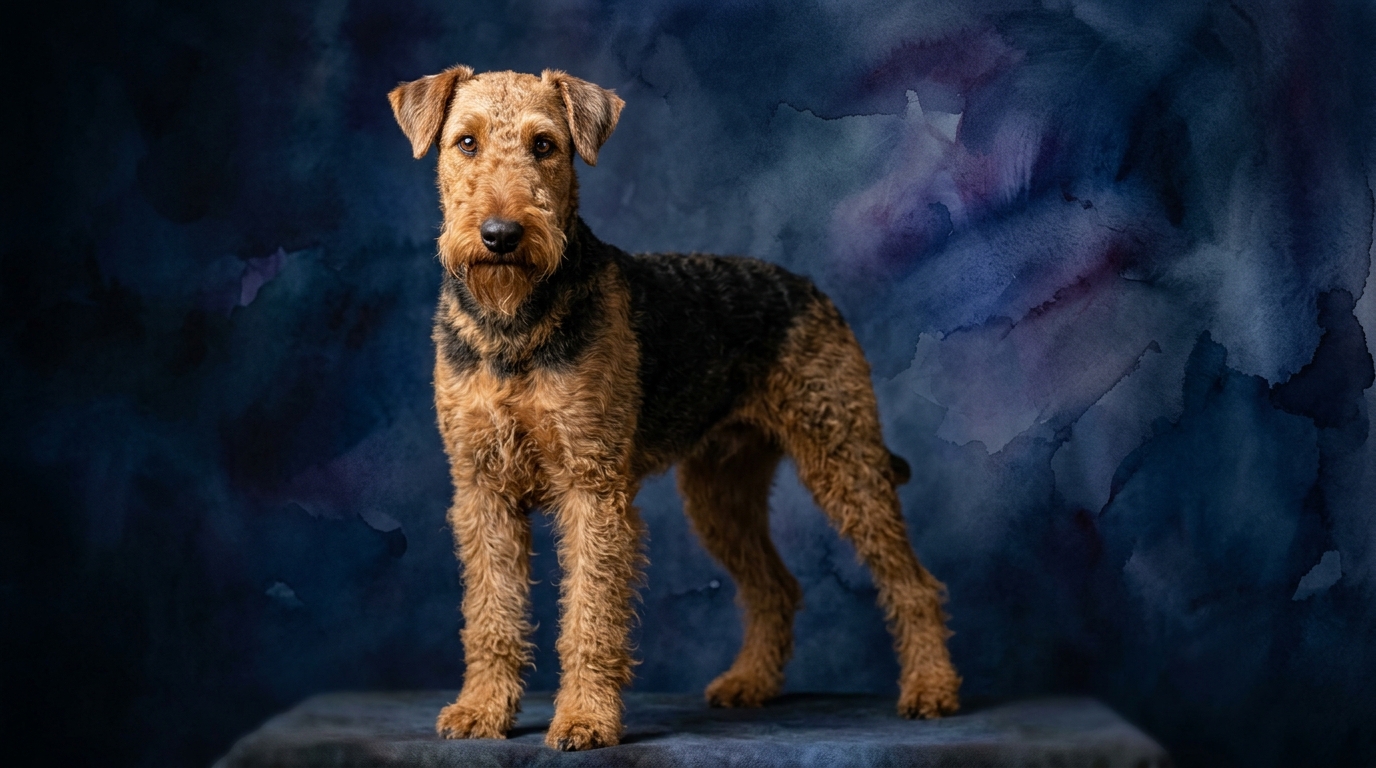
The Airedale Terrier, often dubbed the 'King of Terriers,' holds a respectable Coren rank of #29, signifying a breed that generally grasps new commands with fewer repetitions and exhibits a higher obedience rate. Our Cosmic Pet IQ Lab assessment further refines this, assigning the Airedale a Problem Solving score of 4/5, indicating a strong capacity for independent thought and devising solutions to novel challenges. Their Training Speed also stands at 4/5, reflecting their quick uptake of new behaviors and commands. Social Intelligence is rated 3/5, suggesting they form strong bonds and understand family dynamics well, while their Instinctive Drive, also 3/5, speaks to their inherent terrier working traits like chasing and exploration. A solid Memory score of 4/5 underpins their ability to retain complex learned behaviors and past experiences.
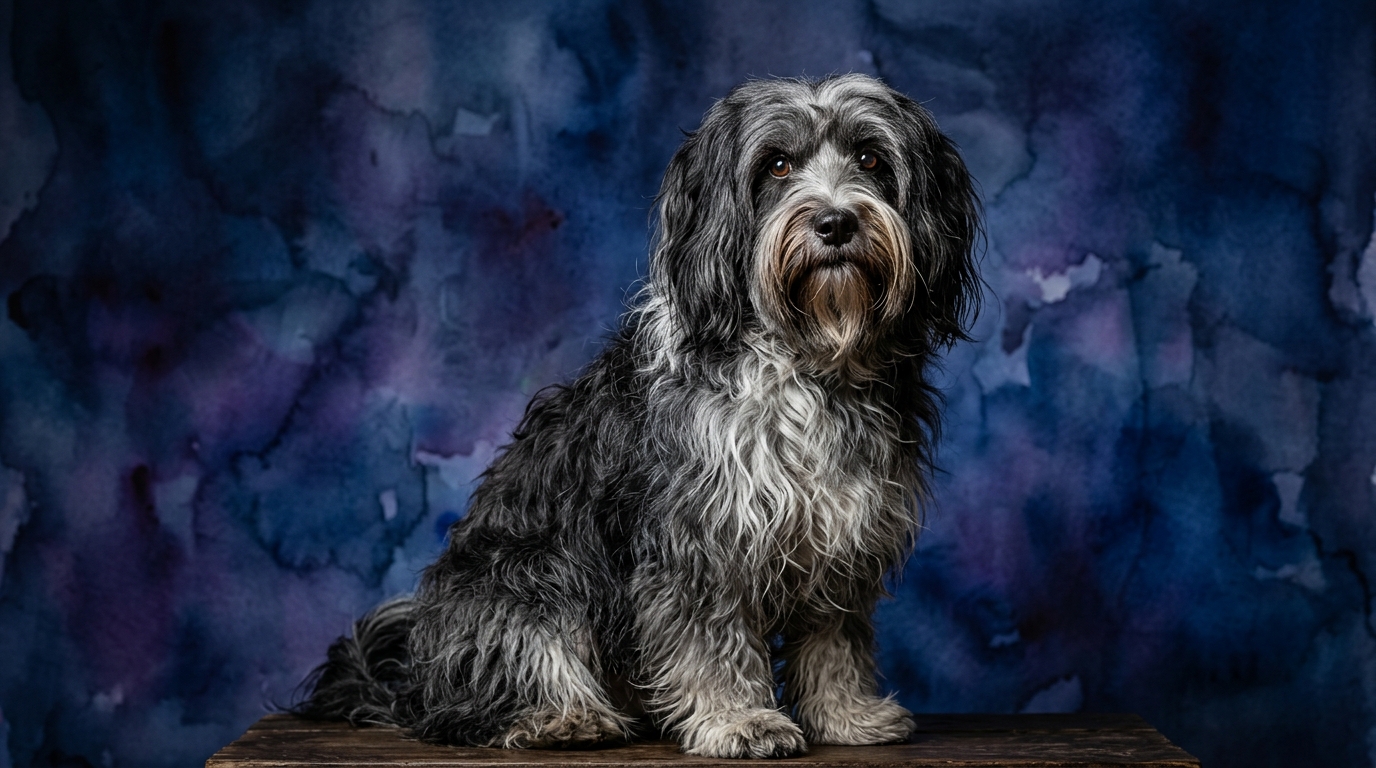
In contrast, the Tibetan Terrier, a breed historically cherished as a companion and watchdog, occupies Coren rank #63, suggesting a more moderate pace of learning and obedience. The Cosmic Pet IQ Lab’s evaluation assigns them a Problem Solving score of 3/5, meaning they are competent at learning routines and solving familiar puzzles but may require more guidance for truly novel situations. Their Training Speed is 3/5, indicating a steady, cooperative learner who benefits from consistent, positive reinforcement. Social Intelligence is equal to the Airedale at 3/5, highlighting their capacity for deep emotional connections and understanding human cues within their family unit. Their Instinctive Drive, also 3/5, often manifests as curiosity and a watchful nature rather than intense prey drive. A Memory score of 3/5 suggests they retain what they learn, though perhaps with a slightly slower recall or requiring more refreshers than their Airedale counterpart.
Where the Airedale Terrier Wins Cognitively
The Airedale Terrier distinctly outpaces the Tibetan Terrier in several key cognitive dimensions, most notably in Problem Solving, Training Speed, and Memory, each scoring a 4/5 compared to the Tibetan's 3/5. This higher problem-solving capacity means an Airedale is more likely to independently figure out how to open a gate, manipulate a complex puzzle toy, or even strategize how to get what they want from their environment. Their minds are geared towards active engagement with their surroundings, often seeking out challenges.
The Airedale's superior Training Speed and Memory also translate into a more rapid acquisition and retention of commands and complex sequences. This makes them exceptional candidates for advanced obedience, agility, or working roles where precision and quick learning are paramount. An Airedale can often master a new trick in fewer repetitions and remember it reliably over longer periods, allowing for a broader and more sophisticated repertoire of behaviors. For owners who delight in pushing the boundaries of canine learning, the Airedale's cognitive architecture provides a more fertile ground for ambitious training goals.
Where the Tibetan Terrier Wins Cognitively
While the Airedale often demonstrates a quantitative edge in specific cognitive domains, the Tibetan Terrier's cognitive profile offers a qualitative advantage in certain home environments. Their consistent 3/5 across problem-solving, training speed, social intelligence, and memory paints a picture of a well-rounded, adaptable intellect that is less prone to the intense demands or potential mischief that can accompany higher cognitive scores in a working breed. A Tibetan Terrier's moderate instinctive drive, while present, is typically less focused on prey or independent hunting than the Airedale's, manifesting more as curiosity and a watchful nature. This means their intellectual engagement is often more directed towards their human family and immediate environment, making them highly present and engaged companions without the relentless need for a 'job' or the constant mental challenge that an Airedale might demand.
Their balanced intelligence means they are competent learners and problem-solvers, but without the potential for outsmarting their owners or boredom-induced destructive behaviors that can arise from an under-stimulated Airedale. For an owner seeking a perceptive, cooperative companion whose mental agility is perfectly suited to family life without requiring a full-time intellectual project, the Tibetan Terrier's profile becomes a compelling advantage. Their 3/5 Social Intelligence, equal to the Airedale, means they are equally capable of forming deep, empathetic bonds, often expressing their understanding through subtle cues and attentive presence, without the added complexity of a higher, more demanding drive.
Which is Easier to Train and Why?
Based on their Training Speed scores, the Airedale Terrier (4/5) generally proves quicker to train than the Tibetan Terrier (3/5). Airedales absorb new commands rapidly and remember them due to their higher memory score. However, their superior problem-solving ability and inherent terrier independence (Instinctive Drive 3/5) mean they can also be quite opinionated and prone to 'selective hearing' if not properly motivated or if they perceive a loophole. Training an Airedale requires a firm, consistent, and engaging approach to channel their sharp mind and prevent them from using their intelligence to outmaneuver their handler.
The Tibetan Terrier, while scoring a 3/5 in Training Speed and Memory, offers a different training dynamic. They might take a few more repetitions to master a new concept, but their more moderate problem-solving and instinctive drives often translate into a more biddable and less challenging training experience for some owners. They are typically eager to please their family and less inclined to independently pursue distractions compared to a terrier with a stronger working drive. Consistency and positive reinforcement are still crucial, but their cooperative nature can make the training journey feel less like a constant battle of wits and more like a steady, rewarding partnership.
Which Suits Active Owners vs. Relaxed Owners?
The Airedale Terrier is an ideal match for active owners who thrive on mental and physical engagement with their dog. Their 4/5 Problem Solving, 4/5 Training Speed, and 3/5 Instinctive Drive demand an outlet through activities like advanced obedience, agility, tracking, or long, exploratory hikes. An Airedale left without sufficient mental and physical stimulation can become bored and channel their considerable intellect into less desirable behaviors, such as digging, escaping, or destructiveness. They excel with owners who are committed to daily interaction, structured training sessions, and providing a 'job' to satisfy their working heritage.
The Tibetan Terrier, with its more balanced 3/5 scores across most cognitive dimensions, is better suited for moderately active owners. While they enjoy regular walks, playtime, and mental enrichment, their needs are generally less intense than the Airedale's. They are content with family activities and do not typically require the same level of high-octane physical or intellectual challenge. Owners who enjoy daily walks, puzzle toys, and consistent companionship without the pressure of needing to engage in competitive dog sports will find the Tibetan Terrier's adaptable and perceptive nature a delightful fit. They appreciate being involved in family life rather than constantly seeking independent endeavors.
The Verdict
Choose the Airedale Terrier if you are an active, experienced owner eager for a highly engaged partner in advanced training, dog sports, and complex problem-solving activities, ready to meet their substantial mental and physical needs.
Opt for the Tibetan Terrier if you seek a perceptive, adaptable, and cooperative companion for a moderately active family lifestyle, valuing consistent companionship and a steady, rewarding training journey over intense cognitive challenges.
🧠 Find Your Pet's IQ Score
Our Pet IQ Lab assessment covers 25+ tests across 5 cognitive dimensions — personalized to your breed.
Take the Full IQ Test →Frequently Asked Questions
Do Airedale Terriers get bored easily?
Yes, Airedale Terriers, with their 4/5 Problem Solving and 4/5 Training Speed, possess sharp minds that require consistent mental stimulation. Without sufficient engagement, they can quickly become bored, potentially leading to destructive behaviors or seeking out their own 'entertainment' by exploring boundaries.
Are Tibetan Terriers good at learning tricks?
Tibetan Terriers are competent learners with a 3/5 Training Speed score, meaning they are certainly capable of learning tricks. They might take a bit more patience and repetition than an Airedale, but their cooperative nature makes them enjoyable to train for owners who use positive reinforcement and consistent methods.
How do their social intelligence scores compare?
Both Airedale Terriers and Tibetan Terriers score a 3/5 in Social Intelligence. This indicates that both breeds are capable of forming strong bonds with their human families and understanding social cues within their established household, making them empathetic and connected companions.