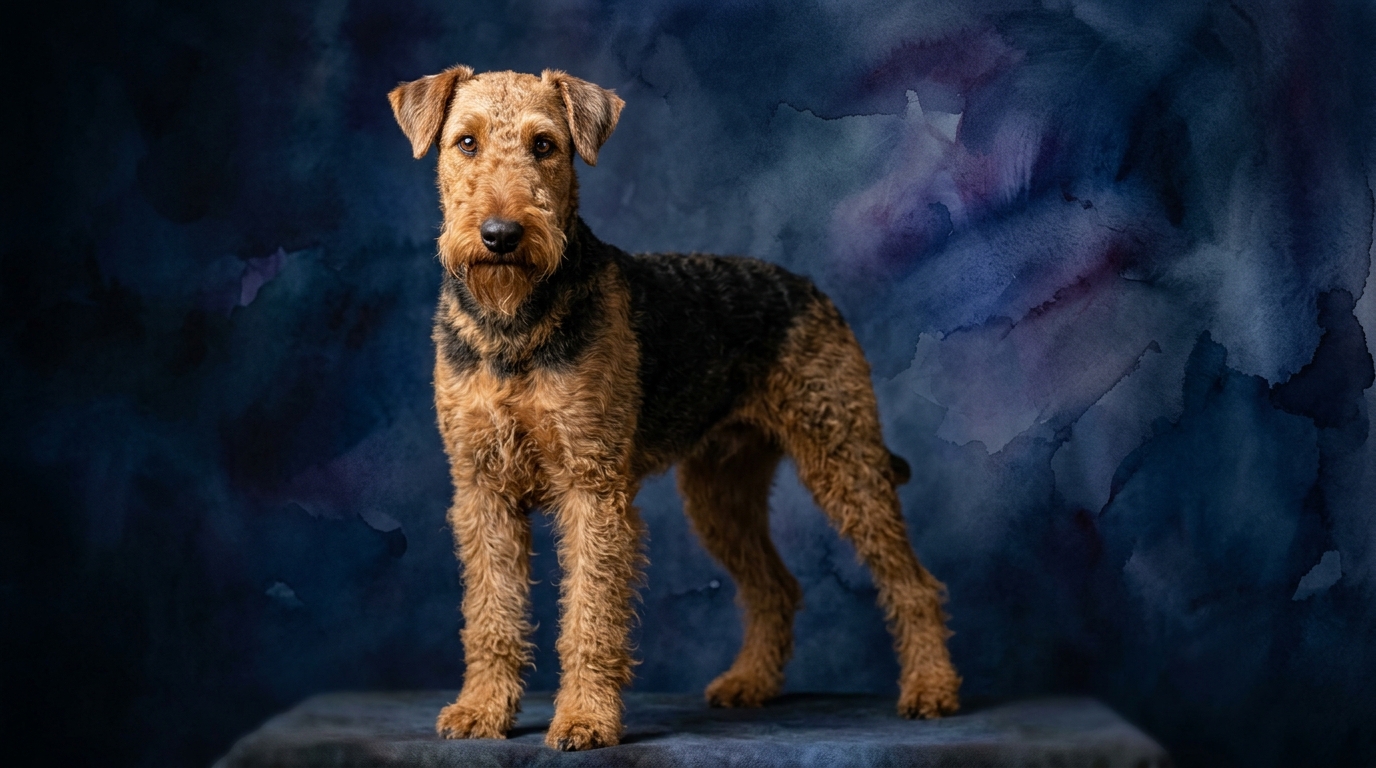
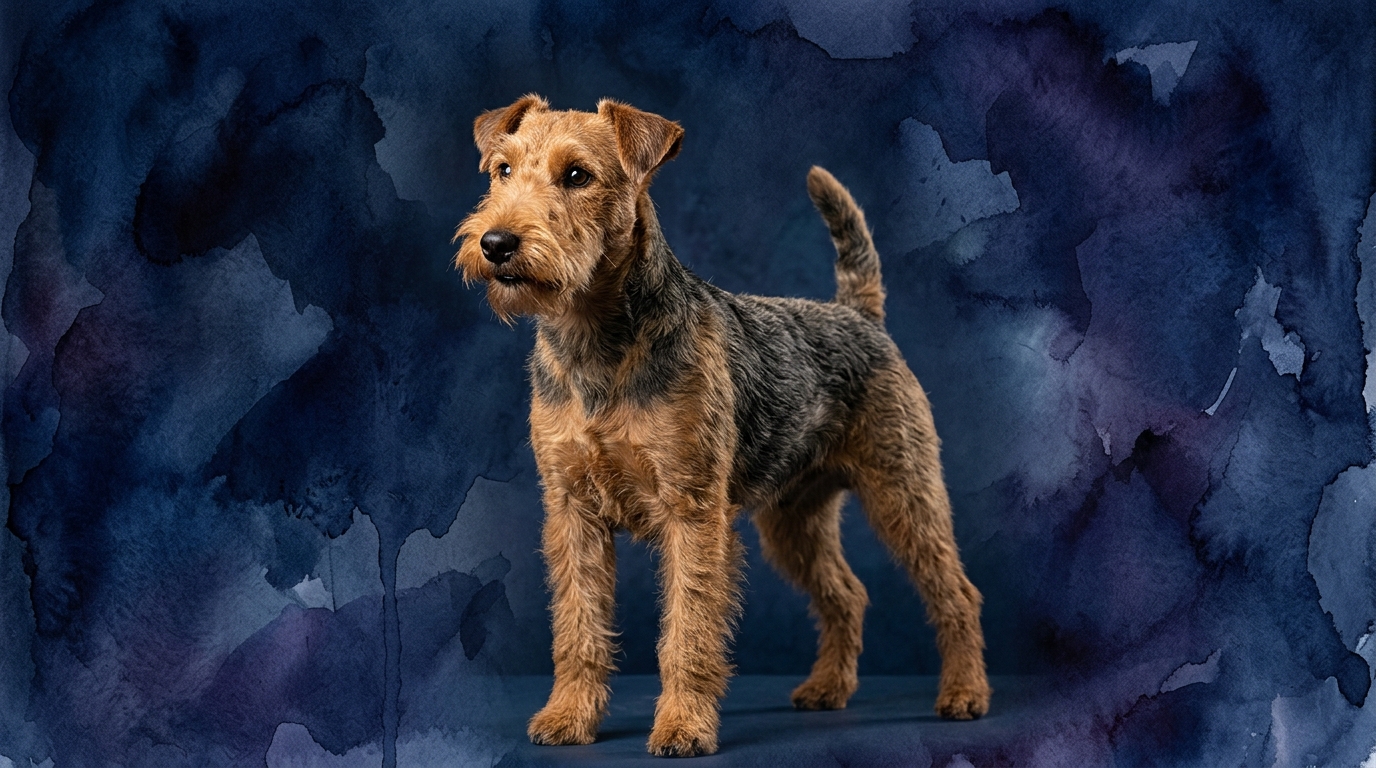
Side-by-side IQ profile
At The Cosmic Pet Pet IQ Lab, we evaluate canine intelligence across five key dimensions, offering a nuanced perspective beyond simple "smart" labels. The Airedale Terrier, often dubbed the "King of Terriers," presents a cognitive profile indicating a strong aptitude for learning and retention. Specifically, its Problem Solving ability rates 4/5, suggesting a capacity for navigating complex situations and devising effective strategies. Its Training Speed is also a notable 4/5, meaning new commands and behaviors are typically grasped quickly. Memory stands strong at 4/5, allowing for excellent retention of learned skills and experiences over time. Social Intelligence is rated 3/5, indicating an ability to understand social cues but with a potential for independence, requiring consistent socialization. Instinctive Drive, typical of a terrier, is 3/5, encompassing a moderate prey drive that needs appropriate outlets. The Airedale's overall cognitive prowess is underscored by its #29 ranking in Stanley Coren's intelligence hierarchy for working and obedience.
The Welsh Terrier, a slightly smaller but equally spirited cousin, exhibits a consistently balanced cognitive profile. Its Problem Solving ability is rated 3/5, signifying competence in handling challenges, though perhaps with a need for more direct guidance or simpler steps initially compared to the Airedale. Training Speed also sits at 3/5, meaning they learn at a steady, reliable pace, benefiting from patient and consistent instruction. Memory is likewise 3/5, indicating that while they retain information, periodic refreshers might be more beneficial to solidify long-term recall. Mirroring the Airedale, the Welsh Terrier also scores 3/5 in Social Intelligence, suggesting a similar need for early and ongoing socialization to ensure adaptable interactions. Its Instinctive Drive is also 3/5, reflecting the characteristic terrier tenacity and drive for pursuit. The Welsh Terrier does not feature in Coren's top rankings, which aligns with its balanced, rather than standout, scores in the training-related metrics.
Where Airedale Terrier wins cognitively
The Airedale Terrier distinctly outpaces its Welsh counterpart in several cognitive domains, making it a preferred choice for specific intellectual pursuits. With a Problem Solving score of 4/5, Airedales often demonstrate a remarkable ability to figure out intricate puzzles or multi-step tasks, such as opening complex latches or navigating novel obstacles in an agility course. This higher cognitive processing means they can analyze situations and adapt their approach more effectively. Their 4/5 Training Speed is another clear advantage; Airedales typically pick up new commands with fewer repetitions, allowing for a broader and more sophisticated behavioral repertoire to be established relatively quickly. Furthermore, a Memory score of 4/5 ensures that these learned behaviors and complex sequences are retained over longer periods, reducing the need for constant reteaching and allowing them to build upon past lessons more efficiently. This cumulative learning capacity positions the Airedale as a candidate for advanced obedience, complex trick training, or even service dog roles where intricate command chains are essential.
Where Welsh Terrier wins cognitively
While the Welsh Terrier's individual cognitive scores don't surpass the Airedale's, its strengths lie in a different kind of cognitive advantage: a consistent and predictable application of its intellect. The Welsh Terrier's uniform 3/5 across problem-solving, training speed, and memory signifies a reliable and steady learning curve. This consistency can be a "win" for owners who prefer a dog that learns at a manageable pace without the potential for outsmarting or becoming bored by tasks that don't sufficiently challenge a higher-rated intellect. Their tenacity, a hallmark of the terrier group, becomes a powerful cognitive asset when combined with their steady learning. Once a Welsh Terrier grasps a concept, their inherent drive ensures a determined execution, often making them exceptionally reliable in tasks requiring persistence rather than complex strategy. For instance, in earthdog trials, their unwavering focus and instinctive drive (3/5) are paramount, where sheer determination to follow a scent and dig is more valuable than intricate problem-solving. This balanced cognitive profile means a Welsh Terrier is less likely to become frustrated or demanding if not constantly engaged with novel, high-level mental stimulation, making them a steadfast companion for owners who appreciate consistency.
Which is easier to train and why
When considering ease of training, the Airedale Terrier generally holds an edge due to its superior cognitive metrics. Its 4/5 Training Speed means an Airedale will typically grasp new commands and concepts with fewer repetitions than a Welsh Terrier. For instance, teaching a complex sequence like "fetch the leash, then sit by the door" would likely be broken down and mastered more rapidly by an Airedale. Coupled with a 4/5 Memory, they retain these learned behaviors over extended periods, making refreshers less frequent and less intensive. Their 4/5 Problem Solving also enables them to understand the *why* behind commands more readily, leading to quicker generalization of behaviors across different environments.
The Welsh Terrier, with its 3/5 in Training Speed and Memory, requires a more patient and consistent approach. They *will* learn, but the process may involve more repetitions and shorter, more frequent training sessions to solidify understanding. A Welsh Terrier might take longer to connect the verbal cue "stay" with the desired action, but once the connection is made through consistent positive reinforcement, their inherent terrier resolve ensures that the behavior, once learned, becomes deeply ingrained. Owners of Welsh Terriers often find success by breaking down commands into smaller, simpler steps and celebrating every minor achievement, leveraging their tenacity to build reliable habits over time.
Which suits active owners vs less cognitively demanding owners
Neither the Airedale nor the Welsh Terrier is suited for truly "relaxed" owners who prefer minimal engagement. Both are terriers through and through, meaning they possess significant energy and a need for consistent activity. The distinction lies in the *type* of activity and mental engagement they thrive on.
The Airedale Terrier, with its higher scores in problem-solving and training speed, is an excellent match for active owners who enjoy structured activities that challenge both body and mind. This includes participation in advanced obedience, agility, rally, or even scent work, where their capacity for complex learning and memory can be fully utilized. They need owners who are prepared to provide daily mental stimulation beyond just physical exercise, perhaps through puzzle toys, learning new tricks, or engaging in interactive games that require strategic thinking.
The Welsh Terrier, while equally active physically, suits owners who prioritize consistent physical exercise and clear boundaries over intricate mental challenges. They thrive on long walks, energetic play sessions, and opportunities for digging or exploring in a secure environment. Owners who enjoy hiking, running, or consistent outdoor adventures will find a willing companion in the Welsh. While they benefit from training, their needs are more aligned with establishing reliable basic commands and good manners through consistent, patient reinforcement, rather than constant pursuit of novel, high-level cognitive tasks. They are for owners who appreciate a steadfast, determined companion that can keep up physically, even if not constantly engaged in advanced intellectual pursuits.
The Verdict
For owners seeking a highly engaged canine partner eager for complex training, dog sports, and advanced mental challenges, choose the Airedale Terrier, capable of learning quickly and retaining extensive commands.
For owners who appreciate a steadfast, tenacious companion that thrives on consistent routine, ample physical activity, and clear, patient guidance, choose the Welsh Terrier, without the demand for constant advanced cognitive stimulation.
🧠 Find Your Pet's IQ Score
Our Pet IQ Lab assessment covers 25+ tests across 5 cognitive dimensions — personalized to your breed.
Take the Full IQ Test →Frequently Asked Questions
Is the Airedale Terrier truly smarter than the Welsh Terrier?
Based on our Pet IQ Lab metrics, the Airedale Terrier exhibits higher scores in problem-solving, training speed, and memory, suggesting a quicker grasp of new concepts and better retention. While both are capable, the Airedale's cognitive profile indicates a more rapid and complex learning capacity.
How does Coren's ranking relate to these IQ scores?
Stanley Coren's ranking primarily assesses "working and obedience intelligence," aligning closely with our training speed and problem-solving dimensions. The Airedale's #29 rank suggests a strong ability to understand and obey commands, which our 4/5 scores for those traits corroborate, whereas the Welsh Terrier, though capable, is not specifically listed in his top tiers.
Do these IQ differences impact their social behavior?
Both breeds score 3/5 in social intelligence, meaning they share a similar baseline for understanding social cues and interacting with their environment. While the Airedale's higher problem-solving might lead to more nuanced reactions in complex social situations, both benefit greatly from early, consistent socialization to foster adaptable and well-mannered interactions.