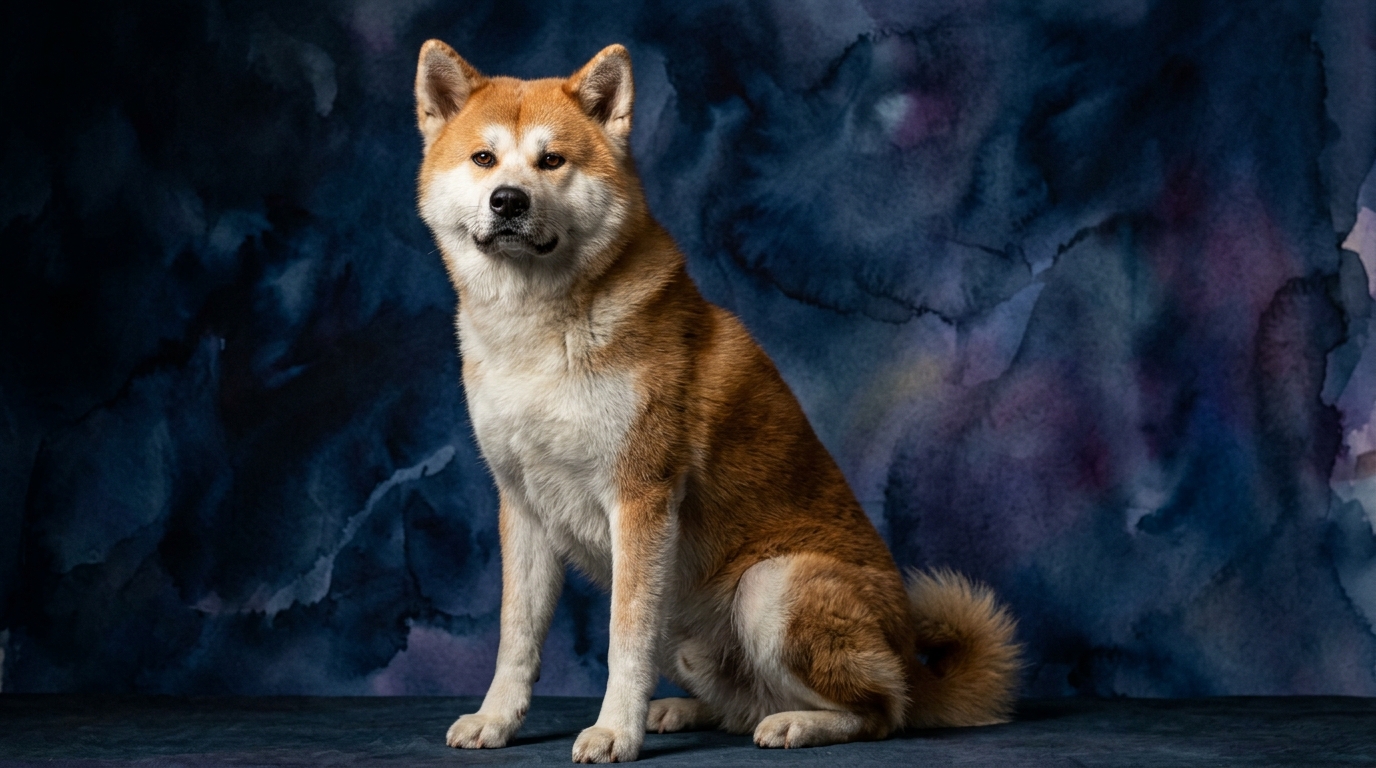
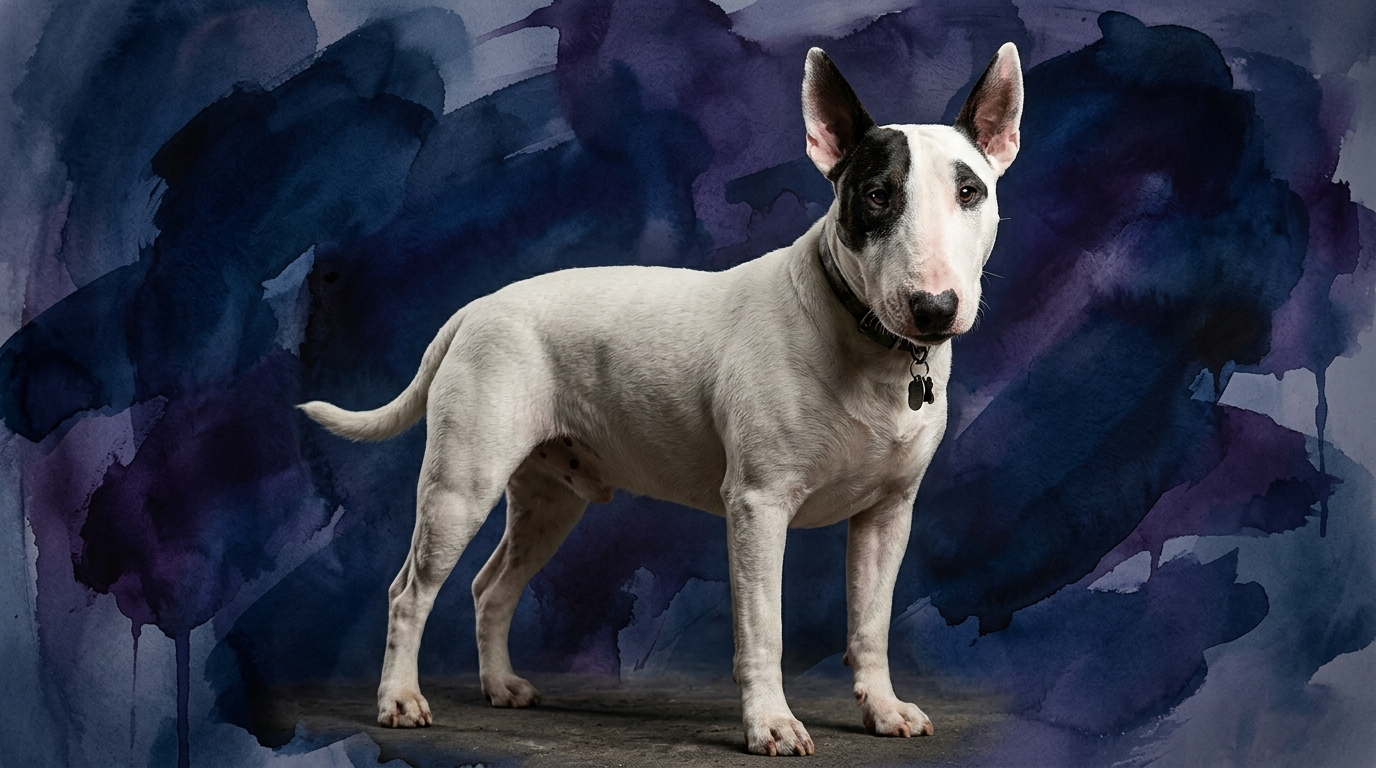
Side-by-Side Cognitive Profiles: Akita vs. Bull Terrier
The Cosmic Pet Pet IQ Lab employs a five-dimensional framework to assess canine cognition, moving beyond simple obedience to understand a breed's full mental tapestry. Let's dissect the Akita and Bull Terrier's profiles.
The Akita, with a Coren ranking of #54, showcases a blend of independence and profound instinct. Their Problem Solving is rated 3/5, indicating a capacity to navigate complex situations, often through self-directed thought rather than immediate reliance on human cues. Training Speed is 2/5; while they certainly learn, their independent streak means that absorbing and consistently executing commands requires significant patience and repetition from their handler. Social Intelligence stands at 3/5, meaning they are adept at reading their family’s emotional states and social dynamics, but often reserved or indifferent towards outsiders. Instinctive Drive is a powerful 5/5, reflecting deep-seated guarding, hunting, and protective behaviors that are intrinsic to their being. Finally, their Memory is strong at 4/5, allowing them to retain learned behaviors, routines, and experiences over long periods, making both positive and negative associations durable.
The Bull Terrier, ranking #66 on the Coren scale, presents a different cognitive signature, often characterized by a spirited and tenacious approach to life. Their Problem Solving also rates 3/5, demonstrating cleverness in navigating their environment and achieving goals, frequently with a playful, persistent effort. Training Speed is a moderate 3/5; they typically learn new commands at a reasonable pace, often thriving on engaging, positive reinforcement-based methods. Their Social Intelligence is 3/5, indicating a good understanding of human emotions and family interactions, though their expression of this can be boisterous or exuberant. Instinctive Drive is 3/5, reflecting the typical terrier drives for chasing and digging, but these are generally less overwhelming than the Akita's profound protective instincts. Their Memory is 3/5, meaning they retain information and experiences adequately, benefiting from consistent reinforcement to solidify training and positive associations.
Where the Akita Wins Cognitively
The Akita's cognitive strengths lie in areas demanding deep retention and profound instinctual engagement. Their superior Memory, rated 4/5 compared to the Bull Terrier's 3/5, means they recall complex sequences, boundaries, and past interactions with remarkable clarity. Once an Akita truly grasps a lesson or understands a rule, it tends to be deeply ingrained, influencing their behavior consistently over time. This makes them highly reliable in remembering established routines and specific commands within their perceived domain.
Furthermore, the Akita's exceptionally high Instinctive Drive (5/5 versus 3/5) represents a powerful cognitive advantage when channeled appropriately. While challenging to manage, this intense drive reflects a profound connection to primal functions like guarding, protecting, and even scent work. This isn't just raw energy; it's a deep-seated purposefulness. When given a job or a clear role, this drive manifests as intense focus, unwavering dedication, and a powerful sense of responsibility, allowing them to excel in tasks requiring sustained, instinct-driven engagement and vigilance.
Where the Bull Terrier Wins Cognitively
The Bull Terrier excels in areas that prioritize adaptability and a more amenable learning style. Their Training Speed, rated 3/5 compared to the Akita's 2/5, means they often show a quicker uptake of new commands and behaviors. This is partly due to their generally more eager-to-please nature and playful approach, which makes them more receptive to positive reinforcement and engaging, game-based training methods. They are often more willing to participate in repeated training sessions without becoming aloof or overly independent.
Additionally, the Bull Terrier's more moderate Instinctive Drive (3/5 versus 5/5 for the Akita) can be seen as a cognitive win in terms of manageability. While still possessing terrier-typical drives, these are generally less intense and therefore potentially easier to redirect and integrate into a modern household environment. Their drive to 'play' or interact is often a stronger motivator than a deep-seated, complex 'work' ethic, making their cognitive energy more readily accessible for general obedience and companionship rather than specialized, instinct-driven tasks.
Which Breed is Easier to Train, and Why?
Based on their cognitive profiles, the Bull Terrier is generally considered easier to train than the Akita. The Bull Terrier's higher Training Speed (3/5) indicates a more receptive learner who responds well to consistent, positive reinforcement. Their playful spirit often transforms training into an enjoyable interaction, making them less prone to the stubborn resistance that can characterize more independent breeds. They tend to be more focused on engaging with their handler during sessions, viewing it as a shared activity rather than an imposition. Their moderate instinctive drives are also easier to channel and redirect, allowing for a more straightforward training process without constant battles against deeply ingrained protective or hunting behaviors.
The Akita, conversely, presents a greater training challenge due to their lower Training Speed (2/5) and very high Instinctive Drive (5/5). Their independent nature means they often weigh a command against their own assessment of the situation or their inherent predispositions. Training an Akita demands immense patience, unwavering consistency, and the establishment of a strong, respectful bond built on trust and clear communication. Success relies on motivating them to comply rather than enforcing strict obedience, as their powerful guarding instincts can make focus difficult in distracting environments. They are not dogs that will blindly follow; they require a handler who understands their deeply thoughtful and often self-reliant cognitive process.
Matching Cognitive Profiles to Lifestyles: Active vs. Relaxed Owners
Understanding these cognitive distinctions is crucial for prospective owners to find a harmonious match. The Akita is best suited for active owners who not only provide physical exercise but also understand the profound need for consistent mental engagement tailored to their powerful instincts. These are not 'relaxed' dogs in the sense of being low-maintenance; their high instinctive drive (5/5) demands a structured outlet, whether it's protection training, advanced obedience, or extensive hiking that allows them to utilize their impressive memory and discerning nature. Owners must be prepared to manage a strong-willed, perceptive companion who thrives on purpose and clear leadership, often requiring an active, hands-on approach to their daily lives and training.
The Bull Terrier, with its moderate instinctive drives and faster training speed, suits moderately active owners. While they certainly enjoy vigorous play and require regular exercise to stay healthy and happy, their cognitive needs are often met through interactive games, consistent, engaging training sessions, and ample social interaction within the family. They can settle down more readily after exercise, making them adaptable to owners who appreciate a balance of activity and relaxation. Their social intelligence means they genuinely thrive on being an integral part of family activities, making them a good fit for those seeking an enthusiastic and engaging companion rather than a dog with a specific 'job' driven by intense instincts.
The Verdict
Choose the Akita if you are an experienced, dedicated owner seeking a discerning, protective companion with a profound sense of purpose, prepared to invest deeply in consistent leadership and instinct channeling.
Choose the Bull Terrier if you desire an exuberant, playful, and moderately trainable companion who thrives on social interaction and consistent, positive engagement within a family setting.
🧠 Find Your Pet's IQ Score
Our Pet IQ Lab assessment covers 25+ tests across 5 cognitive dimensions — personalized to your breed.
Take the Full IQ Test →Frequently Asked Questions
Do Akitas and Bull Terriers learn at the same pace?
No, Akitas generally have a slower training speed (2/5) compared to Bull Terriers (3/5). Akitas require more patience and consistency to internalize commands, often due to their independent nature and tendency to evaluate situations before complying.
Which breed is better at problem-solving?
Both breeds are rated equally in problem-solving (3/5), indicating a similar capacity to figure out challenges. An Akita might approach a problem with more independent thought, while a Bull Terrier might use more playful persistence and tenacious effort to achieve their goal.
How do their social intelligences compare?
Both breeds score 3/5 in social intelligence, but express it differently. Akitas tend to be more reserved with strangers but deeply attuned to their family's dynamics, while Bull Terriers are often more outwardly gregarious and boisterous within their trusted circle, thriving on interactive engagement.