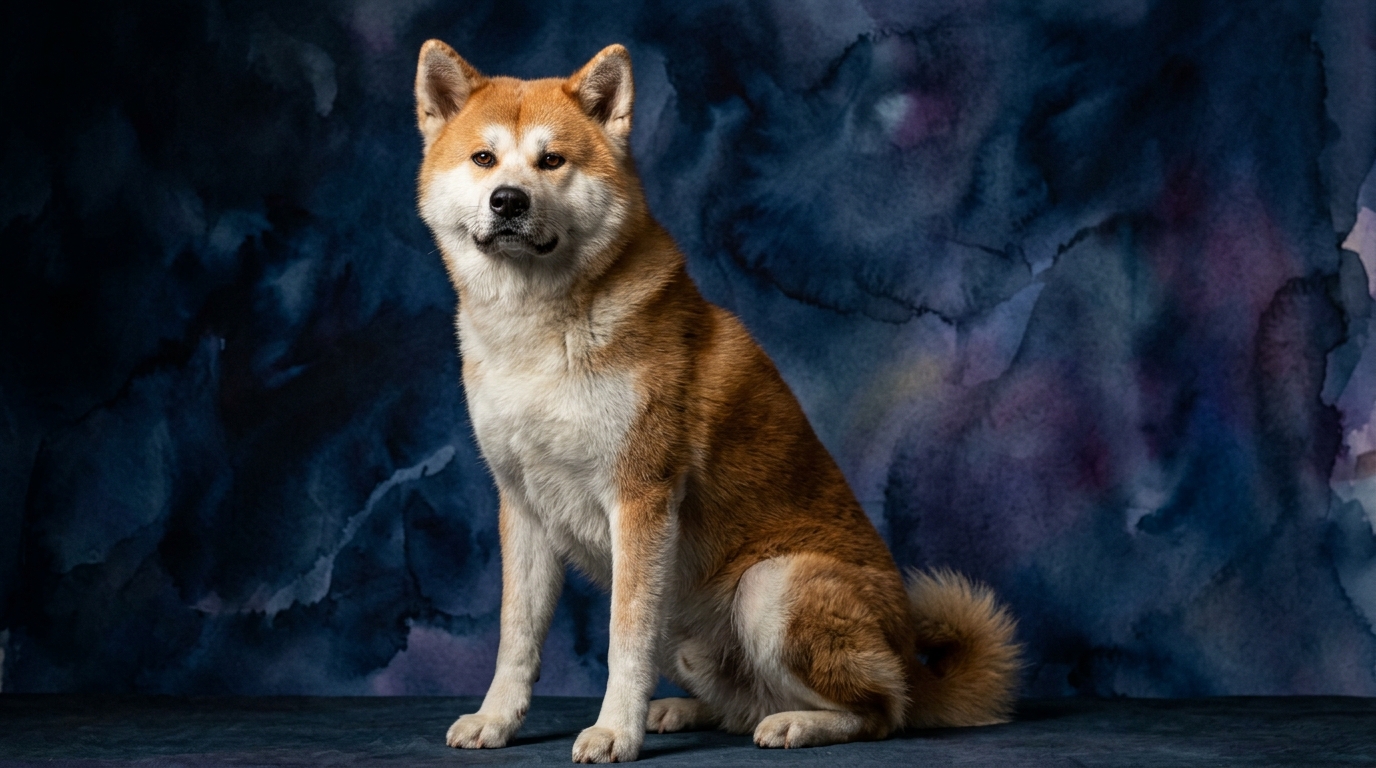

Akita vs. Chinook: A Side-by-Side IQ Profile
The Cosmic Pet Pet IQ Lab employs a multi-dimensional framework to assess canine intelligence, moving beyond single scores to reveal a richer tapestry of cognitive abilities. For the Akita, a Coren rank of #54 places it in the average working/obedience intelligence category, reflecting its independent nature rather than a lack of capability. Its Problem Solving is rated 3/5, indicating a capacity to navigate complex situations, often through self-directed thought. Training Speed, at 2/5, suggests a deliberate approach to learning new commands, requiring patience and a clear purpose. Social Intelligence stands at 3/5, showing an understanding of human cues and group dynamics, though often expressed with a reserved demeanor. The Akita's Instinctive Drive is a formidable 5/5, rooted deeply in its heritage as a guardian and hunter, manifesting as intense focus and purpose. Finally, its Memory is 4/5, enabling strong retention of experiences and learned associations.
In contrast, the Chinook, a breed not ranked by Coren, presents a more uniformly balanced cognitive profile. Its Problem Solving ability is rated 3/5, demonstrating practical ingenuity when faced with new challenges. Training Speed is 3/5, indicating a moderate responsiveness to instruction and a more cooperative learning style than the Akita. Social Intelligence also scores 3/5, highlighting an aptitude for understanding and engaging with human companions and social structures. The Chinook's Instinctive Drive is 3/5, a balanced level that supports its historical role as a sled dog, emphasizing teamwork and endurance rather than intense prey or protective impulses. Its Memory is 3/5, providing adequate retention for routine tasks and learned behaviors without exceptional recall.
Where the Akita Wins Cognitively
The Akita demonstrates distinct cognitive advantages, particularly in its profound Instinctive Drive and robust Memory. With an Instinctive Drive score of 5/5, the Akita possesses an unparalleled natural guardian and territorial awareness. This isn't merely a reactive trait but a proactive engagement with its environment, allowing it to detect subtle anomalies or perceived threats with remarkable acuity. This deep-seated drive, honed over centuries as a protector and hunter, means an Akita is often one step ahead in assessing its surroundings, making it a formidable presence. Owners will observe this as a dog that is acutely aware of its territory and its people, often taking initiative in situations where its protective instincts are engaged.
Complementing this drive is the Akita's superior Memory, rated 4/5. This enhanced recall means the Akita forms lasting associations, remembering specific faces, places, and complex learned behaviors with tenacity. This long-term retention supports its steadfast loyalty to its chosen family but also implies it remembers negative experiences or perceived slights, necessitating careful socialization and consistent, fair handling. For an owner, this means an Akita will not easily forget a routine, a boundary, or a bond, making it a consistent, albeit independently minded, companion once a behavior or relationship is established.
Where the Chinook Wins Cognitively
The Chinook's cognitive strengths lie in its more cooperative approach to learning and its overall balanced intellectual toolkit. Its Training Speed, rated 3/5 compared to the Akita's 2/5, offers a significant advantage in the initial phases of instruction. This marginal but distinct difference suggests a greater openness to instruction and a more direct translation from command to action. Chinooks are generally more eager to please and cooperative within a training context, making positive reinforcement highly effective. Their history as sled dogs, requiring synchronized effort and responsiveness to a handler's directives, has fostered a natural inclination towards working in partnership, translating to a smoother and often faster learning curve for new commands.
Furthermore, the Chinook's generally balanced cognitive profile, with consistent 3/5 scores across Problem Solving, Social Intelligence, Instinctive Drive, and Memory, indicates a versatile and adaptable mind. While it may not possess an Akita's extreme drive or memory, this balance means the Chinook is less likely to be hindered by extreme independence or overwhelming instincts that can complicate training or social interactions. Its well-rounded intellect allows it to adapt to various tasks and environments without significant cognitive 'blind spots,' making it a reliable and generally predictable companion across diverse activities and social settings. This balanced nature fosters a dog that integrates smoothly into a variety of family dynamics and routines.
Which is Easier to Train, and Why?
When considering ease of training, the Chinook generally presents a more straightforward path for most owners. Its Training Speed of 3/5 signifies a dog that is responsive and typically willing to engage in learning sessions. Rooted in its heritage as a sled dog, the Chinook was bred to work cohesively in a team, relying on communication and response to its handler. This historical context cultivates a dog that often seeks to understand and comply, making positive reinforcement techniques particularly effective. Chinooks are less prone to challenging authority or acting purely on independent impulse during instruction, leading to more consistent progress and a generally more rewarding training experience.
The Akita, with a Training Speed of 2/5, undeniably offers a more challenging training journey. This breed possesses a robust independent streak and a powerful will, often prompting it to evaluate whether a command aligns with its own perceived purpose or benefit. While capable of learning complex tasks due to its Problem Solving (3/5) and Memory (4/5) abilities, its willingness to perform on cue is frequently conditional. Training an Akita demands immense patience, unwavering consistency, and a deep understanding of its motivations, building a relationship based on mutual respect rather than simple obedience. Behavioral differences observed include their selective hearing when a command seems arbitrary, and a potential for stubbornness if they disagree with the task at hand.
Suitability for Active vs. Relaxed Owners
The Akita, distinguished by its Instinctive Drive of 5/5, thrives with owners who are prepared for substantial engagement and purposeful activity. These dogs demand structured outlets that effectively channel their considerable intellect and strong guardian/hunting instincts. Consistent training, vigorous physical exercise, and mentally stimulating tasks are not merely beneficial but crucial for an Akita’s well-being. They excel with active owners who appreciate a dog with a profound presence and are willing to invest significant time in dedicated activities like advanced obedience, tracking, or protection work. A more relaxed or sedentary owner who cannot consistently meet these deep-seated needs might find an Akita prone to boredom, developing undesirable behaviors, or becoming overly independent.
The Chinook, with its more moderate Instinctive Drive of 3/5 and balanced Social Intelligence, is adaptable but still requires regular activity. These dogs enjoy being integral parts of family adventures, whether that involves hiking, jogging, or participating in various dog sports. They are well-suited for active owners who desire a consistent companion for diverse outdoor pursuits, perhaps without the singular focus or intensity demanded by an Akita's profound drives. While Chinooks certainly appreciate periods of rest and family downtime, they are not suited for entirely sedentary lifestyles. They necessitate regular physical and mental stimulation to remain content and well-adjusted, making them an excellent fit for owners who maintain a moderately active and varied routine.
The Verdict
Choose an Akita if you are an experienced owner seeking a formidable guardian with profound memory and an independent spirit, prepared for the dedication required to manage a dog with exceptional instinctive drives and a selective approach to training.
Opt for a Chinook if you desire a cooperative, adaptable companion who responds well to consistent training and enjoys a varied, active lifestyle without the intense demands of a high-drive guardian breed.
🧠 Find Your Pet's IQ Score
Our Pet IQ Lab assessment covers 25+ tests across 5 cognitive dimensions — personalized to your breed.
Take the Full IQ Test →Frequently Asked Questions
Do Akitas make good family dogs despite their independence?
Akitas can be devoted family dogs, forming deep bonds with their immediate household. However, their independence and strong protective instincts mean they require early and consistent socialization, especially with children and other animals, and are often best suited for homes with experienced owners who understand their unique needs.
Are Chinooks suitable for first-time dog owners?
Chinooks can be suitable for first-time dog owners who are committed to consistent training and providing ample physical and mental stimulation. Their cooperative nature and moderate drives make them more forgiving than some other working breeds, but they still require a dedicated approach to socialization and exercise.
How do their grooming needs compare?
Both Akitas and Chinooks have dense double coats that require regular grooming, particularly during shedding seasons. Akitas often have a slightly thicker, stiffer coat, while Chinooks' coats are generally softer, but both benefit from weekly brushing to manage shedding and maintain coat health.