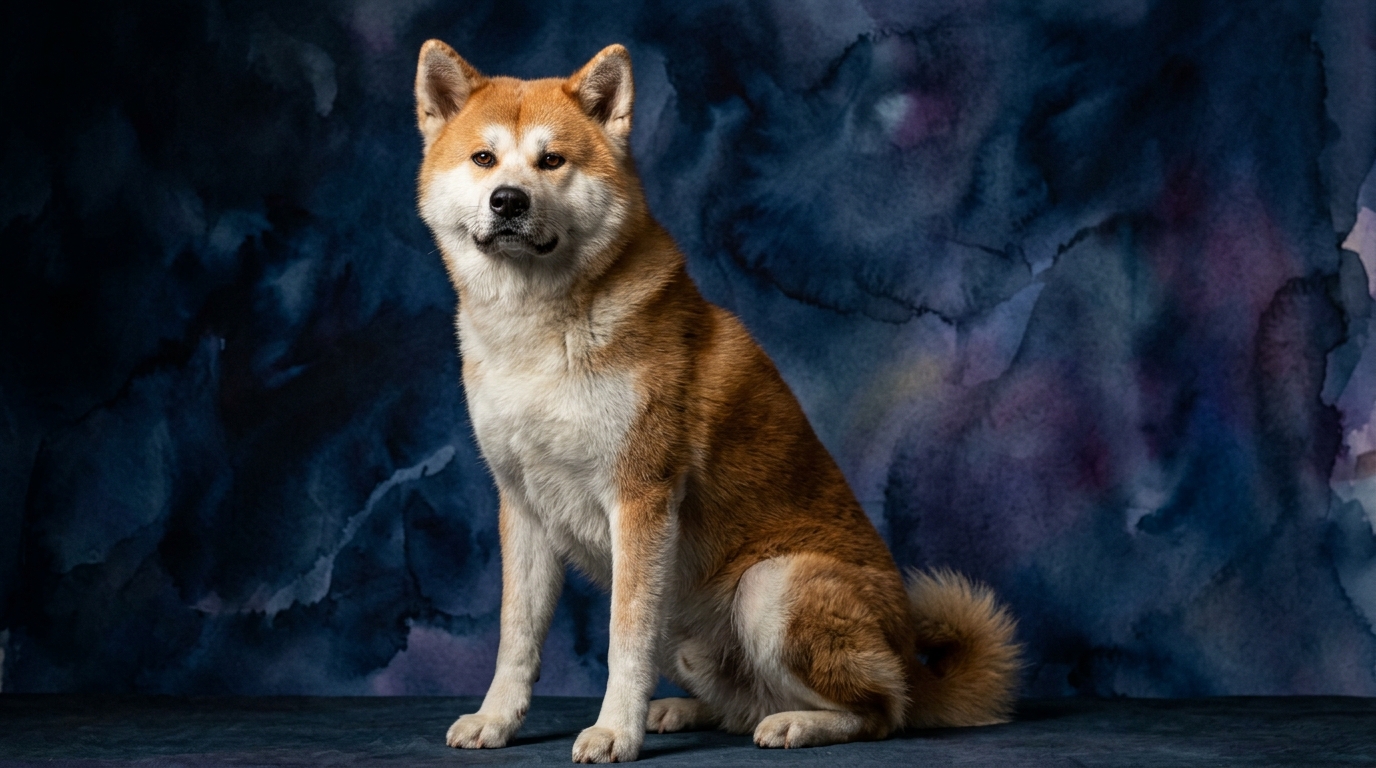

Side-by-Side IQ Profile: Akita vs. Flat-Coated Retriever
The Cosmic Pet Pet IQ Lab employs a multi-dimensional approach to assess canine cognition, providing a nuanced understanding beyond simple obedience. Let's examine how the Akita and Flat-Coated Retriever measure up across five critical dimensions.
The **Akita**, a Working breed with a Coren rank of #54, showcases a unique cognitive blueprint. Their **problem-solving (3/5)** ability is moderate; they are capable of figuring out immediate environmental solutions, especially concerning territorial security, but prefer established routines over constant innovation. **Training speed (2/5)** is slower, necessitating consistent repetition due to their independent nature. **Social intelligence (3/5)** is moderate, marked by deep, discerning bonds with family but reservation towards strangers. Their **instinctive drive (5/5)** is exceptionally strong, fueling profound protective instincts and self-reliance. Finally, their **memory (4/5)** is good, ensuring learned behaviors and routines are retained once accepted.
In contrast, the **Flat-Coated Retriever**, a Sporting breed ranking #17 on the Coren scale, presents a different cognitive profile. Their **problem-solving (4/5)** is strong; they approach new situations with curiosity, readily employing creative strategies. **Training speed (4/5)** is high, as they quickly grasp and respond to commands, driven by an eagerness to please. **Social intelligence (3/5)** is moderate, characterized by general affability and responsiveness to human interaction, making them outgoing companions. Their **instinctive drive (3/5)** is moderate, primarily centered on retrieving and cooperative play. An outstanding **memory (5/5)** ensures exceptional recall of commands, routines, and experiences, contributing to their remarkable consistency.
Where the Akita Wins Cognitively
The Akita's cognitive strengths are deeply rooted in its heritage as a powerful working and guarding breed. Their **instinctive drive (5/5)** is unparalleled among these two breeds, manifesting as a profound sense of purpose and self-reliance. This drive makes them exceptionally vigilant guardians, keenly aware of their surroundings and instinctively prepared to assess and respond to perceived threats. While this can present training challenges, it means an Akita is inherently equipped for roles requiring independence and protective instincts, rather than constant direction. Furthermore, their **memory (4/5)**, though slightly lower than the Flat-Coat's, is robust enough to ensure that critical lessons, territory boundaries, and established routines are firmly ingrained. Once an Akita commits to a concept or accepts a rule, their memory ensures a lasting understanding, making them incredibly reliable within their defined parameters, particularly concerning their protective duties and family loyalty.
Where the Flat-Coated Retriever Wins Cognitively
The Flat-Coated Retriever shines in areas demanding adaptability, rapid learning, and collaborative engagement. Their **Coren rank of #17** places them significantly higher than the Akita, indicating a general cognitive agility that translates into quicker understanding and execution of commands. This is underscored by their superior **problem-solving ability (4/5)**; Flat-Coats are naturally curious and enjoy the mental exercise of figuring things out, whether it's navigating a complex environment or solving a puzzle. Their **training speed (4/5)** is also markedly higher, allowing them to absorb new information and behaviors with remarkable efficiency, often eager to please and perform. Critically, their **memory (5/5)** is exceptional, ensuring that once something is learned, it is retained with remarkable consistency. This combination of quick learning, strong problem-solving, and outstanding recall makes them incredibly versatile and amenable to a wide array of training disciplines and activities.
Which is Easier to Train and Why
Without question, the Flat-Coated Retriever is the easier of the two breeds to train, and this distinction stems directly from their differing cognitive profiles and inherent motivations. The Flat-Coat's **training speed (4/5)** and **problem-solving (4/5)** capabilities mean they grasp new commands and concepts rapidly. They possess a strong desire to engage with their handlers and a natural inclination towards cooperation, often viewing training as an enjoyable collaborative game. Their exceptional **memory (5/5)** solidifies learned behaviors, leading to consistent performance even in varied environments.
In contrast, the Akita's **training speed (2/5)** is notably slower. Their independent nature and formidable **instinctive drive (5/5)** mean they are less inherently driven by handler praise or a simple desire to please. Instead, an Akita often requires a clear understanding of the *purpose* behind a command and may challenge its necessity. This isn't a lack of capacity, but rather a different processing style; they are thinkers who need to be convinced, not just told. Training an Akita demands immense patience, unwavering consistency, and a profound understanding of canine behavior, focusing on building mutual respect and trust rather than rote obedience. Their strong memory means once a lesson truly sinks in, it lasts, but getting to that point requires a more dedicated and nuanced approach.
Which Suits Active Owners vs. Owners Seeking an Independent Companion
When considering lifestyle fit, the cognitive profiles of these breeds paint clear pictures. The **Flat-Coated Retriever**, with its high problem-solving capacity, quick training speed, and moderate instinctive drive, is an ideal match for **active owners**. These dogs thrive on consistent mental and physical engagement, eagerly participating in activities like long runs, retrieving games, agility, or obedience trials. Their collaborative spirit means they genuinely enjoy working alongside their human companions, making them excellent partners for owners who want to integrate their dog into a bustling, interactive lifestyle. They require significant daily stimulation to prevent boredom and channel their enthusiastic energy constructively.
Conversely, defining which owner type suits the Akita requires nuance. While often perceived as stoic, the Akita is not a 'relaxed' dog in the sense of being low-maintenance. Their powerful **instinctive drive (5/5)** and moderate problem-solving mean they need purpose and consistent, structured exercise. However, their **independent nature** and lower training speed mean they are less demanding of *constant, collaborative interaction* than a Flat-Coat. Therefore, the Akita is better suited for **owners who appreciate a more independent companion**, are prepared to provide structured exercise and mental engagement on their dog's terms, and possess the patience for a more deliberate training journey. They are loyal and protective but are not typically the 'always-on' eager-to-please type, thriving in a home that offers routine, clear boundaries, and respect for their self-possessed character.
The Verdict
Choose an Akita if you value an independent, protective companion, are prepared for a consistent and patient training journey, and appreciate a dog with deep loyalty to its inner circle.
Opt for a Flat-Coated Retriever if you seek an enthusiastic, highly trainable, and collaborative companion for active pursuits and enjoy engaging in mental and physical challenges together.
🧠 Find Your Pet's IQ Score
Our Pet IQ Lab assessment covers 25+ tests across 5 cognitive dimensions — personalized to your breed.
Take the Full IQ Test →Frequently Asked Questions
Are Akitas stubborn?
Their low training speed and strong instinctive drive can be perceived as stubbornness. Akitas are independent thinkers who need motivation and consistent, patient training, rather than simply obeying commands without perceived purpose.
How much mental stimulation does a Flat-Coated Retriever need?
Flat-Coats, with their strong problem-solving and memory, thrive on significant daily mental engagement. Activities like puzzle toys, obedience training, agility, or retrieving games are crucial to keep them content and prevent boredom.
Can an Akita live in a multi-pet household?
Akitas' strong instinctive drive and moderate social intelligence mean they often prefer to be the sole pet or require very careful, early socialization and management in multi-pet homes. Their protective instincts can extend to their territory and resources.