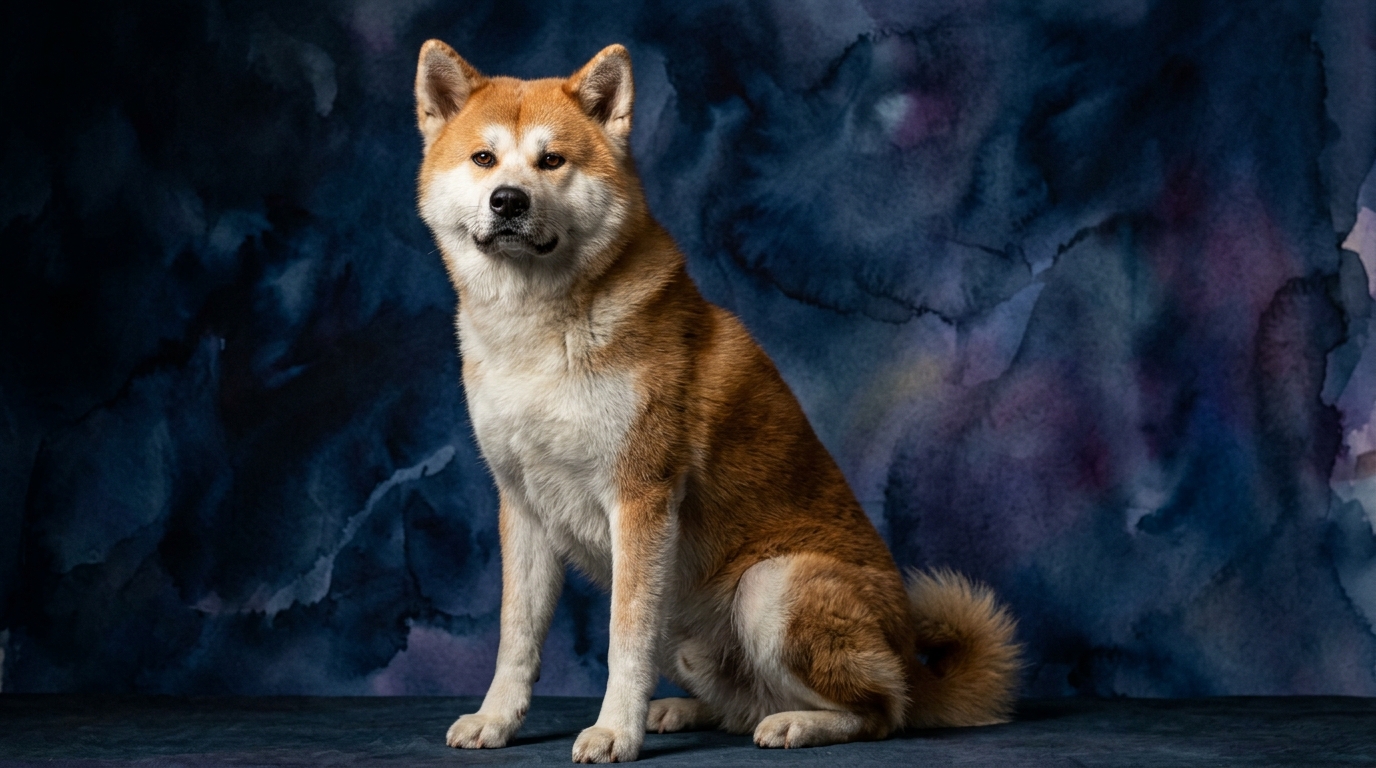

Side-by-Side Cognitive Profiles
The Akita, ranked #54 by Stanley Coren for working and obedience intelligence, presents a complex cognitive makeup. Its Problem Solving score of 3/5 suggests an ability to navigate moderately intricate situations, often relying on its own judgment rather than immediate human direction. Training Speed, at 2/5, indicates a breed that requires patience and consistent, engaging methods, as Akitas possess a strong independent streak and are not always eager to comply with repetitive commands. Social Intelligence, also 3/5, points to a discerning nature; Akitas are typically reserved with strangers but form deep bonds with their chosen family, reading their cues acutely. A standout is their Instinctive Drive at 5/5, reflecting powerful guardian instincts, a strong prey drive, and a robust sense of territory. Finally, their Memory score of 4/5 means Akitas retain learned behaviors and experiences over extended periods, remembering past interactions and routines with clarity.
In contrast, the Norwich Terrier, while not included in Coren's rankings, shows a balanced yet distinct cognitive profile. Its Problem Solving ability, rated 3/5, matches the Akita, indicating a capacity for tackling challenges, often with a terrier's tenacious approach. Training Speed, at 3/5, suggests a slightly more amenable disposition to learning new commands than the Akita, though still possessing the characteristic terrier independence that can pose challenges. Social Intelligence, also 3/5, means Norwich Terriers are generally affable and observant, capable of forming strong bonds and adapting to various social situations, though they retain a terrier's self-assuredness. Their Instinctive Drive, at 3/5, is present but less overwhelming than the Akita's, manifesting as a drive to chase, dig, and explore, typical of their vermin-hunting heritage. Memory, rated 3/5, indicates a solid ability to recall past events and training, though perhaps not with the same depth or duration as the Akita.
Akita's Cognitive Strengths
The Akita's cognitive advantages primarily stem from its superior Instinctive Drive (5/5) and Memory (4/5). This combination makes them exceptional at tasks requiring self-reliance and long-term recall, such as guarding and protection. An Akita can survey its environment, remember past threats or patterns, and make independent decisions to protect its family or territory without needing constant instruction. Their memory allows them to learn complex routines and boundaries, remembering who belongs and who doesn't, even after long absences. This deep-seated drive and recall mean they excel in roles where vigilance and strategic, independent action are paramount, such as livestock guarding or personal protection, where they apply their problem-solving skills to real-world scenarios rather than just puzzle toys. Their cognitive makeup favors understanding a situation's nuances and acting decisively based on past experiences and inherent protective instincts, making them formidable and reliable guardians.
Furthermore, the Akita's robust memory contributes to its ability to understand and adhere to household rules and routines over time. Once an Akita learns what is expected, it tends to retain that knowledge, leading to a consistent demeanor in a well-established environment. This memory isn't just about recall; it's about building a comprehensive mental map of its world, including the people, places, and expected behaviors within it. Their social intelligence, while reserved, contributes to their ability to read their family's emotions and intentions, allowing them to provide comfort or protection as needed. This nuanced understanding, combined with their powerful instinctive drive, means an Akita often operates with a profound, almost intuitive grasp of its role within the family unit.
Norwich Terrier's Cognitive Strengths
The Norwich Terrier's primary cognitive advantage lies in its more amenable Training Speed (3/5) compared to the Akita's 2/5. While still possessing a terrier's independent spirit, the Norwich generally exhibits a greater willingness to engage in training sessions and respond to cues, making the initial stages of obedience training potentially smoother. This isn't to say they are always effortless, but their slightly higher eagerness to interact and learn from their human counterparts can translate to a quicker grasp of basic commands and tricks. Their problem-solving score of 3/5, identical to the Akita, combined with this higher training speed, means they can apply their intellect to learn new tasks with less repetition, often enjoying the mental stimulation that training provides.
Additionally, the Norwich Terrier's slightly less intense Instinctive Drive (3/5 vs. Akita's 5/5) can be a cognitive advantage in certain contexts. While they retain their prey drive and zest for exploration, it is generally more manageable and less overwhelming than the Akita's profound protective instincts. This allows for a more adaptable cognitive focus, where their problem-solving skills can be directed towards a wider array of activities beyond guarding, such as agility, earthdog trials, or simply navigating novel environments with enthusiasm rather than suspicion. Their social intelligence, also 3/5, often manifests as a more outgoing and less reserved demeanor than the Akita, allowing them to interact more readily with a broader range of individuals and situations, which can be a cognitive asset in adapting to diverse social settings.
Training Ease: Akita vs. Norwich Terrier
When it comes to training ease, the Norwich Terrier generally presents a more straightforward experience than the Akita. The Norwich's Training Speed score of 3/5, compared to the Akita's 2/5, is a key indicator. Norwich Terriers, while independent, often display a greater eagerness to participate in training and respond to positive reinforcement. Their natural curiosity and desire for engagement mean they can pick up new commands with fewer repetitions, provided the training is kept fun and stimulating. They thrive on variety and praise, and their smaller stature makes them easier to manage physically during early training phases.
The Akita's lower Training Speed score of 2/5 reflects its inherent independence and self-assuredness. Akitas are not naturally inclined to blindly follow commands; they prefer to understand the 'why' behind an instruction and may decide whether it aligns with their own perceived best interest. This requires a trainer to be exceptionally patient, consistent, and creative, employing strong motivation and clear communication. Akita training often involves building mutual respect and trust, rather than simply enforcing compliance. Their formidable instinctive drive also means early and extensive socialization and impulse control training are critical to channel their protective instincts appropriately. While capable of learning complex tasks due to their memory and problem-solving skills, the path to achieving reliable obedience is typically longer and more demanding with an Akita.
Suitability for Active vs. Relaxed Owners
The Akita, with its profound Instinctive Drive (5/5) and a history as a working dog, is better suited for active owners who are prepared to meet significant demands for mental and physical engagement. These are not dogs content to be couch potatoes; their cognitive makeup requires purpose. Owners must provide consistent training, ample structured exercise, and opportunities for mental stimulation to prevent boredom and channel their strong protective instincts constructively. An Akita thrives with an owner who understands and respects their independent nature, providing clear leadership and engaging them in activities that tap into their problem-solving and memory skills, such as advanced obedience, tracking, or even guardian roles. A relaxed owner who cannot commit to this level of interaction might find an Akita challenging.
The Norwich Terrier, while certainly not a sedentary breed, offers more flexibility for owners with varying activity levels. Its Instinctive Drive (3/5) is present, meaning they enjoy walks, playtime, and opportunities to explore, but it’s less intense than the Akita's. They are adaptable and can be content with moderate daily exercise coupled with indoor play and mental games. A Norwich Terrier can suit a moderately active owner who enjoys daily walks and some interactive play but doesn't necessarily need a canine partner for intense endurance sports. Their problem-solving abilities mean they appreciate puzzle toys and training sessions, which can substitute for some physical exertion. While they can certainly keep up with active families, they are also capable of settling down and enjoying a more relaxed evening, making them more suitable for owners who might not have the capacity for an Akita's profound engagement needs.
The Verdict
Choose an Akita if you are an experienced, assertive owner seeking a deeply loyal, independent guardian with a profound memory, prepared for extensive training and commitment to their significant mental and physical needs.
Opt for a Norwich Terrier if you desire a spirited, adaptable companion that is generally more responsive to training, suitable for moderately active households, and enjoys a balance of play and relaxation.
🧠 Find Your Pet's IQ Score
Our Pet IQ Lab assessment covers 25+ tests across 5 cognitive dimensions — personalized to your breed.
Take the Full IQ Test →Frequently Asked Questions
Are Akitas good family dogs?
Akitas can be exceptional family dogs, forming deep, protective bonds with their immediate household. However, their reserved nature and strong instincts mean they require early socialization and consistent training to ensure they are well-adjusted around children and strangers.
Do Norwich Terriers bark a lot?
Norwich Terriers, like many terriers, can be prone to barking, especially when alerting to new sounds or visitors. This is often tied to their instinctive drive to signal and can be managed with consistent training and redirection from a young age.
Which breed is better for apartment living?
Given their size and more moderate instinctive drive, Norwich Terriers are generally better suited for apartment living, provided they receive adequate daily walks and mental stimulation. Akitas can adapt to apartments if their significant exercise and mental engagement needs are rigorously met by dedicated owners.