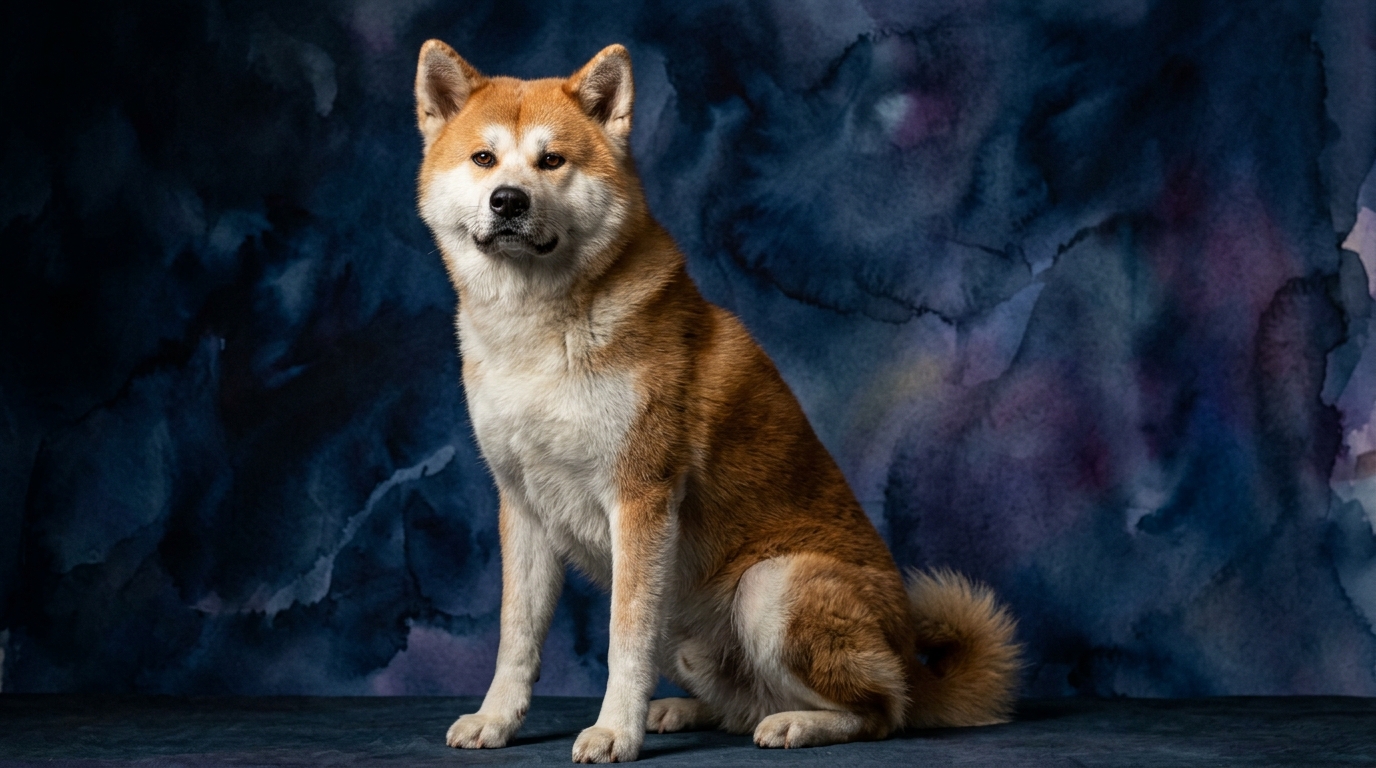
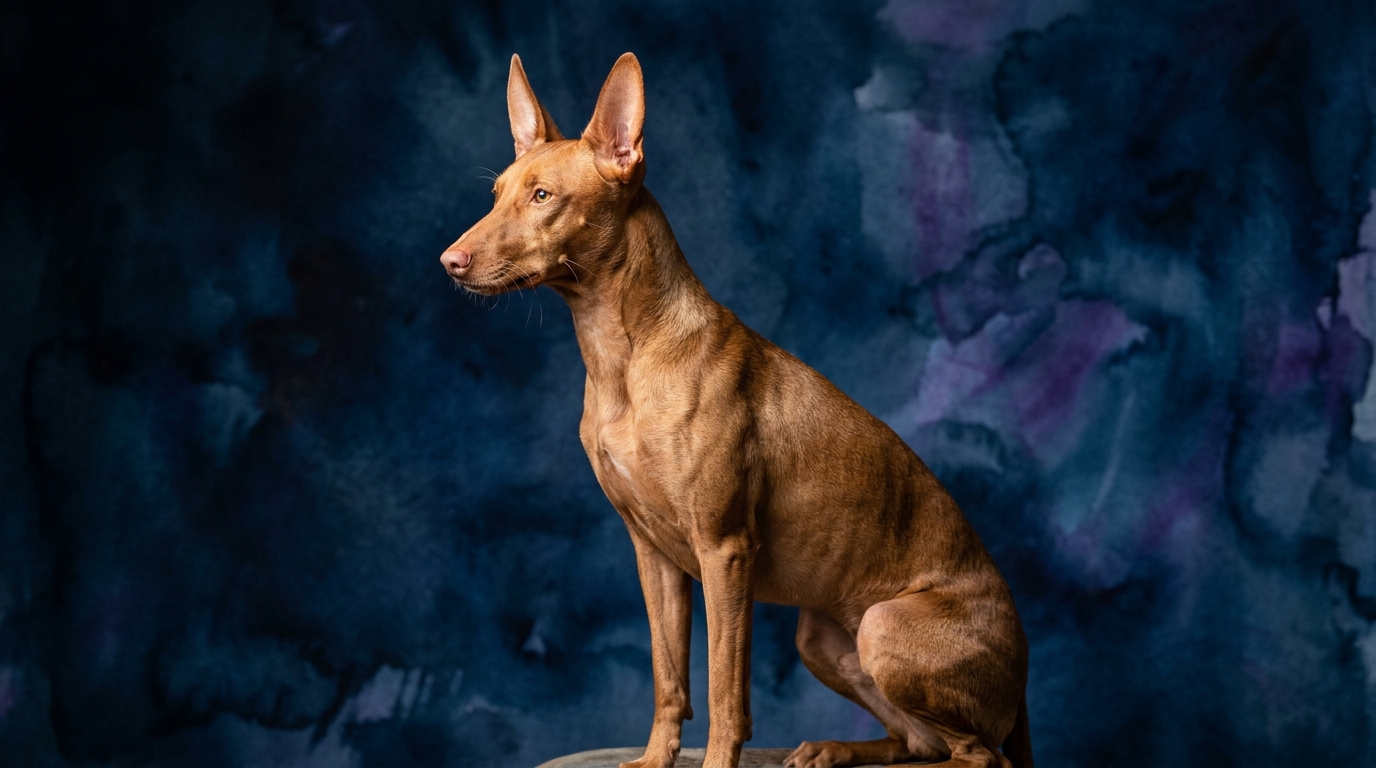
Side-by-Side IQ Profile: Akita vs. Pharaoh Hound
The Akita, a robust dog from the Working group, holds a Coren rank of #54, indicating a respectable capacity for understanding and obedience. Its cognitive profile shows a Problem Solving score of 3/5, suggesting it can navigate complex situations and learn through observation, though perhaps not with immediate adaptability. The Akita's Training Speed is rated at 2/5, reflecting a breed that may require more repetitions and patience during training sessions, often due to its independent nature and selective hearing rather than a lack of understanding. Social Intelligence, at 3/5, points to an ability to interpret human cues and interact within a social structure, though often with a reserved demeanor towards strangers. Its Instinctive Drive is a high 5/5, showcasing a powerful innate motivation for tasks, protection, and hunting, making it highly self-sufficient and purposeful. Finally, the Akita's Memory stands at 4/5, meaning it retains learned behaviors, routines, and experiences over long periods, which can be both an advantage and a challenge depending on what is learned.
In contrast, the Pharaoh Hound, a graceful member of the Hound group, does not appear on Coren's ranking, which often suggests a more specialized or less generalized form of intelligence, or simply less participation in the specific obedience trials Coren studied. Its Problem Solving ability is also 3/5, similar to the Akita, indicating a comparable capacity for navigating novel challenges and learning from experience. Where it differs is in Training Speed, rated at 3/5, suggesting it generally picks up new commands and routines with moderate efficiency, often displaying a willingness to engage. Social Intelligence is also 3/5, implying an ability to form bonds and understand social dynamics, typically with a more outgoing and less reserved temperament than the Akita. The Pharaoh Hound's Instinctive Drive is 3/5, a moderate level that still includes a strong prey drive typical of sighthounds but without the same intensity or breadth of purpose seen in the Akita. Its Memory is 3/5, indicating a solid ability to recall past events and learned behaviors, though perhaps not with the same depth or persistence as the Akita.
Where the Akita Wins Cognitively
The Akita's cognitive strengths distinctly emerge in areas demanding profound instinct and durable recall. With an Instinctive Drive of 5/5, the Akita possesses an unparalleled inner motivation, whether it's for guarding its family and territory, tracking, or engaging in demanding physical activities. This intense drive translates into a dog that approaches tasks with a formidable sense of purpose and commitment, often working independently to achieve its goals. This deep-seated drive means that once an Akita is motivated, its focus can be exceptionally strong, making it a powerful partner for specific roles. Furthermore, its Memory score of 4/5 means that the Akita retains information and experiences with remarkable tenacity. This superior recall applies not only to learned commands but also to routines, past interactions, and environmental details, allowing it to build a comprehensive mental map of its world and anticipate events. This memory contributes to its reliability in established patterns and its ability to learn from past successes and failures, albeit sometimes slowly. The Akita's formidable instinctive drive and robust memory give it an edge in tasks requiring sustained, independent effort and a deep understanding of its established environment.
Where the Pharaoh Hound Wins Cognitively
The Pharaoh Hound's cognitive advantages become apparent in its balanced approach to learning and its adaptability. While sharing a 3/5 Problem Solving score with the Akita, the Pharaoh Hound's slightly higher Training Speed (3/5 vs. Akita's 2/5) suggests a greater willingness to engage in structured learning and a quicker uptake of new commands. This isn't necessarily about being 'smarter' in a raw problem-solving sense, but rather about a more amenable disposition towards human instruction. Its moderate Instinctive Drive (3/5) means that while it possesses a strong sighthound prey drive, it is often less all-consuming than the Akita's intense drives, allowing for easier redirection and a more balanced focus during training. The Pharaoh Hound's Social Intelligence of 3/5, coupled with its generally more gregarious nature, allows it to integrate smoothly into diverse social settings and respond to a broader range of human social cues without the Akita's characteristic reservation. This combination of moderate drive, good training speed, and balanced social awareness makes the Pharaoh Hound more generally flexible and responsive to varied training methodologies and social environments, making it cognitively advantageous for owners seeking a more cooperative and less intensely driven companion.
Which is Easier to Train and Why?
When considering ease of training, the Pharaoh Hound generally presents a more straightforward experience than the Akita. The Akita's Training Speed of 2/5, coupled with its potent 5/5 Instinctive Drive, means that training often requires significant patience, consistency, and a deep understanding of its independent nature. Akitas are not inherently eager to please in the same way many other breeds are; they evaluate commands and often require a compelling reason to comply, sometimes displaying a 'what's in it for me?' attitude. Their strong memory means they will recall inconsistent training or negative experiences, making recovery from errors more challenging. For example, an Akita might learn a command but choose not to execute it if it perceives no immediate benefit, or if its powerful guarding instincts override the instruction.
Conversely, the Pharaoh Hound's Training Speed of 3/5 and moderate Instinctive Drive of 3/5 contribute to a more manageable training process. While still possessing a sighthound's independence and a strong prey drive, Pharaoh Hounds are typically more biddable and responsive to positive reinforcement. They generally enjoy interaction and learning, making them more receptive to commands and less likely to challenge authority persistently. For instance, a Pharaoh Hound is more likely to engage enthusiastically in a training session for a reward, whereas an Akita might comply but with less overt enthusiasm or require more profound motivation. Their moderate memory also means that while they learn effectively, they might be slightly more forgiving of minor training inconsistencies. Therefore, for an owner seeking a dog that responds more readily to training efforts, the Pharaoh Hound would typically be the easier choice.
Which Suits Active Owners vs. Relaxed Owners?
The cognitive profiles of these two breeds offer clear distinctions for owner lifestyles. The Akita, with its 5/5 Instinctive Drive and 4/5 Memory, is best suited for active owners who are prepared for a consistent and structured routine. This breed thrives on having a purpose and requires substantial mental and physical engagement to channel its powerful inherent motivations. Owners who are committed to regular, purposeful activities like advanced obedience, tracking, or even protection work will find the Akita a formidable and dedicated partner. Its strong memory means it will remember routines and expectations, but also requires early and consistent socialization to prevent undesirable habits from forming. The Akita is not a breed that thrives on being a passive companion; it needs a job, even if that job is simply managing a well-defined daily schedule of walks, training, and enrichment, implemented by an engaged and experienced owner.
The Pharaoh Hound, with its more balanced 3/5 Instinctive Drive and 3/5 Memory, offers greater versatility and can adapt to a wider range of active lifestyles. While it is certainly an active breed that enjoys running and requires regular exercise, its drive is less all-consuming than the Akita's. This means it can thrive with owners who enjoy daily runs or sighthound-specific activities like lure coursing, but can also transition to a more relaxed home environment once its exercise needs are met. Its moderate memory and social intelligence allow it to adapt to varying schedules and social situations with less rigidity than the Akita. Pharaoh Hounds are suitable for active owners who enjoy engaging with their dogs in varied activities but also appreciate a companion that can settle down and enjoy quiet time without constant demand for intense engagement. They are less suited for truly relaxed, sedentary owners due to their need for regular bursts of speed and mental stimulation, but offer a more flexible activity level than the Akita.
The Verdict
Choose the Akita if you are an experienced, active owner seeking a dog with formidable drive and purpose, prepared for consistent, structured engagement and a strong, independent companion.
Opt for the Pharaoh Hound if you are an active owner who appreciates a more biddable yet independent companion, capable of both spirited activity and relaxed home life, amenable to varied training approaches.
🧠 Find Your Pet's IQ Score
Our Pet IQ Lab assessment covers 25+ tests across 5 cognitive dimensions — personalized to your breed.
Take the Full IQ Test →Frequently Asked Questions
Do Akitas and Pharaoh Hounds get along with other pets?
Akitas, with their strong instinctive drive, often require careful, early socialization with other pets, especially other dogs, due to their potential for dominance and territoriality. Pharaoh Hounds generally possess a more amiable social intelligence but retain a high prey drive, meaning small, fast-moving pets could trigger their hunting instincts, so introductions must be managed carefully.
Are Akita or Pharaoh Hound puppies easier to socialize?
Pharaoh Hound puppies tend to be more inherently outgoing and adaptable, making their socialization process generally smoother. Akita puppies, while capable of forming strong bonds, require more intensive and consistent early socialization to ensure they develop appropriate responses to new people, places, and animals, owing to their reserved social intelligence and strong protective instincts.
Which breed is better for first-time dog owners?
Neither breed is typically recommended for first-time dog owners. The Akita's powerful drive, independent nature, and specific training needs require an experienced hand. The Pharaoh Hound, while more biddable, still has a strong prey drive and independent sighthound characteristics that can be challenging for novices to manage effectively.