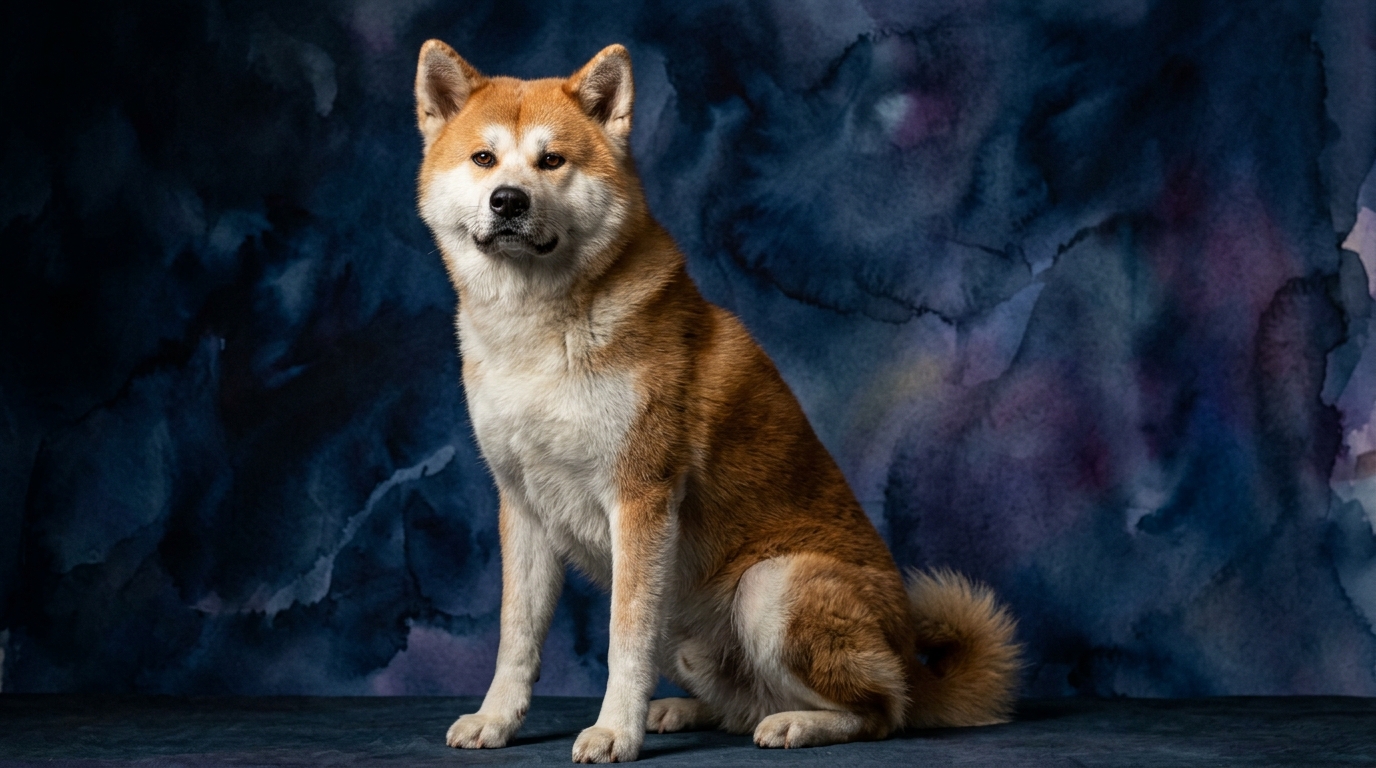
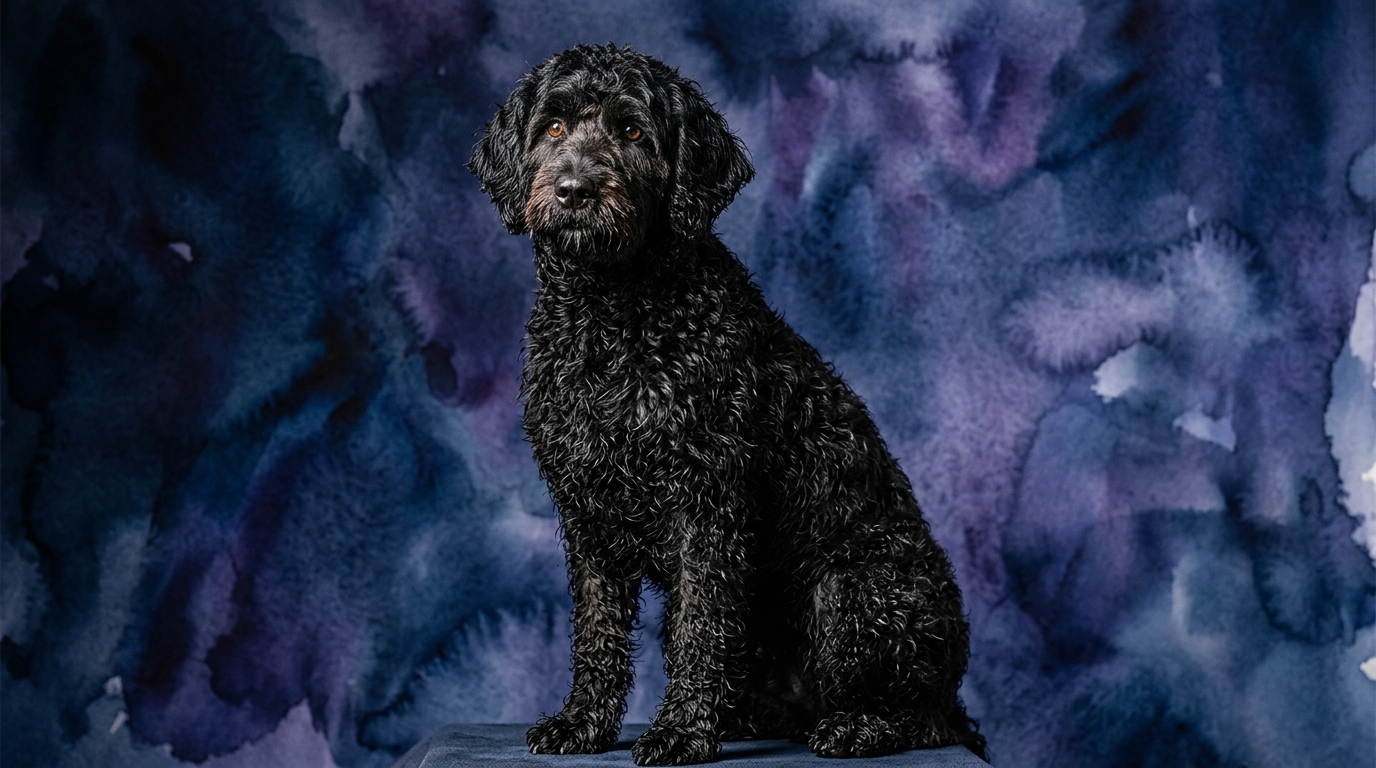
Side-by-Side Cognitive Profile: Akita vs. Portuguese Water Dog
To understand the cognitive landscape of these two working breeds, The Cosmic Pet Pet IQ Lab employs a five-dimensional framework. This allows for a granular comparison of their mental attributes, moving beyond general assumptions to specific intellectual strengths and tendencies.
The Akita, a breed steeped in history as a hunter and guardian, presents a distinct cognitive makeup. Its Problem Solving is rated at 3/5, indicating a capacity for independent thought and often a preference for devising its own solutions rather than relying solely on human direction. Training Speed is 2/5, reflecting its strong-willed and independent nature, which necessitates patience and consistent methodology. Social Intelligence, at 3/5, points to deep, focused bonds with its immediate family while often being reserved or aloof with strangers, carefully assessing new individuals. Its Instinctive Drive is a robust 5/5, showcasing powerful territorial, guarding, and prey instincts. Finally, Akita Memory is 4/5, indicating an impressive recall of experiences, routines, and interactions, often with lasting emotional resonance.
In contrast, the Portuguese Water Dog, with its heritage as a fisherman's companion, offers a different intellectual signature. Its Problem Solving is also 3/5, demonstrating resourcefulness and adaptability, particularly in environmental tasks or collaborative efforts. Training Speed is 3/5, suggesting a more eager and responsive disposition to learning, though still requiring engagement to maintain focus. Social Intelligence is 3/5, typically manifesting as an outgoing, friendly demeanor and a keen awareness of human emotions, often seeking interaction. Instinctive Drive is 3/5, primarily centered around retrieving, a love for water, and cooperative tasks rather than intense guarding. Portuguese Water Dog Memory is 3/5, signifying a good retention of commands and routines, allowing for a broad skill set.
Where the Akita Wins Cognitively
When evaluating the Akita's cognitive strengths, its superior instinctive drive truly sets it apart. Rated at 5/5, this breed embodies centuries of selective breeding for protection and hunting. Their territorial awareness is profound; an Akita will instinctively assess and react to perceived threats to its home and family with an unwavering resolve. This isn't merely learned behavior but an intrinsic cognitive program for guardianship, making them highly effective deterrents. Furthermore, the Akita's memory, at 4/5, often surpasses that of many breeds. They possess a remarkable ability to recall specific events, routines, and the nature of past interactions, both positive and negative. This deep memory contributes to their discerning character, informing their future responses to people and situations. They remember who their friends are and, perhaps more notably, who they are not, often for a very long time.
Where the Portuguese Water Dog Wins Cognitively
The Portuguese Water Dog shines in areas reflecting its cooperative working heritage. While both breeds share a 3/5 rating for problem-solving, the PWD's application of this skill often leans towards collaborative tasks and environmental navigation. They are adept at figuring out how to retrieve objects from challenging locations or how to best assist their human companions in a task, showcasing a practical, adaptable form of intelligence. Their training speed, at 3/5 compared to the Akita's 2/5, indicates a greater eagerness to absorb and execute commands. This isn't just about raw processing power, but a cognitive disposition towards engagement and responsiveness, making them generally quicker to grasp new concepts when motivation is high. Although both rate 3/5 in social intelligence, the PWD's expression of this is typically more outwardly friendly and adaptable, allowing them to navigate a wider array of social situations with ease, seeking interaction rather than merely tolerating it.
Which is Easier to Train, and Why?
Without question, the Portuguese Water Dog presents an easier training journey for most owners. Their moderate training speed (3/5) is bolstered by an inherent eagerness to please and a generally cooperative temperament. PWDs thrive on positive reinforcement and engagement, viewing training as a shared activity. Their behavioral responses are often more direct and less resistant, making them responsive to cues and commands, particularly when the training incorporates play or retrieving. In contrast, the Akita's training speed (2/5) reflects its profound independence and strong will. An Akita learns, but often on its own terms, requiring an owner with exceptional patience, consistency, and a firm, fair approach. They are not as inherently motivated by pleasing their human as they are by understanding the logic or benefit of a command, making them prone to 'selective hearing' if not properly engaged and respected. Their deep memory means they remember inconsistencies in training, which can complicate the process.
Matching Breed to Owner Lifestyle: Active vs. Relaxed
Neither the Akita nor the Portuguese Water Dog is suited for truly relaxed, sedentary owners, as both are working breeds requiring substantial physical and mental engagement. However, their activity needs differ in nature. The Portuguese Water Dog is an ideal match for active owners who relish interactive activities. Their strong instinctive drive for retrieving (3/5) and their love for water mean they thrive with consistent, varied exercise like swimming, fetching, agility, or hiking. They crave mental stimulation through tasks and training, making them excellent companions for owners who want a dog actively involved in their daily adventures. The Akita, while needing regular, structured exercise to maintain health and balance, might appeal to active owners who appreciate a companion capable of self-amusement and observation after its needs are met. Its independent nature and lower social intelligence score (3/5, but expressed as reserved) mean it isn't constantly seeking human-initiated play in the same way. An Akita is content with a good walk or run, followed by quiet companionship, rather than constant interactive engagement.
The Verdict
Choose the Akita if you seek a fiercely loyal, protective companion with a profound sense of self and an independent spirit, valuing a deep, discerning bond over constant overt interaction.
Opt for the Portuguese Water Dog if you desire an energetic, highly interactive, and adaptable partner eager to participate in family activities, especially those involving water, tasks, and consistent engagement.
🧠 Find Your Pet's IQ Score
Our Pet IQ Lab assessment covers 25+ tests across 5 cognitive dimensions — personalized to your breed.
Take the Full IQ Test →Frequently Asked Questions
Are Akitas good family dogs?
Akitas form extraordinarily deep bonds with their immediate family members, often displaying a protective instinct towards them. However, their reserved nature means they typically aren't overtly demonstrative with strangers and require careful socialization around unfamiliar children.
Do Portuguese Water Dogs shed much?
Portuguese Water Dogs possess a unique single coat that does not shed in the traditional sense, making them often suitable for individuals with allergies. However, this coat requires consistent grooming to prevent matting and maintain its health.
Which breed is better for first-time dog owners?
The Portuguese Water Dog is generally considered a more adaptable and biddable choice for first-time owners due to its eagerness to please and responsive nature in training. The Akita's strong will and independence typically demand a more experienced and consistent handler.