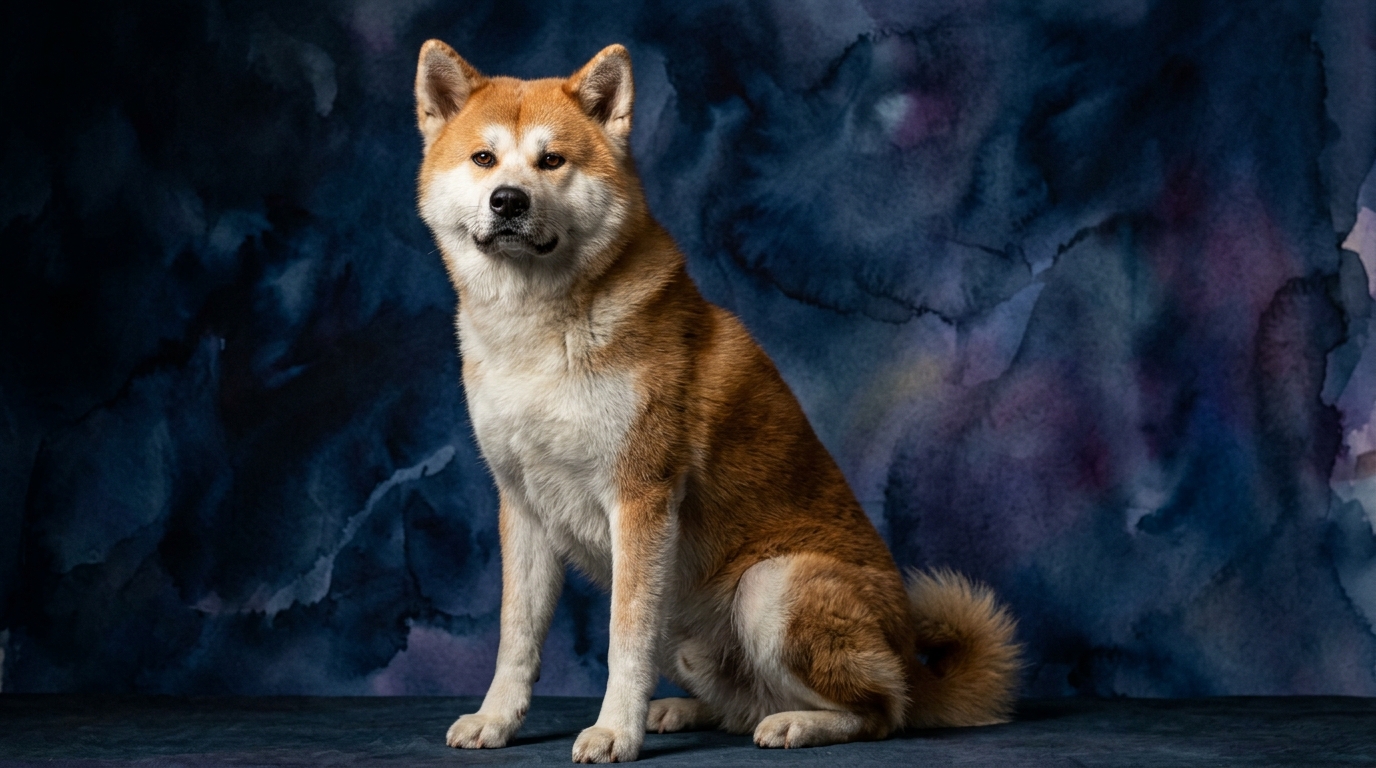

Side-by-Side Cognitive Profiles
The Akita, a working breed, presents a cognitive landscape marked by profound independence and strong inherent drives. Its Problem Solving is rated 3/5, indicating an ability to navigate moderate challenges and find solutions, often on its own terms, reflecting its history as a versatile working dog. Training Speed for the Akita sits at 2/5, suggesting a breed that requires patience and consistent, engaging methods, as they are not inherently driven to please but rather to understand and cooperate if it aligns with their purpose. Social Intelligence is 3/5, meaning they can read social cues and interact appropriately within their established pack, though often reserved with strangers. Where the Akita truly distinguishes itself is in its Instinctive Drive, scoring a perfect 5/5; this encompasses powerful guarding instincts, a strong prey drive, and an innate sense of territory, all integral to its historical function. Finally, the Akita’s Memory is 4/5, allowing them to retain complex commands and past experiences effectively, contributing to their reliability once a behavior is learned.
The Rhodesian Ridgeback, classified as a hound, showcases a cognitive profile characterized by endurance, moderate independence, and a keen sense of purpose. Its Problem Solving is also 3/5, indicating a capacity to figure out puzzles and overcome obstacles, particularly when motivated by a reward or a goal, reflecting its background in tracking and holding large game. The Ridgeback’s Training Speed is 3/5, making it slightly more responsive to training cues than the Akita, often learning new commands with reasonable repetition, though they can still exhibit a hound's independent streak. Social Intelligence for the Ridgeback is 3/5, similar to the Akita, suggesting they are capable of navigating social interactions within their family and with familiar individuals, though they too can be discerning with newcomers. Their Instinctive Drive is 3/5, strong enough to pursue and track but less intensely focused on guarding territory than the Akita, leaning more towards chase and stamina. The Ridgeback’s Memory is 3/5, allowing them to recall learned behaviors and past events, though perhaps not with the same depth or longevity as the Akita.
Where the Akita Wins Cognitively
The Akita's cognitive strengths distinctly lie in its profound Instinctive Drive (5/5) and robust Memory (4/5). This unparalleled instinctive drive means an Akita possesses an innate, powerful understanding of its role, whether guarding its family, tracking game, or simply being a vigilant presence. This isn't just a physical drive but a cognitive one, guiding their decision-making in complex situations, often leading to self-reliant actions without direct human instruction. Their superior memory complements this, allowing them to internalize routines, remember past interactions, and recall learned skills over long periods, making them incredibly reliable once a task is truly imprinted. For example, an Akita might remember a specific threat or a safe pathway years after the initial encounter, demonstrating a cognitive recall that influences their future behaviors and protective instincts.
Where the Rhodesian Ridgeback Wins Cognitively
The Rhodesian Ridgeback's cognitive edge, while subtle, is observed in its Training Speed (3/5), which is a point higher than the Akita's. This slight advantage translates into a dog that generally picks up new commands and routines with a bit more alacrity and fewer repetitions. While still possessing an independent hound spirit, the Ridgeback often exhibits a stronger desire to engage with its handler during training sessions, making initial learning phases potentially smoother. This isn't to say they are always eager to please, but their cognitive processing for associating actions with consequences, particularly positive reinforcement, can be marginally quicker. This can be particularly beneficial for owners looking to progress through basic obedience and more advanced sports with a slightly faster uptake.
Which Is Easier to Train and Why
Between the two, the Rhodesian Ridgeback generally presents as the easier dog to train, primarily due to its marginally higher Training Speed (3/5) and a less overwhelming Instinctive Drive (3/5 compared to Akita's 5/5). The Akita's potent instinctive drive, while valuable for its historical roles, often translates into a strong independent streak and a tendency to evaluate commands against its own perceived needs or purpose. This means Akita training often requires immense patience, consistent motivation, and a deep understanding of their unique motivations, as they are less inclined to perform simply to appease. The Ridgeback, while not a pushover and certainly capable of stubbornness, tends to be more cooperative in a training context. Their instincts are geared towards a partnership in pursuit, making them somewhat more amenable to direction and less likely to question every command, provided the training is engaging and fair. This difference in intrinsic motivation and cognitive processing speed makes the Ridgeback often a more straightforward candidate for obedience and skill acquisition.
Which Suits Active Owners vs. Relaxed Owners
Both the Akita and the Rhodesian Ridgeback are robust breeds that thrive with active engagement, making neither truly suited for a relaxed, sedentary owner. The Akita, with its powerful instinctive drive and strong guarding tendencies, suits owners who are active in a structured, purposeful way. They require consistent mental stimulation and physical activity that often incorporates their natural protective instincts or problem-solving abilities, such as advanced obedience or tracking. The Rhodesian Ridgeback, designed for endurance and pursuit, suits owners who are active in a more free-ranging, stamina-focused manner. They excel in activities like running, hiking, and canine sports that utilize their athleticism and desire to move. While they appreciate rest, their need for sustained physical output is significant. Neither breed is content with minimal walks; both demand a commitment to an active lifestyle, albeit with different cognitive and physical emphases.
The Verdict
Choose the Akita if you appreciate a profoundly independent, deeply loyal companion with powerful protective instincts and an excellent memory, and you are prepared for a patient, consistent training journey.
Choose the Rhodesian Ridgeback if you seek an enduring, athletic partner that is slightly more amenable to training and thrives on sustained physical activity and collaborative outdoor adventures.
🧠 Find Your Pet's IQ Score
Our Pet IQ Lab assessment covers 25+ tests across 5 cognitive dimensions — personalized to your breed.
Take the Full IQ Test →Frequently Asked Questions
Is the Akita or Rhodesian Ridgeback better for a first-time dog owner?
Neither breed is typically recommended for first-time dog owners due to their strong personalities and specific training needs. Both require experienced handlers who understand their unique cognitive profiles and can provide consistent, firm, and fair guidance.
How do their social intelligence scores impact their interactions with other pets?
Both breeds score 3/5 in social intelligence, meaning they are capable of appropriate interactions within their established social circles. However, Akitas tend to be more reserved and can be less tolerant of unfamiliar dogs, while Rhodesian Ridgebacks, though hounds, may still exhibit strong prey drives towards smaller animals.
Do either of these breeds excel in specific dog sports?
Akitas, with their problem-solving and memory, can do well in obedience or tracking, often excelling in tasks requiring focus and purpose. Rhodesian Ridgebacks, with their endurance and training speed, are often seen in lure coursing, agility, and other high-energy activities that leverage their athleticism.