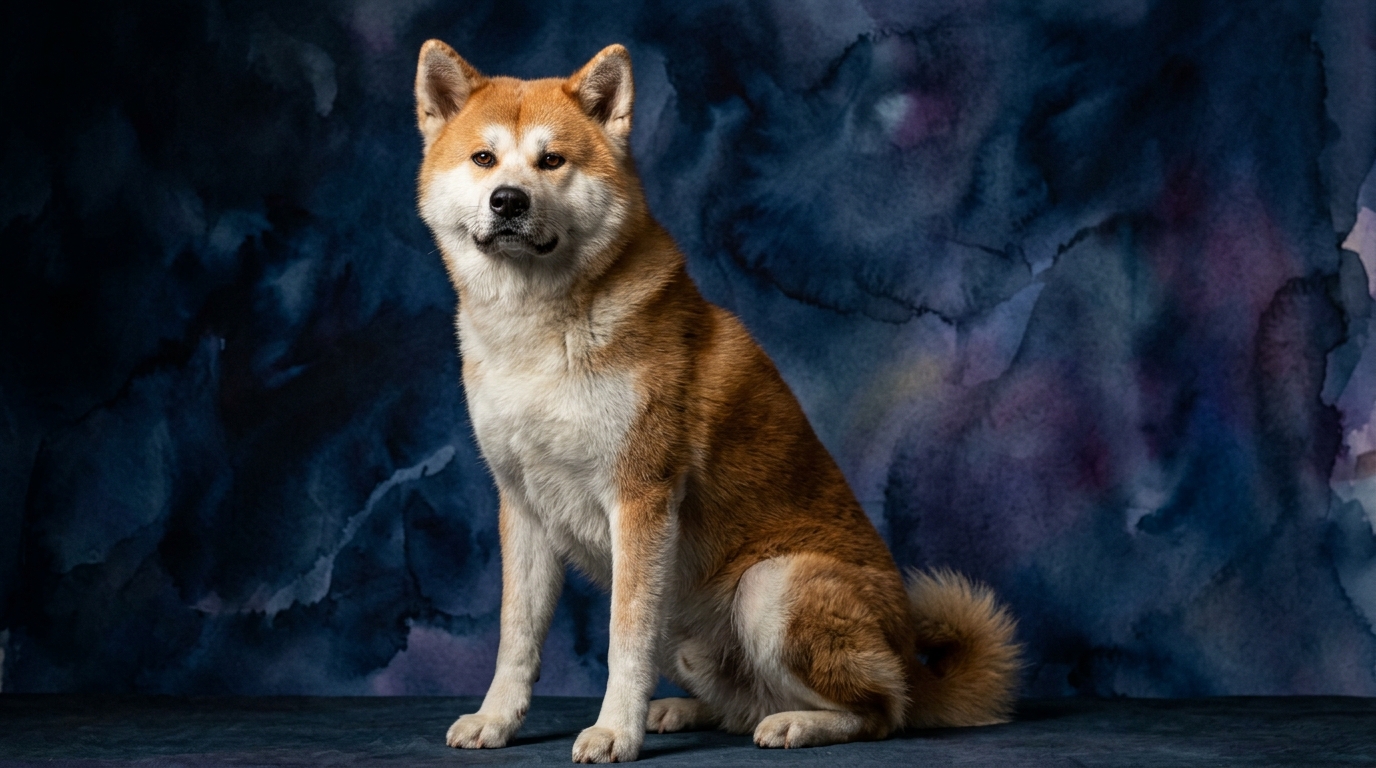

Side-by-Side IQ Profile: Akita vs. Smooth Fox Terrier
The Cosmic Pet Pet IQ Lab employs a multi-dimensional framework to assess canine cognitive abilities, moving beyond simple 'smart' labels to reveal the unique mental landscapes of different breeds. Here’s how the Akita and the Smooth Fox Terrier stack up across five key cognitive dimensions.
**Akita (Working Group, Coren Rank #54)**
**Problem Solving (3/5):** Akitas approach challenges with thoughtful deliberation, often preferring to observe and strategize rather than react impulsively. They are not quick to jump into action, instead taking time to assess a situation before committing to a solution. Their independence means they might devise their own methods, which are typically effective, though not always immediate or conventional.
**Training Speed (2/5):** Akitas exhibit a formidable independent streak, which directly impacts their initial uptake of new commands. They require consistent, patient, and highly engaging training methods, often needing to understand the 'why' behind a task before fully committing. Progress can be slower, demanding more repetition and creative motivation from their handler.
**Social Intelligence (3/5):** Their social understanding is nuanced and often reserved. Akitas are deeply perceptive of their human family's emotions and internal dynamics, forming strong, loyal bonds. However, they can be aloof or even wary with strangers and other animals, requiring extensive, positive early socialization to foster appropriate interactions.
**Instinctive Drive (5/5):** With a powerful heritage as hunting and guarding dogs, Akitas possess an exceptionally strong instinctive drive. This manifests as a profound sense of territoriality, a keen protective instinct over their family, and a strong prey drive, all deeply rooted in their ancestral roles.
**Memory (4/5):** Akitas have a remarkable capacity for retaining information, remembering past experiences, and associating specific events with outcomes. This contributes to their discerning nature, allowing them to learn from single, impactful encounters and develop long-term understanding of their environment and social dynamics.
**Smooth Fox Terrier (Terrier Group, Not Coren-Ranked)**
**Problem Solving (3/5):** Smooth Fox Terriers tackle problems with energetic persistence and a good dose of terrier tenacity. They often employ a trial-and-error approach, combined with their innate curiosity, to find solutions, quickly adapting their strategy if an initial attempt fails. Their process is more about active exploration than quiet contemplation.
**Training Speed (3/5):** These terriers can pick up new tasks at a moderate pace, demonstrating a willingness to learn when motivated. However, their quick-wittedness is often matched by a short attention span and a desire for novelty, meaning training sessions need to be kept brief, fun, and varied to maintain their engagement.
**Social Intelligence (3/5):** Smooth Fox Terriers are generally affable and responsive to their immediate human companions, often displaying an outgoing and charming demeanor within their family unit. Their interactions with unfamiliar dogs or small animals, however, can be driven by their strong terrier instincts, sometimes leading to boisterous or chase-oriented behaviors.
**Instinctive Drive (3/5):** While possessing a terrier's characteristic drive for digging, chasing, and vocalizing, their instinctive behaviors are generally manageable compared to some other working or hunting breeds. These drives are present and need outlets, but they are often more amenable to redirection into appropriate activities.
**Memory (3/5):** They demonstrate a good capacity for remembering commands, routines, and the consequences of their actions, especially when reinforced consistently. Their memory is typically tied to immediate utility and reinforcement, allowing them to learn and retain information effectively for practical purposes, though perhaps not with the same depth of complex, long-term recall as an Akita.
Where the Akita Wins Cognitively
The Akita's superior **memory (4/5)** provides a significant cognitive advantage, allowing them to build complex mental maps of their environment and recall past events with remarkable detail. This means they are less likely to repeat mistakes, can learn from single, impactful experiences, and develop a deep understanding of their surroundings and the behaviors of others. This profound recall contributes to their discerning nature, making them astute judges of character and situations. Furthermore, their exceptionally high **instinctive drive (5/5)**, while requiring careful management, represents a highly refined and deeply ingrained set of ancient working behaviors—guarding, protecting, and tracking. These abilities are readily accessible and robust, making them exceptionally reliable in roles requiring vigilance, territorial defense, and decisive action, provided their training and environment appropriately channel these powerful predispositions. They possess an inherent gravitas and purpose tied to these instincts that few other breeds can match.
Where the Smooth Fox Terrier Wins Cognitively
The Smooth Fox Terrier's cognitive edge can be found in its slightly higher **training speed (3/5)** combined with a more adaptable and experimental approach to **problem-solving (3/5)**. While their problem-solving score matches the Akita, the *nature* of their approach differs; Smooth Fox Terriers are quicker to try various solutions and less prone to the Akita's contemplative pauses, often using energetic trial-and-error. This makes them more agile in novel situations. Their moderate **instinctive drive (3/5)** also positions them favorably; while the terrier drive for digging and chasing is present, it's generally easier to redirect and integrate into a modern household than the Akita's more intense and often protective drives. This allows for greater flexibility in varied training scenarios and activities, even if their focus can sometimes waver due to their spirited nature. They excel in environments where quick, reactive thinking and physical engagement are rewarded.
Which Is Easier to Train and Why?
When considering ease of training for the average owner, the Smooth Fox Terrier generally presents a more straightforward path, primarily due to its higher **training speed (3/5)** and less intense **instinctive drive (3/5)**. Akitas, with a **training speed of 2/5**, exhibit a formidable independent streak; they are not inherently eager to please and will often weigh commands against their own perceived value or comfort. This means an Akita might perfectly understand a command but choose not to execute it if they don't see the immediate benefit, perceive a threat, or are not sufficiently motivated. Their profound **memory (4/5)** means they remember both positive and negative training experiences vividly, making consistency paramount and harsh methods counterproductive, as they can lead to distrust or resentment. The Akita's deeply ingrained guarding and protective instincts, rated at **5/5**, require a trainer who understands how to work with, rather than against, these powerful predispositions, often necessitating specialized handling.
Smooth Fox Terriers, while still possessing a terrier's independent spirit and occasional stubbornness, are generally more responsive to positive reinforcement and novelty. Their moderate instinctive drives are often channeled into playful activities, making them more amenable to learning tricks and obedience commands when presented as an engaging game. Their quicker adaptability and less intense drives mean they are often more forgiving of handler mistakes and recover faster from training setbacks. While they can be distracted by their environment, their inherent curiosity and desire for engagement often make them willing participants in training, as long as it's kept stimulating and fun. For these reasons, the Smooth Fox Terrier typically proves less challenging for a novice or moderately experienced dog owner to train effectively.
Which Suits Active Owners vs. Relaxed Owners?
**For Active Owners:** Both breeds can thrive with active owners, but their ideal activities and the required owner engagement differ significantly. An Akita suits an active owner who understands the need for structured, purposeful activity that engages both their powerful body and their discerning mind, such as long, leashed walks or hikes in varied terrain, and mental puzzles that challenge their problem-solving. Their physical activity requirement is substantial, but it must be paired with consistent, strong leadership and extensive early socialization to manage their formidable independent and protective instincts. They are not typically suited for off-leash dog park frolics but excel in activities that reinforce their bond with their primary human, where their loyalty and focused nature can truly shine.
The Smooth Fox Terrier, conversely, is an ideal match for an owner who enjoys high-energy, varied physical activities like agility, earthdog trials, extended play sessions involving chasing and retrieving, or even jogging. Their boundless energy, marked by quick bursts of speed and an insatiable curiosity, demands an owner who can consistently provide outlets for their physical and mental stimulation. Without sufficient engagement, a Smooth Fox Terrier can become bored and resort to destructive behaviors like excessive digging or chewing. They thrive on interaction and being an active participant in family outings, always ready for the next adventure.
**For Relaxed Owners:** Neither breed is truly suited for a 'relaxed' owner in the sense of minimal engagement or a hands-off approach. Both require significant commitment. However, if 'relaxed' implies a less overtly demanding initial training regimen or a dog less prone to intense guarding behaviors towards strangers, the Smooth Fox Terrier might be marginally more adaptable, provided its energy is adequately managed through daily vigorous exercise. Its smaller size also makes its energy bursts somewhat more manageable indoors compared to the Akita's physical presence. The Akita, with its profound **instinctive drive (5/5)** for protection and its reserved **social intelligence (3/5)**, unequivocally requires an owner who is not only active but also highly experienced and committed to extensive, positive socialization and consistent, firm yet gentle training from an early age. A truly relaxed owner who isn't prepared for this level of dedication and management might find an Akita's independence and protective nature overwhelming and potentially challenging to live with.
The Verdict
Choose an Akita if you are an experienced dog owner prepared for a deep, dedicated relationship, valuing a discerning, protective companion with a profound memory and strong character, and are committed to consistent, patient training and socialization.
Opt for a Smooth Fox Terrier if you seek an energetic, playful, and moderately trainable companion for an active household, appreciate their lively spirit and adaptable problem-solving, and are ready to engage them with consistent mental and physical challenges.
🧠 Find Your Pet's IQ Score
Our Pet IQ Lab assessment covers 25+ tests across 5 cognitive dimensions — personalized to your breed.
Take the Full IQ Test →Frequently Asked Questions
Is an Akita hard to train?
Akitas are not necessarily hard to train, but they require a specific approach due to their independent nature and lower training speed. They learn best with patient, consistent, and positive reinforcement, and thrive under owners who understand their strong will and inherent desire to assess situations independently.
Do Smooth Fox Terriers bark a lot?
Smooth Fox Terriers can be prone to barking, especially if not adequately exercised or mentally stimulated. Their terrier instincts often make them alert to their surroundings, and they may bark at perceived intruders or simply out of boredom, requiring consistent training to manage.
Which breed is better with children?
While individual temperament varies, Smooth Fox Terriers, with their playful and energetic nature, are often considered a more natural fit for active, older children who understand how to interact respectfully. Akitas can be good with children in their immediate family if raised with them, but their reserved nature and strong protective instincts mean interactions should always be supervised, especially with unfamiliar children.